










Hello procurement leaders,
If the last few months have felt less like policy adoption and more like operational firefighting, you’re not alone. Since the revised Commonwealth Procurement Rules (CPRs) came into force on 17 November 2025, ANZ procurement teams have largely moved beyond awareness; the real challenge now is execution, updating processes, retraining teams, and ensuring every sourcing decision can withstand audit, transparency, and public scrutiny.
The 2025 CPR reforms mark a structural shift in public sector procurement. With a stronger emphasis on value for money beyond the lowest price, increased opportunities for Australian businesses and SMEs, and a deeper focus on ethical and sustainable outcomes, procurement is now operating under heightened scrutiny. The question is no longer what changed, but how to operationalise those changes consistently and defensibly.
Here is a practical 90-day roadmap reflecting what procurement leaders are navigating on the ground.
Days 1-30: Stabilise and Align
The first month is about correcting legacy assumptions embedded in pipelines, templates, and internal guidance.
Audit procurement pipelines against new thresholds
The increase in the general procurement threshold from AUD 80,000 to AUD 125,000 for many non-construction procurements materially affects sourcing pathways and SME participation. Review all ATMs released on or after 17 November 2025 to confirm correct threshold application and alignment with updated CPR settings.
Misclassification at this stage can create probity concerns, incorrect SME treatment, and post-award scrutiny risks. Threshold interpretation should align with the CPRs, Department of Finance guidance, and entity-specific directions.
Update policies and internal playbooks
The revised CPRs clarify how non-discrimination operates under Division 2 and increase flexibility to prioritise Australian businesses and SMEs where consistent with value for money and trade obligations. However, many internal manuals still reflect the previous framework.
Leaders should ensure that:
- Procurement templates reflect revised thresholds and SME/Australian business settings.
- Stakeholders understand when and how preferences can be applied.
- SME engagement is treated as a policy expectation rather than an exception.
Alignment at this stage prevents both over-escalation and underutilisation of available flexibility.
Verify the Australian business and SME status properly
Entities are expected to apply clear, CPR-aligned criteria when determining Australian business and SME status, including ownership structure, tax residency, and business presence. Sole reliance on supplier self-declarations represents a material compliance risk.
Structured verification at intake, such as validating business numbers and applying consistent internal criteria, reduces downstream exposure and strengthens defensibility.
Days 31–60: Embed Ethics and Broader Value
This phase introduces operational pressure as ethical and sustainability considerations must be embedded into everyday procurement practice.
Conduct reasonable enquiries proportionate to risk
The updated CPRs reinforce that entities must take reasonable steps to ensure suppliers demonstrate appropriate ethical standards, including in labour practices, modern slavery, and environmental responsibility. Enquiries should be proportionate to risk, complexity, and value, not reserved solely for major procurements.
Clear internal guidance and consistent documentation are essential to withstand audit and probity review.
Automate risk screening within workflows
Manual risk checks often introduce delays and documentation gaps. Technology-driven controls can improve consistency and visibility.
Platforms such as Zycus Merlin AI support ethical procurement by cross-referencing supplier data against modern slavery registers, ESG disclosures, and environmental indicators, while maintaining an auditable record of checks undertaken. Automation reduces rework and strengthens CPR-aligned practice, while accountability remains firmly with the entity.
Operationalise broader value for money
The 2025 CPRs reinforce that value for money includes whole-of-life costs, quality, risk, and broader economic and social benefits such as SME participation and sustainability.
Operational discipline requires:
- Evaluation scorecards that weight non-financial criteria alongside price.
- Clear documentation of trade-offs where broader public value justifies higher cost.
- Confident decision-making grounded in defensible rationale.
Days 61-90: Strengthen Governance and Control
As implementation matures, governance gaps around panels, negotiations, and reporting become more visible.
Embed SME-aware logic into panels
Where SME preferencing applies, particularly around the general threshold, agencies are expected to prioritise Australian SMEs consistent with panel terms, value for money, and trade obligations. Embedding SME-aware workflows into panel call-offs reduces inconsistent practice and compliance risk.
Formalise negotiation intent
Where Division 2 applies, negotiations may only occur if the intention to negotiate was declared in the ATM documentation, or where no tender initially represents the best value for money in line with the stated evaluation criteria. Clear, standardised ATM templates with mandatory negotiation fields strengthen probity and defensibility.
Prepare for greater scrutiny
The reform trajectory supports increased whole-of-government oversight and shared procurement data. Evaluation reports, contract awards, and supplier performance records may inform broader compliance monitoring. Documentation quality and consistency are therefore critical.
Looking Ahead: Increased Transparency
The policy direction signals stronger transparency around SME preferencing outcomes and enhanced supplier data visibility. Even before additional measures are formalised, agencies should ensure that value for money rationales – particularly where a non-SME or non-local supplier is selected, are robust, well documented, and disclosure-ready.
The 2025 CPRs represent a durable shift in how public value is defined, measured, and defended.
Why Zycus?
The 2025 Commonwealth Procurement Rules demand more than process updates. They require a shift from reactive compliance to proactive, outcome-driven governance. This is where Zycus’ Intake-to-Outcomes (I2O) framework, powered by Agentic AI becomes strategically relevant.
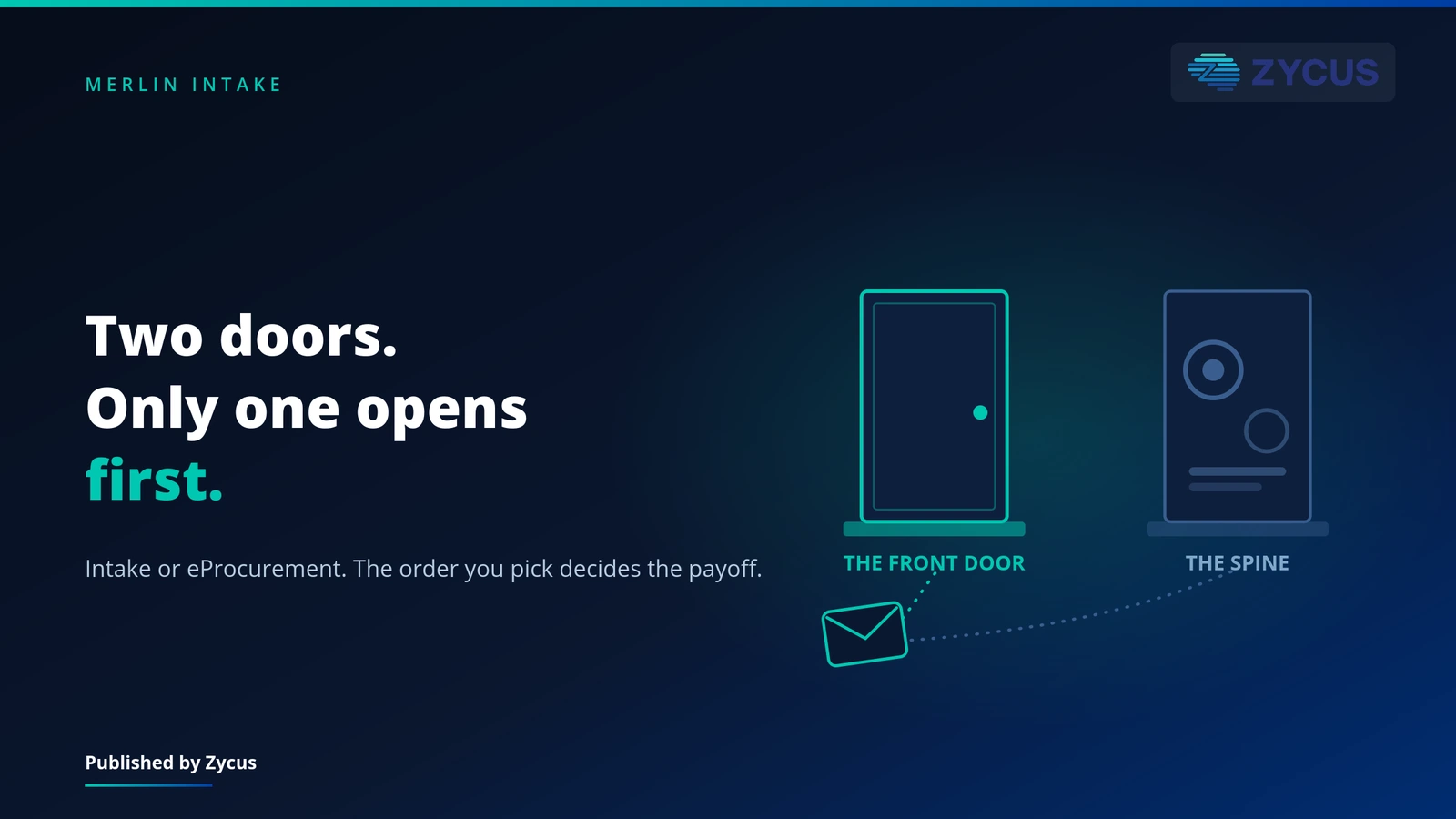
Traditional procurement systems activate once sourcing begins. Zycus starts earlier, at intake, where risk, policy alignment, and value expectations are defined. By embedding CPR-aware controls at the point of requisition, organisations can ensure that every request is aligned to thresholds, SME preferencing rules, negotiation settings, and value-for-money considerations before it progresses downstream.
This Intake-to-Outcomes approach ensures that compliance is embedded at the front door and sustained through sourcing, evaluation, award, and supplier performance – reducing manual intervention while strengthening defensibility.
Zycus’ position as a Leader in the Gartner® Magic Quadrant™ for Source-to-Pay Suites further reinforces its ability to support public sector procurement transformation at scale. Recognised for completeness of vision and ability to execute, Zycus combines intelligent automation, deep supplier management capabilities, and AI-driven orchestration to help procurement leaders move beyond policy adherence toward measurable outcomes.
For ANZ procurement leaders navigating the 2025 CPR reforms, Zycus provides not just technology, but a structured pathway from compliant intake to defensible outcomes, powered by Agentic AI and built for the next era of public procurement governance.
Sources and Further Reading
- Department of Finance, Commonwealth Procurement Rules (CPRs), effective 17 November 2025 – official rules, thresholds, Division 1 and Division 2 requirements, and value for money principles.
- MinterEllison, New Commonwealth Procurement Rules commence 17 November 2025 – overview of key changes including threshold increases, SME opportunities, and negotiation settings.
- Clayton Utz, Changes to the Commonwealth Procurement Rules – what you need to know before 17 November 2025 – analysis of reforms to value for money, non-discrimination, and access for Australian suppliers.
- Sparke Helmore Lawyers, Commonwealth Procurement Rules update – commentary on ethical procurement, modern slavery considerations, and whole-of-government oversight trends.
- Auxin Law (or similar specialist firm), Commonwealth Procurement Rules (commencing 17 November 2025): what suppliers need to know – practical implications for suppliers and SME participation.