








Agentic sourcing software should be evaluated on the intelligence it builds before an RFP begins, not only on how efficiently it runs the sourcing event. A genuine platform analyzes spend and contracts, builds should-cost models, qualifies suppliers, generates category-specific RFPs, and models awards using live data with minimal human handoffs. When comparing AI procurement software, procurement teams must test intelligence-layer depth, integration fit, and production proof – not upgraded eSourcing features presented as agentic capability. Most evaluation frameworks were built for eSourcing. Agentic sourcing requires different questions.
TL;DR
- Traditional strategic sourcing software evaluations focus on bid collection, scoring, and event execution. Agentic sourcing evaluations must test the intelligence created before suppliers are contacted.
- Genuine AI procurement tools should connect spend analysis, contract intelligence, should-cost modeling, supplier qualification, RFP generation, and award modeling without manual re-entry between stages.
- Sourcing automation software is not automatically agentic. Vendors should prove their capabilities using the organization’s data, external market benchmarks, production references, and documented sourcing outcomes.
- Evaluate AI source-to-contract software for multi-ERP compatibility, pilot data requirements, handoffs to existing systems, and governed human oversight.
The previous blog in this series built the financial case for agentic sourcing investment. This blog tells you how to evaluate which platform to deploy.
Why Do Most Software Evaluations Miss the Most Important Question?
Procurement software evaluation has a pattern. The team identifies requirements, builds a scoring matrix, runs demos, checks references, and selects the platform that scores highest. The process is not the problem. The criteria are.
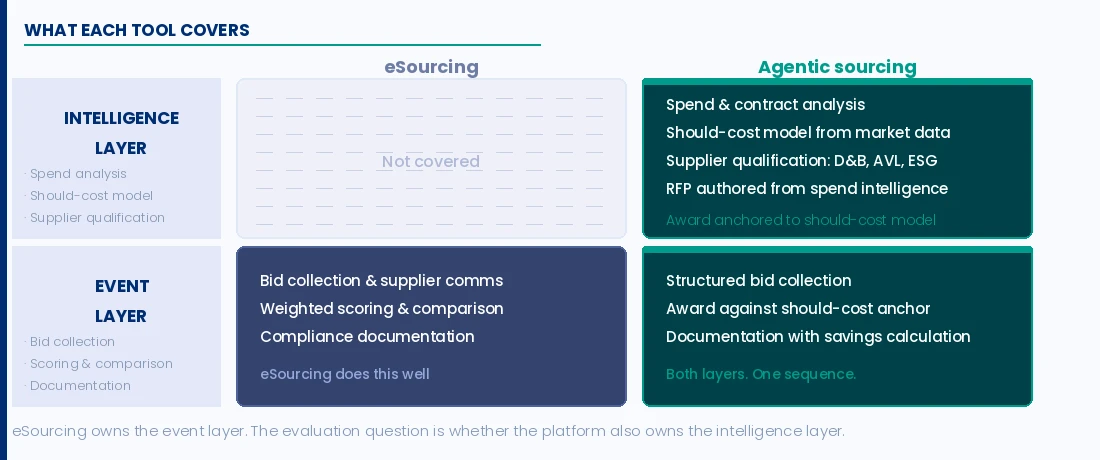
eSourcing evaluation criteria test the event layer: bid collection, scoring, and compliance documentation. Those are the right criteria for eSourcing but the wrong criteria for agentic sourcing, where the intelligence layer is the differentiator.
A platform that scores well on event management criteria may have added a workflow step called spend analysis that retrieves a pre-built report. That is not an intelligence chain.
Deloitte’s 2025 Global CPO Survey found that organizational or technology capability to support execution was cited as a barrier by 40% of procurement leaders. Our read: the gap is not ambition. It is the capacity to evaluate and deploy the right tools.†
What Does “Agentic” Mean in AI Procurement Software Evaluation?
The word agentic has arrived in procurement software marketing without a shared definition. Vendors use it to describe AI-assisted tasks, automated workflows, multi-agent coordination, or AI features on existing platforms. In a demonstration, these can look similar. In production, they behave very differently.
In a genuine agentic sourcing system, the agent operates across a sequence without waiting for analyst input between steps: spend analysis, cost modeling, supplier qualification, RFP authoring, event execution, and award recommendation.
When evaluating a vendor’s agentic claim, ask where the system requires a human to hand off or re-enter information.
The Hackett Group’s 2026 Procurement Key Issues research identified AI-enabled technology as a top-three procurement priority for the first time, and noted a growing divide between organizations experimenting with AI and those redesigning operating models around it.
How Do You Evaluate the Intelligence Layer in Agentic Sourcing Software?
Five tests identify genuine intelligence-layer capability:
- Spend and contract analysis: does the system read the organization’s actual transaction history, or ask the analyst to upload a prepared file? Genuine spend analysis requires a live connection to the data environment.
- Should-cost modeling: does the system build a pricing target from external commodity indices and market benchmarks, or accept a target price the analyst provides? A system that accepts an analyst-provided number is not doing should-cost modeling.
- Supplier discovery and qualification: does the system identify suppliers not previously used and screen them against financial health and compliance data, or manage a list the team provides?
- RFP generation: does the system draft scope and evaluation criteria from the spend analysis, or from a template the analyst populates?
- Award modeling: does the system produce savings calculations against the should-cost model, or a ranked comparison with no external anchor?
A system that handles some of these and delegates others to the analyst is a partial solution. The intelligence layer earns its value by running all five before the first supplier is contacted.
How Do You Assess Integration and Deployment Risk?
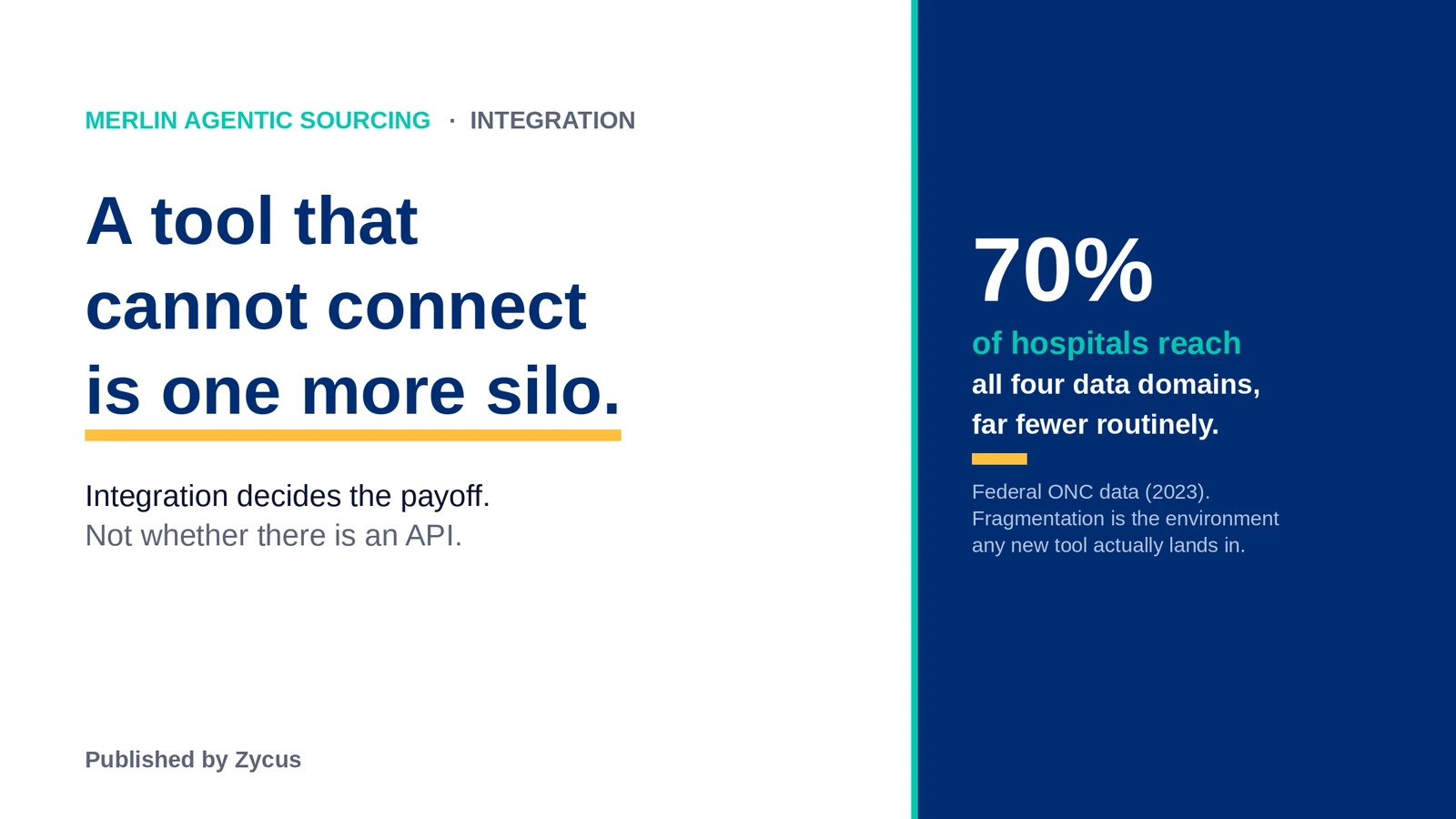
Post-merger and multi-ERP environments are where procurement software implementations most commonly stall. Two dimensions determine integration risk. Data: where does the platform read spend history from, and what does it require from existing infrastructure? A platform needing a single clean data feed will not work in a twelve-ERP environment without significant pre-work. Workflow: does the platform replace the existing event execution environment, or run its intelligence chain and hand off to it? An upstream intelligence layer carries lower deployment risk than a full replacement.
Before committing to an evaluation, map data readiness for the pilot category: which system holds the spend history, how clean is it, and what does the vendor require to read it?
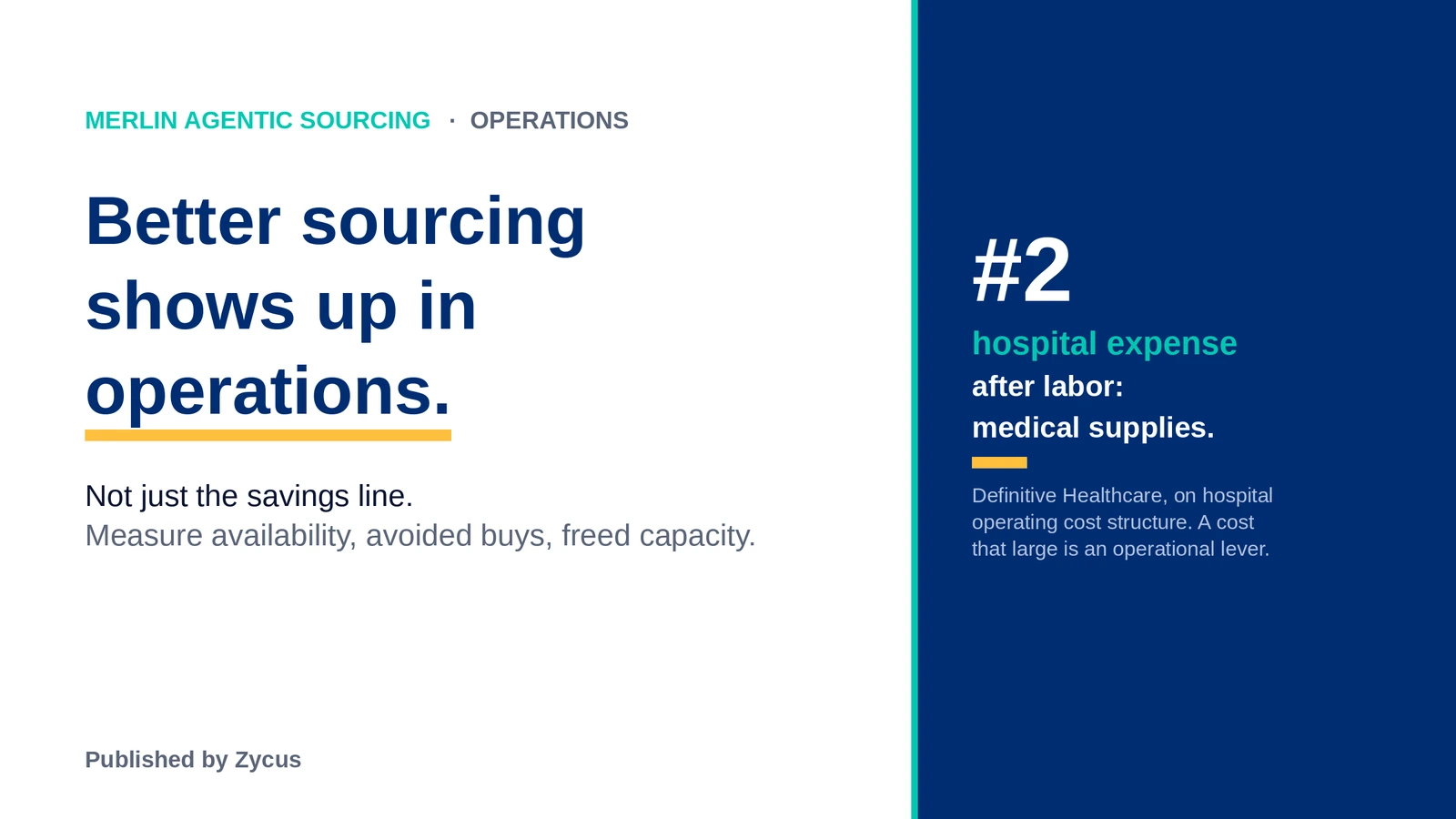
APQC benchmarking data finds the cost to process a single purchase order ranges from around $14 for automated, top-performing organizations to over $54 for those relying on manual processes. Each additional disconnected system the procurement team maintains adds coordination overhead that compounds that cost.
What Proof Should a Vendor Be Able to Provide?
Merlin Agentic Sourcing (MAS) is a native module of the Merlin Agentic Platform, built so that the intelligence chain a demo shows is the same one designed to run in production, not a separate proof-of-concept environment.
When evaluating any agentic sourcing vendor, request:
- A live data demonstration: run the intelligence chain on a category from your own data, not sample data prepared by the vendor. If the platform cannot run spend analysis on a file you provide on the day, the intelligence layer is not designed to production standards.
- A production reference: speak to an organization that has run a complete sourcing cycle using the intelligence layer. Ask what the should-cost model produced and whether it matched benchmarks the reference team could verify independently.
- A documented saving: not a projected saving and not a methodology for calculating savings. An actual event, an actual award, and the documented gap between the award rate and the benchmark the system produced.
In live MAS demos, supplier response rates have reached 100%, against the 60 to 75% range sourcing teams typically report. These are demo conditions, not a customer benchmark.
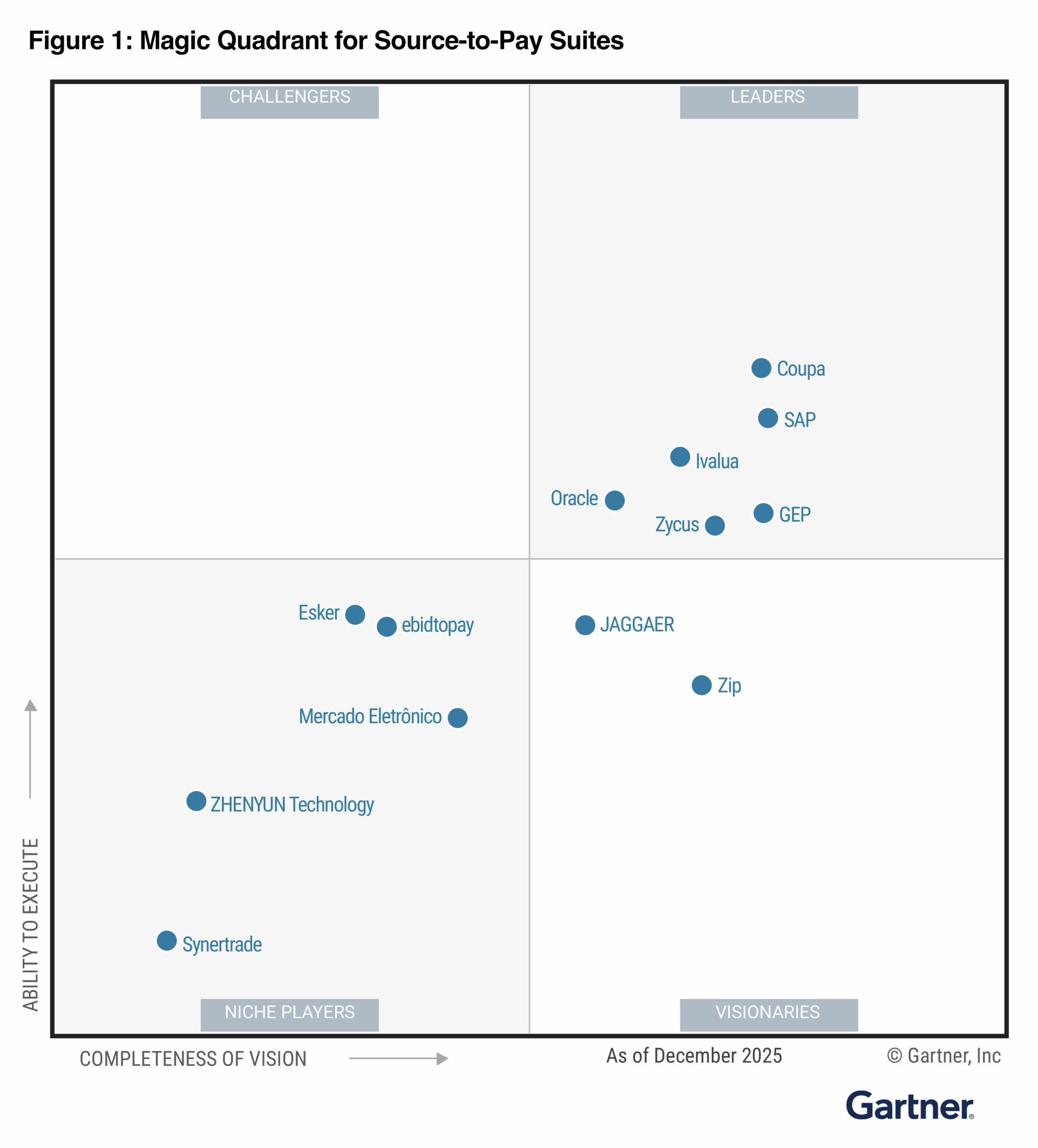
Zycus was recognized as a Leader in the Gartner® Magic Quadrant™ for Source-to-Pay Suites, January 2026. MAS is designed to reduce sourcing scoping time by up to 70%.
How Do You Structure the Evaluation in a Fragmented Environment?
The evaluation should separate two questions most RFPs conflate: capability (what the platform can do) and fit (which categories and environments it can run in first).
Choose the pilot category where data quality is highest, not where the integration challenge is hardest. A clear result in a bounded scope builds more organizational confidence than a broad deployment that struggles with data complexity.
Key questions: Which category has the cleanest spend data? Can the intelligence chain start without connecting to every ERP? What does the handoff to existing event execution look like?
Five Questions That Separate Genuine Agentic Sourcing from Upgraded eSourcing
Five questions separate tools that have renamed existing features from tools that have built a genuine intelligence chain:
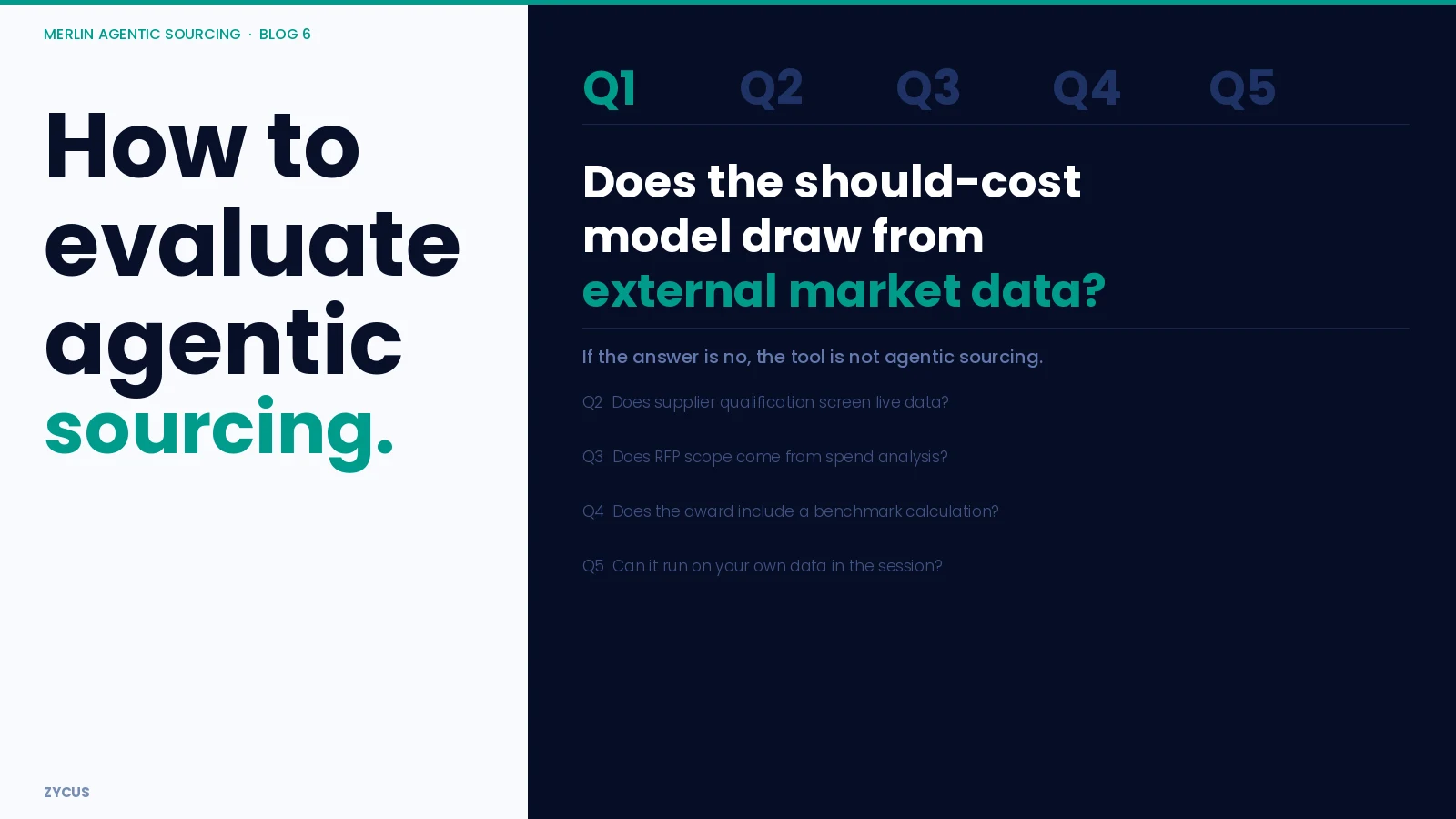
- Does the should-cost model draw from external market data, or from the analyst’s input?
- Does the supplier qualification screen against live financial health and compliance data, or from a list the team maintains?
- Does the RFP scope language come from spend analysis of this category, or from a template?
- Does the award recommendation include a savings calculation against a market benchmark?
- Can the system demonstrate the full sequence on a category from your own data in the evaluation session?
| Evaluation question | Genuine agentic sourcing | Upgraded eSourcing | |
|---|---|---|---|
| Q1 | Does the should-cost model draw from external market data? | External commodity indices and benchmarks | Analyst provides the target |
| Q2 | Does supplier qualification screen against live financial and compliance data? | D&B financial health, AVL and ESG criteria | Team maintains the list |
| Q3 | Does RFP scope language come from spend analysis of this category? | Derived from spend and contract analysis | Last year’s template updated |
| Q4 | Does the award recommendation include a savings calculation against a market benchmark? | Gap vs should-cost model, documented at award | Ranked bids, no external anchor |
| Q5 | Can the system run the full sequence on your own data in the evaluation session? | Live data on evaluation day | Vendor-prepared sample data |
If any answer is no, the product is an improved event management tool, not an agentic sourcing system.
† Deloitte 2025 Global CPO Survey: 40% capability barrier figure. This is a different finding from the 57% and 74% statistics used in Blog 2 from the same survey.
Merlin Agentic Sourcing is part of the Merlin Agentic Platform, Zycus’s Intake-to-Outcomes architecture for governed, multi-agent procurement.
Ready to see next-generation AI in action? Request a Demo today to discover how our intelligent agentic sourcing software can transform your procurement operations.
Frequently Asked Questions
Q1. What makes an agentic sourcing evaluation different from an eSourcing evaluation?
eSourcing evaluation tests the event layer: how the platform runs RFPs, collects bids, and produces comparison outputs. Agentic sourcing evaluation must test the intelligence layer: how the platform builds the category brief, should-cost model, and supplier shortlist before the event is created. Adding intelligence-layer criteria is the single most important step in evaluating an agentic sourcing vendor.
Q2. What features should you look for in procurement software designed for agentic sourcing?
Look for live spend and contract analysis, external data-based should-cost modeling, supplier discovery and qualification, category-specific RFP generation, benchmarked award modeling, and governed human oversight. Agentic sourcing software should create decision intelligence before the event, not simply automate bid collection.
Q3. How do you evaluate whether a vendor’s “agentic” claim is genuine?
Ask where in the intelligence chain the system requires human input. A genuine agentic sourcing system runs from spend analysis through award modeling without requiring the analyst to hand off or re-enter information between steps. Any point in that sequence where the system stops and waits for analyst input indicates a partial capability, not an agentic one.
Q4. What is the most important evaluation criterion for a fragmented technology environment?
Data readiness: whether the platform can read spend and contract history from the existing environment without requiring a full integration project before the pilot begins. A platform that can run spend analysis on a category data export before the broader integration is complete can start delivering value in weeks rather than months.
Q5. What should a vendor demonstrate in a live evaluation session?
Three things: the intelligence chain running on the organization’s own data, not vendor-provided sample data; a should-cost model referencing external market benchmarks the evaluation team can independently verify; and an award modeling output showing the savings calculation, not just a ranked bid comparison. A vendor that declines to run the intelligence chain on your data during the evaluation is signaling a production readiness gap.
Q6. How should procurement leaders structure the pilot to minimize deployment risk?
Choose the pilot category based on data quality and stakeholder readiness, not strategic importance. The cleanest data produces the clearest result. Run one complete sourcing cycle from intelligence chain through award. Document the gap between the award and the benchmark. Use that result to build the business case for the next phase. Pilot clarity is more valuable than pilot breadth.
Related Reads