


TL;DR
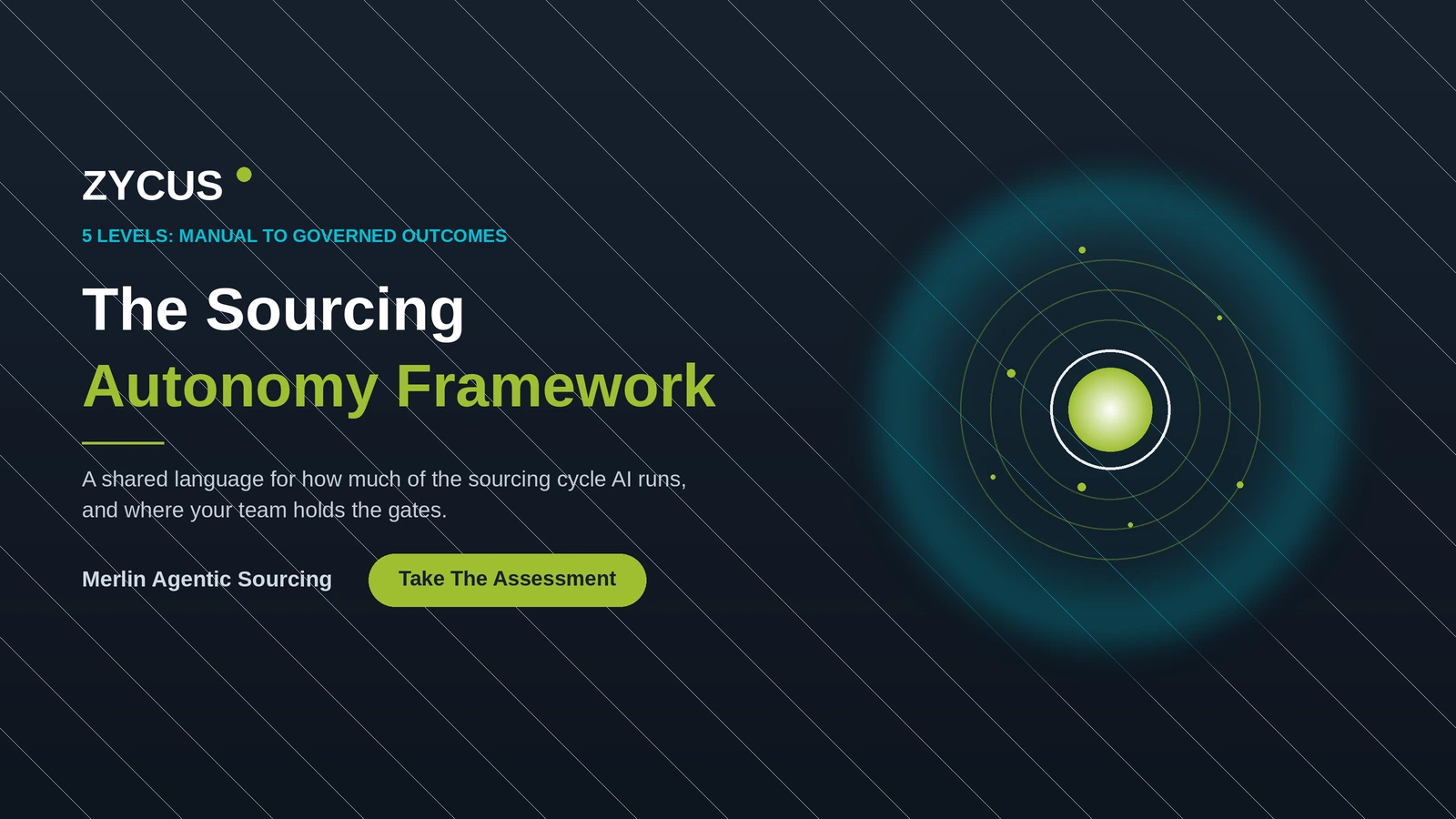
- The Sourcing Autonomy Framework defines five levels of maturity, from manual sourcing to governed, outcome-driven execution.
- Sourcing autonomy should be set by category, with different levels of AI involvement depending on risk, complexity, and business need.
- As organizations progress through the levels of sourcing autonomy, AI moves from assisting people to completing tasks and running end-to-end flows.
- Autonomous sourcing workflows can reduce dependence on manual effort while keeping human approvals, decision gates, and auditability in place.
- At the highest level, governed outcome autonomy enables AI to drive the sourcing cycle while critical commercial decisions remain under human control.
Nearly half of spend still is not competitively sourced across the average procurement organization (Ardent Partners, 2026), while best-in-class teams reach 69%. At the same time, procurement workloads are rising 8% in 2026 while resources tighten (The Hackett Group), and the median sourcing event still takes weeks from request to award (APQC — figure pending internal confirmation, see note at the end). Every CPO is being asked to close that gap with AI. Almost none have been given a shared language for what “AI running sourcing” should actually mean.
That is the problem the Sourcing Autonomy Framework is built to solve. Announced today by Zycus, the framework defines five levels of sourcing autonomy, from fully manual execution to governed outcome autonomy, and gives procurement leaders a structured way to answer three questions: where are we today, how much autonomy should each category carry, and what has to be true before we move up a level.
“Autonomy is a design decision, not an inevitability of capability. A capable agent can and should be deliberately constrained. This framework gives CPOs a common language for deciding how much of the sourcing cycle AI runs, and where humans hold the gates.” — Aatish Dedhia, Founder and CEO, Zycus [QUOTE PENDING CONFIRMATION — see note]
The five levels
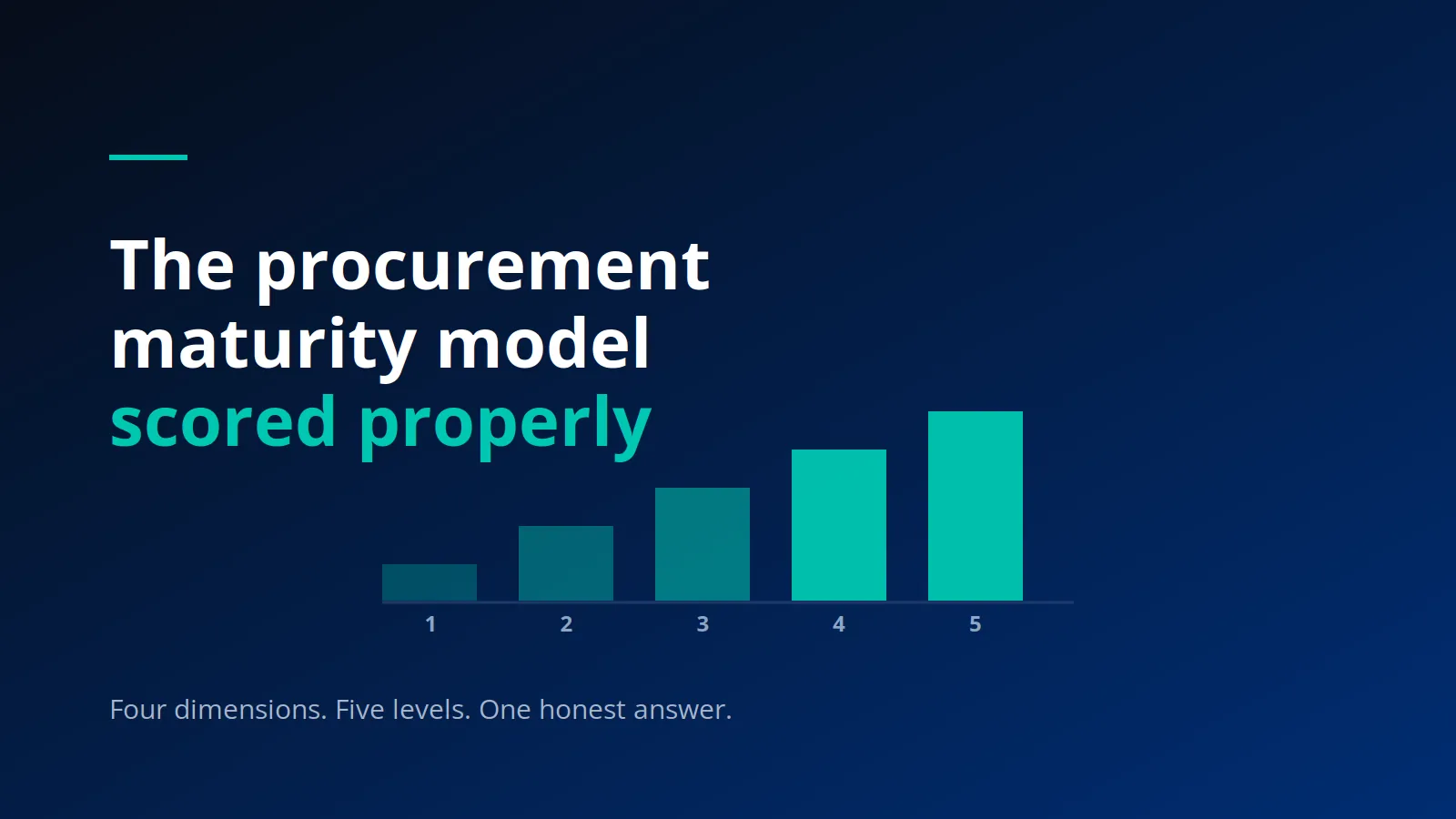
Each step up the framework trades a defined slice of human effort for a defined guardrail, as the figure below sets out. The detail on what changes, and what stays under human control, follows.
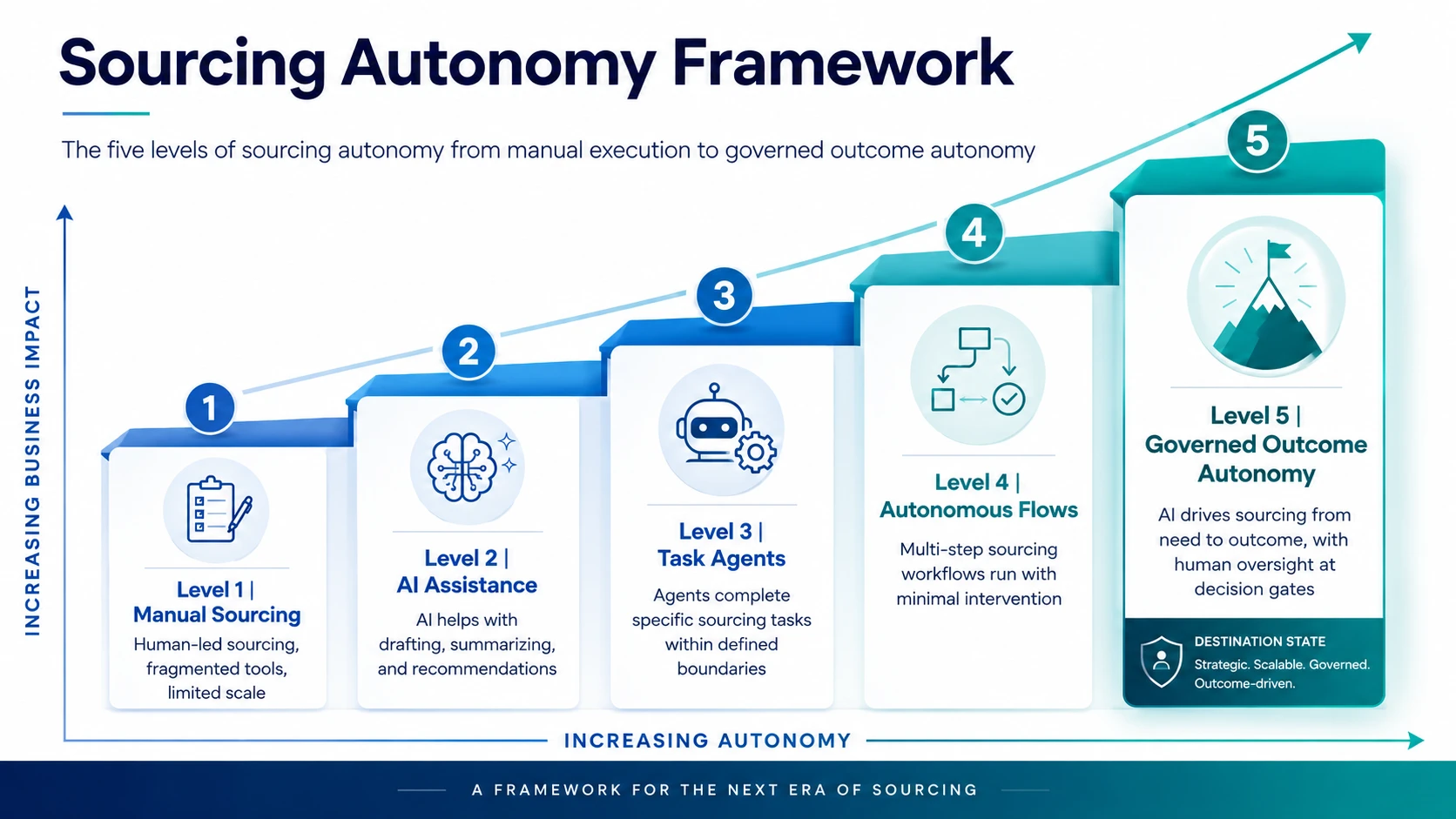
Figure 1: The five levels of sourcing autonomy, from manual execution to governed outcome autonomy.
Level 1: Manual Sourcing. Human-led events on fragmented tools. Requests arrive by email, briefs are assembled by hand, and coverage is rationed by headcount. Most of the cycle is assembly rather than judgment.
Level 2: AI Assistance. Copilots draft, summarize, and recommend. Every step is still human-run; AI just makes the steps faster. Productivity improves per task, but the shape of the cycle does not change, and intelligence stays advisory. McKinsey finds less than 20% of procurement data is used in decision-making, and assistance alone does not fix that.
Level 3: Task Agents. Agents complete specific sourcing tasks within defined boundaries: turning a request into a structured need, generating an RFP-ready brief, shortlisting suppliers with visible criteria. The human orchestrates the event and reviews each handoff.
Level 4: Autonomous Flows. Multi-step sourcing workflows run with minimal intervention. Intake, strategy, event execution, and evaluation run as one governed flow, and the human moves from reviewing every step to approving at defined decision gates, with a live view and a full audit trail of everything the agents do.
Level 5: Governed Outcome Autonomy. AI drives sourcing from need to outcome, with human oversight at decision gates. Strategic events run agentically all the way to an award recommendation that a human signs. Tail spend is negotiated autonomously within pre-set limits on price, terms, and authority. The destination state is strategic, scalable, governed, and outcome-driven. Governed is the operative word: at Level 5, the commercial decision still never leaves human hands.
One principle runs through the whole framework: autonomy is a dial you set per category, not a switch you flip for the function. A defensible operating model might run IT hardware at Level 5 and legal services at Level 2, on purpose.
Why the framework matters now
Most enterprises today sit at Level 1 or Level 2, which is a meaningful part of why so much spend never reaches the market: coverage is capped by human throughput, and a rising workload makes that cap tighter every year. The economics of the gap do not change until autonomy changes, because the constraint is structural, not motivational.
The framework also answers the question buyers are quietly asking in every agentic AI evaluation: how do I adopt this without giving up control? The answer is built into the model itself. Each level up adds capability and adds a matching guardrail, from visible selection criteria at Level 3, to decision gates and audit trails at Level 4, to hard limits on negotiation authority at Level 5.
Where Zycus fits
Zycus built the framework from the operating pattern of the Merlin Agentic Platform. Merlin Agentic Sourcing runs strategic sourcing events as autonomous flows with human decision gates, from intake to an award recommendation. In a parallel lane, Merlin’s Autonomous Negotiation Agent (ANA) applies Level 5 autonomy to tail spend that category managers would never reach, negotiating within limits the enterprise sets. Two lanes, one governance model, one principle: AI decides. Suite governs. Enterprise stays in control.
Find your level
A seven-minute self-assessment places your organization on the five levels and shows the specific moves that advance you to the next one: Sourcing Autonomy Assessment.
Isolated agents do tasks. Zycus delivers Intake to Outcomes.