








TL;DR
- Agentic AI in procurement ≠ RPA, GenAI, or copilots. It’s goal-driven software that perceives, decides, acts, and adapts across multiple steps — not single-turn assistance.
- Most “agents” on the market aren’t agents. Gartner estimates only ~130 vendors are genuinely agentic; the rest are agent-washing — and 40%+ of agentic AI projects will be cancelled by end of 2027.
- Use the decision-turn test. A copilot drafts one thing and waits. An agent sequences five or more actions — identify, check, calculate, draft, log — before a human reviews.
- Agents are already live across the S2P lifecycle. Intake, sourcing, autonomous negotiation, contracts, AP invoicing, supplier onboarding, and risk — each solving a piece, together running procurement as a system.
- The architecture question matters more than the feature list. AI-native systems break without the AI; bolted-on systems keep running because the AI was a wrapper. 44% of multi-agent failures trace back to system design, not model quality.
- Fragmentation is the silent tax. Only 38% of CFOs are confident procurement savings reach the P&L; 57% of CPOs blame silos. Agents on silos automate silos — intake-to-outcomes architecture automates the full arc.
- The 2030 picture is already forming. Gartner expects 90% of B2B buying to be AI-intermediated by 2028. The winners won’t be the ones who bought the most agents — they’ll be the ones who architected the deepest.
Of the thousands of vendors now marketing “agentic AI,” Gartner estimates only about 130 are genuinely agentic. The rest are older products wearing new labels — chatbots rebranded, RPA repackaged, copilots reclassified. Gartner has given the practice a name: agent washing. It has also given the industry a warning: more than 40% of agentic AI projects will be canceled by the end of 2027, many of them because what was sold as an agent turned out to be something considerably less.
Procurement sits at the center of this reckoning. The function now leads the enterprise, 94% of procurement executives now use generative AI tools, nearly doubling from 50% a year earlier and one of the lowest rates of scaled deployment, with only 4% of organizations running AI in production at meaningful scale.
The gap between use and value has a name too: the adoption-execution chasm. Closing it requires less hype and more clarity. Before anyone can separate real agents from washed ones, they first need to know what agentic AI actually is.
What Agentic AI Actually is in Practice
Gartner defines agentic AI as goal-driven software that perceives, decides, acts, and adapts to achieve outcomes — not just tasks. The shift from prior categories is fundamental. Rule-based automation executes scripts. Generative AI produces outputs when prompted. Copilots suggest; humans decide. Agentic AI reasons across steps, selects among options, and closes the loop without being asked again.
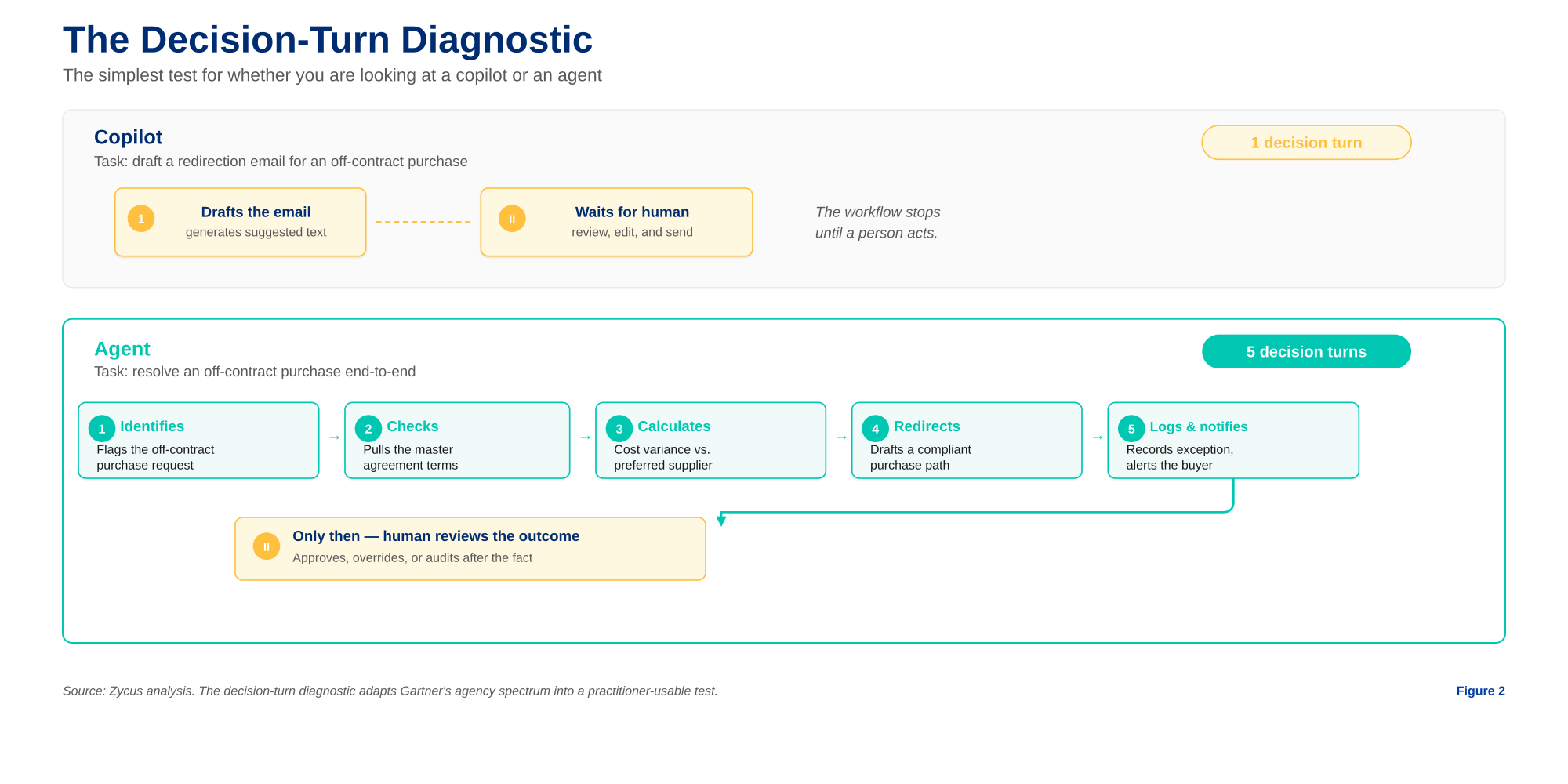
A practical way to separate categories is the decision-turn test. A copilot drafts a message (one turn), then waits for a human to send it. An agent identifies an off-contract purchase, checks the master agreement, calculates the cost variance, drafts a redirection to the preferred supplier, logs the exception, and notifies the buyer (five turns) before anyone reviews it.
Figure 1 — The decision-turn diagnostic: one turn for a copilot, five for an agent.
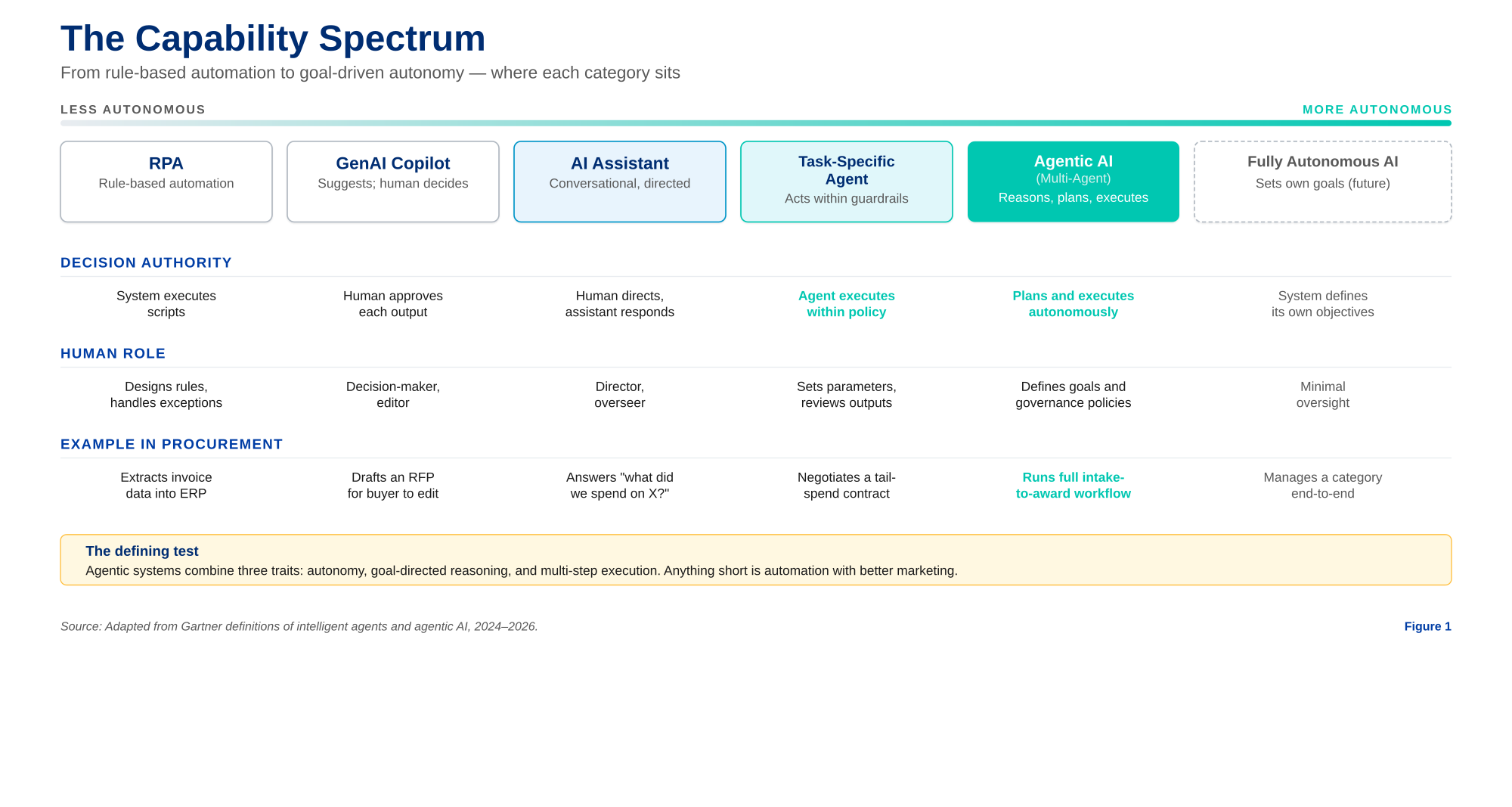
The capability spectrum runs from RPA through GenAI copilots, AI assistants, and task-specific agents to multi-agent orchestration. Each step adds autonomy, reasoning depth, and the ability to handle unstructured input. The defining traits of agentic systems are three: autonomy (they act without step-by-step instruction), goal-directed reasoning (they work toward outcomes rather than completing tasks), and multi-step execution (they sequence actions across systems). Everything short of all three is automation with better marketing. That distinction matters because procurement is about to receive more of it than any other enterprise function.
Figure 2 — The capability spectrum: where each category of AI actually sits.
Five Levels of Agentic Procurement Maturity
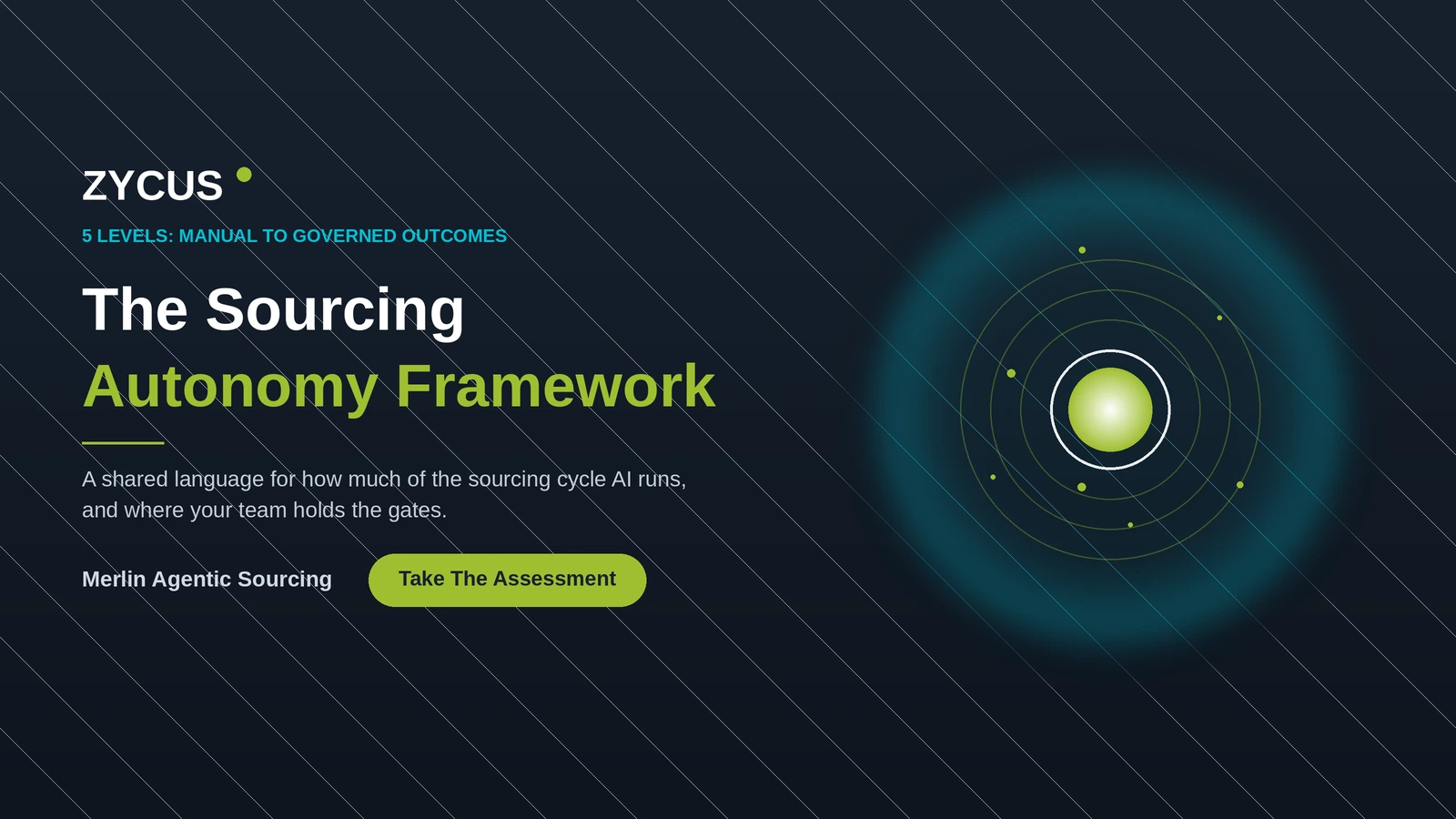
The capability spectrum becomes actionable when mapped to a maturity model. We define five levels of agentic procurement maturity — each distinguished by what the system can do without being asked, and what the human’s role becomes.
- Level 1 — Rule-Based Automation: System executes predefined scripts. Human designs rules and handles every exception. (e.g., three-way invoice matching against fixed tolerances.)
- Level 2 — AI-Assisted: System recommends; human decides and acts. (e.g., GenAI copilot drafts an RFP; buyer reviews, edits, sends.)
- Level 3 — Task-Autonomous: Agent executes bounded tasks within guardrails without human involvement. (e.g., tail-spend negotiation agent operates within pre-set spend thresholds.)
- Level 4 — Process-Autonomous: Agent manages end-to-end workflows, escalating only genuine exceptions. (e.g., intake-to-PO agent routes, policy-checks, and generates purchase orders, with human review on outliers.)
- Level 5 — Orchestrated Agentic: Multiple agents coordinate across the S2P lifecycle on a unified data core, sharing context and compounding intelligence. (e.g., intake agent triggers sourcing agent triggers contract agent — context flows, humans direct strategy.)
Most procurement organizations today sit between Level 1 and Level 2. The leaders are reaching Level 3 and 4. Level 5 is emerging.
The performance gap between levels is not incremental. In strategic sourcing, human-led processes take eight to ten weeks per event. RPA marginally reduces data-entry time but does not touch the strategic sequence. GenAI copilots cut document-generation time by 20–30% but still require the human to drive every step. Agentic systems compress the full cycle by up to 80% — because the agent handles the operational sequence end to end, from spend analysis through bid evaluation to award recommendation. The same pattern holds in AP, where best-in-class agentic deployments achieve 3.5× higher productivity than peers, and in contracts, where draft-to-approval cycles compress from 45 days to 12 (Hackett Group, 2024). The gap is not between good AI and bad AI. It is between systems that recommend and systems that execute.
For a deeper look at the technology beneath these capabilities — the reasoning loops, tool use, and connectivity standards that make agents work mechanically — see How Agentic AI Actually Works in Procurement (Under the Hood).
The Agents Already at Work in Procurement
Gartner forecasts that agentic AI in supply chain software alone will grow from under $2 billion today to $53 billion by 2030. Agents are now being deployed across every moment of the source-to-pay lifecycle and beginning to operate as a connected system rather than a collection of point solutions.
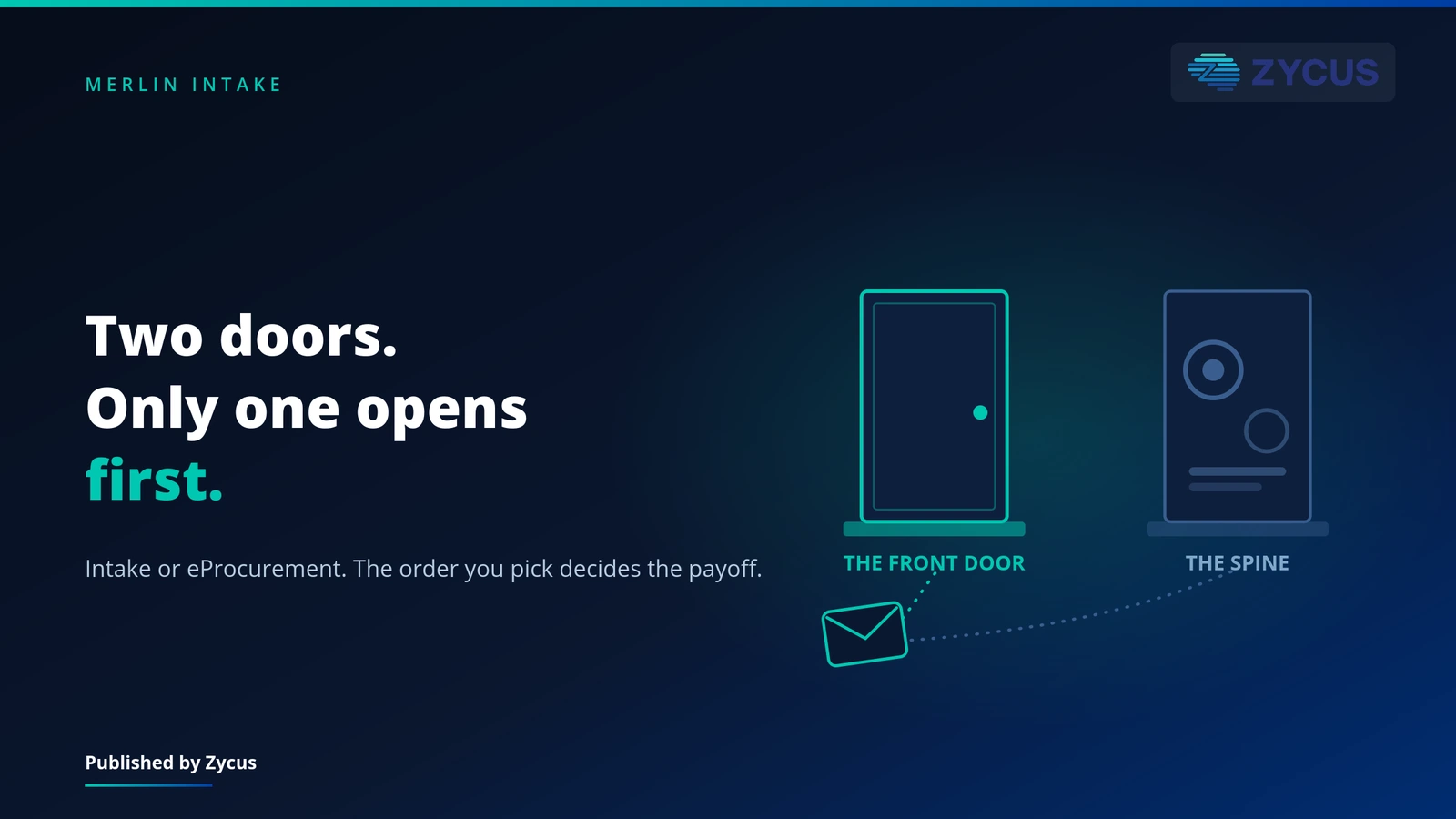
The intake agent sits at the front door, converting plain-language requests into structured, policy-compliant purchase paths. The sourcing agent compresses weeks of RFP work into hours, drafting event structures, shortlisting suppliers, and benchmarking responses. The autonomous negotiation agent handles tail spend — the long tail of low-value contracts that once went unmanaged — negotiating directly with suppliers within rules the category manager sets. The contract agent reviews, redlines, and monitors obligations continuously, surfacing renewal risks months before they become emergencies. The AP agent processes invoices end-to-end, matching against POs and contracts, routing exceptions intelligently rather than dumping them on a queue. The supplier onboarding and risk agents verify, score, and monitor the supply base continuously rather than in quarterly audits.
Individually, each agent solves a problem. Together, they begin to behave like something more consequential: a procurement function that runs as an integrated system rather than a chain of handoffs. What is that organism built on?
For named enterprise deployments and measurable outcomes — from Bayer’s intake transformation to Walmart’s autonomous negotiation — see Top Use Cases of Agentic AI in Procurement (with Real Examples). For a detailed before-and-after comparison of how each workflow transforms — with specific cycle times, touchless rates, and compression metrics — see Procurement Workflows Before and After Agentic AI.
The Architecture Question — Native or Bolted-on?
The most important question in evaluating any agentic AI platform is also the least discussed: is the intelligence native to the system, or bolted onto it?
IBM’s distinction is useful. AI-native means the system was designed from the ground up with intelligence as a core component, not a feature. Remove the AI from a native system, and it doesn’t function. Remove it from a bolted-on system, and the underlying product keeps running — the AI was a wrapper. There is a quick diagnostic: if the interface has buttons labeled “Launch AI” or “Open Assistant,” the AI is a wrapper. In native systems, intelligence operates invisibly within the workflow.
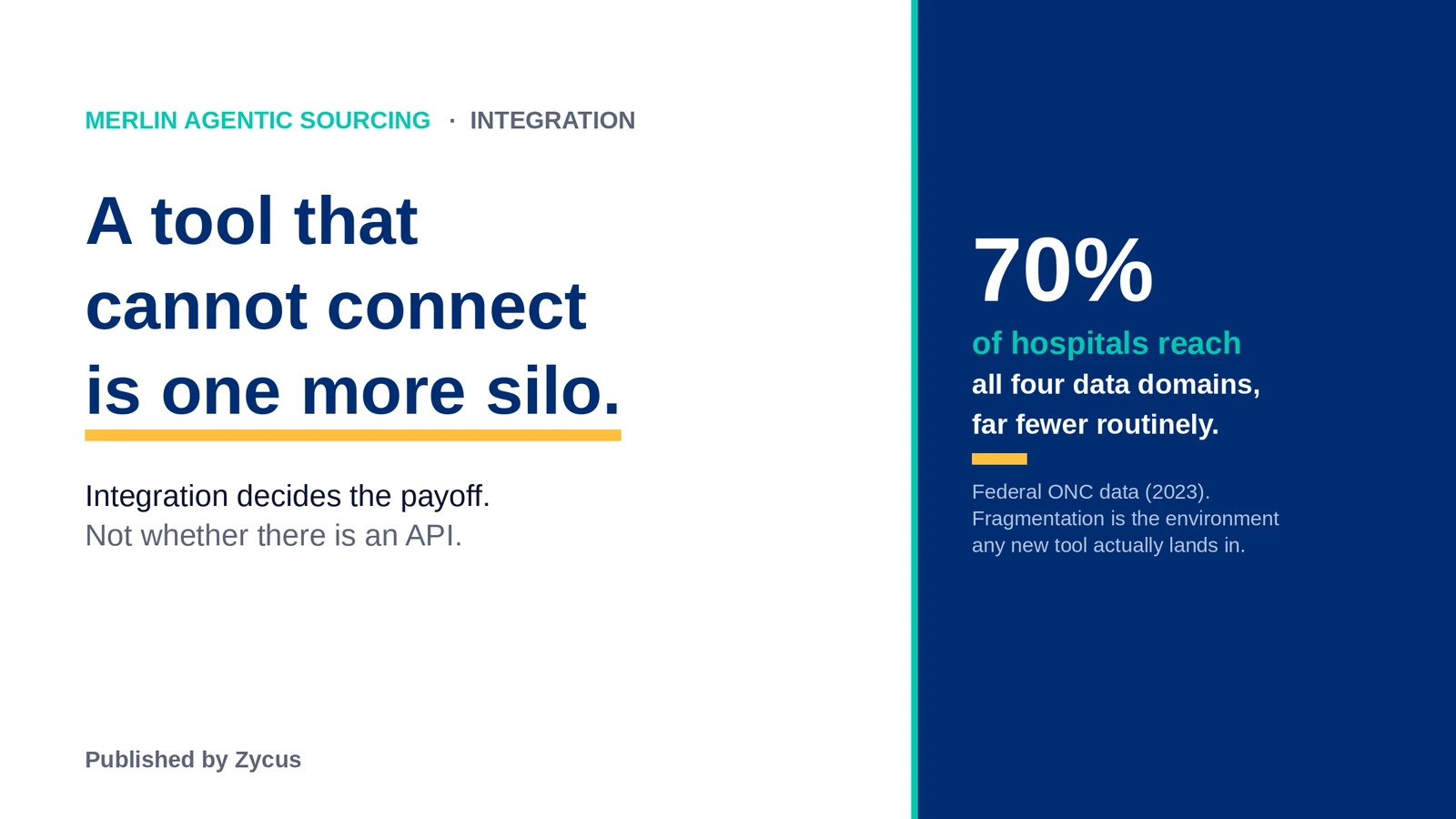
The difference is not cosmetic. Research on multi-agent AI systems has found that 44% of production failures originate in system design decisions, not in model quality. Platforms stitched together from acquisitions inherit fragmented data cores, incompatible APIs, and governance gaps — all of which agents then have to work around rather than through. The question procurement teams should be asking vendors is not “what can your AI do?” but “what is it built on?” Is there a unified data core beneath the agents, or multiple silos behind a shared logo? Are the agents interoperable by design, or by integration project? The first answer compounds over time. The second accumulates integration debt.
Build or Buy — and Why Most Enterprises Shouldn’t Build
The build path looks attractive on a slide and expensive in production. Building agentic AI in-house means owning the data core, the model layer, the orchestration logic, the guardrails, and the ongoing fine-tuning — for a domain that wasn’t your core business yesterday. The Hackett Group’s 2026 Agentic AI in Procurement Adoption Index found 65% of procurement executives prefer pre-built, interoperable agents over building their own. The build case rarely survives contact with the second model upgrade.
Five Questions to Ask Any Agentic AI Vendor
Architecture questions separate real platforms from rebranded ones:
- Is the data core unified, or stitched from acquisitions? Fragmented data produces fragmented agents.
- Are agents interoperable by design, or by integration project? Integration debt compounds.
- What level of the maturity model does each agent operate at — and what’s documented?
- How are exceptions escalated, and is the audit trail complete?
- Native or bolted-on? Remove the AI — does the product still function as advertised?
Governing Autonomy — The Four Controls Every CPO Needs
Autonomy without governance is exposure. The Hackett Group’s 2026 Adoption Index found only 19% of organizations have an agentic AI governance and monitoring platform in place, and just 24% have defined KPIs for their use cases. The four controls that close the gap:
- Autonomy thresholds — what spend or risk level triggers human review.
- Audit trails — every agent action logged and replayable.
- Exception escalation paths — how the agent hands off, and to whom.
- Measurement frameworks — outcome-based, not adoption-based.
Where Agentic AI Falls Short — The Four Failure Modes
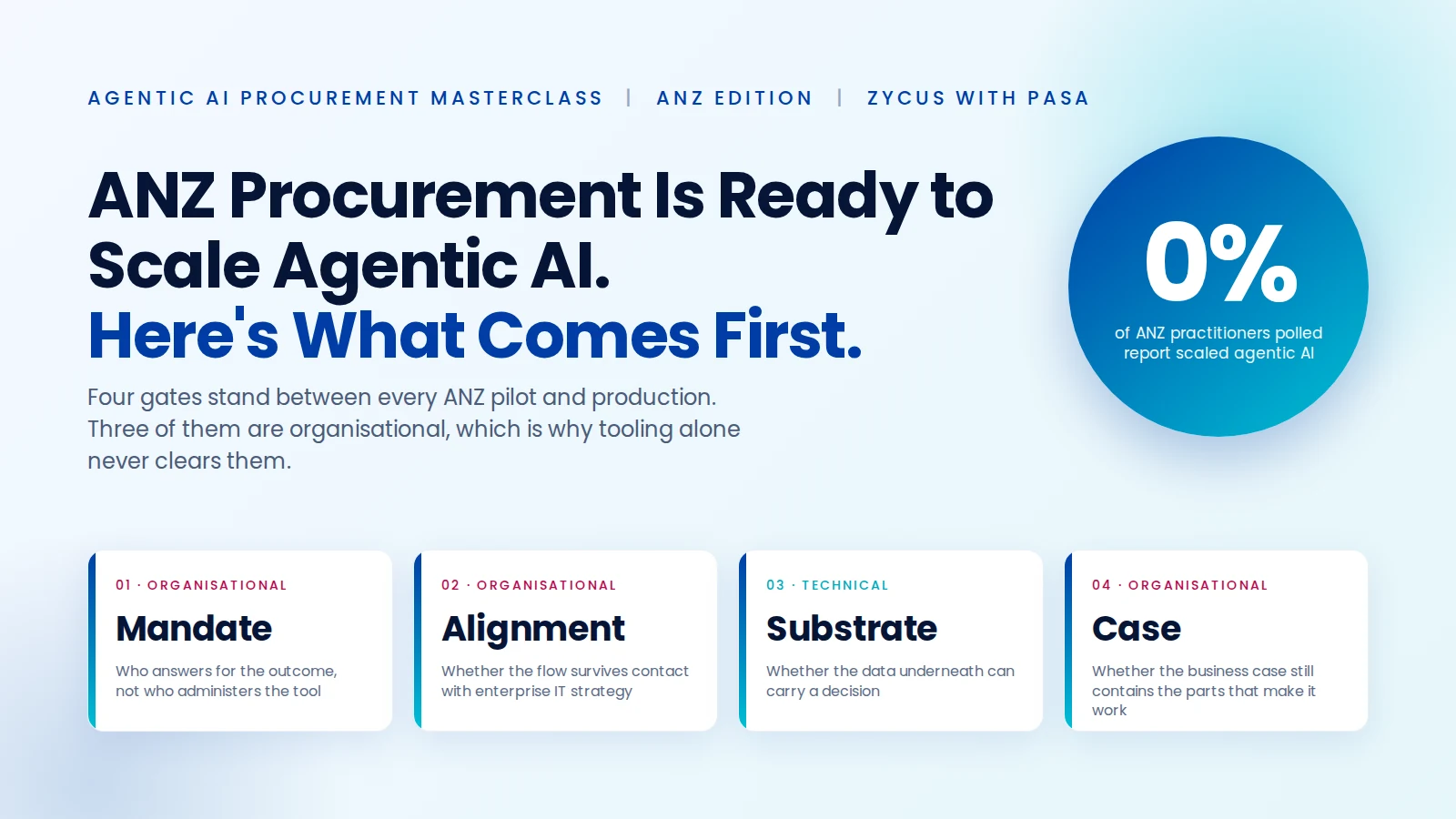
Acknowledging limitations is not a concession — it is a prerequisite for credible deployment. McKinsey’s 2025 research found that eight in ten companies cite data limitations as the primary roadblock to scaling agentic AI. Nearly two-thirds of enterprises have experimented with agents, but fewer than 10% have scaled them to deliver tangible value. Industry benchmarks suggest that only 5% of organizations achieve what researchers define as “substantial ROI” from AI — meaning the investment demonstrably improves the bottom line beyond total implementation costs. The failures are architectural, not intellectual:
- Data fragmentation — agents inherit silos they cannot reconcile.
- Governance gaps — autonomy without audit trails or escalation rules.
- Action opacity — agent decisions that cannot be reconstructed after the fact.
- Adoption-as-metric — measuring use rather than outcomes, which lets unhealthy deployments scale unchecked.
Full autonomy remains risky for high-value, complex categories where tacit knowledge, relationship dynamics, and non-quantifiable factors like political context shape the decision. The organizations succeeding deploy agents at the right autonomy level for the right tasks — not the ones reaching for full autonomy everywhere.
From Intake to Outcomes — And The 2030 Question
Procurement’s most persistent problem is not that it lacks savings. It is that the savings evaporate. Only 38% of CFOs have high confidence that procurement savings reach the P&L. In large companies the figure drops to 29%. Somewhere between the negotiation and the quarter-end, a third of the value disappears — into maverick spend, contract drift, process exceptions, and the seams between systems nobody owns.
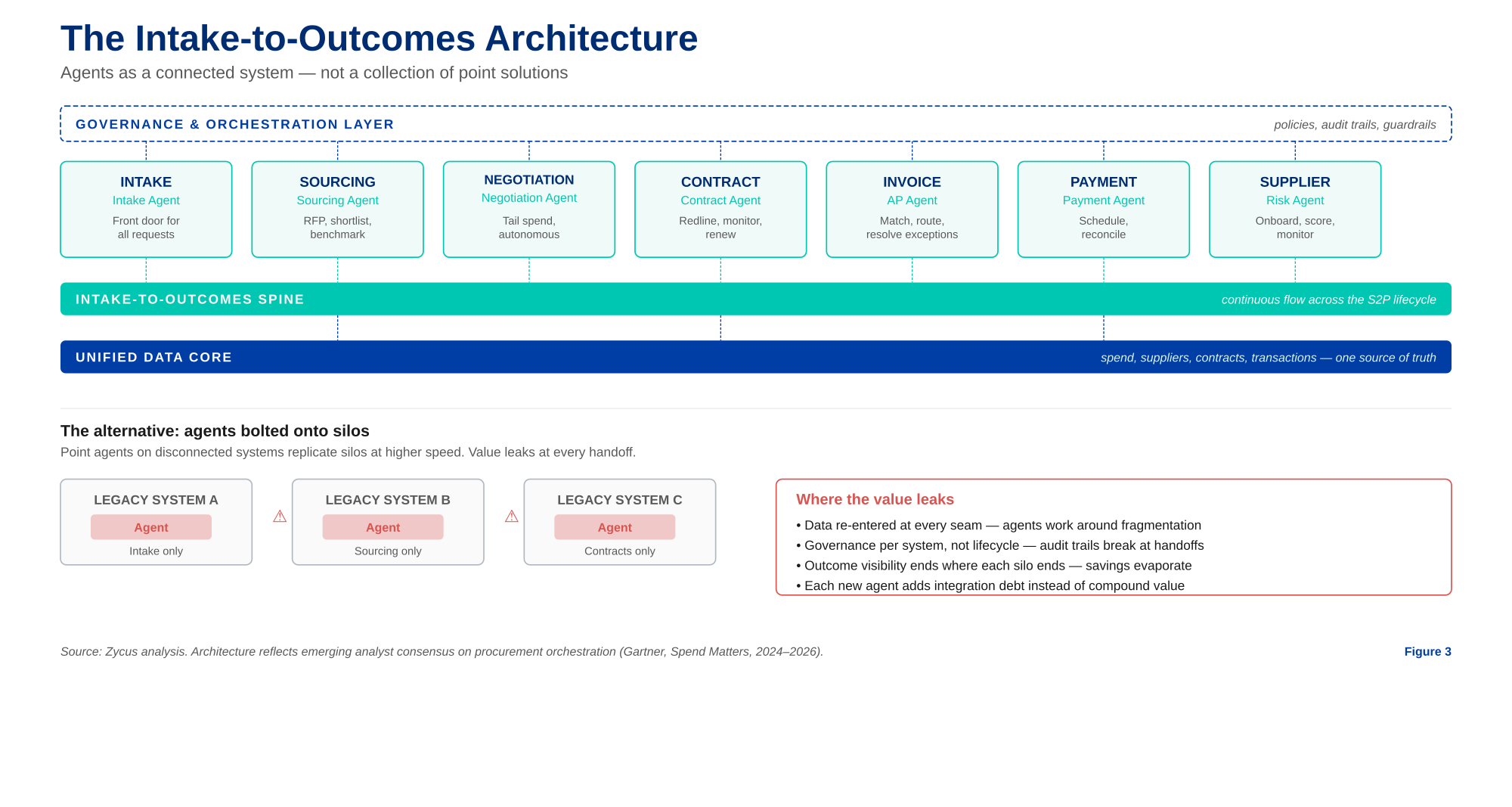
57% of CPOs cite siloed structures as the single biggest internal barrier to value. Agents accelerate everything they touch, including the cost of fragmentation. A point agent bolted onto a silo automates the silo. A network of agents running on a unified architecture — from intake through sourcing, negotiation, contracts, payment, and supplier management — automates the full arc from request to realized outcome.
This is the architecture the category is converging toward: intake-to-outcomes — the connective tissue that turns a collection of agents into a procurement operating system. Platforms built this way, Zycus among them, treat the S2P lifecycle as a single continuous flow rather than a sequence of handoffs, with agents coordinating across the spine rather than operating beside it.
Figure 3 — The intake-to-outcomes architecture: agents as a connected system, not a collection of point solutions.
Gartner predicts that 40% of enterprise applications will embed task-specific AI agents by the end of 2026, up from less than 5% in 2025. By 2028, Gartner expects 90% of B2B buying to be intermediated by AI agents. By 2030, agents will handle the majority of operational procurement work. The organizations that reach Hackett’s Digital World Class standard — delivering 2.6× greater ROI than peers while operating with 31% fewer FTEs and 19% lower cost — will not be the ones that bought the most agents. They will be the ones that architected the deepest, measured the sharpest, and connected intake to outcomes before the market taught them why it mattered.
For a complete framework on measuring whether your agents are actually creating value — including the three-pillar KPI model, leading vs. lagging indicators, and governance metrics — see Measuring Agent Performance: The KPIs That Actually Matter.
The question is no longer whether agentic AI is coming to procurement. It is whether the architecture is ready.
FAQs
Q1. What is agentic AI in procurement?
Goal-driven software that perceives, reasons, acts, and adapts across the source-to-pay lifecycle without step-by-step human instruction. Where copilots recommend, agents execute — closing loops that previously required human routing between systems.
Q2. How is agentic AI different from RPA and GenAI?
RPA executes scripts. GenAI generates content when prompted. Agentic AI reasons toward outcomes, handles unstructured inputs, and sequences actions across systems. The decision-turn test distinguishes them: copilots complete one turn (recommend), agents complete five or more (execute).
Q3. What are examples of agentic AI in procurement?
Intake agents, autonomous negotiation agents for tail spend, contract agents, AP invoice agents, and supplier risk agents — coordinated across an integrated architecture rather than deployed as point solutions. See Top Use Cases with Real Examples for named enterprise deployments and measurable outcomes.
Q4. How should procurement teams evaluate agentic AI vendors?
Ask architecture questions, not feature questions. Examine the data core, the orchestration layer, and whether agents are interoperable by design rather than by integration project. The five-question vendor framework above gives a structured starting point for any RFP conversation.
Q5. Build or buy agentic AI for procurement?
For most enterprises, buy. Building in-house means owning the data core, model layer, orchestration, guardrails, and ongoing fine-tuning — for a domain that wasn’t the core business yesterday. The Hackett Group 2026 Adoption Index found 65% of procurement executives prefer pre-built, interoperable agents over building their own.
Q6. How do you measure whether agentic AI is working?
Track three categories: reliability (is the agent doing the right thing?), adoption (are people trusting it?), and business value (is the CFO seeing the number?). Production agents should hit 85%+ goal accuracy. See Measuring Agent Performance: The KPIs That Actually Matter for the complete framework.
Related Reads: