

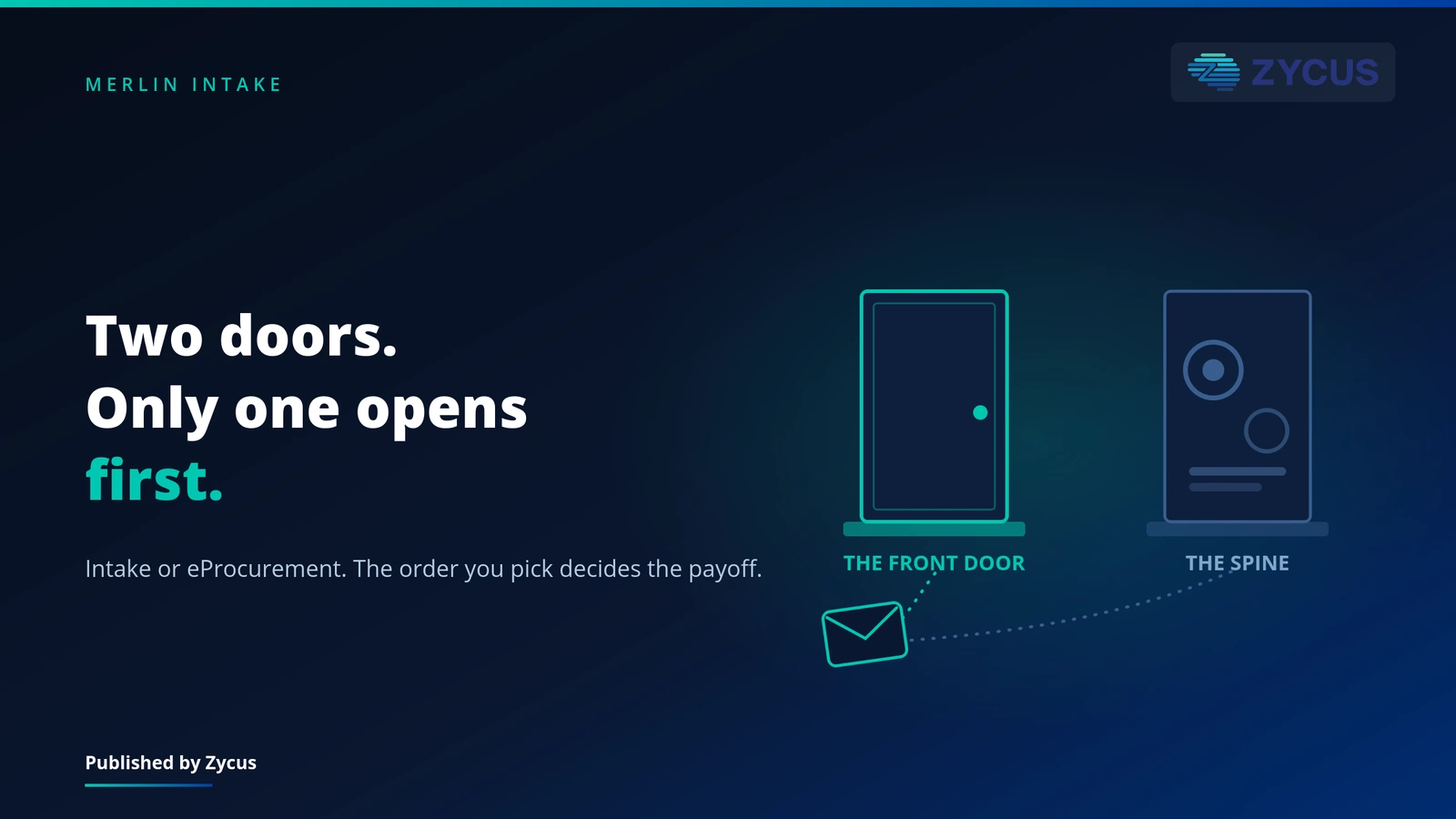

Procurement intake and eProcurement are not competing versions of the same tool. One improves how demand enters procurement. The other controls how approved demand becomes a purchase transaction. The right sequence depends on which part of that journey is failing today.
TL;DR
- Procurement intake creates a governed entry point for requests, captures the context procurement needs, applies policy, and routes demand into the right workflow.
- eProcurement digitizes operational purchasing, including purchase requisitions, approvals, catalogs, purchase orders, receiving, and related transaction controls.
- The boundary is not absolute. Modern intake platforms can orchestrate downstream work, and modern eProcurement suites may include guided buying or intake-like experiences.
- Start with intake when requests arrive through email, chat, spreadsheets, or other off-channel routes and procurement spends too much time clarifying what the business actually needs.
- Start with eProcurement when request capture is already controlled but catalog buying, approvals, purchase order creation, receiving, or transaction compliance are the bottleneck.
- If both layers need redesign, the right answer may be a coordinated rollout rather than forcing one universal sequence.
The Hackett Group reports that procurement workloads are projected to rise 8% in 2026 while head count and operating budgets decline. That makes sequencing an operating-capacity decision, not just a software choice. See the 2026 Procurement Key Issues study.
What is procurement intake?
Procurement intake is the entry and orchestration layer for purchase requests. It gives employees a consistent place to describe what they need, captures the information required to act, applies procurement policy, and routes the request to the right path. That path might be a catalog purchase, sourcing event, contract workflow, supplier onboarding step, approval, or another buying process.
The important distinction is that intake is centered on demand capture and triage. It does not have to replace the transaction system underneath it. Modern intake management can trigger or orchestrate downstream work, but it is still solving a different operating problem from the system that creates and manages the purchase transaction.
For example, Zycus Merlin Intake accepts requests through Microsoft Teams, Slack, email, and other channels, applies policy, and routes requests onward to the appropriate procurement workflow.
What is eProcurement?
eProcurement is the digital transaction layer for operational purchasing. It typically covers the purchase requisition, approval workflow, supplier and catalog selection, purchase order creation, receiving, and the controls that connect those steps. Some eProcurement systems also extend into invoicing or connect directly to accounts payable.
That makes eProcurement broader than simply converting a request into a purchase order. It governs how approved demand is bought, recorded, fulfilled, and controlled. Zycus eProcurement is designed around this operational purchasing flow, with Merlin Intake positioned as the front door to the requisition and buying experience.
There is overlap between categories. An eProcurement system may include guided buying, forms, or conversational request experiences. An intake platform may initiate sourcing, supplier onboarding, or buying actions. For implementation planning, it is more useful to compare the role each layer plays in your operating model than to rely only on product labels.
Procurement intake vs eProcurement at a glance
| Decision area | Procurement intake | eProcurement |
| Primary job | Capture, structure, validate, and route demand | Execute and control purchasing transactions |
| Typical starting point | An employee or business request | A purchase requisition or approved buying need |
| Typical workflows | Triage, policy checks, approvals, sourcing handoff, supplier or contract routing | Catalog buying, requisitions, approvals, purchase orders, receiving, transaction controls |
| Primary user problem | People do not know where to start or what information procurement needs | Buying is slow, manual, fragmented, or poorly controlled after the need is known |
| Common KPIs | Controlled-channel capture, first-pass completeness, routing time, reroute rate, adoption | PR-to-PO cycle time, catalog adoption, touchless orders, receiving accuracy, exception rate |
| Relationship to ERP | Can sit in front of ERP, S2P, and specialist tools | May sit beside the ERP or provide the procurement transaction layer, depending on architecture |
| Best first-investment signal | Requests arrive off-channel or incomplete | Requests arrive cleanly but transaction execution is the bottleneck |
A better question than “Which tool is better?”: Where does the problem begin?
The buying journey can fail before a purchase requisition exists or after it. Those failure points call for different first investments.
If requests arrive through uncontrolled channels, lack the information needed to act, or reach procurement only after a supplier has already been chosen, the problem starts at intake. If requests enter correctly but stall in approvals, catalogs, purchase order creation, receiving, or transaction controls, the problem sits further downstream.
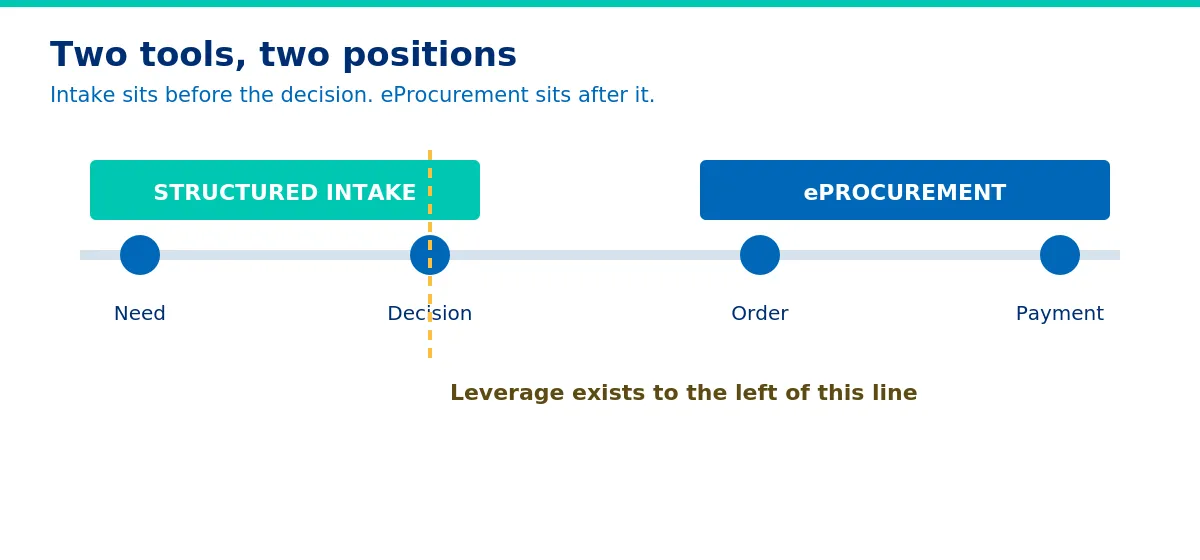
Figure 1: An illustrative way to separate front-door leakage from downstream transaction leakage.
Question one: how much demand reaches procurement through a controlled channel?
Start by measuring capture. What share of purchase requests enters through an approved channel before a supplier, price, or buying path has already been decided? If a meaningful share still arrives through email, chat, spreadsheets, or informal conversations, improving the transaction engine alone will not make that demand visible any earlier.
Compare total addressable demand with the volume of requests captured through a governed entry point and with spend under management. A low capture rate is a strong signal that the front door deserves attention. A high capture rate with weak downstream control points toward an execution problem instead.

Question two: how complete are requests when they enter the buying process?
A clean request contains enough context for the next person or system to act without sending it back for clarification. A simple diagnostic is to sample twenty recent requests and count how often procurement had to ask for missing scope, budget, category, supplier, delivery, contract, or approval information.
If the same questions are being asked repeatedly before a requisition can be created, the organization has an intake-quality problem. If requests are complete but the requisition-to-order process remains slow, the bottleneck is more likely to sit inside eProcurement or ERP execution.
APQC reports a median of 1,619 purchase orders processed per FTE for its order-materials-and-services measure and a median two-day cycle time from purchase requisition receipt to purchase order release in its separate cycle-time benchmark. Those are useful transaction benchmarks, but they start after a usable requisition exists. APQC purchase-order productivity benchmark | APQC requisition-to-PO cycle-time benchmark
Question three: what does your ERP or current eProcurement system already do well?
Do not assume the presence of an ERP means the transaction layer is adequate, and do not assume poor adoption means the underlying transaction capability is missing. Test the current state.
- Can the current system create and release purchase orders reliably at the required volume?
- Are approval limits and delegated authorities configured correctly?
- Can employees buy from contracted catalogs or approved suppliers without manual intervention?
- Are receipts, matching, and financial postings handled at the level the business needs?
- Is the real complaint missing functionality, or is it that employees struggle to start and navigate the process?
If transaction capability is fundamentally sound but the user experience before requisition creation is fragmented, an intake layer can address the problem without replacing working execution. If the transaction controls themselves are missing or unreliable, intake will not solve that gap.
Question four: which change carries more data, integration, and switching impact?
The original question of reversibility is useful, but it should not be reduced to “intake is easy to remove” and “eProcurement becomes the system of record.” Enterprise architectures vary. The ERP may remain the financial system of record even when a procurement suite manages requisitions and purchase orders.
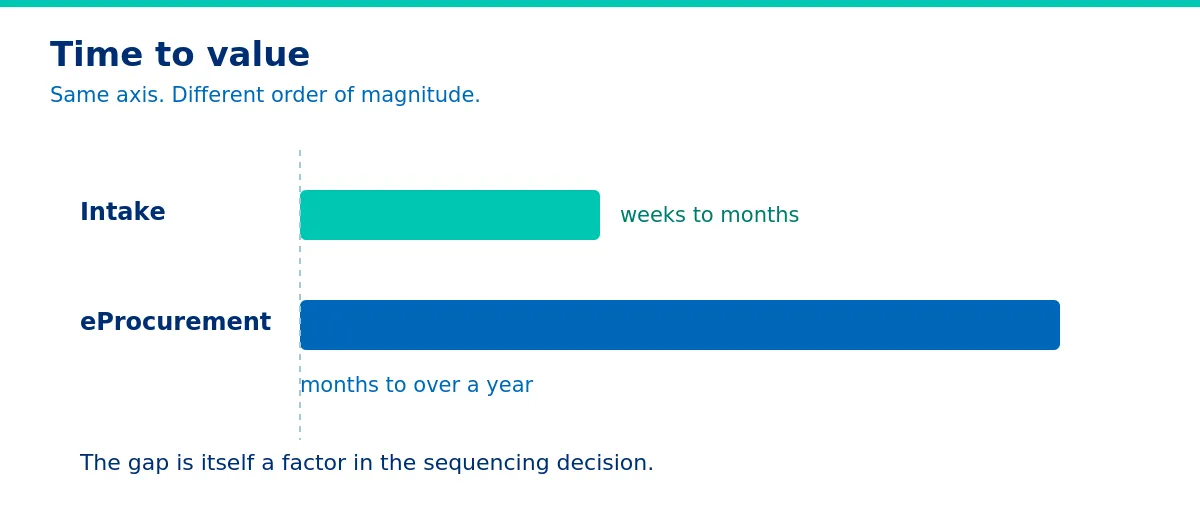
Instead, compare the change footprint. An intake layer can often be introduced above existing systems with a narrower transactional migration, but its scope still depends on the number of integrations, workflows, policy rules, and downstream actions it orchestrates. An eProcurement replacement usually touches more transactional data, catalogs, suppliers, approvals, accounting integration, and historical records. That can increase migration and change-management effort, but the exact difference is architecture-specific.

Decision scorecard: which capability should come first?
| Signal | Intake first | eProcurement first | Consider parallel design |
| Requests arrive by email/chat or through different forms | Strong | Weak | Possible |
| Frequent back-and-forth for missing request information | Strong | Weak | Possible |
| Requisition and approval flow is already stable | Strong | Weak | Possible |
| Catalog, PO, receiving, or matching controls are missing | Weak | Strong | Possible |
| ERP transaction capability cannot support required volume or policy | Weak | Strong | Strong |
| Major ERP/S2P transformation is already underway | Possible | Possible | Strong |
| Both user entry and transaction execution are being redesigned | Possible | Possible | Strong |
Metrics that reveal which layer is failing
Do not choose the first investment from feature comparisons alone. Pull a small baseline that shows where work is being lost or repeated.
| Metric | What it tells you | Primary layer |
| Controlled-channel capture rate | How much demand reaches procurement through the intended entry point | Intake |
| First-pass request completeness | How often a request can move forward without clarification | Intake |
| Request-to-route time | How long triage and ownership assignment take | Intake / orchestration |
| Reroute or manual override rate | Whether routing and policy logic match real operating practice | Intake / orchestration |
| PR-to-PO cycle time | How quickly an approved requisition becomes an order | eProcurement |
| Catalog adoption | How often users buy through governed supplier content | eProcurement |
| Touchless PO rate | How much routine purchasing executes without buyer intervention | eProcurement |
| Receiving or invoice exception rate | Where downstream transaction quality is breaking | eProcurement / P2P |
| Spend under management | Whether procurement has influence across the end-to-end flow | Cross-layer outcome |
When should procurement intake come first?
Intake is the stronger first move when the transaction layer is usable but demand reaches it badly. Typical signals include:
- Employees start purchases in email, Teams, Slack, spreadsheets, or unstructured forms.
- Procurement spends significant time clarifying scope, coding requests, finding the right owner, or explaining the process.
- Business users bypass the buying system because they do not know where to start.
- The ERP or current eProcurement system can execute purchase orders and approvals, but adoption is weak before requisition creation.
- Early policy checks, sourcing triage, contract checks, or supplier-routing decisions are happening manually.
In this scenario, structured intake can improve the quality and visibility of demand before it reaches the transaction system. The objective is not to create another form. It is to make the request easier for the employee and more actionable for procurement.
When should eProcurement come first?
eProcurement deserves priority when demand is already captured reliably but operational purchasing cannot execute it with the required control or scale. Typical signals include:
- Requisitions are complete, but approvals or purchase order creation are slow and manual.
- Catalogs, preferred-supplier buying, receiving, or purchasing controls are missing or fragmented.
- The existing ERP cannot support the organization’s transaction volume, user experience, or procurement policy requirements.
- Buyers manually convert approved demand into orders or repeatedly correct transaction data downstream.
- The organization needs a stronger digital procurement transaction layer before it can automate more of procure to pay.
In this scenario, a better front door will improve convenience but will not repair a weak purchasing engine.
When should you implement intake and eProcurement together?
Some transformations should not be forced into an intake-first or eProcurement-first answer. Parallel design makes sense when the organization is already replacing the procurement transaction layer and knows the user entry experience also needs to change.
- A new ERP or Source-to-Pay program is already funded and the request experience is part of the target operating model.
- The same policy, supplier, catalog, identity, and approval data will drive both intake and transaction execution.
- A global rollout requires one coherent change story rather than launching two unrelated user journeys.
- The organization wants intake to route directly into new sourcing, contracting, supplier, catalog, or purchase-order workflows from day one.
Parallel design does not require every capability to go live on the same day. The architecture and policy model can be designed together while user rollout is phased by region, category, or business unit.
Read More About What is ERP Procurement?
What does the combined model look like in practice?
Outokumpu Stainless USA provides a useful example of the combined architecture. The company selected Zycus for an end-to-end Source-to-Pay transformation that includes Merlin Intake and eProcurement alongside sourcing, contracts, supplier management, risk, eInvoicing, and autonomous negotiation. In the announced design, Merlin Intake serves as the unified front door for procurement engagement while the broader suite supports downstream procurement execution. Read the Outokumpu announcement.
The lesson is not that every organization should buy both at once. It is that the front door and the transaction layer solve complementary parts of the same operating model. The sequencing decision should follow the bottleneck, the existing architecture, and the amount of change the organization can absorb.
How does Merlin Intake fit with eProcurement and ERP?
Merlin Intake is designed to sit at the start of the procurement journey. Employees submit requests in natural language through Microsoft Teams, Slack, email, or other supported channels. The system interprets the need, captures the required context, applies policy, and routes the request into the appropriate sourcing, supplier, contract, catalog, or purchasing path.
That routing can connect to Zycus eProcurement or to existing ERP and third-party systems. This matters for organizations that do not need to replace every transaction system at the same time. It also means intake and eProcurement can be implemented as complementary layers rather than treated as mutually exclusive purchases.
The sequencing rule is simple: fix the first constraint that matters
Procurement intake and eProcurement are complementary capabilities. The wrong decision is not choosing one before the other. It is investing in a layer that is not causing the current bottleneck. Diagnose where requests lose structure, where transactions lose speed or control, what the existing ERP already handles, and how much change each option introduces. Then sequence the investment around that evidence.
Explore Merlin Intake | Explore Zycus eProcurement
Frequently Asked Questions
Q1. What is the difference between procurement intake and eProcurement?
Procurement intake captures, structures, validates, and routes demand before or as it enters the buying process. eProcurement manages the operational purchasing transaction, including requisitions, approvals, catalogs, purchase orders, and receiving. Modern platforms can overlap, but the operating roles remain different.
Q2. Do I need procurement intake if I already have eProcurement?
You may. If business users still start requests outside the eProcurement system or procurement must manually translate incomplete requests into requisitions, an intake layer can close that gap without replacing the transaction engine. If users already enter complete requests through a governed experience, the case for a separate intake investment is weaker.
Q3. Can procurement intake replace eProcurement?
Not in every architecture. Intake can orchestrate many downstream actions, but organizations still need a system that creates and controls purchasing transactions. That system may be eProcurement, an ERP, or another procure-to-pay platform.
Q4. Can eProcurement replace procurement intake?
Sometimes the eProcurement experience is sufficient, especially when it already gives users an intuitive way to start a request and routes non-catalog, sourcing, contract, and supplier needs correctly. The question is whether the existing entry experience captures all demand, not whether the product carries an eProcurement label.
Q5. Can we run procurement intake in front of our ERP?
Yes. That is a valid architecture when the ERP can manage the required purchase transactions and the larger problem is how employees initiate requests, how policy is applied, or how work is routed. Intake should integrate with the ERP rather than duplicate transaction data unnecessarily.
Q6. Is procurement intake cheaper than eProcurement?
There is no universal cost rule. Intake often has a narrower transaction and data-migration footprint, which can reduce implementation scope, but total cost depends on licensing, integrations, workflow complexity, change management, data requirements, and how much functionality overlaps with systems you already own.
Q7. How long does procurement intake take to implement compared with eProcurement?
There is no reliable generic timeline. Intake scope is driven by channels, policies, integrations, categories, and downstream workflows. eProcurement scope is driven by catalogs, supplier enablement, requisition and PO design, receiving, financial integration, data migration, and geography. Compare implementation plans for your architecture rather than using a blanket weeks-versus-months rule.