







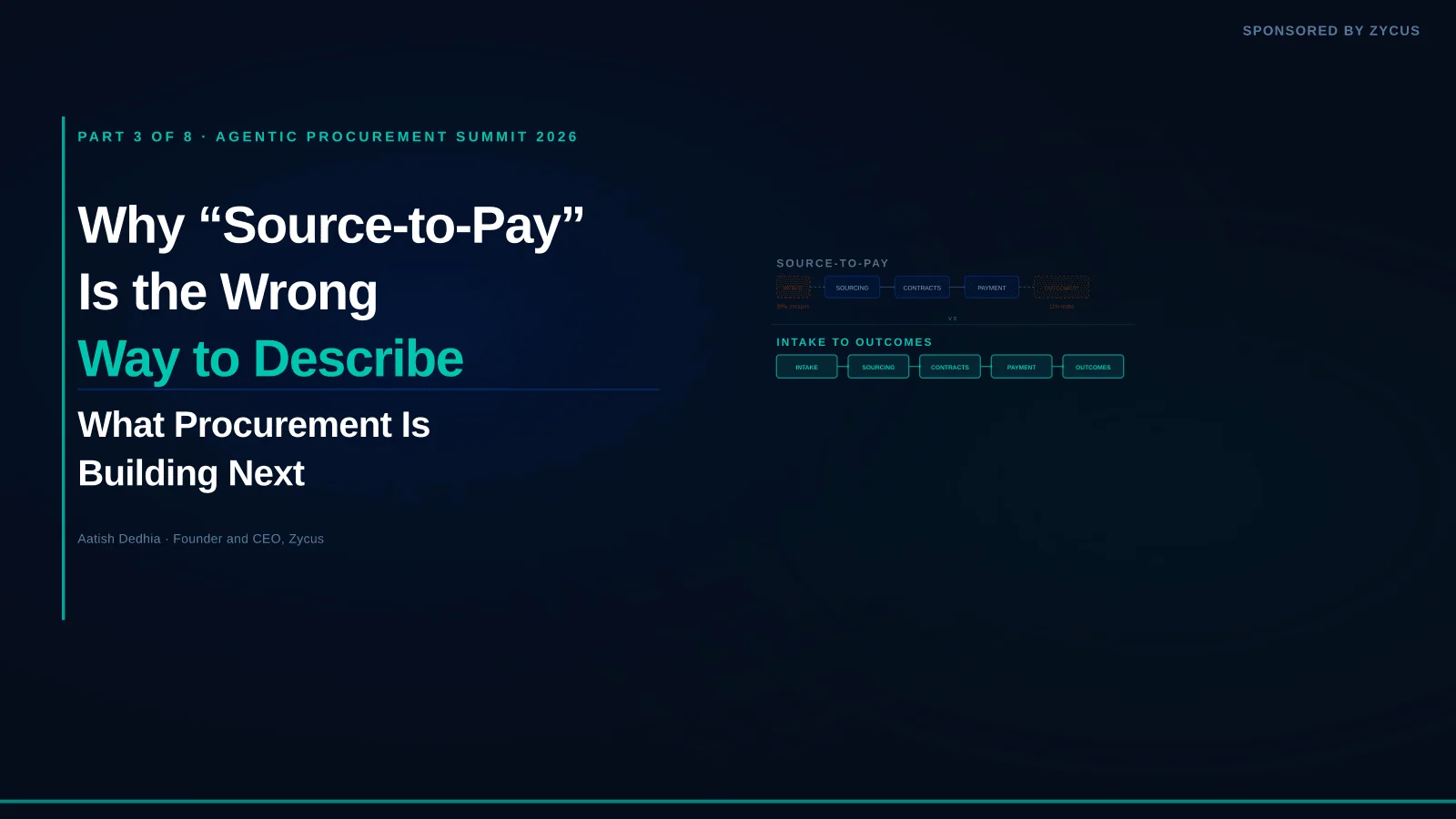

S2P describes a software system. Intake to Outcomes describes the result. After two decades of the first framing, procurement is building toward the second, and the architecture required is not what the category name implies.
From the Agentic Procurement Summit 2026 · Session 2 · Aatish Dedhia, Founder and CEO, Zycus
TL;DR
- The previous blog in this series argued that agentic AI requires a factory, not a better steam engine. This blog names the specific construction most S2P organizations are still missing: a front door that actually works.
- Source-to-pay describes where software operates. It says nothing about the spend that never reaches it, or the time lost before a sourcing event begins.
- APQC benchmarking shows a nearly 4x gap in the cost of processing a single purchase order between least and most efficient organizations. That gap is driven by front-end structure.
- WorldCC’s 2025 research found organizations lose 11% of contract value after signature. S2P manages the middle. It does not protect what enters at the front, and it does not lock in what leaves at the back.
- Aatish Dedhia, Founder and CEO of Zycus, presents the full Intake-to-Outcomes thesis at APS 2026. → Watch the session
What Source-to-Pay Actually Describes
Source-to-pay is a category label. It describes the arc of a procurement software system from the sourcing event to the payment. For twenty years, it served as the organizing frame for technology investment, platform strategy, and CPO conversations with the board.
It does not describe a mission. It does not describe an outcome. It describes where a particular category of software operates. That distinction has become the most consequential question in enterprise procurement.
The previous blog in this series argued that agentic AI requires a factory, not a better steam engine: a system that reorganizes how work flows end to end. This blog names the specific room the factory is still missing. It is the first one on the left when you walk in the door.
The Gap in that Description
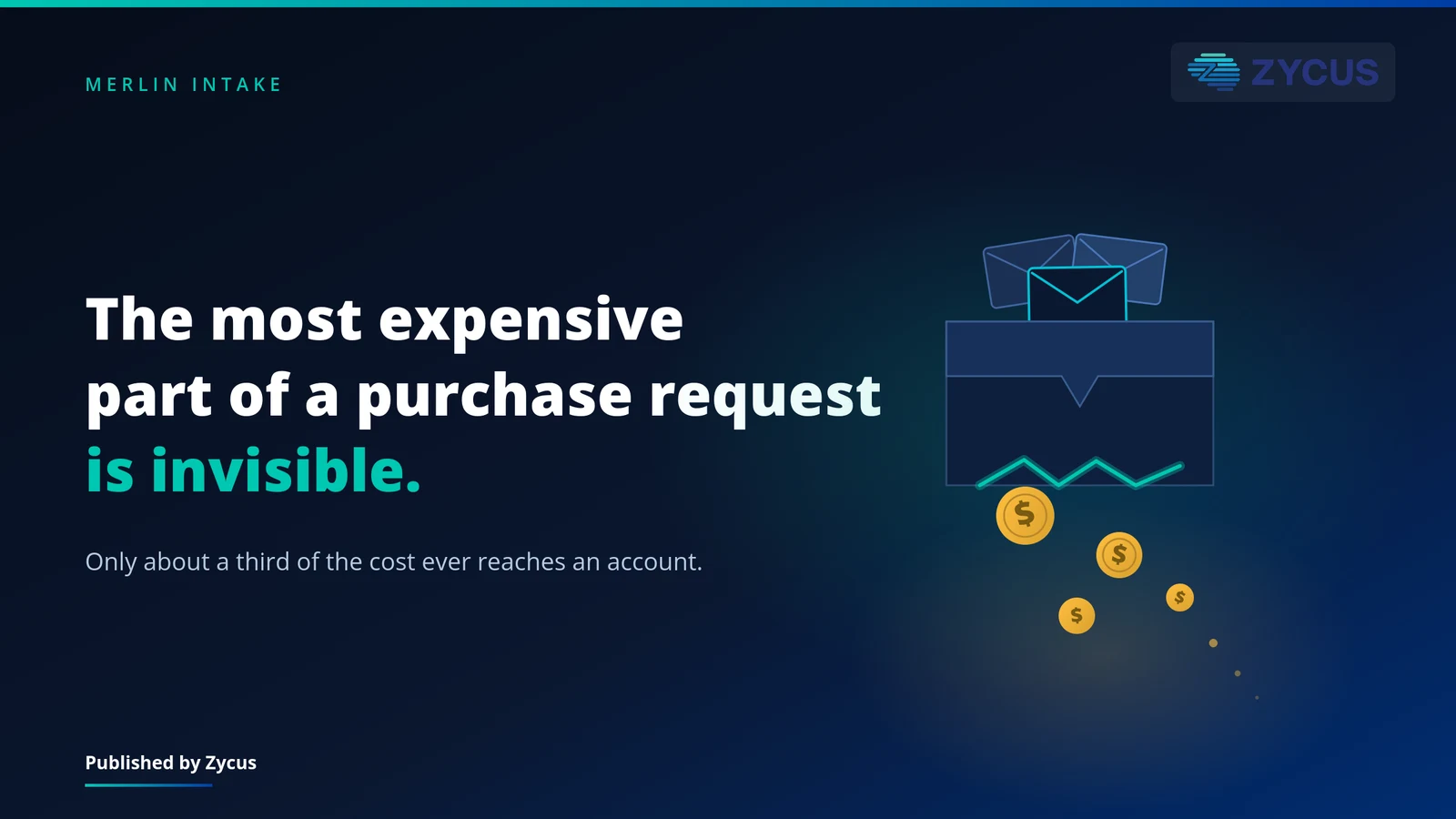
Only 61.1% of spend is under management at the average procurement organization, according to Ardent Partners’ CPO Rising 2025 research. Best-in-class teams reach 91.7%. The gap is not explained by sourcing capability, contract management maturity, or payment automation. Those are all downstream. The gap is explained by what happens before spend reaches the S2P system at all.
That 39% does not bypass sourcing. It bypasses the front door. It arrives via email, through a supplier the CFO already knows, through the IT team that decided not to raise a formal request. Source-to-pay was designed for the spend that made it through. It had nothing to say about the spend that never arrived.
The Front Door that Was Never Fixed
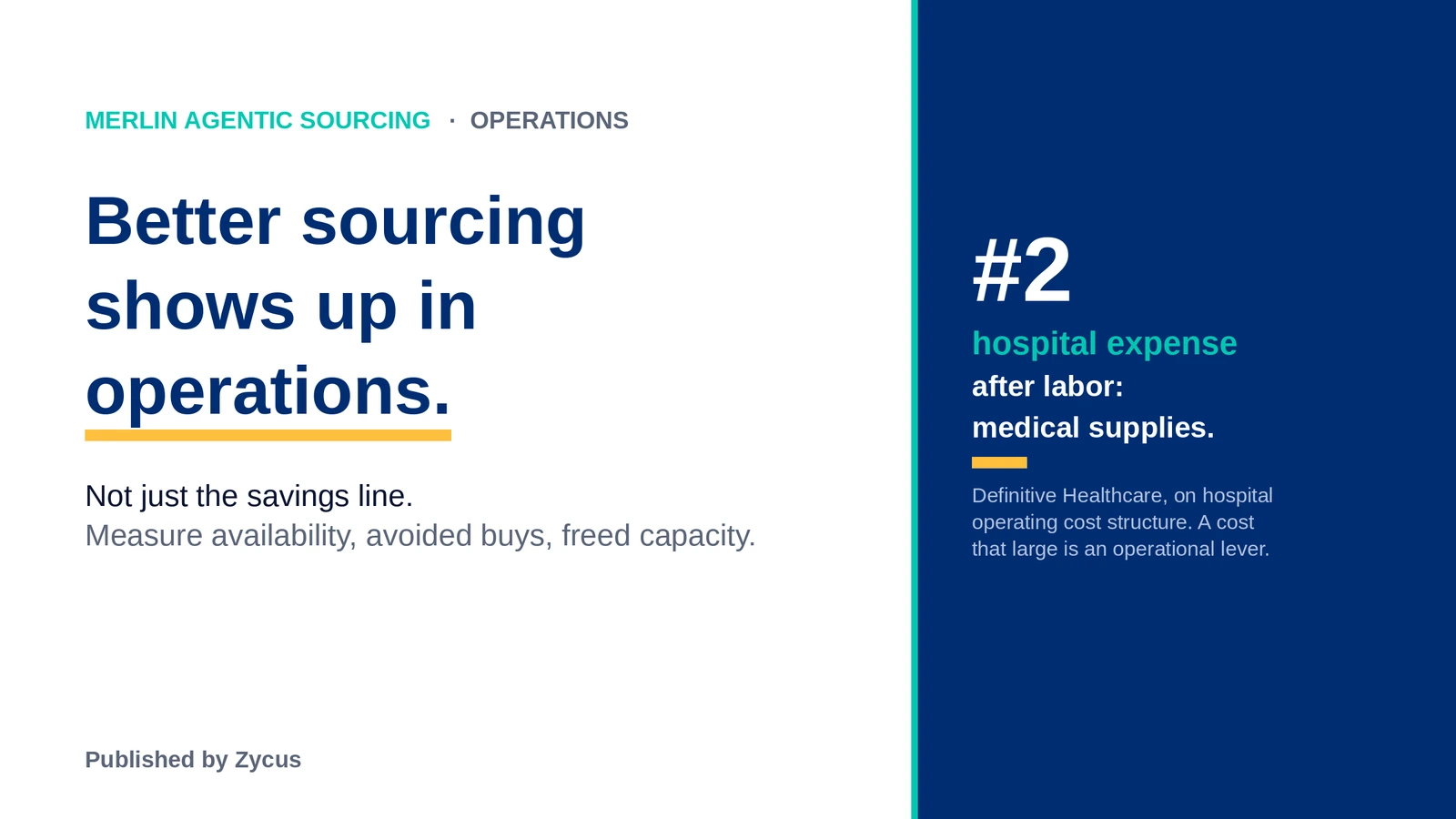
APQC’s benchmarking data shows that organizations spend anywhere from $14 to more than $54 to process a single purchase order, a nearly 4x gap between least and most efficient organizations driven almost entirely by how the intake stage is structured. The efficient organizations have a clean path from request to routing: consistent classification, defined approvals, automatic policy checks. The rest have email threads, exceptions that restart the queue, and rework that multiplies before a purchase order is ever raised.
Intake was procurement’s broken front door long before agentic AI existed. What AI does is make the break structural: every automated downstream step is only as fast as the intake that feeds it. The most capable sourcing agents will find themselves waiting on a misclassified request in an approval queue that nobody owns.
Why the Bottleneck Moves Upstream with Agentic AI
As sourcing agents run faster, they expose what is behind them. As negotiation agents close deals in hours, they reveal contract-management processes that still take weeks. As payment agents match invoices automatically, they surface the purchase orders that were never issued correctly. Each layer of automation removes the manual work that used to absorb the front-end chaos.
The intake problem does not disappear under automation pressure. It becomes the constraint. The organizations that understand this are not adding intake tools to their existing stacks. They are asking a more fundamental question: what does the front door need to know to route every request correctly the first time, without a human in the loop?
What S2P Still Gets Right, and Where it Ends
None of this makes source-to-pay wrong. The sourcing, contracting, and payment infrastructure it describes is essential. The problem is not that S2P fails at what it was designed to do. The problem is that what it was designed to do is not the full picture.
WorldCC’s 2025 research found that organizations lose an average of 11% of contract value after agreements are signed: not at the negotiation table, but in delivery, in obligations negotiated and never tracked, in price adjustments missed, in auto-renewals on unfavorable terms. S2P manages the middle of the procurement lifecycle. It does not protect what leaks out at the back.
The system optimizes what is already in it. The question is what never made it in, and what escaped after the contract was signed.
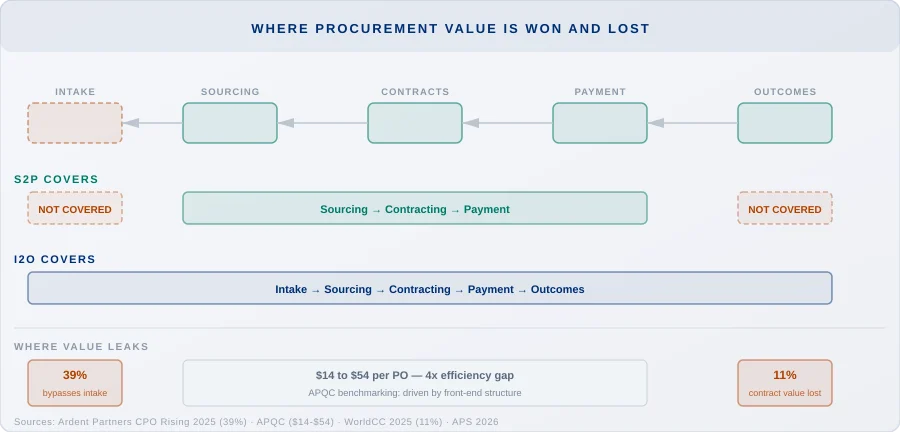
S2P manages what enters the system. I2O is accountable for what happens at the front door and what is delivered at the end.
What Intake to Outcomes Actually Means
At APS 2026, Aatish Dedhia made the distinction precisely: source to pay describes a software system; intake to outcomes describes the result. The shift is not a rebranding. It is a reorientation of what the whole system is supposed to produce.
Intake-to-Outcomes starts where the business user starts: at the moment of a need, not the moment of a correctly submitted purchase requisition. It ends where procurement’s value is delivered: the saving captured, the contract executed, the supplier integrated, the payment made. The S2P stack is the engine underneath. The engine has been there for twenty years. What has been missing is the frame that starts at the right point and measures the right outcome.
The Architecture that Makes it Real
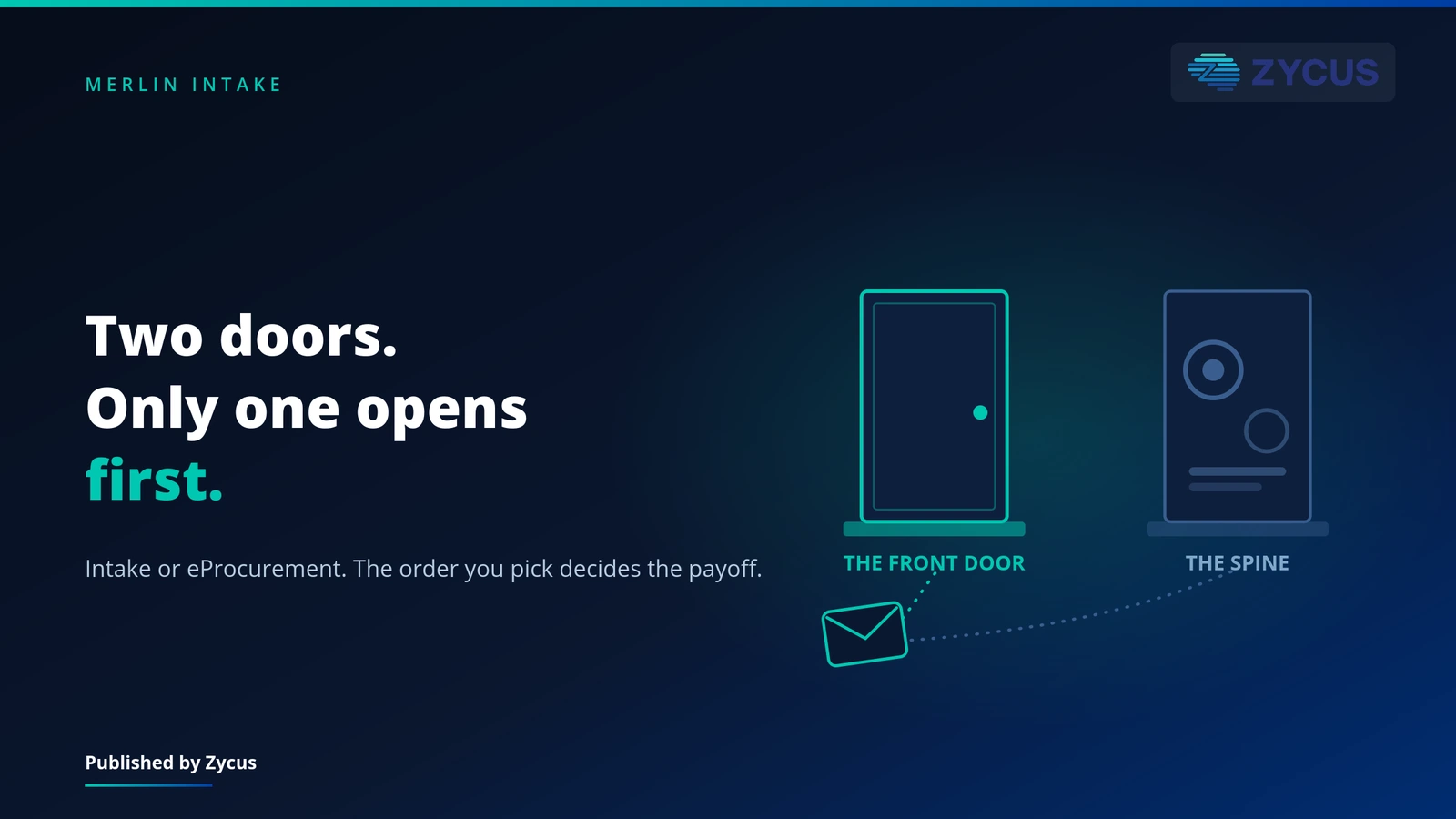
The resolution is one intelligent front door for every request: not a routing tool on top of the existing system, but an intake layer built into the architecture that governs everything behind it.
The Merlin Agentic Platform is built on this principle. Merlin Intake, the AI Control Tower for every procurement request, classifies, validates budget, applies policy, and routes autonomously before any human needs to intervene. At Zycus, built-in beats bolt-on because the AI needs context to act correctly: category policy, supplier history, contract status, compliance rules. When intake, sourcing, contracts, suppliers, invoices, and spend data share one architecture, the agents can act on the full picture. Miss one layer and the outcomes fail.
The Question Procurement is Answering in 2026
The question for every procurement organization investing in agentic AI is not whether the front door needs fixing. It does. The question is whether the fix will be a tool attached to the outside of an existing system, or a front door built into the architecture that governs everything it feeds.
Source-to-pay described the software. Intake-to-Outcomes describes the ambition. The organizations that close the gap between those two frames build the most durable advantage.
Agentic Procurement Summit 2026 — On-Demand Access. Aatish Dedhia, Founder and CEO of Zycus, presents the full Intake-to-Outcomes thesis and the architecture behind it. Sponsored by Zycus. → Watch the session
Previous blog in the series: Copilots Answer Questions. Agents Achieve Outcomes. Procurement Needs to Know the Difference
Next blog in the series: Where Your Procurement Organization Actually Sits on the Agentic AI Curve
FAQs
Q1. How is Intake-to-Outcomes different from source-to-pay?
S2P describes where software operates. I2O describes what procurement delivers. Thirty-nine percent of spend bypasses the front door and never reaches the S2P system. I2O starts where the need starts.
Q2. If we already have an S2P system, do we need a separate intake tool?
Not a separate tool, but a built-in one. A bolt-on intake layer lacks the policy context, supplier history, and category data the AI needs. The front door works only when it shares the architecture of everything behind it.
Q3 . What is causing the 39% of spend that bypasses procurement?
Broken front-end experience. Business users choose email or shadow channels because the formal path is slower. When intake routes correctly and automatically, compliance follows. Friction is the problem; removing it is the solution.
Q4. Is the 11% contract value erosion a procurement problem or a contracts problem?
Both. WorldCC’s research shows value leaks through governance gaps and untracked obligations across procurement and legal. An I2O architecture helps because data flows from intake to contract to delivery instead of stopping at signature.
Q5. Where should we start if our intake process is broken?
Map every path a business user uses to buy outside the formal system. Then ask: what makes the workaround easier than the formal route? The answer defines what an intelligent front door needs to solve first.
Q6. Does fixing intake require replacing our existing S2P system?
No. S2P is the engine. Intake is the front door. Add intake as a standalone tool and it runs on partial data. The priority is ensuring both share the same architecture.
Related Reads: