




The finance leader’s guide to turning trade payables from a back-office liability into a strategic lever for working capital, supplier trust, and competitive advantage.
TL;DR
- Trade accounts payable are the amounts a company owes suppliers for goods and services purchased on credit — they sit on the balance sheet as current liabilities and directly shape cash flow timing.
- Managing trade payables strategically can release trapped working capital, capture early-payment discounts worth 1–3% of invoice value, and improve cash forecast accuracy by 20–30%.
- Late payments remain endemic: only 5% of businesses consistently pay on time, while 47% pay at least one in ten invoices late — damaging supplier trust and risking supply chain disruptions.
- The key metric to watch is Days Payable Outstanding (DPO): extending DPO improves short-term liquidity, but pushing it too far erodes supplier relationships and triggers stricter credit terms.
- AP automation reduces invoice processing costs from ~$15 per invoice to under $3, cuts cycle times from 14+ days to 2–4 days, and frees teams for strategic work — the global AP automation market is projected to reach $11 billion+ by 2030.
- Zycus’s Merlin AI platform connects trade payables to procurement and treasury decisions in real time — automating invoice processing, optimizing payment timing, and strengthening supplier relationships at scale.
Every dollar sitting in trade accounts payable is a decision waiting to be made. Pay too early, and you surrender cash your business could deploy elsewhere. Pay too late, and you erode the supplier relationships your operations depend on. Get the timing right, and trade payables become one of the most powerful levers for working capital optimization.
Yet most organizations still treat trade payables as a back-office processing function — not a strategic one. According to the PwC Working Capital Study 2025/26, days payable outstanding (DPO) has increased by more than 14% across North America since 2015, masking worsening performance in receivables and inventory. The implication is clear: companies are stretching supplier payment terms as a cash flow band-aid rather than addressing working capital holistically.
This guide explains what trade accounts payable really are, why they matter far beyond the balance sheet, and how modern AI-powered platforms are transforming payables from a cost center into a competitive advantage.
What are Trade Accounts Payable?
Trade accounts payable — also called trade payables or trade payable — represent the money a company owes to suppliers for goods or services purchased on credit in the ordinary course of business. When your company receives raw materials, inventory, or professional services and agrees to pay later (typically within 30, 60, or 90 days), that obligation is recorded as a trade payable.
On the balance sheet, trade payables appear as a current liability. On the cash flow statement, however, they tell a different story: an increase in trade payables means cash has been conserved (you received goods but haven’t paid yet), while a decrease means cash has flowed out to settle those obligations.
| Term | Definition | Why It Matters |
| Trade Accounts Payable | Amounts owed to suppliers for goods/services purchased on credit | The core operational liability driving cash flow timing |
| Accounts Payable (AP) | All short-term amounts owed to creditors — including trade and non-trade | Broader category; trade payables are a subset |
| Days Payable Outstanding (DPO) | Average number of days to pay suppliers: (AP ÷ COGS) × Days | The key metric linking payables management to cash flow |
| Payment Terms | Agreed timeframe for settling invoices (e.g., Net 30, Net 60, 2/10 Net 30) | Defines the window for cash flow optimization |
| Cash Conversion Cycle (CCC) | DSO + DIO − DPO: measures how fast cash moves through the business | Trade payables (via DPO) directly shorten the cycle |
Understanding the distinction between trade payables and the broader accounts payable category matters for financial reporting and analysis. Trade payables arise exclusively from core operational purchases — raw materials, components, services — while accounts payable may also include non-trade items like utilities, rent, or one-time professional fees.
Explore Zycus’ Solution: AP Automation: End-to-End Accounts Payable Software
How do Trade Accounts Payable Impact Cash Flow?
Trade payables act as a form of interest-free, short-term financing from your suppliers. Every day you hold cash before paying an invoice, that capital is available for operations, investment, or unexpected needs. This is why McKinsey’s research on procurement transformation identifies payment term optimization as one of the most direct levers for improving working capital.
The mechanics are straightforward but the strategic implications are significant.
Extending payment terms improves short-term liquidity: If your current terms are Net 30 and you negotiate Net 60, you hold onto cash for an additional 30 days across every invoice. For a company processing $50 million in annual trade payables, that shift alone can free up $4–6 million in working capital at any given time.
But stretching payables too far destroys value: The PwC Working Capital Study 2025/26 warns that using DPO as a “quick fix” is no longer sustainable. Extended payment terms may conserve cash in the short run, but they strain supplier relationships, invite late-payment penalties, and can trigger stricter credit terms — ultimately increasing costs.
Early-payment discounts are often worth more than the cash flow benefit of holding: A standard 2/10 Net 30 discount — 2% off for paying within 10 days — equates to an annualized return of approximately 36%. When your cost of capital is 5–10%, taking that discount is almost always the smarter financial decision. Yet Forrester’s research on AP invoice automation finds that most organizations still miss the majority of available discounts due to slow processing and poor visibility.
The cash conversion cycle depends on payables efficiency: DPO is the one component of the cash conversion cycle (CCC = DSO + DIO − DPO) that directly improves the cycle when it increases. A higher DPO shortens CCC, meaning cash circulates faster through the business. The Hackett Group’s 2025 U.S. Working Capital Survey found a 4% improvement in cash conversion cycles across the largest U.S. public companies, driven primarily by a 3% increase in DPO through smarter supplier payment strategies.
Why Do Trade Payables Matter for Supplier Relationships?
Cash flow optimization cannot come at the expense of the suppliers who keep your operations running. This is the central tension in trade payables management — and the reason it requires strategic coordination between procurement, AP, and treasury.
The data on late payments is sobering. Industry research shows that only about 5% of businesses consistently pay all invoices on time. Meanwhile, 47% of companies admit to paying at least one in ten invoices late, and 40% of AP teams cite strained vendor relationships as a major concern. The consequences compound quickly: late payments erode trust, trigger stricter credit terms, reduce priority during supply shortages, and eliminate access to volume discounts or preferential pricing.
On the other hand, organizations that pay reliably — and communicate proactively about payment timing — unlock significant supplier value.
| Payment Behavior | Supplier Impact | Business Outcome |
| Consistent on-time payment | Builds trust and preferred-buyer status | Better pricing, priority fulfillment, extended credit |
| Strategic early payment | Strengthens partnership; signals financial health | 1–3% discounts, improved terms on future contracts |
| Chronic late payment | Erodes trust; triggers risk reassessment | Stricter terms, supply interruptions, reputational damage |
| Unpredictable payment patterns | Creates uncertainty; increases supplier costs | Higher prices (risk premiums built into quotes) |
McKinsey’s research on procurement highlights that the CPO role is evolving into a “chief partnership officer” — where external supplier relationships are as strategic as internal functions. In this model, trade payables management is not a back-office task. It is a supplier relationship strategy executed through AP.
The Association for Financial Professionals (AFP) has similarly emphasized that organizations embedding payment timing into their broader supplier relationship management (SRM) frameworks consistently outperform peers on cost, quality, and supply chain resilience.
What are the Key Metrics for Managing Trade Accounts Payable?
Effective trade payables management requires tracking a small set of interconnected metrics. Here are the ones that matter most:
Days Payable Outstanding (DPO) = (Average Accounts Payable ÷ Cost of Goods Sold) × Number of Days. A rising DPO signals you are retaining cash longer — positive for liquidity if supplier relationships remain healthy. A declining DPO may indicate you are paying faster than necessary or losing negotiating leverage.
Accounts Payable Turnover Ratio = Net Credit Purchases ÷ Average Accounts Payable. This tells you how many times per period you pay off your suppliers. A ratio of 6, for example, means you pay suppliers roughly every 61 days.
Early Payment Discount Capture Rate = Discounts Taken ÷ Discounts Available. Best-in-class AP teams capture 80%+ of available discounts. The average organization captures less than 25%.
Invoice Processing Cost = Total AP Department Cost ÷ Number of Invoices Processed. The benchmark for manual processing is approximately $15 per invoice. Automated AP organizations reduce this to $2–3 per invoice — a reduction of 80% or more.
Invoice Processing Cycle Time = Average days from invoice receipt to payment execution. Manual processes average 14.6 days. Automated processes bring this down to 2–4 days, according to industry benchmarks.
How does AP Automation Transform Trade Payables Management?
The global AP automation market was valued at over $6 billion in 2025 and is projected to exceed $11 billion by 2030, growing at a CAGR of 12–21%. This growth reflects a fundamental shift: organizations are recognizing that manual payables processing is too slow, too expensive, and too error-prone for modern finance.
According to Deloitte’s CFO Signals survey, 80% of CFOs plan to embed automation and digital technologies in their finance operations, with AP identified as one of the highest-ROI areas for investment. The Gartner Magic Quadrant for Source-to-Pay Suites now evaluates AP automation capabilities as a core component of enterprise procurement platforms — not a standalone category.
| Manual AP Process | Automated AP Process | Impact |
| Paper invoices, manual data entry | AI-powered OCR and intelligent capture | 75% reduction in processing time |
| Email-based approvals, routing delays | Automated workflow routing with escalation rules | 2–4 day cycle vs. 14+ days |
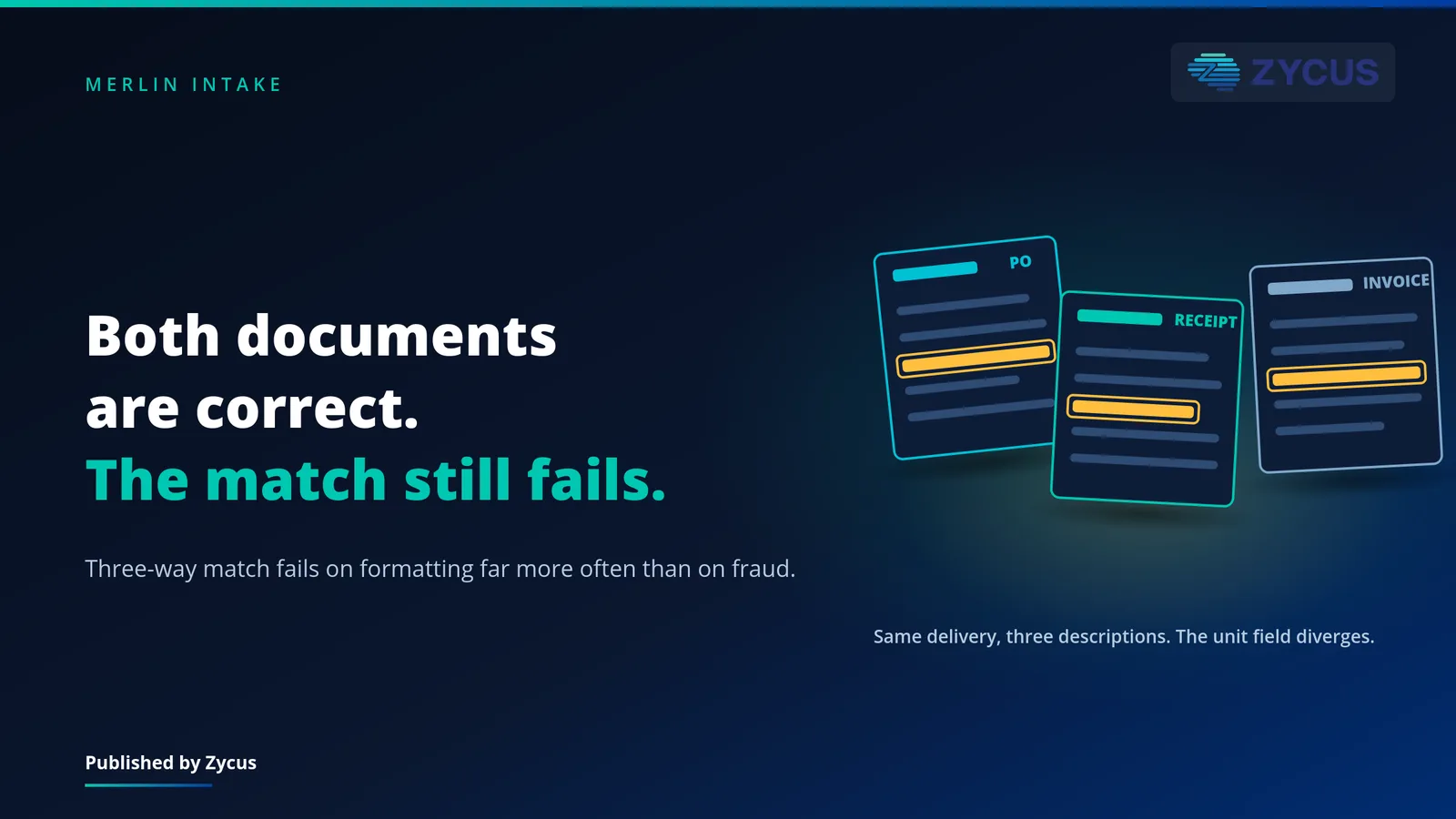
| Manual 3-way matching | Automated PO-receipt-invoice matching with exception flagging | 90%+ touchless processing rates |
| Reactive fraud detection | AI-driven anomaly detection and duplicate prevention | 40–60% reduction in fraud incidents |
| Spreadsheet-based payment scheduling | Dynamic payment optimization based on cash position | 3x improvement in discount capture |
65% of AP teams now partner with their treasury department to guide cash flow and payment timing decisions — up significantly from prior years. This convergence of AP and treasury is where trade payables management becomes truly strategic: payment decisions informed by real-time cash positions, not arbitrary schedules.
How Zycus Transforms Trade Accounts Payable into a Strategic Advantage
Zycus approaches trade accounts payable not as an isolated function but as a critical connector between procurement decisions, cash flow management, and supplier relationships. Through its Merlin AI platform, Zycus embeds intelligence into every stage of the payables lifecycle.
- Merlin AP Agent automates invoice capture, validation, multi-way matching, and exception handling with AI — reducing processing costs by up to 80% and cutting cycle times from weeks to days. Real-time payables visibility feeds directly into cash forecasting.
- Merlin Intake Agent captures procurement demand at the point of request, ensuring committed spend is visible to AP and treasury the moment it is approved — not when the invoice arrives weeks later.
- Merlin Analytics Agent provides on-demand insights into payment patterns, DPO trends, discount capture rates, and supplier payment performance — giving finance leaders the data they need to optimize trade payables strategically.
- Merlin Autonomous Negotiation Agent (ANA) negotiates payment terms and pricing at scale for tail-spend suppliers, ensuring every trade payable reflects the best available terms without manual intervention.
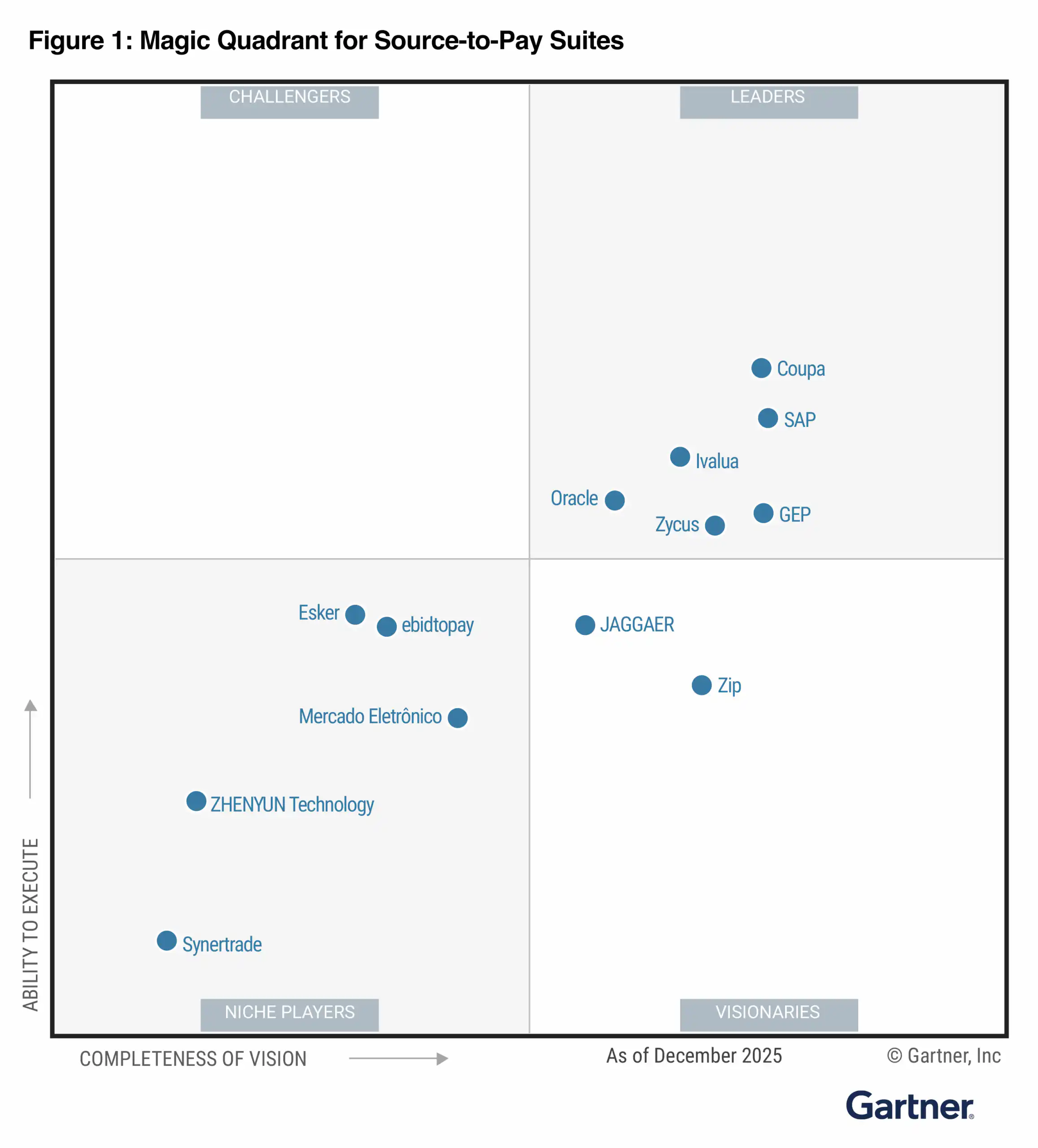
Recognized as a Leader in the 2026 Gartner Magic Quadrant for Source-to-Pay Suites and a Leader in the IDC MarketScape for AI-Enabled Source-to-Pay, Zycus helps organizations transform trade payables from a cost center into a working capital advantage.
What Results Does Strategic Trade Payables Management Deliver?
| Performance Metric | Before Optimization | After Optimization | Improvement |
| Invoice processing cost | ~$15 per invoice | $2–3 per invoice | 80%+ reduction |
| Invoice cycle time | 14+ days | 2–4 days | 70–80% faster |
| Early payment discount capture | 15–25% | 70–85% | 3–4x increase |
| DPO optimization | Unmanaged / default terms | Strategically calibrated to cash position | 10–20 day improvement |
| Supplier satisfaction | Reactive, complaint-driven | Proactive, data-driven engagement | Measurable trust improvement |
| Working capital released | Baseline | +$2M–$10M annually | Significant |
| Touchless invoice processing | Under 20% | 70–90% | 4x+ improvement |
What is the Future of Trade Accounts Payable?
The future of trade payables is autonomous, predictive, and deeply connected to every other financial function.
AI agents will manage the entire invoice-to-payment lifecycle with minimal human intervention — from intelligent capture to dynamic payment optimization based on real-time cash positions, supplier risk scores, and available discount terms. Forrester’s 2026 AP outlook identifies agentic AI as the defining trend in AP automation, enabling autonomous exception handling and prescriptive payment decisions.
Real-time supplier payment networks will replace batch processing. API-driven connectivity between buyers, suppliers, and financial institutions will make payment status as transparent as package tracking — strengthening trust and eliminating the information asymmetry that strains supplier relationships today.
McKinsey’s analysis of procurement transformation projects that AI-enabled procurement functions will be 25–40% more efficient, with trade payables management becoming a fully integrated component of strategic spend management rather than a standalone process.
The organizations that will lead are those connecting trade payables to procurement and treasury in real time — using every payment as a data point for smarter cash decisions and stronger supplier partnerships.
Ready to turn your trade payables into a working capital advantage? Book a demo with Zycus and see how the Merlin AI platform connects AP, procurement, and cash decisions for smarter payments and stronger supplier partnerships.
FAQs
Q1. What is the difference between trade accounts payable and accounts payable?
Trade accounts payable are amounts owed specifically to suppliers for goods and services purchased on credit in the normal course of business. Accounts payable is the broader category that includes trade payables plus non-trade obligations like utilities, rent, and professional fees.
Q2. How do trade accounts payable affect cash flow?
Trade payables act as interest-free short-term financing. An increase in payables conserves cash (goods received, not yet paid for). A decrease means cash has been used to settle supplier obligations. Managing the timing strategically — through DPO optimization and discount capture — directly improves working capital.
Q3. What is a good Days Payable Outstanding (DPO)?
There is no universal “good” DPO — it depends on industry, supplier relationships, and cash flow needs. The key is to balance liquidity benefits with supplier trust. The PwC Working Capital Study notes that DPO has risen 11.5% globally since 2015, but warns against using DPO extension as a cash flow quick fix.
Q4. Why do late payments hurt supplier relationships?
Late payments signal financial instability or disrespect, causing suppliers to reassess risk. Consequences include stricter credit terms, higher pricing (risk premiums), deprioritized fulfillment, and potential supply disruptions. Only 5% of businesses consistently pay on time.
Q5. How much can AP automation save on invoice processing?
AP automation typically reduces per-invoice processing costs from ~$15 to $2–3 (80%+ reduction), cuts cycle times from 14+ days to 2–4 days, and enables 70–90% touchless processing. The global AP automation market is projected to reach $11+ billion by 2030.
Q6. What is the 2/10 Net 30 discount and why does it matter?
It means the buyer gets a 2% discount if they pay within 10 days; otherwise, the full amount is due in 30 days. The annualized return of taking this discount is approximately 36% — making it almost always more valuable than holding the cash, assuming adequate liquidity.
Q7. How does Zycus help manage trade accounts payable?
Zycus’s Merlin AI platform automates the full invoice-to-payment lifecycle — from AI-powered capture and matching to dynamic payment optimization and autonomous term negotiation. By connecting AP to procurement and treasury data in real time, Zycus transforms trade payables into a strategic lever for working capital and supplier relationships.
Related Reads:
- The Ultimate Guide to Accounts Payable 2026: Process, Automation & Best Practices
- Procure to Pay Vs Accounts Payable: Efficient Spend Management Guide
- Six Habits of Highly Effective Accounts Payable Managers
- Leveraging Accounts Payable Automation to Stay Ahead in a Competitive Market
- eBook: AP Automation: Driving Effective Supplier communications, Fraud Detection, and Compliance
- Whitepaper: What CFOs Need to Know Now about AP Automation ROI