








TL;DR
- The majority of procurement leaders plan agentic AI deployment within 12 months — but most lack a structured approach.
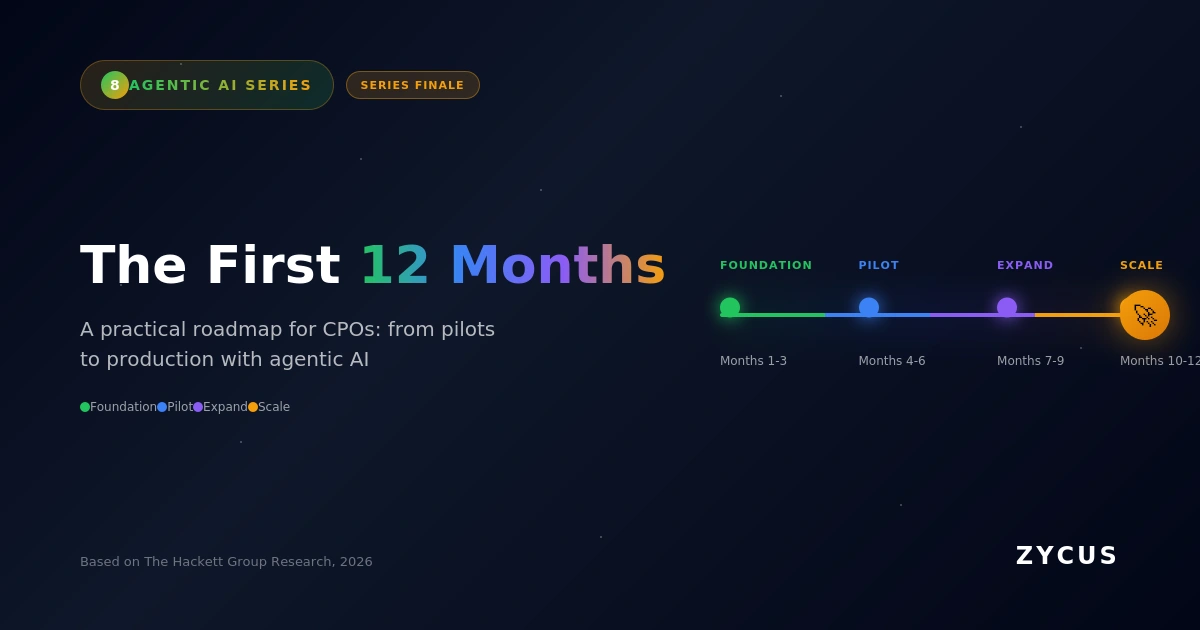
- Months 1-3: Focus on foundation — assess readiness, select use cases, align stakeholders.
- Months 4-6: Launch pilots in controlled environments — spend analytics, intake management, market intelligence.
- Months 7-9: Expand successful pilots, address integration gaps, build change management capability.
- Months 10-12: Scale to production, establish governance, measure and communicate results.
Throughout this series, we’ve explored the opportunities, challenges, and strategic decisions surrounding agentic AI in procurement. Now it’s time to translate insights into action.
The Hackett Group’s 2026 research shows that most procurement leaders plan to deploy agentic AI within the next 12 months. But planning and executing are different things. Organizations with 63% piloting maturity still show only 19-29% strategic maturity — a gap that explains why so many initiatives stall.
This roadmap provides a practical month-by-month framework for CPOs who want to move from experimentation to production without the false starts and expensive resets that plague most AI initiatives.
Months 1-3: Build the Foundation
Before selecting vendors or launching pilots, you need three things in place:
Honest readiness assessment. Evaluate your integration maturity, data quality, and organizational change capacity. The findings from this assessment should shape which use cases you pursue first.
Use case prioritization. Start with areas where current processes are well-documented, data is relatively clean, and the value of automation is clear. Spend analytics, intake management, and market intelligence are common starting points.
Stakeholder alignment. Bring IT, Finance, and Legal into the conversation early. Define roles, agree on success metrics, and secure budget commitment. The 12% budget allocation trend identified by Hackett reflects organizations that have made this commitment explicit.
12-Month Agentic AI Roadmap for Procurement
| Phase | Focus Areas | Key Deliverables |
| Months 1-3
Foundation |
Readiness assessment
Use case selection Stakeholder alignment |
Maturity scorecard
Prioritized use case list Signed governance charter |
| Months 4-6
Pilot |
Controlled deployment
User training Performance baseline |
Working pilot
Trained user cohort Measured results |
| Months 7-9
Expand |
Additional use cases
Integration hardening Change management |
Multi-process coverage
Production-grade integrations Adoption metrics |
| Months 10-12
Scale |
Production deployment
Governance operationalized Value communication |
Scaled deployment
Sustainable operations Business case validation |
Source: Zycus Framework based on The Hackett Group Research, 2026
Months 4-6: Launch Pilots
With foundations in place, deploy your first AI capabilities in controlled environments:
Start where data is strongest. If your spend data is well-organized, begin with spend analytics. If supplier information is clean, start with supplier risk monitoring.
Define success metrics upfront. The Hackett research identifies key metrics: spend under management, operating cost reduction, productivity improvements. Know what you’re measuring before you measure it.
Build the feedback loop. Create channels for pilot users to report issues, suggest improvements, and validate that AI recommendations align with procurement reality.
Months 7-9: Expand and Harden
Successful pilots create momentum. Use it wisely:
Add adjacent use cases. If spend analytics worked, extend to category recommendations. If intake automation succeeded, add intelligent routing.
Harden integrations. Move from pilot-quality connections to production-grade integrations. Address the data synchronization, error handling, and failover requirements that pilots often defer.
Invest in change management. Broader deployment means more users, more resistance, and more support requirements. Build the communication and training infrastructure before you need it.
Months 10-12: Scale to Production
The final phase transitions from experimentation to operation:
Operationalize governance. Move governance from project oversight to business-as-usual. The 82% IT, 60% Legal, 58% Finance collaboration patterns identified by Hackett should be embedded in standard processes.
Measure and communicate value. Document savings, efficiency gains, and quality improvements. Build the business case for continued investment and expansion.
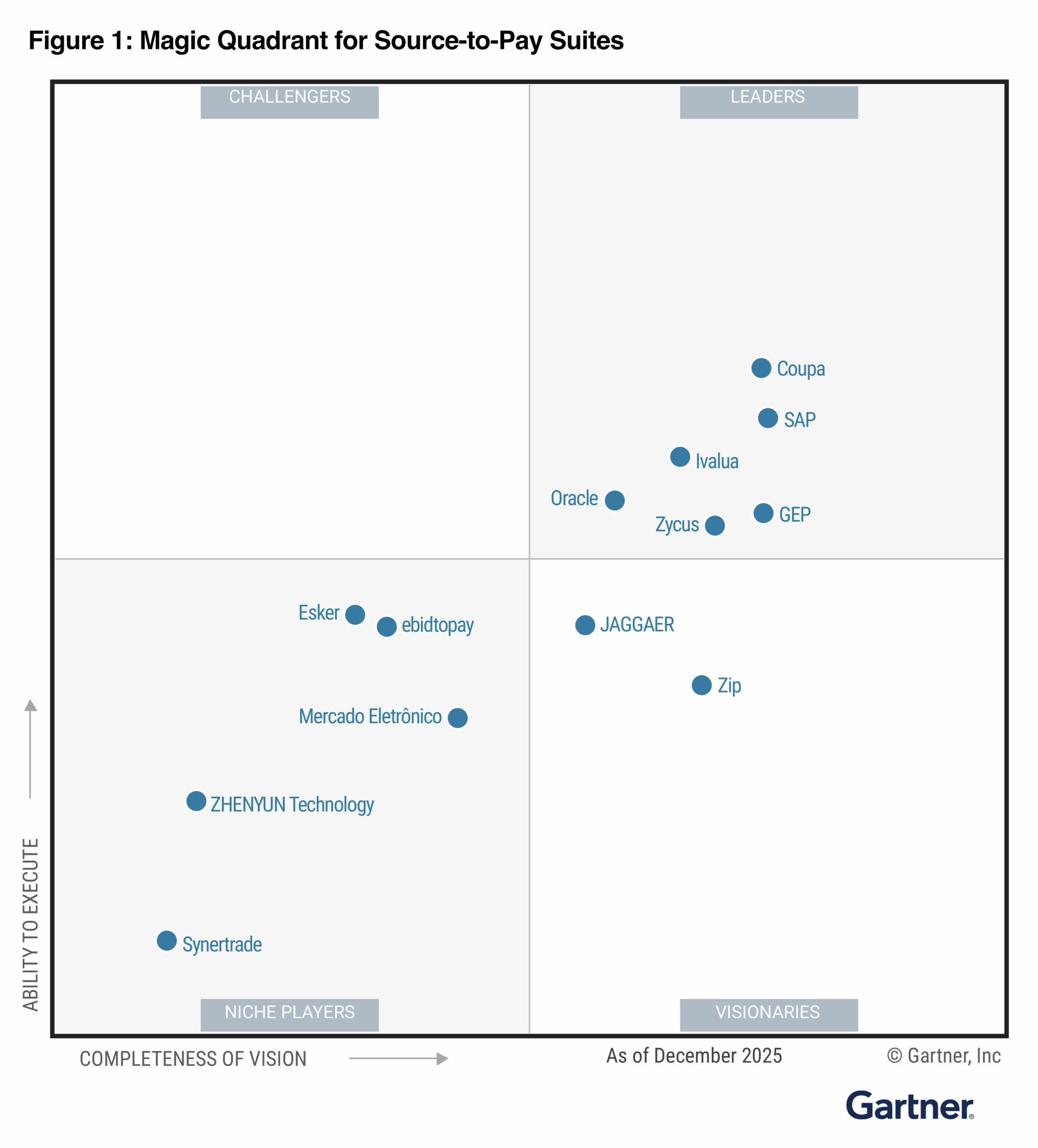
Zycus — recognized as a Leader in both the 2026 Gartner® Magic Quadrant™ for Source-to-Pay Suites and the 2025 IDC MarketScape for AI-Enabled Source-to-Pay — provides the AI-powered platform and implementation support organizations need to execute this roadmap successfully.
The next 12 months will separate organizations that talk about agentic AI from those that deploy it. This roadmap provides the structure to be in the latter group.
FAQs
Q1. What use cases should CPOs prioritize in the first 12 months?
Start with areas where data is clean and value is clear: spend analytics, intake management, and market intelligence are common first choices. Add complexity only after demonstrating success in foundational use cases.
Q2. How much budget should organizations allocate to agentic AI?
Research indicates a 12% budget allocation trend among organizations seriously pursuing agentic AI. The exact amount depends on scope and starting point, but the allocation should be explicit, committed, and tied to measurable outcomes.
Q3. What’s the biggest mistake CPOs make in their first year with agentic AI?
Skipping the foundation phase. Organizations eager to show AI results often jump to pilots without assessing readiness, aligning stakeholders, or selecting appropriate use cases. This creates expensive resets when pilots succeed but can’t scale.
|
Series Conclusion This concludes our 8-part series on Agentic AI in Procurement, based on The Hackett Group’s 2026 Adoption Index. From understanding the confidence gap to building a practical roadmap, we’ve explored the opportunities, challenges, and decisions that will define procurement’s AI transformation. The organizations that succeed won’t be those with the most advanced technology — they’ll be those that combine clear strategy, cross-functional collaboration, and disciplined execution. The roadmap is clear. The time to start is now. |
Related Reads:
- Why Less Than One-Third of Procurement Organizations Can Scale Agentic AI
- IT vs Procurement: Who Should Own Your Agentic AI Strategy?
- Loss of Human Oversight: Procurement’s Top Agentic AI Fear and How to Address It
- Guide to Procurement Agents: Roles, Skills & How AI is Changing the Game
- Unlocking the Future of Procurement: Synergizing Agentic AI and Generative AI for Seamless Automation
- Future of Healthcare Procurement with Agentic AI