









Over the past three decades, I’ve worked closely with procurement leaders and procure-tech providers through academic research, executive education, and advisory engagements. With the introduction of agentic AI, I’ve observed how procurement is adopting this emerging technology in novel ways that continue to evolve.
One conclusion stands out: procurement is not constrained by data, dashboards, or digital tools. It is constrained by execution.
Despite significant investment in Source-to-Pay platforms, many procurement teams continue to rely on operating models that do not fully exploit the capabilities of emerging agentic platforms. Visibility has improved. Automation has helped at the margins. But work is still coordinated manually across fragmented systems — a model that struggles under today’s volatility, scale, and the need for rapid response in a shifting and disruptive ecosystem.
Agentic AI is About Delegation, Not Replacement
In nearly every discussion with procurement leaders, one concern surfaces quickly: uncertainty and challenges around future strategic planning. That concern is understandable — but it is not insurmountable.
Copilots and point agents are useful for one-off tasks — summarizing information, drafting responses, or assisting in tactical decisions.
But procurement value is rarely created in isolation. It must be coordinated across multiple business processes — intake, validation, negotiation, approval, and execution — moving together toward an outcome. That is where agentic flows, operating within policy and human-defined boundaries, can provide meaningful benefits by creating alignment across these elements.
This is Not Workflow Automation
Automation follows instructions and executes predefined paths faster. Agents are individually programmed systems that interoperate to progress toward an outcome — within rules defined by humans — with transparency, consistency, and the ability for intervention when required.
Humans remain firmly in control: setting intent, defining policy, establishing risk thresholds, and deciding where autonomy begins and ends. Systems take responsibility for execution within those boundaries. Control is not lost; it is designed.
Why Retrofitting AI Falls Short
From years of observing the procure-tech landscape, one foundation consistently emerges: architecture and data governance matter more than features.
Many platforms were originally designed for manual orchestration — approvals routed across inboxes, exceptions handled through escalation, compliance enforced after the fact. Adding AI to these environments may enhance usability or analytics, but it rarely changes how work fundamentally gets done.
At the other end, point-solution startups offering bolt-on agents often underestimate procurement’s governance complexity. Without deep integration into workflows, policies, and data models, these agents can introduce fragility rather than resilience.
Autonomy is difficult to layer onto systems designed primarily for human coordination. It must be designed into the foundation.
The Zycus Agentic Platform
This context helps explain why certain platforms are emerging as reference points.
Zycus sits at a distinct sweet spot. It brings more than two decades of procurement domain expertise — shaped by trillions of dollars in managed spend— and its leadership has a deep understanding of how the CPO’s office operates, from governance and risk to stakeholder alignment.
Unlike point-solution startups, Zycus understands scale and compliance. And unlike platforms that remain tightly coupled to manual orchestration models, Zycus has evolved its architecture to support guided intake, agentic execution, and autonomous negotiation as first-class design principles rather than bolt-on capabilities.
The result is autonomy without loss of control, and innovation without fragility.
Tail Spend: Where Agency Becomes Real
If agentic AI is going to deliver tangible value in procurement, tail spend is a natural application well suited to this approach.
Tail spend represents a disproportionate share of suppliers, transactions, and unmanaged risk, yet remains poorly addressed by traditional sourcing models. A recent Hackett Group report highlights tail spend as an area where autonomy can deliver an outsized impact without increasing risk.
Policy-driven execution and guided autonomous negotiation change the economics — allowing procurement teams to focus on strategy while systems handle scale within defined guardrails.
Notably, Zycus invested heavily in this area during 2024–25. These were not experimental pilots, but production-grade capabilities built with human oversight and measurable outcomes.
A Directional Signal for CPOs
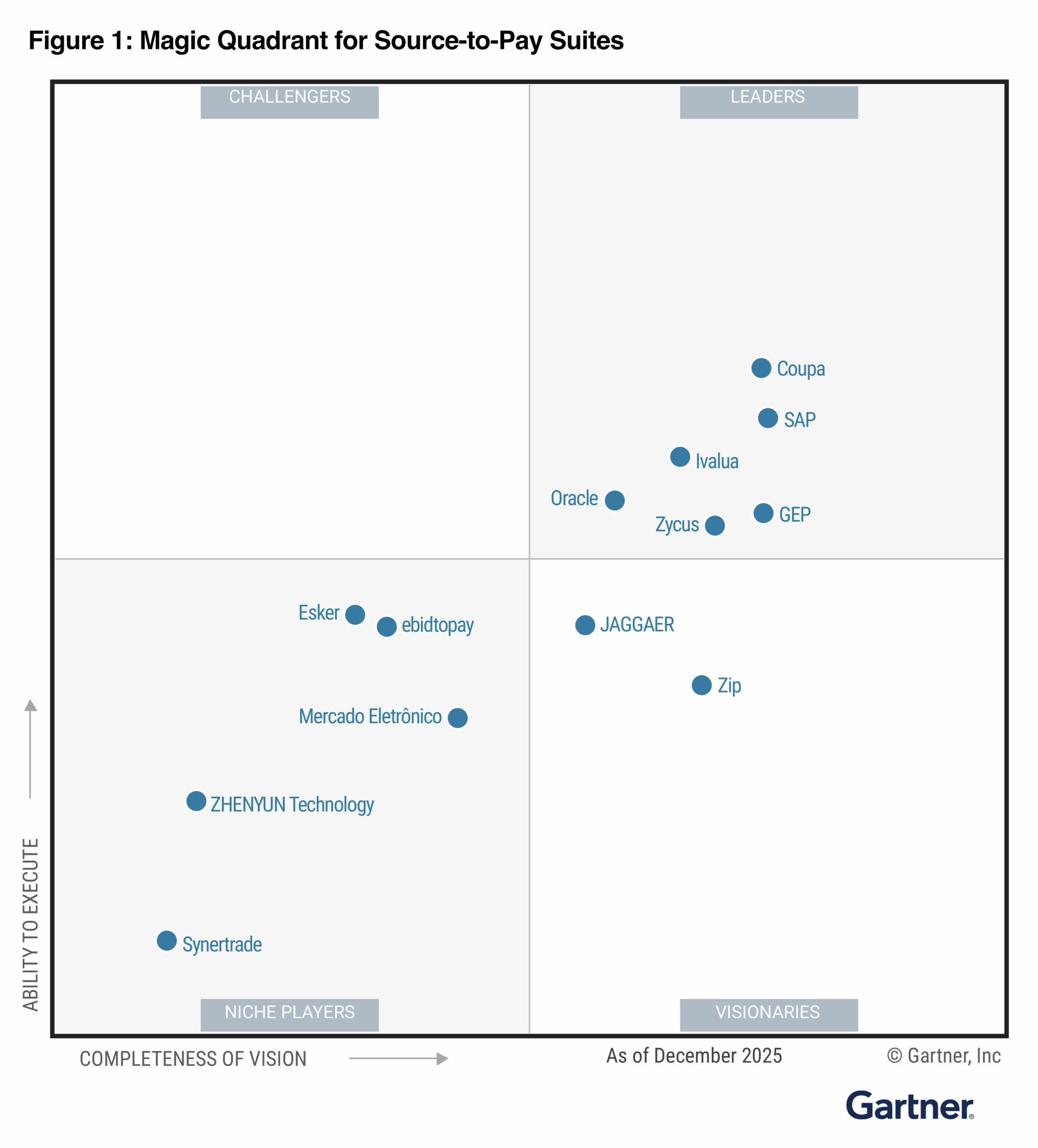
Recent analyst assessments reinforce this shift. While Gartner emphasizes orchestration and governance, Forrester focuses on workflow integrity, and IDC highlights architectural readiness; their conclusions show increasing convergence: the market is rewarding platforms that enable execution autonomy, not just incremental automation.
Zycus’s consistent recognition as a Leader across these assessments reflects architectural readiness alongside market momentum.
For CPOs, the decision is no longer whether to adopt AI. That question is largely settled.
The real question is how much responsibility to delegate — and to which systems.
The next decade of procurement will not be defined by who automates the most, but by who designs autonomy deliberately — trusting systems to act, while humans define the boundaries.
Related Reads:
- From Co-Pilots to Commanders: How Agentic AI is Redefining Procurement Transformation
- Revolutionizing Procurement: Agentic AI-Driven Autonomous Purchase Orders & Automation
- Agentic AI Survey Report: The Quantum Leap in Procurement
- Download Whitepaper: Beyond GenAI: The Dawn of Agentic AI in Procurement
- Listen Podcast: Agentic AI for Procurement | Listen Now
- Agentic AI-Driven Procurement: Beyond Source to Pay | Procurement Magazine