





TL;DR
- Direct sourcing eliminates intermediaries between your organization and suppliers, giving procurement teams greater control over quality, cost, and delivery timelines while reducing markup fees by 15–25%.
- Organizations with mature direct sourcing programs achieve 8–12% cost savings compared to those relying on purely transactional supplier relationships, according to Deloitte research.
- The model works best for high-volume, production-critical categories where quality consistency and supply continuity directly impact revenue and customer satisfaction.
- McKinsey finds that procurement teams now manage 50% more spend than five years ago, making strategic direct sourcing essential for maintaining margin discipline at scale.
- AI-powered sourcing platforms are transforming direct sourcing by enabling real-time supplier evaluation, predictive risk scoring, and autonomous category management across global supply bases.
- Gartner reports that 89% of companies experienced a supplier risk event in the past five years, underscoring why direct supplier relationships with built-in risk visibility are now a competitive necessity.
What is the Direct Sourcing Model and How Does it Differ from Traditional Procurement?
The direct sourcing model is a procurement strategy where organizations establish unmediated relationships with suppliers, manufacturers, or service providers—bypassing intermediaries such as agents, distributors, or staffing agencies. Instead of routing purchases through third-party channels, procurement teams identify, evaluate, and engage suppliers directly, giving them end-to-end visibility into pricing, quality, and delivery performance.
This approach stands in contrast to traditional procurement models where intermediaries manage supplier identification, negotiation, and fulfillment. While intermediary-based models offer convenience, they introduce markup costs, dilute quality oversight, and create information asymmetry between buyers and their actual supply sources.
According to McKinsey’s research on procurement transformation, two-thirds of leading organizations now separate strategic and transactional procurement, enabling teams to focus on value-driven direct sourcing relationships rather than routine purchasing. This structural shift reflects a broader industry recognition that direct supplier engagement is fundamental to cost competitiveness and supply chain resilience.
The direct sourcing model encompasses both goods procurement—such as raw materials, components, and production inputs—and services procurement, including contingent workforce management and professional services. In every context, the core principle remains the same: closer proximity to the source yields better outcomes.
Read more: 10 Key Elements of a High-Performing Direct Procurement Strategy
Why are Organizations Shifting Toward Direct Sourcing in 2026?
Several converging forces are accelerating the adoption of direct sourcing models across industries. The most significant driver is margin pressure. Deloitte’s 2026 Global CPO Survey of more than 260 CPOs identified improving margins via cost reduction (72%) and driving operational efficiency (68%) as the top two priorities for procurement leaders responding to macroeconomic challenges. Direct sourcing addresses both priorities simultaneously by eliminating intermediary fees and streamlining procurement workflows.
Supply chain volatility is the second major catalyst. Gartner’s supply chain risk research reveals that 89% of companies experienced a supplier risk event in the past five years, and nearly two-thirds were delayed in responding because they lacked continuous risk assessment frameworks. Direct sourcing provides the transparency needed to identify and mitigate risks before they cascade into production disruptions.
The third driver is technology maturity. AI-powered procurement platforms now enable organizations to manage direct supplier relationships at scale. McKinsey estimates that agentic AI could make procurement functions 25–40% more efficient, fundamentally changing the cost-benefit calculus for direct sourcing adoption.
Finally, geopolitical uncertainty is pushing organizations to build more resilient, diversified supply bases. With 71% of U.S. CEOs planning to alter supply chains over the next three to five years due to trade uncertainties, direct sourcing provides the agility needed to quickly qualify and onboard alternative suppliers across regions.
What are the Core Benefits of a Direct Sourcing Strategy?
The advantages of direct sourcing extend well beyond simple cost reduction. While eliminating intermediary markups typically yields 15–25% savings on affected categories, the strategic benefits compound over time through stronger supplier partnerships, better quality outcomes, and improved organizational agility.
| Benefit Category | Intermediary-Based Model | Direct Sourcing Model | Strategic Impact |
| Cost Structure | 15–25% markup from intermediaries; limited pricing visibility | Direct-to-source pricing; full cost transparency | Immediate margin improvement; better budget forecasting |
| Quality Control | Quality managed by intermediary; limited buyer oversight | Direct quality audits; real-time production visibility | Fewer defects; consistent product standards |
| Supply Chain Visibility | Single-tier visibility; dependent on intermediary reporting | Multi-tier transparency; direct communication channels | Faster risk identification; proactive issue resolution |
| Supplier Innovation | Innovation filtered through intermediary priorities | Direct collaboration on product development and co-investment | Faster time-to-market; competitive differentiation |
McKinsey’s procurement transformation research demonstrates that procurement typically accounts for more than 20% of total financial impact in business transformation programs. Organizations that invest in direct supplier relationships—including joint development projects and strategic partnerships—consistently outperform those that treat procurement as a purely transactional function.
Deloitte research further confirms that organizations with mature supplier relationship management programs achieve cost savings of 8–12% compared to transactional approaches. These savings come from reduced transaction costs, improved quality, decreased inventory requirements, and enhanced supplier-driven innovation.
When does the Direct Sourcing Model Work Best?
Direct sourcing delivers the highest return when applied to categories that meet specific criteria. Understanding where the model excels—and where it introduces unnecessary complexity—is essential for procurement leaders designing their sourcing strategy.
| Evaluation Criteria | Strong Fit for Direct Sourcing | Better Suited to the Indirect/Intermediary Model |
| Spend Volume | High-volume, recurring purchases with predictable demand patterns | Low-volume, infrequent, or highly variable purchases |
| Impact on End Product | Materials/services directly affecting product quality and customer experience | Support services with limited production impact |
| Supplier Market | Concentrated market with identifiable, qualified manufacturers | Fragmented market requiring broad aggregation |
| Internal Capability | Dedicated procurement team with category expertise and supplier management tools | Limited procurement resources; generalist buyers |
The model is particularly effective for production-critical categories—raw materials, key components, specialized services—where quality consistency, delivery reliability, and cost predictability directly impact revenue. A manufacturer sourcing specialized alloys, for example, benefits enormously from direct relationships that enable joint quality standards development and dedicated production capacity.
Conversely, direct sourcing introduces overhead that may not justify the investment for tail-spend categories. Organizations typically benefit from applying the 80/20 principle: direct sourcing for the strategic 20% of categories that represent 80% of spend impact, while using streamlined or intermediary-based approaches for lower-value, commodity purchases.
PwC’s Digital Procurement Survey identifies strategic sourcing and supplier management as the top priorities for purchasing departments globally, reinforcing that leading organizations are concentrating their direct sourcing efforts where they generate the greatest competitive advantage.
How does Direct Sourcing Reduce Supply Chain Risk?
In an era of persistent supply chain disruption, direct sourcing serves as a critical risk mitigation strategy. The key advantage is information velocity—when you have direct relationships with suppliers, you learn about potential disruptions faster and can respond more effectively than when information must travel through intermediary channels.
Gartner’s research highlights that only 35% of companies have a formal enterprise-wide risk appetite statement, and even fewer have business-unit-customized risk management frameworks. Direct sourcing addresses this gap by embedding risk visibility into the sourcing relationship itself.
| Risk Dimension | Intermediary-Mediated Exposure | Direct Sourcing Advantage |
| Financial Risk | Limited visibility into supplier financial health; intermediary may mask instability | Direct access to supplier financial data; early warning of viability issues |
| Quality Risk | Quality failures discovered late in the supply chain; slower root cause analysis | Real-time production monitoring; joint quality improvement programs |
| Geopolitical Risk | Dependence on intermediary’s supplier network; limited diversification | Direct control over supplier geography; faster qualification of alternatives |
| Compliance Risk | Reliance on intermediary certifications; limited audit trail | Direct audit capability; verified compliance documentation |
McKinsey’s analysis found that half of single-source spending could be redirected to multiple sources through strategic supplier development. Direct sourcing makes this diversification practical by giving procurement teams the relationships and data needed to qualify and onboard alternative suppliers efficiently.
Forrester’s procurement research reveals that 76% of procurement leaders compromised on supplier due diligence to avoid supply chain disruptions—a pattern that creates long-term vulnerability. Direct sourcing reverses this dynamic by building due diligence into the ongoing supplier relationship.
What Role Does AI Play in Modern Direct Sourcing?
Artificial intelligence is transforming direct sourcing from a resource-intensive manual process into a scalable, data-driven capability. Previously, the primary barrier to direct sourcing adoption was the operational burden of managing supplier relationships without intermediary support. AI eliminates this constraint by automating supplier discovery, performance monitoring, risk assessment, and even negotiation support.
McKinsey’s 2026 procurement research reports that companies now manage 50% more spend per employee than five years ago, and the next wave of agentic AI could make procurement operations 25–40% more efficient. This efficiency gain is particularly consequential for direct sourcing, where the operational overhead of managing supplier relationships has historically limited adoption.
AI-powered sourcing platforms deliver specific capabilities that make direct sourcing viable at enterprise scale: automated supplier matching based on capability, capacity, and geographic criteria; continuous financial health monitoring across the supply base; predictive risk scoring that identifies potential disruptions before they materialize; and intelligent should-cost modeling that strengthens negotiation positions with data rather than intermediary market knowledge.
A specialty chemicals company referenced in McKinsey’s research leveraged AI-powered should-cost modeling within its center of excellence to save 13% on raw materials spending—a direct sourcing outcome enabled by technology that would have been impossible through traditional intermediary channels.
For organizations evaluating AI-powered procurement platforms, the key differentiator is the ability to combine sourcing intelligence with autonomous execution. Platforms like Zycus Merlin AI integrate supplier discovery, risk assessment, and contract management into a unified workflow, enabling procurement teams to manage direct sourcing relationships with the same efficiency previously available only through intermediary outsourcing.
How Should Organizations Implement a Direct Sourcing Program?
Implementing direct sourcing requires a structured approach that balances ambition with organizational readiness. The most successful programs follow a phased methodology that builds internal capability while delivering early wins to sustain executive support.
Phase 1: Strategic Assessment: Begin with comprehensive spend analysis to identify categories where direct sourcing will deliver the highest impact. Prioritize categories with high intermediary dependency, significant spend volume, and clear quality or delivery improvement opportunities. McKinsey’s transformation research shows that procurement transformations with proactive capability-building efforts outperform those that attempt to extract more value from existing approaches.
Phase 2: Supplier Development: Invest in identifying and qualifying direct supply sources for priority categories. This includes financial viability assessment, quality capability evaluation, geographic risk analysis, and compliance verification. Building a qualified supplier pipeline is the foundational asset that enables direct sourcing at scale.
Phase 3: Technology Enablement: Deploy AI-powered procurement technology that supports direct sourcing workflows—from supplier discovery and evaluation through contract management and performance monitoring. PwC’s research shows that 94% of purchasing departments have adopted source-to-pay solutions, but many still lack the advanced analytics and AI capabilities needed to manage direct supplier relationships effectively.
Phase 4: Continuous Optimization: Establish performance measurement frameworks that track direct sourcing impact across cost, quality, risk, and innovation dimensions. Use these metrics to expand the program to additional categories and refine supplier management practices based on empirical outcomes.
What Mistakes Should Procurement Teams Avoid with Direct Sourcing?
While the benefits of direct sourcing are well-documented, implementation failures are common—typically caused by underestimating the operational requirements or applying the model to inappropriate categories.
| Common Mistake | Why It Happens | How to Avoid It |
| Applying direct sourcing to all categories uniformly | Enthusiasm for cost savings overrides strategic analysis | Use spend segmentation to identify high-impact categories; maintain intermediary relationships for tail spend |
| Underinvesting in supplier relationship management | Focus on initial sourcing rather than ongoing relationship quality | Allocate dedicated resources for supplier development, joint planning, and performance reviews |
| Neglecting risk diversification | Over-reliance on a single direct supplier replaces intermediary dependency with concentration risk | Maintain qualified alternative suppliers; establish dual-sourcing requirements for critical categories |
| Lacking technology infrastructure | Manual processes cannot scale to manage multiple direct supplier relationships | Implement AI-powered sourcing platforms before expanding the direct sourcing portfolio |
McKinsey’s research on SME procurement identifies five major barriers that hold organizations back: lack of spending transparency, myopic focus on the short term, talent gaps, underused digital tools, and insufficient supply chain risk management. Direct sourcing programs that address these barriers proactively are far more likely to deliver sustainable results.
The most critical mistake is treating direct sourcing as a cost reduction exercise rather than a strategic capability. Organizations that build direct sourcing as a core procurement competency—supported by technology, talent, and executive sponsorship—achieve compounding returns as supplier relationships mature and data-driven decision-making improves over time.
How does Zycus enable AI-Powered Direct Sourcing at Scale?
Zycus takes a distinctive approach to direct sourcing by embedding AI-driven intelligence across the entire source-to-pay lifecycle. Rather than offering standalone sourcing tools, Zycus unifies supplier discovery, risk assessment, negotiation, and performance management within a single platform—giving procurement teams the operational capacity to manage direct supplier relationships without the overhead that traditionally required intermediary support.
Merlin Sourcing Agent automates supplier identification, qualification, and bid evaluation using AI-powered market intelligence. For direct sourcing programs, this means procurement teams can rapidly expand their qualified supplier base across categories and geographies—reducing the time-to-qualify from weeks to days while maintaining rigorous evaluation standards.
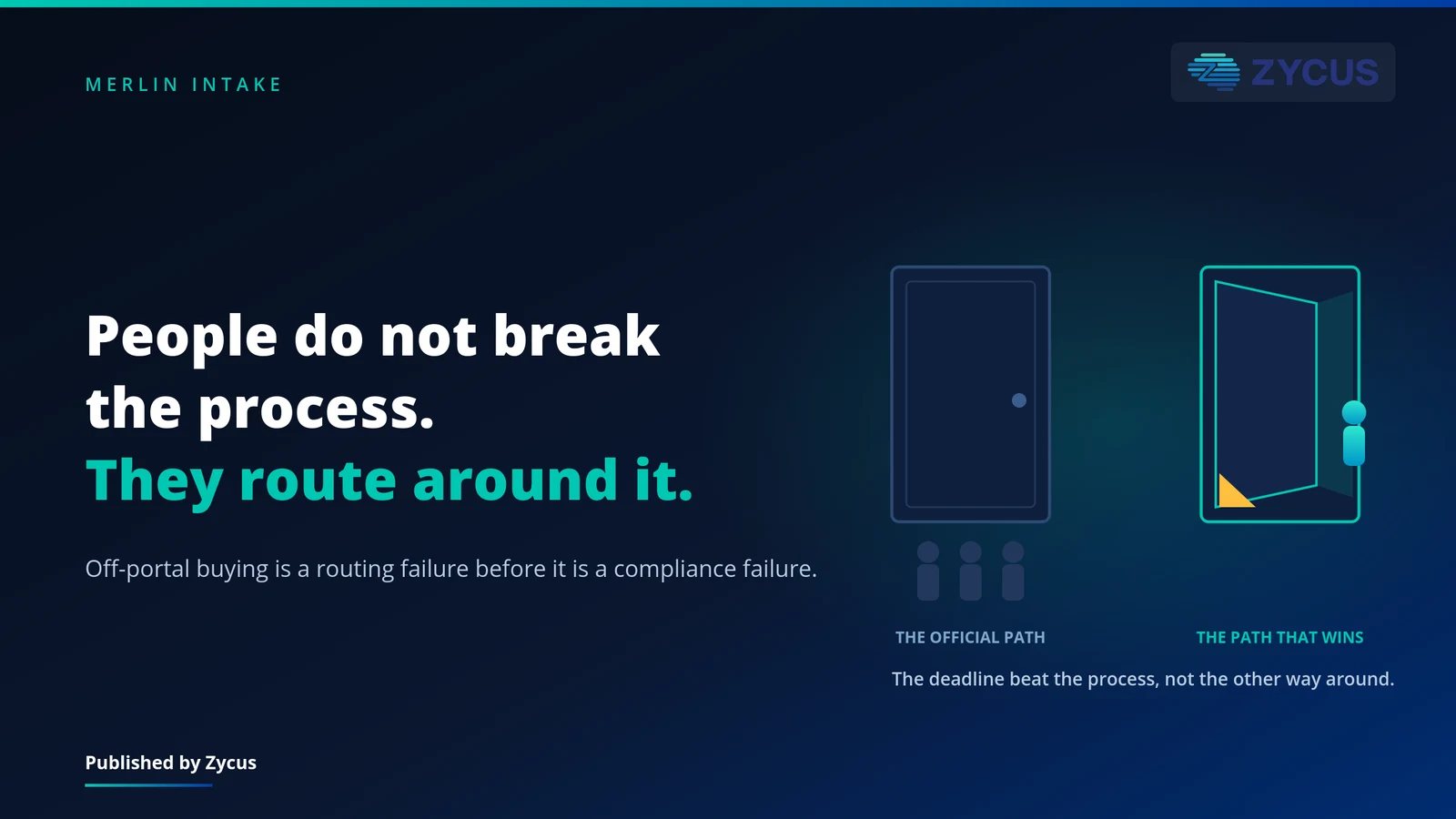
Merlin Intake Agent captures procurement demand at the point of request, ensuring every direct sourcing requirement is visible to the procurement team the moment it is approved. This eliminates shadow sourcing and ensures that spend committed through direct supplier relationships is tracked and optimized from inception.
Merlin Analytics Agent delivers real-time insights into supplier performance, spend patterns, and savings realization across direct sourcing categories. Procurement leaders gain the visibility needed to measure direct sourcing ROI, identify underperforming supplier relationships, and prioritize categories for program expansion.
Merlin Autonomous Negotiation Agent (ANA) handles tail-spend negotiations autonomously, freeing strategic buyers to focus on high-value direct supplier relationships. ANA conducts competitive bidding, evaluates supplier responses, and recommends optimal award scenarios—ensuring that even lower-tier direct sourcing categories receive rigorous commercial optimization.
Merlin Contract Agent manages the complete contract lifecycle for direct supplier agreements, from initial terms negotiation through renewal and compliance monitoring. AI-powered clause analysis and obligation tracking ensure that direct sourcing commitments translate into realized savings and sustained supplier performance.
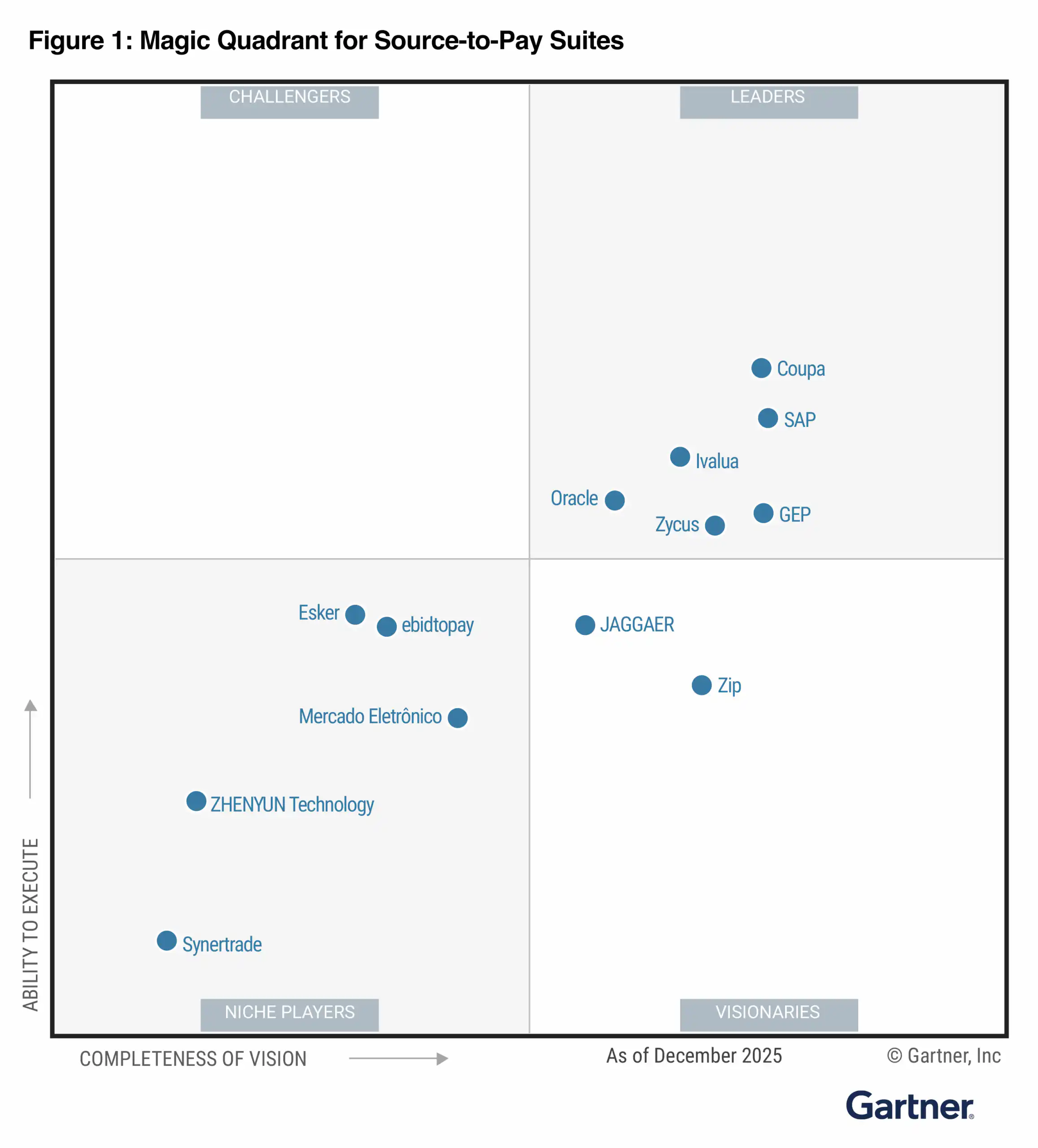
Recognized as a Leader in the 2026 Gartner Magic Quadrant for Source-to-Pay Suites and a Leader in the IDC MarketScape for AI-Enabled Source-to-Pay, Zycus helps organizations transform direct sourcing from a manual, resource-intensive initiative into a scalable, AI-orchestrated competitive advantage.
Conclusion: Direct Sourcing Is No Longer Optional — It’s a Margin Imperative
Procurement leaders in 2026 face a convergence of pressures that traditional intermediary-dependent models simply cannot withstand. Margins are compressing as input costs rise. Supply chain disruptions are no longer exceptions — they are the operating norm. Geopolitical volatility is rewriting sourcing maps overnight. And executive teams are demanding that procurement deliver measurable, strategic impact rather than incremental cost reductions.
Direct sourcing addresses every one of these pain points — not through marginal adjustments, but through a fundamental shift in how organizations engage their supply base. By eliminating intermediaries, procurement teams gain the cost transparency, quality control, and supplier intelligence needed to protect margins, build resilience, and drive innovation. When powered by AI, direct sourcing scales from a resource-intensive initiative to an enterprise-wide competitive advantage.
The organizations that thrive in the years ahead will not be those that negotiate harder through the same intermediary channels. They will be those that build direct, data-driven supplier relationships — supported by technology that automates the operational burden and surfaces the strategic insights that matter.
Ready to transform your direct sourcing strategy? Request a demo with Zycus and see how the Merlin AI platform helps procurement teams build and manage direct supplier relationships at scale — with less overhead, better visibility, and measurable margin impact.
FAQs
Q1. What is the direct sourcing model in procurement?
The direct sourcing model is a procurement strategy where organizations establish direct relationships with suppliers, manufacturers, or service providers, bypassing intermediaries such as agents and distributors. This approach provides greater control over cost, quality, and delivery while improving supply chain transparency.
Q2. How much can organizations save through direct sourcing?
Cost savings vary by category and industry, but organizations typically achieve 15–25% reductions by eliminating intermediary markups. Deloitte research shows that organizations with mature supplier relationship management programs save 8–12% compared to transactional approaches through reduced transaction costs and improved quality.
Q3. When is direct sourcing not the right approach?
Direct sourcing is less effective for low-volume, highly fragmented, or commodity categories where the operational overhead of managing direct supplier relationships exceeds the cost savings. It also requires dedicated procurement capability—organizations without category expertise or supplier management tools may achieve better outcomes through managed intermediary models.
Q4. How does AI improve direct sourcing outcomes?
AI transforms direct sourcing by automating supplier discovery, enabling continuous risk monitoring, providing should-cost modeling for stronger negotiations, and supporting predictive analytics for demand planning. McKinsey estimates AI-powered procurement can be 25–40% more efficient than traditional approaches.
Q5. What is the difference between direct sourcing and strategic sourcing?
Direct sourcing specifically refers to eliminating intermediaries to engage suppliers directly. Strategic sourcing is a broader methodology encompassing the entire supplier evaluation, selection, and management process. Direct sourcing is one strategy within a strategic sourcing framework—applicable when direct supplier relationships deliver superior outcomes compared to intermediary-based alternatives.
Q6. How does direct sourcing reduce supply chain risk?
Direct sourcing improves risk management through greater supply chain visibility, faster information flow about potential disruptions, direct audit capability, and the ability to quickly qualify and onboard alternative suppliers. Gartner reports that companies leveraging supply chain technology for risk management nearly double their effectiveness in supplier risk tactics.
Q7. What technology is needed to support direct sourcing at scale?
Effective direct sourcing requires AI-powered sourcing platforms that integrate supplier discovery, financial health monitoring, risk assessment, contract management, and performance analytics. Platforms like Zycus Merlin AI consolidate these capabilities into unified workflows, enabling procurement teams to manage direct supplier relationships with the same efficiency as intermediary-managed programs.
Related Reads:
- Understanding the What, Why, & How of Strategic Sourcing Technology
- Capture the True Value of Procurement: A Sourcing & Procurement Leader’s Toolkit
- Procurement Operating Model Evolution: Choosing What’s Right for You
- Agile Procurement and Sourcing: A Practical Guide for Modern Enterprises
- Strategic Sourcing: The Complete Procurement Guide
- eBook: The Impact of Direct Procurement Metrics on Business Performance
- Whitepaper: Building a P2P Business Case