









TL;DR
- Social media is most useful to procurement as an early-warning and discovery layer, not as a standalone source of truth.
- High-value use cases include supplier risk monitoring, procurement market intelligence, supplier discovery, reputation monitoring, and relationship or innovation signals.
- Use a Signal -> Evidence -> Action model: detect a signal, corroborate it with authoritative sources, then decide whether procurement action is justified.
- Measure signal quality through time-to-detect, false-positive rate, validated risk alerts, and sourcing decisions influenced – not through followers, mentions, or engagement.
Social media in procurement has changed substantially from the early days of LinkedIn groups, RSS feeds, and Twitter monitoring. The opportunity in 2026 is less about “being social” and more about using public digital signals to sharpen supplier intelligence, procurement market intelligence, strategic sourcing, and supplier risk monitoring. Company announcements, workforce changes, executive posts, customer complaints, local news amplification, industry conversations, and supplier updates can all surface information before it reaches a quarterly review or formal supplier questionnaire.
But speed creates a new problem: social content is noisy, incomplete, and sometimes wrong. The procurement advantage comes from knowing which signals matter, how to verify them, and where they should change a sourcing or supplier-management decision. This guide explains the modern use cases, the evidence standard procurement should apply, and a practical workflow for turning social listening into defensible action.
What Role Does Social Media Play in Procurement Today?
Social media is now too large and too embedded in business communication to be treated as a niche channel. DataReportal reported 5.79 billion active social media user identities worldwide in April 2026, equivalent to 69.9% of the global population. LinkedIn reports more than 1 billion members worldwide, including executives from every Fortune 500 company.
For procurement, however, scale is not the point. The important shift is that social platforms have become part of the external information environment around suppliers, markets, people, products, disruptions, and reputation. Modern supplier-risk practices increasingly combine structured supplier data with unstructured external information from news, public forums, and social media. Deloitte, for example, describes near-real-time monitoring of social media, news, blogs, and public forums as an input to supply-chain risk identification.
Where Does Social Media Create Real Procurement Value?
1. Supplier Risk Monitoring and Early Warning
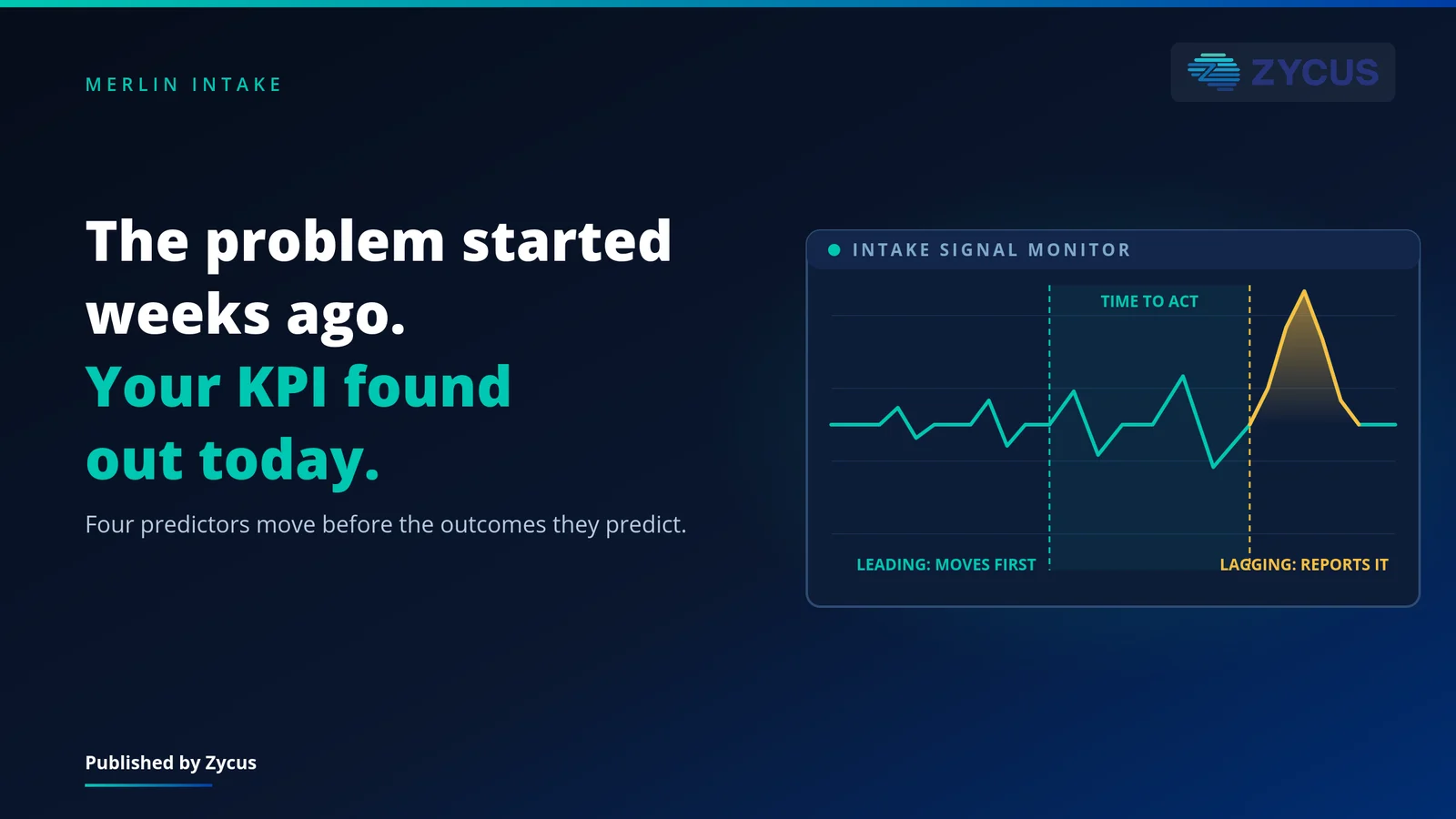
A supplier may disclose a plant outage, workforce reduction, leadership change, product recall, cyber incident, regulatory issue, labor dispute, or local disruption through public channels before the signal reaches a procurement review. Social media listening can help surface those weak signals earlier, especially when combined with news and third-party risk data.
Academic research supports the underlying mechanism. A 2022 study in Industrial Management & Data Systems used text mining of social-media data to identify potential supply-chain risk factors in real time. A separate 2023 study in the International Journal of Production Economics analyzed 215 supply-chain glitches and 63 million associated tweets, showing how operational events generate measurable public reactions and reputational effects.
The right procurement response is not to score a supplier down because negative posts appear. It is to validate the event, determine exposure, and decide whether to escalate, seek a mitigation plan, increase monitoring, or qualify an alternative source.
2. Procurement Market Intelligence and Category Strategy
Procurement market intelligence traditionally relies on analyst research, commodity indices, supplier briefings, earnings calls, trade publications, and internal spend data. Social listening adds a faster, less structured layer: emerging shortages, capacity announcements, technology adoption, customer demand shifts, regulatory reactions, hiring patterns, and expert commentary.
Gartner describes procurement market intelligence as an input to tracking trends, estimating costs, managing risks, selecting suppliers, and improving negotiations. Social signals should complement that evidence base, not replace it. The practical value is speed: a category manager may detect a topic worth investigating before it appears in a formal market report.
3. Supplier Discovery and Capability Signals
For supplier discovery, professional networks and public company channels can reveal new facilities, certifications, product launches, technical capabilities, partnerships, geographic expansion, and subject-matter expertise. LinkedIn is especially useful for mapping companies, executives, technical specialists, and industry ecosystems.
These signals can expand a longlist, but they should not be treated as qualification. Claims still need to be checked against certifications, financial data, references, approved-vendor requirements, regulatory records, and category-specific due diligence. Social media helps procurement ask better questions; it does not remove the need to verify the answers.
4. Supplier Relationship Management and Innovation
Strategic suppliers often share product roadmaps, sustainability initiatives, new capabilities, acquisitions, leadership moves, and customer use cases publicly. Monitoring those signals can create better supplier-development conversations: Where is the supplier investing? Which capabilities could apply to your category? Is a new facility relevant to resilience? Is an announced technology worth piloting?
Used this way, social media supports supplier relationship management by creating a richer agenda than price, service levels, and quarterly scorecards alone. The value is not the interaction itself; it is the ability to connect external supplier developments to specific commercial or operational opportunities.
5. Reputation, ESG, and Disruption Context
Public conversations can provide early context around labor conditions, environmental incidents, product safety, executive conduct, community disputes, cybersecurity events, and other reputational issues. This matters because supplier risk increasingly extends beyond first-tier operational performance to ESG, regulatory, cyber, and brand exposure.
The key is corroboration. Leading supplier-intelligence services themselves do not rely on raw social posts alone; they combine large volumes of public-source monitoring with validation, risk models, and structured supplier data. Procurement should apply the same discipline internally.
From Signal to Sourcing Decision: A Practical Verification Framework
The biggest weakness in older approaches to social media in procurement was the assumption that more information automatically meant better decisions. It does not. Procurement needs an evidence standard.
Step 1 – Detect: Capture the external signal: a supplier announcement, spike in negative discussion, local disruption report, workforce change, executive post, or industry trend.
Step 2 – Corroborate: Check authoritative or independent sources: supplier communications, regulatory filings, credible news, financial data, third-party risk services, certificates, contracts, internal performance records, or direct supplier confirmation.
Step 3 – Act: Translate the verified issue into a procurement decision: monitor, escalate, request a mitigation plan, adjust an RFP, change award weighting, qualify another supplier, renegotiate terms, or take no action.
| Social signal | Verify against | Possible procurement action |
| Supplier announces layoffs or plant closure | Company filing/news/direct confirmation | Review continuity risk, capacity and alternate supply |
| Sudden increase in complaints about delivery or quality | Internal KPIs, customer references, supplier response | Increase monitoring or initiate corrective action |
| New certification, facility or capability announced | Certificate, audit, technical validation | Consider for supplier longlist or expansion opportunity |
| Labor, ESG or regulatory controversy trends online | Regulator, reputable news, audit/ESG provider | Escalate due diligence and assess contractual exposure |
| Category experts discuss shortage or price pressure | Market indices, analyst research, supplier quotes | Revisit should-cost assumptions or sourcing timing |
How Does Social Media Support the Strategic Sourcing Process?
Social media becomes more useful when procurement connects it to an existing sourcing decision rather than running an isolated listening program.
| Sourcing stage | How social signals help | Output |
| Category strategy | Track market narratives, capacity announcements, technology shifts, shortages and regulatory discussion | A hypothesis to validate in the category strategy |
| Supplier discovery | Find emerging suppliers, facilities, partnerships, capabilities and relevant experts | A broader supplier longlist |
| Supplier qualification | Identify issues that merit deeper financial, compliance, ESG, cyber or operational due diligence | Additional qualification questions or evidence requests |
| RFx and negotiation | Use verified market signals to challenge assumptions, timing, risk allocations and supplier claims | Better scenarios, negotiation questions and award criteria |
| Post-award monitoring | Watch critical suppliers and markets for events that may change risk or performance | Earlier escalation and mitigation |
What Should Procurement Never Infer from Social Media Alone?
The fastest way to turn social listening into bad procurement is to give noisy signals the authority of verified data. Social media should not, by itself, determine:
- whether a supplier is financially stable or unstable;
- whether a supplier is compliant with a regulation, certification, or contractual requirement;
- whether an individual post represents the supplier’s official position;
- whether high social engagement means strong supplier performance or capability;
- whether negative sentiment proves operational failure, misconduct, or contractual breach.
Procurement also needs clear legal, privacy, information-security, and records-management guardrails. Monitor information that is legitimately public and relevant to supplier or market risk; do not turn supplier intelligence into surveillance of individual employees or collect personal information simply because it is accessible.
How Do You Build Social Listening into Procurement Without Creating Noise?
Do not begin by monitoring everything. Start with the decisions where earlier external information could materially change an outcome.
- Prioritize exposure: Start with critical suppliers, high-risk categories, concentration points, volatile markets, and strategic sourcing events.
- Define the signal taxonomy: Specify the events that matter – financial distress, cyber incidents, plant disruptions, ESG controversies, regulatory action, leadership changes, capacity moves, innovation or new capabilities.
- Set escalation thresholds: A single mention may be noise. Multiple credible sources, a high-severity event, or a direct supplier announcement can justify review.
- Assign ownership: Every alert should have a named owner in procurement, supplier risk, category management, legal, compliance, or security.
- Close the loop: Record whether the signal was validated, what action was taken, and whether the alert improved the decision. This is how the listening model gets better rather than noisier.
Metrics That Matter
- Time from external signal to procurement awareness
- Percentage of critical suppliers or categories covered by monitoring
- Validated alerts versus false positives
- Risk events identified before formal supplier notification
- Sourcing or supplier-management decisions materially influenced by verified external intelligence
- Average response time from validated alert to owner action
Followers, impressions, mentions, and engagement may matter to marketing. They are weak procurement KPIs. The procurement question is whether external intelligence improved a decision, reduced detection time, or changed risk exposure.
How Zycus Connects External Signals to Procurement Decisions
Social listening has limited value if the signal remains in a separate dashboard. Procurement needs to connect external information with the supplier, contract, spend, sourcing event, and internal performance context that determines what the business should actually do.
That is where Zycus can complement a modern social-media intelligence approach. Zycus Supplier Management brings supplier information, performance, compliance, and risk into a common environment, with real-time risk monitoring that combines internal and external data. Zycus Strategic Sourcing connects supplier and risk context to sourcing decisions, while Insight Studio provides cross-module access to supplier risk, spend, contract, and market intelligence.
The practical benefit is not “social media procurement” as a separate workflow. It is the ability to take a verified external signal – a disruption, risk indicator, market shift, or supplier development – and evaluate it against the procurement data already used to source, qualify, contract, and manage that supplier. That turns monitoring into decision support rather than another stream of alerts.
Conclusion: Social Media Is an Intelligence Input, Not a Procurement System
The role of social media in procurement transformation is no longer about convincing procurement leaders to join a professional network. The more valuable question is how procurement can use public digital signals responsibly alongside supplier intelligence, market intelligence, structured risk data, and internal performance evidence.
Used well, social media can shorten the distance between an external event and procurement awareness. It can help teams discover suppliers, sharpen category hypotheses, spot emerging supplier risks, enrich supplier conversations, and identify issues worth deeper investigation. Used poorly, it creates noise and false confidence.
The discipline is simple: detect early, verify independently, and act only when the evidence supports it. That is what turns social listening from an interesting feed into a useful strategic sourcing capability.
Related Read:
- Blog – How to Effectively Mitigate Supply Chain Risk in the Manufacturing Sector
- Blog – Unleashing ROI Potential: The Power of Composable Procurement
- Blog – Supplier Collaboration Networks: A Roadmap to Unlocking Synergy in Procurement
- Solution: Zycus’ iSupplier, Supplier Information Management Software
- White paper – Make Procurement Smarter with Social Media
- A Leading Global Media and Entertainment Giant Bets Big on Zycus to Drive Procurement Transformation
- Whitepaper: Harnessing the Power of Digital Transformation in Procurement for Enhanced Efficiency
- Whitepaper: A Four Step Guide to Digital Transformation Procurement
- Solution: e-procurement Software
- Solution: Procure to pay software