



TL;DR
- Procurement intake failure has become widespread because intake tools only capture requests—they don’t fulfill them, leaving business users stranded.
- Nearly 40% of indirect spend is non-catalog, meaning intake systems gloss over the most complex, non-standard purchases.
- Users submit requests, wait with no progress, then bypass procurement entirely—driving maverick spend, lost visibility, and poor stakeholder satisfaction.
- Guided buying and assistive AI haven’t solved the core issue: they route requests but can’t execute the sourcing and purchasing work behind them.
- The real fix requires agentic AI that can autonomously source, evaluate, negotiate, and move non-catalog requests to completion.
- Zycus Merlin ANA closes the intake-to-outcome gap by turning requests into completed purchases, not abandoned tickets.
How intake management became the biggest overpromise in procurement tech, and left business users holding the bag.
Let’s call it what it is.
2025 will go down as the year procurement leaders got sold a beautiful dream. The pitch was seductive: deploy an intake management layer, give your business users a “modern front door” to procurement, and watch compliance soar.
Thousands of organizations bought in. Millions were spent. And now, halfway through the implementation cycle, an uncomfortable truth is emerging.
That front door? It opens to a wall.
The Great Intake Overcorrection
Somewhere along the way, the procurement tech industry decided that the real problem was the request experience. Too clunky. Too many forms. Too much friction.
Fair enough. Legacy procurement systems aren’t winning any UX awards.
So vendors built slick intake portals. Consumer-grade interfaces. Slack integrations. AI-powered routing. Everything is designed to make submitting a request feel effortless.
And it worked. Business users actually started using the system.
Then they waited. And waited. And eventually gave up.
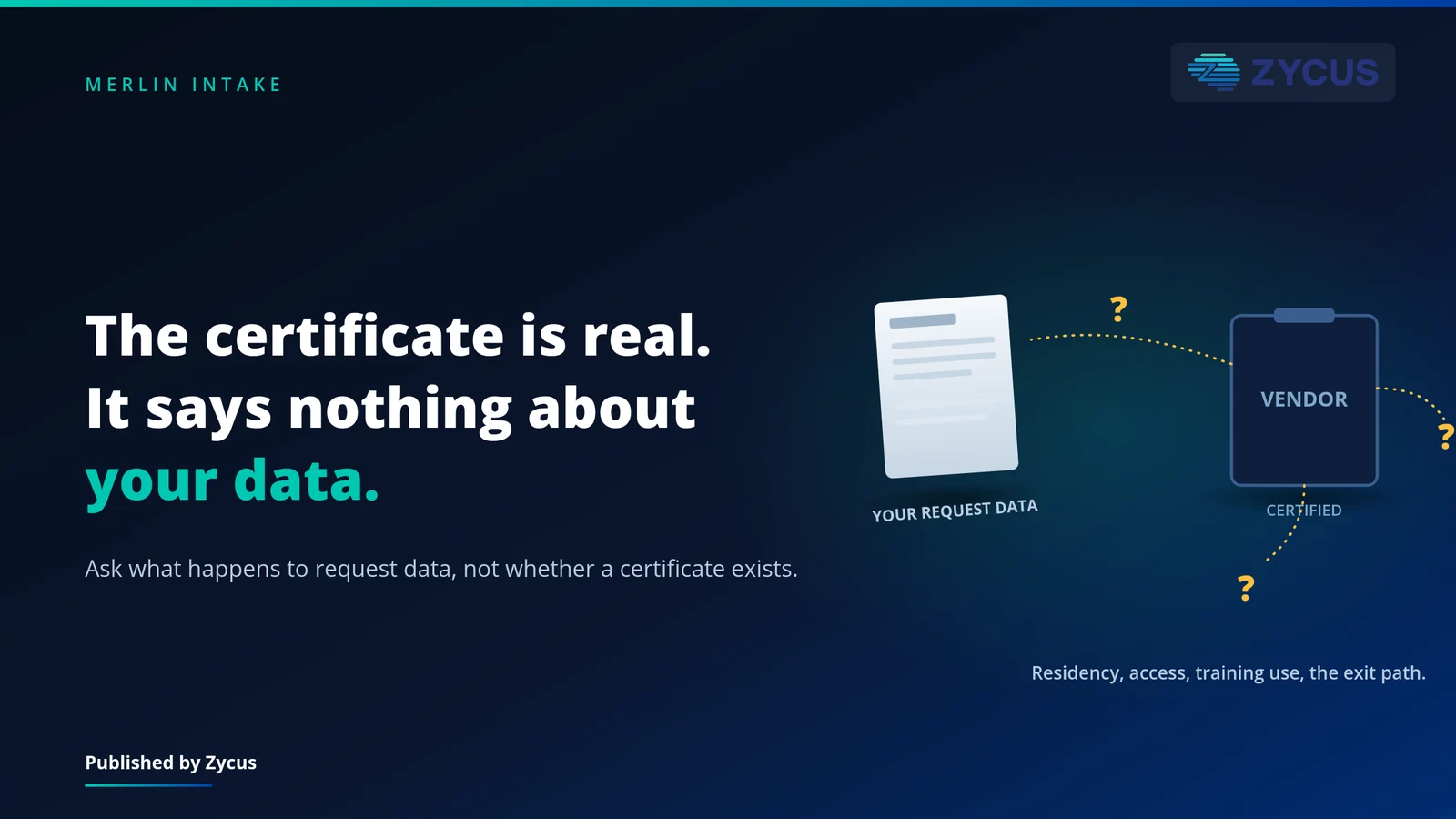
Because here’s what nobody mentioned in the sales deck: capturing a request and fulfilling a request are two very different things. Intake solved the first. It did nothing for the second.
Spend Matters put it bluntly in their 2025 market analysis: organizations “stop there without addressing the complexity of the workflows on the other end.” The intake tool became a beautifully designed cul-de-sac.
Read more: Intake-to-Abandonment: The Hidden Failure Mode CPOs Aren’t Talking About
The 40% Problem That Got Swept Under the Rug
Here’s the math that should have killed the intake-as-panacea narrative before it started.
McKinsey research shows indirect spend can hit 15-18% of revenue in many industries. Of that, roughly 40% flows through spot buying and non-cataloged purchases—one-off needs that don’t fit neatly into any pre-negotiated contract or supplier catalog.
That’s not a rounding error. That’s a massive chunk of everyday business purchasing.
When the marketing team needs a last-minute event photographer. When facilities need an emergency plumber. When IT needs a niche SaaS tool for a three-month pilot, none of this exists in a catalog. None of it has pre-approved pricing. None of it fits the guided buying paradigm.
The Hackett Group’s research confirms it: these purchases are “too small to go through procurement and not frequent enough to be included in cataloged systems.”
So what happens when a business user submits one of these requests through the shiny new intake portal?
Exactly what happened before. Nothing. Or worse—the illusion of something, followed by nothing.
At least before intake, users knew they were on their own. Now they feel like they’ve been handed a ticket to a line that doesn’t move.
Business Users Aren’t Frustrated. They’re Done.
Let’s be clear about who’s paying the price here.
It’s not procurement. They got their “digital transformation” checkbox. They got the executive presentation showing intake adoption rates.
It’s the marketing manager who needed to book a vendor for a product launch and gave up after three days of silence.
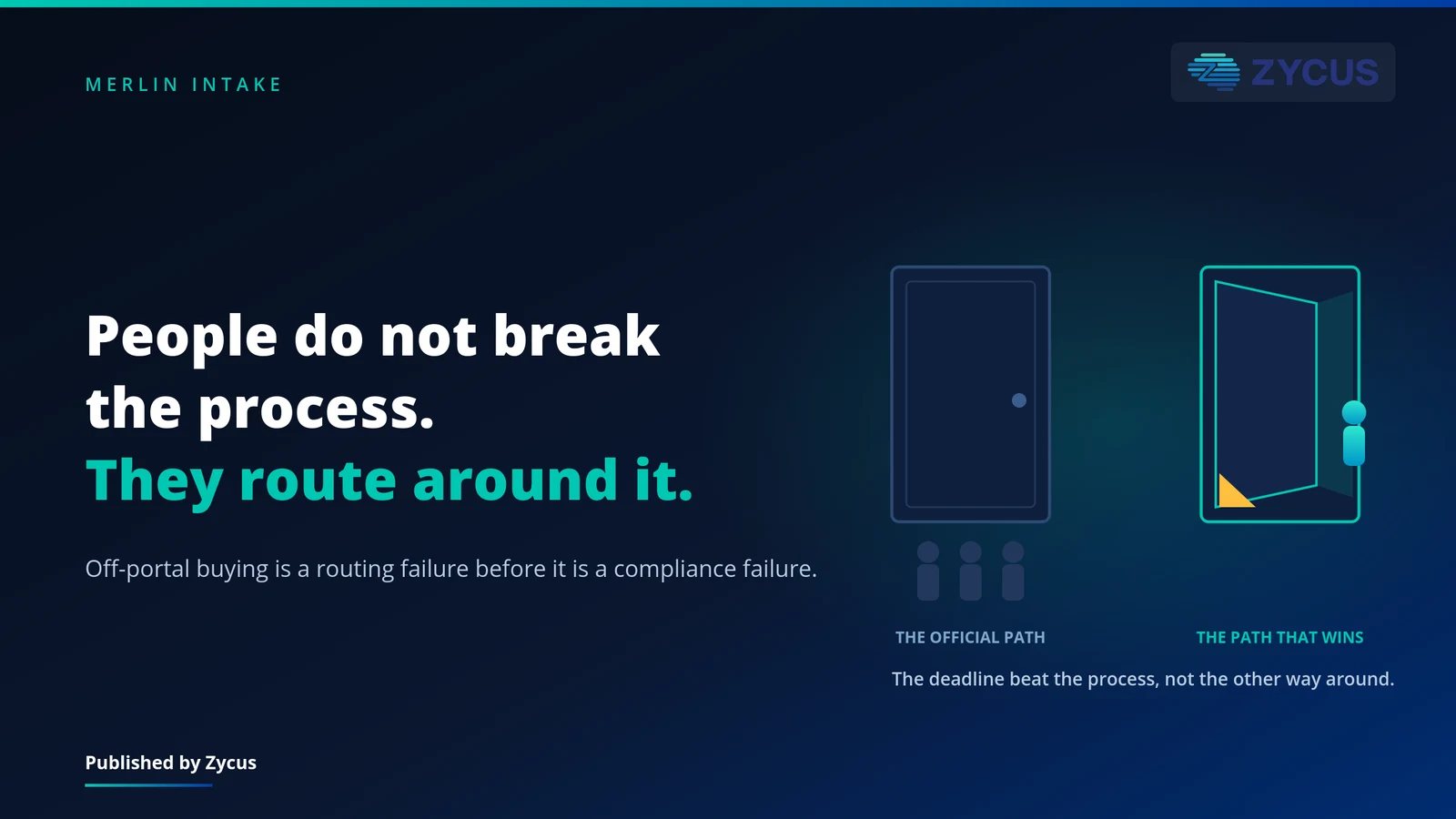
It’s the facilities coordinator who submitted an urgent repair request, got no response, and called a contractor directly—on a personal credit card.
It’s the HR lead who needed a specialized recruiter, couldn’t find one in the catalog, and just… figured it out outside the system.
These aren’t edge cases. Boston Consulting Group’s 2024 research shows that without proper tail spend management, significant portions of organizational spend remain invisible to procurement. That invisibility isn’t random. It’s the direct result of systems that capture requests but can’t complete them.
The Deloitte 2025 CPO Survey notes that “internal customer CSAT” is becoming the new North Star for procurement leaders. Here’s the problem: you can’t achieve stakeholder satisfaction by documenting stakeholder frustration in a prettier interface.
How Did We Get Here?
The intake wave wasn’t malicious. It was a reasonable response to a real problem, procurement systems that business users hated.
But somewhere, the solution got confused with the destination.
Intake is a starting point. It’s the front door. It was never supposed to be the whole house.
The vendors who sold it as a transformation play either didn’t understand this or didn’t care. The procurement leaders who bought it were solving for the problem they could see (bad UX) rather than the problem that actually matters (completing purchases).
The Art of Procurement’s 2025 State of AI report puts it diplomatically: guided buying interfaces “haven’t fully delivered on their promise.” Translation: they promised a lot, delivered a little, and left business users worse off than before, because now there’s an expectation of help that doesn’t materialize.
The Real Question Nobody Asked
Before deploying any intake system, there’s one question that should have been mandatory:
What happens after someone submits a request for something that isn’t in our catalog?
If the answer is “it goes to a queue” or “someone reviews it manually” or “we route it to the right team”, that’s not an answer. That’s the problem restated.
For 40% of business purchases, there is no catalog. There is no pre-negotiated contract. There is no approved supplier list. The request is the starting point of a sourcing process, not a lookup in a database.
Intake tools weren’t built for this. They were built to route known requests to known solutions. When the request is unknown—which it is, 40% of the time—they have nothing to offer.
What Actually Closes the Loop
The distinction that matters in 2025 isn’t “intake vs. no intake.” It’s “assisted vs. agentic.”
Most procurement AI—including most intake tools—is assistive. It helps humans do things faster. Better search. Smarter routing. Automated approvals for straightforward requests. All useful. All limited by the same constraint: a human still has to do the actual work of sourcing, negotiating, and purchasing.
Agentic AI is different. It doesn’t just assist—it acts. It takes a request for something that doesn’t exist in the catalog and actually does something about it: identifies potential suppliers, gathers quotes, evaluates options against policy, negotiates within parameters, and routes for approval. Autonomously.
Zycus Merlin ANA was built for exactly this gap. It treats non-cataloged spend not as an exception to be handled manually, but as the default use case for autonomous execution. The intake request becomes a trigger for a complete purchasing process, not a ticket to a queue that never moves.
That’s the difference between a front door that opens to a hallway and a front door that opens to a wall.
Watch On-demand webinar: How AI-Enabled Intake Turns Into Measurable Outcomes
The 2026 Reckoning
Gartner’s 2025 trends analysis is clear: CPOs must balance cost and quality with speed and user experience. Those aren’t nice-to-haves anymore. They’re table stakes.
Organizations that spent 2025 deploying intake-only solutions are going to face hard questions in 2026. Adoption metrics won’t be enough. Executives will want to know: did this actually help our people buy what they need?
For a lot of organizations, the honest answer will be uncomfortable.
The good news: the gap between intake and outcome is solvable. But it requires admitting that intake was never the solution—just the first step toward one.
The Bottom Line
2025 wasn’t the year procurement got transformed. It was the year procurement got a new front door bolted onto the same broken house.
Business users noticed. They submitted requests, waited for help that never came, and quietly went back to their workarounds.
The wool is coming off. The question now is what comes next.
For procurement leaders still evaluating their tech stack: stop asking whether your intake portal is pretty. Start asking whether it actually helps anyone buy anything.
Because a front door that opens to nowhere isn’t a door. It’s a decoration.
Ready to close the gap between intake and outcome? See how Merlin ANA turns requests into completed purchases at Merlin ANA Interactive Demo
Related Reads:
- TechWatch: Integrated & Intelligent Source-to-Pay
- White Paper: Kill The Complexity- A Practical Handbook for Tackling Key Challenges in Procurement and Sourcing
- Solution: GenAI Powered Merlin Intake
- The Integration Imperative: Transforming Procurement Efficiency with Built-In Intake Management
- Beyond S2P: Why the Future of Procurement Is Intake-to-Outcome (I2O)
- The Intake Advantage: Your Next Step in S2P for Fast-Growing Procurement Teams