

TL;DR
- Invoice & payment management inefficiencies cost enterprises 1–3% of revenue annually, with manual AP workflows averaging $10–$15 per invoice versus under $3 for fully automated processes.
- Without streamlined invoice & payment management, three-way matching failures and approval bottlenecks become the top causes of late payments—eroding supplier trust and forfeiting early payment discounts worth 1–2% of spend.
- AI-powered invoice & payment management reduces processing cycle times by up to 80%, shifting accounts payable from a reactive cost center to a strategic cash flow optimization function.
- Exception handling consumes 40–60% of AP team effort—modern invoice & payment management platforms use intelligent routing and predictive resolution to cut resolution times from days to hours.
- Real-time visibility through centralized invoice & payment management unlocks working capital trapped in payables, enabling dynamic discounting and DPO optimization without damaging supplier relationships.
- Zycus Merlin AI transforms invoice & payment management end-to-end — from touchless invoice ingestion and smart three-way matching to intelligent payment orchestration—eliminating AP bottlenecks at scale.
Invoice and payment management is the operational backbone of every finance function — and for most organizations, it is also where the most avoidable inefficiencies hide. Despite decades of digital transformation, the average accounts payable department still spends $12.88 to process a single invoice, takes over nine days to complete the cycle, and watches more than half of all invoices arrive late or with errors (Ardent Partners, 2025).
Read more: What is Invoice Approval Workflow?
These are not minor process irritations. They are systemic bottlenecks that directly erode working capital, damage supplier relationships, and expose the organization to fraud and compliance risk. As McKinsey’s research on AI in finance highlights, AI-powered agentic workflows are enabling the next level of automation in payable and receivable processes — yet nearly two-thirds of organizations have not begun scaling AI across the enterprise. In 2025, for the first time in 19 years of Ardent Partners’ research, invoice exceptions overtook cost reduction as the number-one challenge cited by AP professionals.
This blog breaks down the five costliest AP bottlenecks, explains why they persist even in partially automated environments, and maps out what procurement-led invoice and payment management looks like when it actually works.
Download Whitepaper: Accounts Payable Automation Survey
The 5 Costliest Bottlenecks in Accounts Payable
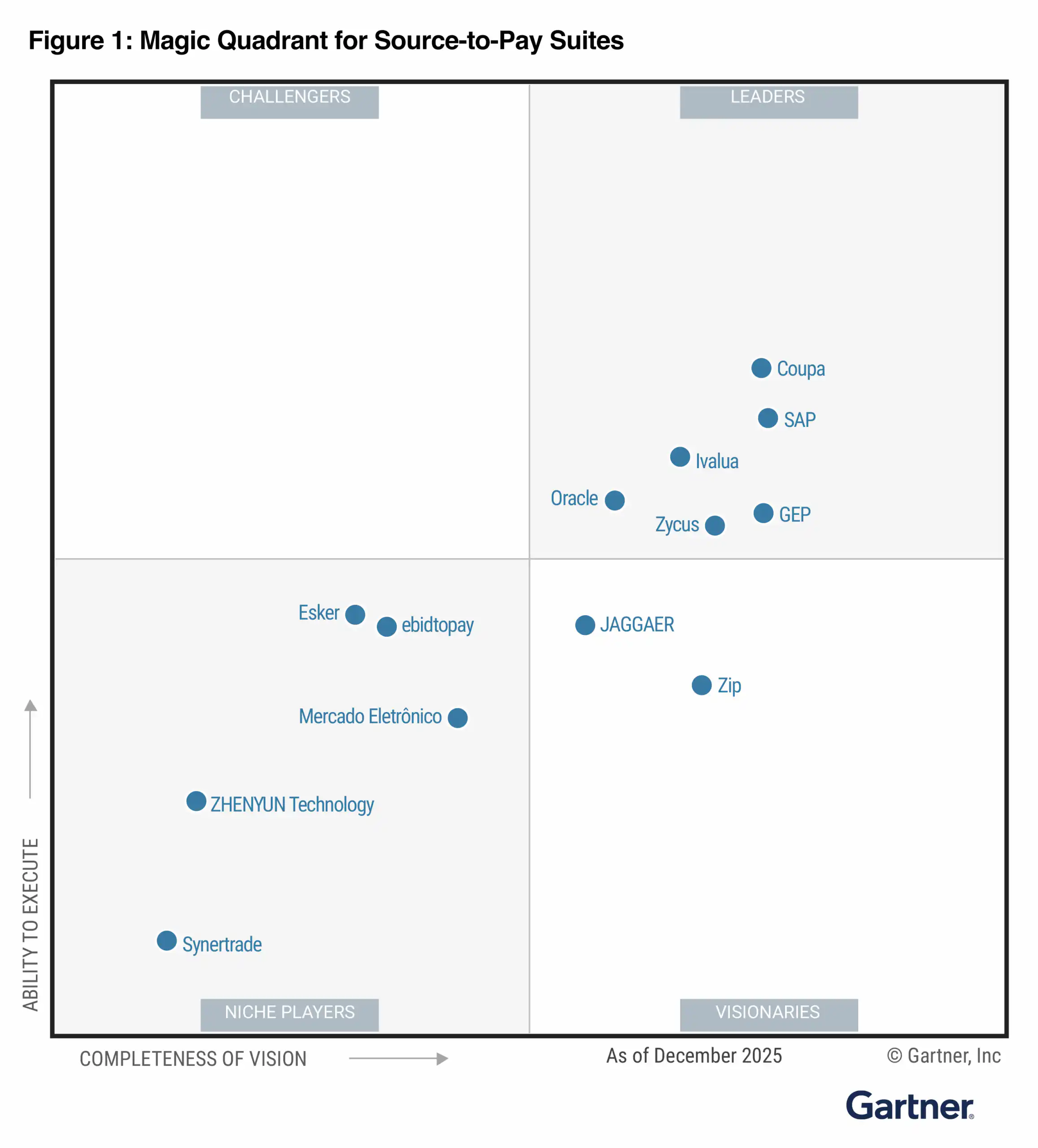
Not all AP inefficiencies are created equal. Some slow things down; others actively drain cash. According to the Gartner Magic Quadrant for Accounts Payable Applications (2025), the AP automation market is growing at a 12.8% CAGR through 2030 as businesses face increasing pressure to embrace digital transformation. Here are the five bottlenecks that cause the most measurable financial damage across mid-market and enterprise organizations.
1. Invoice Exceptions: The Silent Margin Killer
An invoice exception occurs any time a submitted invoice does not match the corresponding purchase order or goods receipt — wrong quantities, pricing mismatches, missing data fields, or duplicate submissions. According to Ardent Partners’ 2025 research, the average exception rate sits at 14% across all organizations, and each exception costs approximately $53 to resolve when you factor in staff time, rework, and supplier follow-up. For a company processing 10,000 invoices per month, that translates to over $890,000 annually in exception-handling costs alone.
2. Manual Data Entry: The 4x Productivity Gap
Despite widespread awareness of automation benefits, 68% of AP teams still manually key invoice data into their ERP systems (APQC, 2024). This creates a staggering productivity difference: an AP clerk in a manual environment processes roughly 6,082 invoices per year, while a fully automated team processes 23,333 per FTE. As McKinsey’s finance transformation research found, leading organizations have increased efficiency in transactional AP functions by 39% or more, and their research projects that 42% of finance activities will be fully automated in the coming years.
3. Approval Delays: Where Invoices Go to Wait
Invoice approvals account for over 60% of total invoice processing time. The average invoice cycle is 9.2 days end-to-end, but best-in-class organizations finish in 3.1 days while laggards take 17.4 days (Ardent Partners, 2025). The root cause is typically multi-layered approval chains: 29% of enterprises require six or more sign-offs, meaning a single invoice can sit in a queue for weeks. Approval bottlenecks are especially acute for non-PO invoices, which often lack a clear routing path and require manual intervention to determine the right approver.
4. Late Payments and Missed Discounts
Slow invoice processing has a direct cash impact. 55% of all B2B invoices in the United States are overdue, and the average company loses $39,406 annually to late-payment penalties and damaged supplier terms (Atradius, 2024). Early payment discount capture remains low at just 58% across all organizations. Best-in-class AP teams capture 85–95% of available discounts, which on a 2/10 Net 30 basis translates to an annualized return exceeding 36%.
5. Duplicate Payments and Fraud Exposure
Between 0.8% and 2.5% of annual disbursements are duplicates or erroneous payments, with the average duplicate invoice valued at $2,034. Fraud risk compounds the problem: 79% of organizations experienced attempted or actual payments fraud in 2024, with invoice fraud incidents jumping from 14% to 24% year-over-year (AFP, 2025). As Gartner’s AP automation market research notes, hyperautomation technologies and ML-based document parsing are increasing touchless rates and accuracy to the high-90% range — critical defenses against fraud that rule-based systems miss.
Download eBook: Accounts Payable Trends & Automation Insights 2026
AP Performance: Manual vs. Automated — The Numbers
The gap between organizations that have invested in AP automation and those that have not is widening, not narrowing.
| AP Metric | Manual / Average | Automated / Best-in-Class | Improvement |
| Cost per invoice | $12.88 | $2.78 | 78% reduction |
| Invoice cycle time | 9.2 days (avg) | 3.1 days | 5.6x faster |
| Invoices per FTE / year | 6,082 | 23,333 | 3.8x productivity |
| Exception rate | ~22% | ~8% | 63% fewer exceptions |
| Error rate | ~2% | ~0.3% | 85% fewer errors |
| Touchless processing rate | < 10% | 49.2% | 5x+ throughput |
| Early payment discount capture | 58% | 85–95% | Up to 37% more captured |
| FTEs per $1B revenue | 14.4 | 3.3 | 77% fewer FTEs needed |
Why AP Bottlenecks Persist: The Procurement Disconnect
Here is what most AP automation vendors will not tell you: digitizing the invoice processing workflow alone does not eliminate bottlenecks. It just makes them faster to encounter.
The majority of invoice exceptions, matching failures, and approval delays originate upstream — in procurement. An invoice mismatches because the PO was never created correctly. An approval stalls because no one defined the routing rules at the requisition stage. Only 42% of organizations have a complete, integrated procure-to-pay solution in place (Ardent Partners, 2025). As McKinsey’s research on finance function transformation emphasizes, the key to unlocking the next level of efficiency is not automating individual tasks but standardizing and simplifying core workflows first — without that foundation, AI only adds to the complexity.
This is the fundamental shift that procurement and finance leaders need to make: AP automation is not an accounts payable project. It is a procurement project. The goal is not to process bad invoices faster. It is to ensure that by the time an invoice arrives, the system already knows the PO, the contract terms, the goods receipt, and the approved payment schedule.
What Best-in-Class AP Teams Do Differently
Organizations that achieve touchless processing rates above 49% and cycle times under 3.1 days share several operational characteristics that go beyond basic automation.
They automate invoice capture end-to-end: AI-powered OCR and intelligent data extraction replace manual keying for all invoice formats. As Gartner observes in its Market Guide for AP Invoice Automation, ML-based parsing of machine-readable documents can push accuracy rates into the high-90% range, dramatically reducing the validation overhead that causes most processing delays.
They connect invoice matching to procurement data: Automated two-way and three-way matching against POs and goods receipts eliminates the guesswork. When the invoice, PO, and receiving data are linked in a single system, the match happens in seconds, not days. Exceptions that do arise get flagged with root-cause detail — not just a generic mismatch alert.
They use intelligent approval routing: Rather than rigid, multi-level approval chains, best-in-class teams configure dynamic workflows based on invoice value, category, supplier risk tier, and contract terms. Low-risk, PO-matched invoices route directly to payment. Only exceptions and high-value non-PO invoices require human approval.
They deploy AI for anomaly detection and fraud prevention: Machine learning models flag duplicate invoices, unusual payment patterns, and potential fraud before payment is authorized. This is critical given that 79% of organizations faced payment fraud attempts in 2024 (AFP). As McKinsey’s AI in finance report documents, a global biotech company deployed an agentic AI system that ingests contracts and invoices throughout the year and checks that all contract terms are correctly applied — catching discrepancies that rule-based systems miss.
They optimize payment timing strategically: With real-time visibility into cash positions and supplier terms, leading AP teams capture early payment discounts (achieving 85–95% capture rates) while also managing payment timing to maximize working capital. This dual optimization turns AP from a cost center into a margin contributor.
Building a Bottleneck-Free AP Operation: A 4-Step Framework
Eliminating AP bottlenecks is not a one-time technology purchase. It is a phased operational transformation that connects procurement intelligence to payment execution.
| Phase | Focus | Key Actions |
| 1. Assess | Baseline your bottlenecks | Measure cost-per-invoice, cycle time, exception rate, and touchless rate. Identify top 3 root causes by volume. |
| 2. Automate | Digitize capture and matching | Deploy AI-powered invoice capture, automated 2/3-way matching, and intelligent approval routing. Target 40%+ touchless rate in the first 90 days. |
| 3. Integrate | Connect AP to procurement | Link invoice processing to contract data, PO compliance, supplier performance, and receiving systems for end-to-end Source-to-Pay visibility. |
| 4. Optimize | Use AI to continuously improve | Deploy agentic AI for predictive exception handling, dynamic payment optimization, and autonomous supplier communication. Target 80%+ touchless rate. |
The organizations that get this right see transformational results: 200–600% first-year ROI with payback periods of 3–6 months (APQC, 2024). And because the improvements are systemic — tied to data quality, process design, and procurement integration — they compound over time.
The Future of Invoice and Payment Management: Agentic AI
The next frontier in AP automation is not just faster processing — it is autonomous decision-making. McKinsey defines agentic AI as an emerging class of AI that can independently pursue goals, make decisions, and take actions with limited human input. In the finance function, agentic AI can orchestrate time-consuming workflows like the accounting close process, resolve invoice exceptions by cross-referencing supplier agreements, and optimize payment timing based on cash positions and discount terms — all without waiting for a human to intervene.
A recent McKinsey CFO survey found that 44% of CFOs used gen AI for over five use cases in 2025 (up from just 7% the prior year), and 65% plan to increase gen AI investment in 2025. With Gartner projecting that more than 80% of enterprises will have deployed some form of generative AI by 2026, and the AP automation market projected to grow from $6.17 billion in 2025 to $12.46 billion by 2031, this is no longer a question of whether to invest. It is a question of how quickly you can close the gap.
Eliminate AP Bottlenecks with Zycus
Zycus’s AI-powered Source-to-Pay platform connects procurement intelligence directly to accounts payable execution — eliminating the upstream disconnects that cause most invoice bottlenecks. With Merlin AI agents handling invoice capture, three-way matching, exception resolution, and payment optimization, procurement and finance teams can move from firefighting exceptions to driving strategic value.
Request a demo to see how Zycus transforms invoice and payment management from a cost center into a margin driver.
FAQs
Q1. What is invoice and payment management?
Invoice and payment management refers to the end-to-end process of receiving, validating, approving, and paying supplier invoices. It encompasses invoice capture, data extraction, PO matching, approval workflows, payment execution, and reconciliation. Effective invoice and payment management ensures organizations pay the right amount, to the right supplier, at the right time — while minimizing manual effort, errors, and fraud risk.
Q2. How much does it cost to process an invoice manually vs. with AP automation?
According to Ardent Partners’ 2025 benchmarking data, the average cost to process a single invoice is $12.88. Organizations using comprehensive AP automation reduce this to $2.78 per invoice — a 78% cost reduction. Paper-based processing is even more expensive, ranging from $18 to $26 per invoice when factoring in printing, mailing, storage, and manual handling.
Q3. What is touchless invoice processing?
Touchless invoice processing (also called straight-through processing) is the automated handling of an invoice from receipt to payment approval without any manual human intervention. As Gartner’s AP research highlights, hyperautomation technologies are increasing touchless rates at every step in the AP process. Best-in-class organizations achieve touchless processing rates of 49.2%, compared to an industry average of 32.6% (Ardent Partners, 2025).
Q4. What is three-way matching in accounts payable?
Three-way matching is a verification process that compares three documents before an invoice is approved: the purchase order (PO), the goods receipt, and the supplier invoice. When all three align on quantities, pricing, and terms, the invoice is approved automatically. AI-powered three-way matching accelerates this from days to seconds while reducing false-positive exception rates.
Q5. What ROI can I expect from AP automation?
Research from APQC (2024) shows that AP automation delivers 200–600% first-year ROI, with most organizations achieving payback within 3–6 months. Key ROI drivers include reduced cost-per-invoice (up to 78% lower), faster cycle times (up to 5.6x improvement), higher early payment discount capture (85–95% vs. 58% average), reduced FTE requirements (77% fewer staff per $1B revenue), and lower fraud and duplicate payment losses.
Q6. How does AP automation help prevent invoice fraud?
AP automation prevents fraud through multiple layers: automated duplicate detection, AI-based anomaly detection for unusual patterns, automated three-way matching against POs and deliveries, and complete audit trails. Given that 79% of organizations experienced payment fraud attempts in 2024 (AFP), automated controls have become essential.
Related Reads:
- E-Invoicing in Accounts Payable: Boost Efficiency & ROI in Your Business
- How to Transition to Paperless Invoicing: A Step-by-Step Guide
- Leveraging Accounts Payable Automation to Stay Ahead in a Competitive Market
- The Ultimate Guide to Accounts Payable 2026: Process, Automation & Best Practices
- Navigating the Shift: What is a Paperless Accounts Payable System?
- Attributes of a Best-In-Class AP Operations- Cost & Time Optimization