








TL;DR
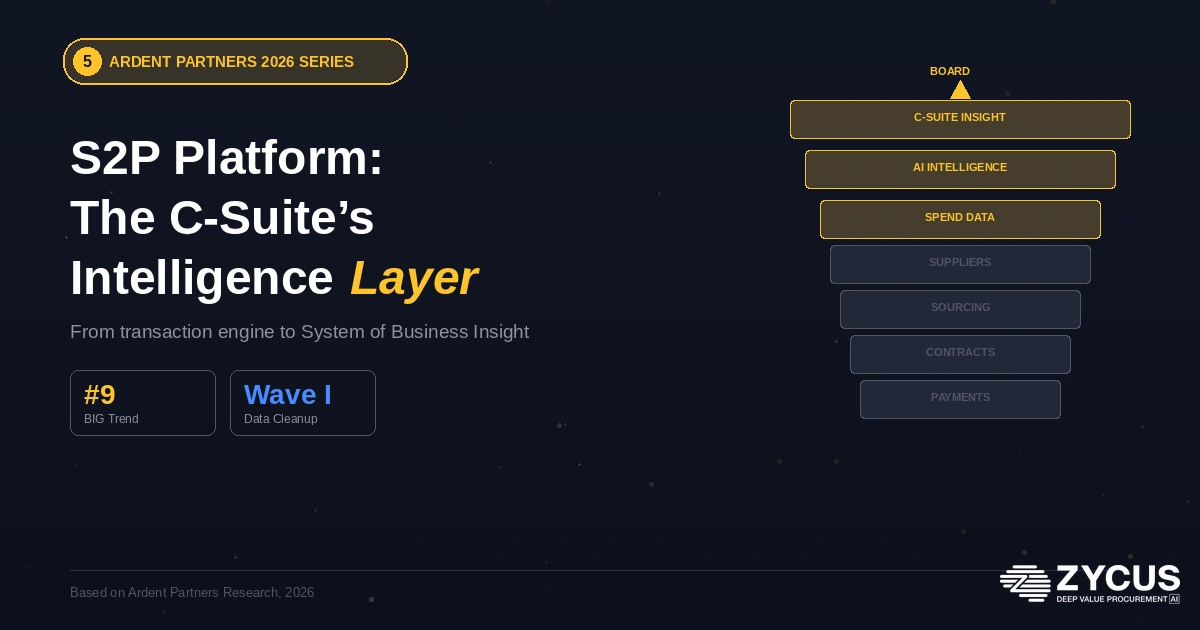
- Ardent Partners declares that S2P platforms are evolving from “systems of engagement” into “Systems of Business Insight” — where the CEO and CFO go to understand margin risk, liquidity, market exposure, and ESG compliance.
- This elevation places procurement at the hub of business operations, intelligence, and outcomes — not as a cost center processing transactions, but as the enterprise’s primary window into external market dynamics.
- BIG Prediction #4 reinforces this: procurement data is becoming boardroom-grade. Spend, supplier, and contract data are now trusted, audit-ready inputs for executive strategy and board-level governance.
- The platform’s ability to serve as an intelligence layer depends on architecture: unified platforms with a single data model connecting intake to payments deliver the 360-degree view the C-suite demands. Fragmented, multi-module platforms cannot.
- Wave I of the CPO Strategic Playbook — Sanitize the Source — positions data hygiene as the foundation for every AI and risk initiative. Without trusted data, the platform cannot serve as a boardroom-grade intelligence asset.
For most of its history, the procurement platform has been asked a simple question: did the transaction happen correctly? Was the PO issued? Did the invoice match? Was the payment made on time?
These are important questions. They are also the wrong ones to lead with in 2026.
Ardent Partners’ Procurement 2026: BIG Trends and Predictions signals a fundamental repositioning. BIG Trend #9 states it directly: procurement platforms are becoming Systems of Business Insight. Not systems of record. Not systems of engagement. Systems that the CEO and CFO rely on to understand margin risk, liquidity, market risk, and ESG compliance.
This is the logical culmination of the shifts we have traced through this series. Autonomous procurement generates data. Intake orchestration captures demand at its source. Precision savings produces financial intelligence. Category intelligence creates real-time market visibility. All of that data has to live somewhere. And the platform that houses it is no longer just processing transactions — it is informing enterprise strategy.
From Transaction Engine to Strategic Asset
The transition Ardent describes is not incremental. A “system of engagement” processes transactions. A “system of business insight” informs strategy. The difference is not just in the data that is captured, but in how it is surfaced, analyzed, and acted upon.
Consider what sits inside a modern S2P platform: every supplier relationship, every contract term, every price point, every spend pattern, every risk signal, every compliance status. Consolidated and analyzed correctly, this data offers something no other enterprise system can provide — a real-time view of the organization’s external economic exposure. How much are we spending with suppliers in tariff-affected regions? Which contracts expire in the next 90 days during a period of market volatility? Where is our supplier concentration risk highest?
These are not procurement questions. They are CEO questions. CFO questions. Board questions. And the S2P platform is increasingly where the answers live.
Boardroom-Grade Data
BIG Prediction #4 adds a critical dimension: in 2026, procurement data becomes boardroom-grade. Spend, supplier, and contract data are being elevated to trusted, decision-ready inputs for executives and finance leaders. Boards will start relying on this data to track financial measures and compliance, assess geopolitical exposure, and validate margin projections.
The implication is significant and often underestimated. Boardroom-grade means audit-ready. It means the CFO trusts the numbers enough to include them in investor communications. It means the data survives scrutiny from external auditors and regulatory bodies. This is a standard that most procurement data operations have not historically been built to meet.
Which is why Wave I of Ardent’s Five-Wave CPO Strategic Playbook is Sanitize the Source: The Great Data Cleanup. The report argues that the Genesis of Autonomy cannot begin without audited, boardroom-grade data. This wave focuses on elevating spend, supplier, and contract data into a trusted asset — ensuring the CFO views procurement’s insights as financial truths, not operational estimates. Every AI initiative, every risk model, every autonomous agent depends on this foundation.
Data hygiene is unglamorous work. It does not generate conference keynotes or vendor demos. But without it, every intelligence capability built on top of the platform is compromised. The CPO who invests in data quality in the first half of 2026 builds the foundation that makes everything else possible.
The Architecture That Enables Intelligence
Not every S2P platform is built to serve as an enterprise intelligence layer. And this is where the architectural choices that procurement teams have made — or avoided — over the past decade come into sharp focus.
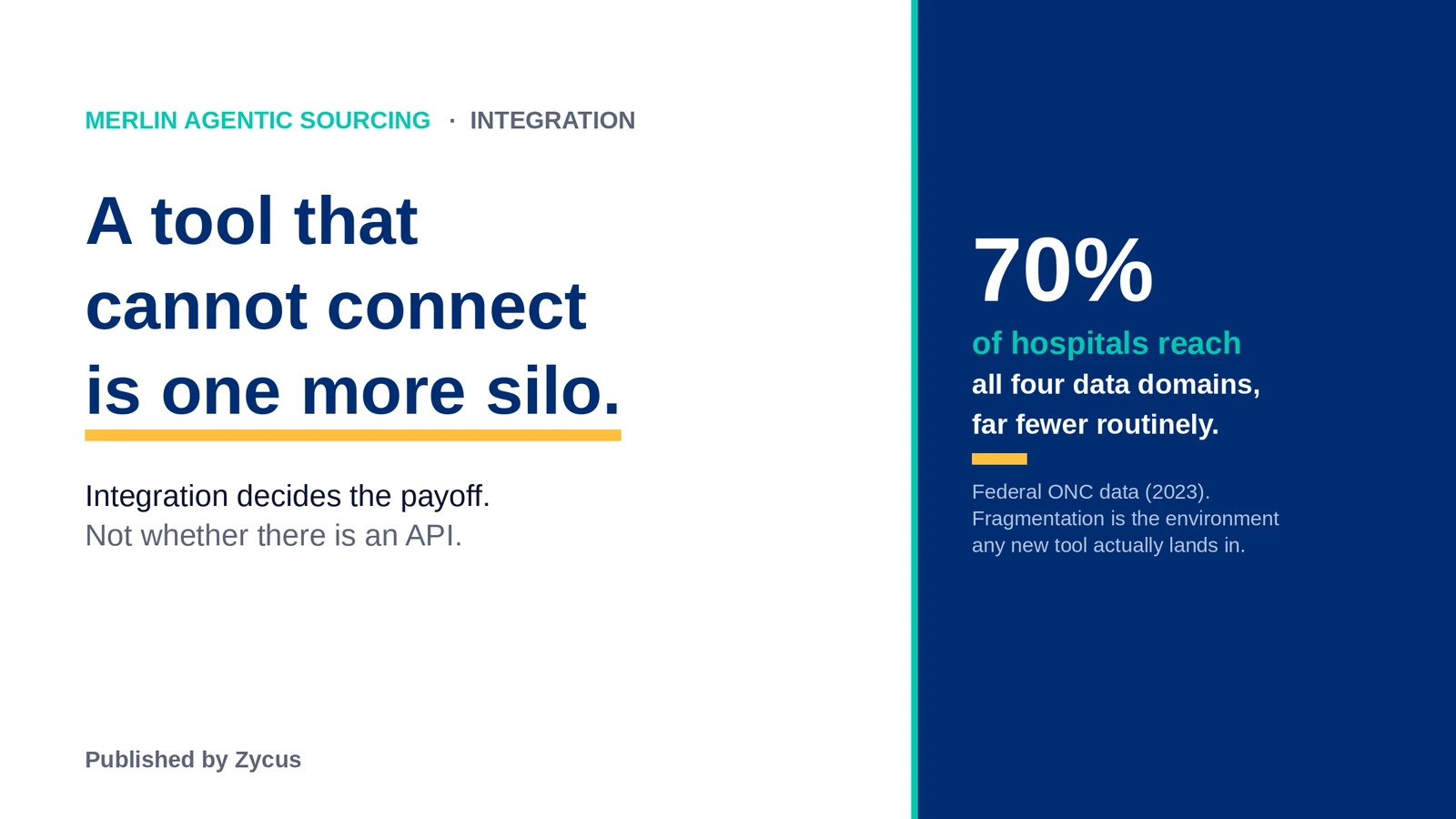
Platforms built through acquisition — where spend analytics sits in one database, contract management in another, supplier information in a third, and intake in a fourth — cannot deliver the unified intelligence that Ardent describes. The data exists, but it is fragmented across systems with different data models, different taxonomies, and different update cycles. Producing a 360-degree view requires complex integrations that introduce latency, reconciliation errors, and maintenance overhead.
Platforms built on a single architecture — where intake, sourcing, contracts, procurement, invoicing, payments, and supplier management share one data model — produce the unified intelligence natively. The CEO’s question about tariff exposure can be answered by querying one system, not five. The CFO’s request for margin risk analysis draws from the same data that powers the category manager’s daily decisions.
The report’s emphasis on this point is clear: the elevation of the platform will place procurement at the hub of business operations, business intelligence, and business outcomes. For CPOs, the platform decision is no longer a technology choice. It is a strategic positioning decision that determines whether procurement operates as a back-office function or as the enterprise’s primary intelligence layer.
The CPO’s Seat at the Table
Ardent’s CPO takeaway captures the stakes: “Leverage your procurement platform as a strategic insight powerhouse for the executive suite, not simply as a transaction engine.”
This is the practical manifestation of the CPO’s rising strategic role — a theme that runs through every trend and prediction in the report. The CPO who can walk into a board meeting and present real-time supply chain exposure, savings pipeline, and supplier risk posture — drawn from a platform the CFO trusts — is operating at a different level than one who reports on PO cycle times and invoice processing rates.
But building an intelligence layer requires making the right technology choices. And in 2026 — a year Ardent calls the Year of Pilots and Mass Experimentation — the pressure to choose quickly is intense. As we explore next, not every AI pilot will deliver, and separating real value from marketing hype demands a disciplined approach.
The Ardent Partners report details the full evolution of procurement platforms alongside the CPO Strategic Playbook and Five-Wave execution framework. Download Procurement 2026: BIG Trends and Predictions for the complete analysis.
Continue Reading
Previous in this series: From Category Plans to Category Intelligence: Procurement’s Data Revolution
Next in this series: The Year of Pilots: How to Separate AI Value from Marketing Hype
FAQs
Q1. What does it mean for an S2P platform to be a “System of Business Insight”?
Ardent Partners describes the shift from S2P platforms processing transactions to serving as the enterprise’s primary intelligence layer. A System of Business Insight consolidates spend data, supplier intelligence, contract terms, and market signals to provide the CEO and CFO with real-time visibility into margin risk, liquidity, market exposure, and ESG compliance — moving procurement from back-office processing to strategic enterprise intelligence.
Q2. What does boardroom-grade procurement data mean?
Boardroom-grade means procurement data — spend, supplier, and contract information — that meets audit-ready standards of accuracy and rigor. Boards rely on this data to track financial measures, assess geopolitical exposure, and validate margin projections. It requires the CFO to trust procurement’s numbers enough to include them in investor communications and regulatory filings.
Q3. Why is data hygiene the first priority in the CPO Strategic Playbook?
Wave I of Ardent’s Five-Wave Playbook — Sanitize the Source — positions data cleanup as the foundation for every subsequent initiative. Without audited, trusted data, AI models produce unreliable outputs, risk assessments are incomplete, and autonomous agents make decisions on flawed inputs. The report argues that the Genesis of Autonomy cannot begin without boardroom-grade data quality.
Q4. Why does platform architecture matter for procurement intelligence?
Platforms built through acquisition house data in separate databases with different models and taxonomies, requiring complex integrations that introduce latency and errors. Platforms built on a single architecture — where intake, sourcing, contracts, payments, and supplier management share one data model — produce unified intelligence natively. The 360-degree view the C-suite demands can only come from a platform that does not need to reconcile across fragmented systems.
Q5. How does this intelligence layer support the CPO’s strategic role?
When the S2P platform serves as a System of Business Insight, the CPO can present real-time supply chain exposure, savings pipeline, and supplier risk posture to the board — drawn from a source the CFO trusts. This elevates procurement from reporting on operational metrics to informing enterprise strategy. Ardent Partners frames this as procurement moving to the hub of business operations, intelligence, and outcomes.
Q6. What questions can the C-suite answer through a procurement intelligence platform?
Questions like: What is our total spend exposure in tariff-affected regions? Which critical contracts expire during periods of market volatility? Where is our supplier concentration risk highest? What is our current ESG compliance posture across the supply base? What savings opportunities exist in the next 90 days? These are board-level questions that a unified S2P platform can answer in real time.
Related Reads:
- Source to Pay (S2P): A Complete End-to-End Procurement Guide
- Keep It Simple, Yet Smart: Demystifying the Source to Pay Process
- Linking Source-to-Contract & Procure-to-Pay
- Whitepaper: The ROI of Source-to-Pay Transformation: How Smart Procurement Leaders Are Using AI to Deliver Real Value
- Whitepaper: 8 Reasons to go for an Integrated Source-to-Pay Suite