








TL;DR
- Penn State procurement highlights the complexity and visibility of procurement in large public institutions.
- Public sector procurement systems must balance transparency, compliance, and speed under constant scrutiny.
- Challenges in procurement and ticketing show how manual and siloed systems increase risk and inefficiency.
- Digital and AI-enabled public sector procurement systems improve governance, spend visibility, and accountability.
- Lessons from Penn State procurement apply to universities, government agencies, and other public organizations.
- Modern procurement platforms help public institutions build trust while delivering efficient, compliant outcomes.
Why Penn State is a Useful Case for Public Procurement
Public procurement is rarely in the spotlight until something goes wrong.
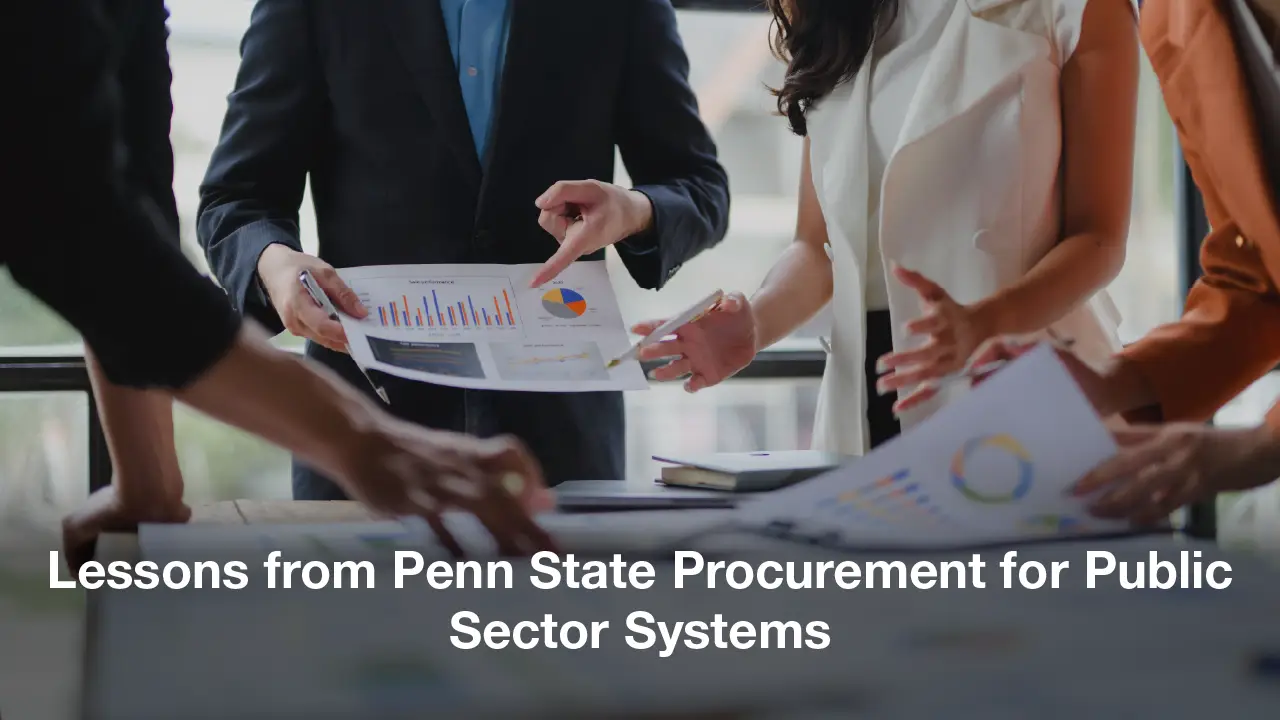
Penn State, one of the largest public universities in the U.S., operates in a highly visible environment where procurement decisions directly affect students, staff, vendors, and the public. From managing large supplier ecosystems to handling high-demand ticketing and event-related procurement, Penn State’s experience reflects the realities many public institutions face.
What makes Penn State procurement especially relevant is that it sits at the intersection of:
- Public funding and oversight
- Complex stakeholder expectations
- Operational scale and urgency
These same pressures exist across public sector procurement systems, from universities and municipalities to transportation authorities and healthcare systems.
Read more: Guide to Public Procurement: Strategies, Compliance & Digital Transformation
Understanding Procurement in Public Institutions
Public sector procurement is fundamentally different from private enterprise procurement.
What Makes Public Procurement Unique
Public organizations must prioritize:
- Transparency and fairness
- Regulatory compliance
- Audit readiness
- Responsible use of taxpayer funds
At the same time, they are expected to deliver services quickly and efficiently.
In institutions like Penn State, procurement is not just about purchasing, it’s about public trust.
The Penn State Ticketing Example: More Than Just Tickets
Penn State’s ticketing operations, especially for high-demand athletic events, offer a powerful lens into public procurement challenges.
Behind ticketing are procurement decisions related to:
- Technology platforms
- Vendor contracts
- Security and fraud prevention
- Customer service operations
When procurement processes are fragmented or outdated, issues can surface quickly and publicly.
This mirrors a broader reality: procurement failures in public institutions are highly visible, making governance and process integrity critical.
Common Challenges in Public Sector Procurement Systems
Complex Approval Structures
Public procurement often involves multiple layers of approvals, slowing down decision-making and increasing administrative burden.
Siloed Systems
Data spread across finance, procurement, and operational systems makes it difficult to get a unified view of spend and supplier performance.
Manual Processes
Paper-based or spreadsheet-driven workflows increase the risk of errors, delays, and non-compliance.
High Scrutiny and Audit Risk
Public institutions face frequent audits and public records requests, making traceability and documentation essential.
Penn State procurement challenges reflect these systemic issues, not isolated failures.
Where Procurement and Governance Intersect
Public procurement is as much about governance as it is about efficiency.
Key Governance Requirements
| Requirement | Why It Matters |
| Transparent sourcing | Ensures fairness and public trust |
| Documented approvals | Supports audits and compliance |
| Supplier accountability | Reduces risk and fraud |
| Budget controls | Protects public funds |
Without digital procurement systems, meeting these requirements becomes resource-intensive and error-prone.
The Role of Technology in Modern Public Procurement
Technology is no longer optional for public procurement, it is foundational.
How Digital Procurement Helps
- Centralizes procurement data
- Standardizes workflows
- Improves visibility into spend and suppliers
- Enables consistent policy enforcement
For institutions like Penn State, modern procurement technology supports both operational efficiency and public accountability.
Why Automation Matters in Public Procurement
Automation helps public organizations do more with limited resources.
Benefits of Automated Procurement Workflows
- Faster requisition and approval cycles
- Reduced manual errors
- Stronger budget and policy controls
- Better audit trails
In high-volume environments like university procurement and ticketing operations, automation reduces friction while maintaining oversight.
How AI Improves Public Sector Procurement Systems
AI takes digital procurement a step further by adding intelligence.
What AI Enables
- Spend pattern analysis to identify inefficiencies
- Early detection of compliance risks
- Predictive insights for demand planning
- Smarter supplier evaluation
AI-driven public sector procurement systems help institutions move from reactive management to proactive governance.
Lessons Public Agencies Can Learn from Penn State
Penn State procurement and ticketing challenges offer broader lessons for public sector leaders.
Key Takeaways
| Lesson | Implication for Public Procurement |
| Visibility matters | Siloed data increases risk |
| Speed must be governed | Fast decisions still need controls |
| Public trust is fragile | Procurement errors have a reputational impact |
| Scale amplifies issues | Small gaps grow quickly at scale |
These lessons apply across public universities, government agencies, and public utilities.
What Modern Public Procurement Systems Should Include
To meet today’s expectations, public sector procurement systems should offer:
- End-to-end procurement workflows
- Budget and policy enforcement
- Supplier lifecycle management
- Real-time reporting and audit readiness
- AI-driven insights for decision support
This combination supports both efficiency and accountability.
How Zycus Supports Public Sector Procurement
Zycus provides an AI-powered Source-to-Pay platform designed to meet the needs of complex, regulated environments.
Zycus Capabilities for Public Procurement
| Public Sector Need | Zycus Capability |
| Transparent sourcing | Digital, auditable sourcing workflows |
| Policy enforcement | Automated approvals and controls |
| Spend visibility | Real-time analytics and dashboards |
| Compliance readiness | Centralized documentation and traceability |
| Intelligent insights | AI-driven risk and spend analysis |
For public institutions, Zycus helps procurement teams operate with confidence, consistency, and clarity.
Customer Testimonial: How DTP Is Innovating Public Sector Procurement
Why Public Procurement Must Evolve Now
Public organizations face increasing pressure to:
- Deliver services faster
- Use funds responsibly
- Demonstrate transparency
- Adapt to changing public expectations
Legacy procurement models cannot keep up with these demands.
The lessons from Penn State procurement and ticketing show why modernization is not just about technology, it’s about trust, governance, and resilience.
Read the Success Story: Victorian Government Subsidiary Standardizes 10,000 Contracts with Zycus
Final Thoughts
Penn State procurement and ticketing challenges offer a clear reminder: public procurement is always under scrutiny.
When processes are manual or fragmented, risks multiply quickly. When systems are modern, transparent, and intelligent, procurement becomes a foundation for trust and efficiency.
By learning from real-world examples like Penn State, public sector organizations can build procurement systems that are not only compliant but resilient, accountable, and future-ready.
Learn how Zycus helps public sector organizations modernize procurement with AI-driven Source-to-Pay. Book a demo today
FAQs
Q1. What is Penn State procurement?
Penn State procurement refers to the university’s processes for sourcing goods and services, managing suppliers, and ensuring compliance with public sector regulations.
Q2. How does public sector procurement differ from private procurement?
Public sector procurement emphasizes transparency, fairness, and compliance, often involving stricter regulations and audit requirements.
Q3. What are public sector procurement systems?
Public sector procurement systems are digital platforms that manage sourcing, purchasing, supplier management, and compliance for government and public institutions.
Q4. Why is procurement important in public universities?
Procurement ensures responsible use of public funds, supports operational efficiency, and maintains public trust in institutions like Penn State.
Q5. How can technology improve public procurement?
Technology improves visibility, standardizes workflows, reduces manual effort, and strengthens compliance and audit readiness.
Related Reads:
- Guide to Public Procurement: Strategies, Compliance & Digital Transformation
- Government Procurement: A Strategic Guide to Contracts, Process & Solutions
- Solution: Public Sector Intake Management
- Leveraging Technology in Public Procurement
- Procurement Innovation in Public Services: London’s Strategic Guide