








The ₱40 Million Migration Myth Holding Philippine Leaders Back
A procurement director from one of Manila’s largest conglomerates leaned back during the Day 2 breakout session I organized and said: “Everyone talks about digital transformation like it’s inevitable. But for us? We’re paying ₱15 million annually across five different procurement vendors that don’t talk to each other. Every consultant tells us we need digital transformation, but the price tag is ₱40 million and 18 months of operational chaos. So, we stay stuck while our competitors modernize.”
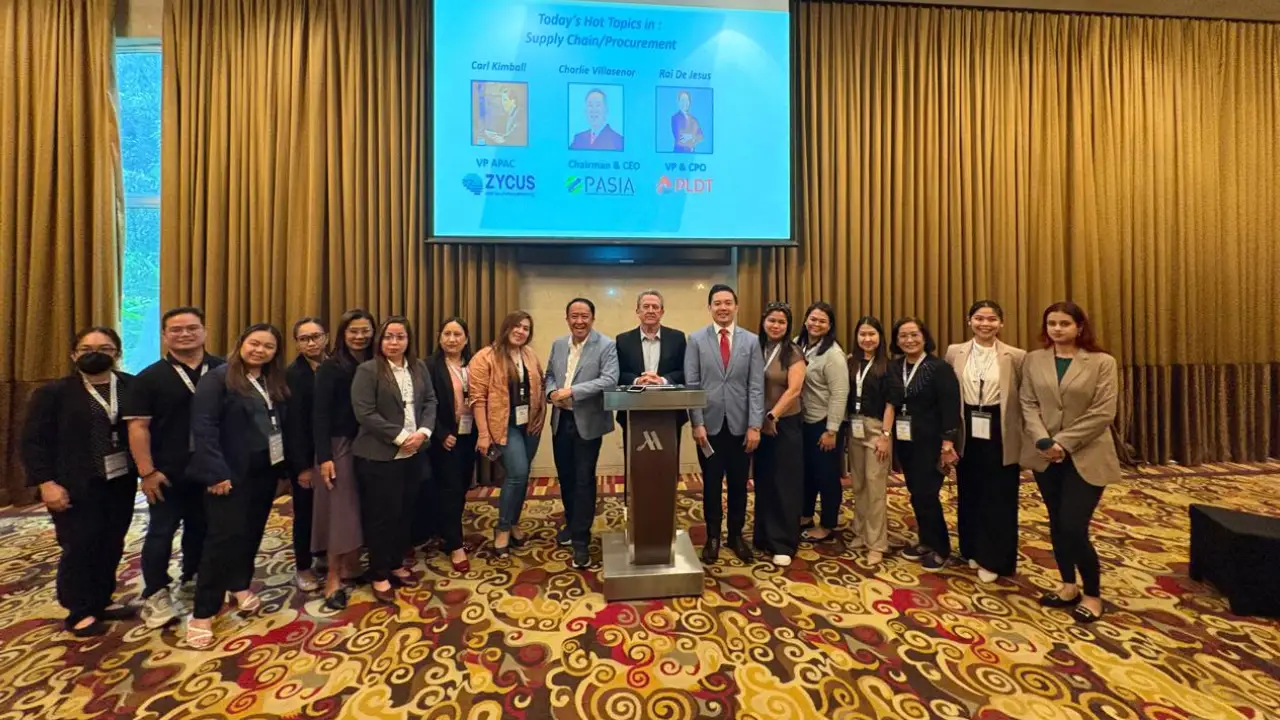
That conversation, repeated dozens of times over two days alongside a growing curiosity about Agentic AI, captured what I witnessed firsthand at PASIAWorld2025 (November 13-14, 2025, Marriott Hotel Manila): Philippine procurement leaders wanting to transform but lacking a practical roadmap that doesn’t require starting from scratch.
Two Days, 200+ Leaders, Growing Curiosity About Agentic AI
As part of the Zycus team at PASIAWorld2025, I had the privilege of engaging with over 200 procurement and supply chain professionals across two intense days. Day 1 saw the largest turnout for Carl Kimball’s keynote on Agentic Artificial Intelligence in Procurement, a term most attendees were encountering for the first time.
What struck me most: genuine curiosity. Leaders weren’t just attending another conference session; they were actively trying to understand what “Agentic AI” meant and whether it could solve problems they’d been wrestling with for years.
But Day 2’s intimate breakout session I organized became where curiosity turned into clarity, and for good reason.
Why the Breakout Session Was Different
While I had valuable conversations over coffee, at our booth, and during networking breaks where curiosity about Agentic AI sparked initial interest, the dedicated breakout session I organized with Carl Kimball, Charlie Villaseñor (Chairman & CEO, PASIA), and Rai De Jesus (ePLDT) created a refreshingly candid environment where leaders felt safe moving beyond curiosity to ask the hard questions:
- “We keep hearing about Agentic AI. What actually makes it different from the automation we tried three years ago?
- “How do we pursue digital transformation without a ₱40 million migration project?”
- “What’s the roadmap for modernizing without replacing everything we’ve built?”
- “Is Agentic AI just the latest buzzword, or is there something genuinely different here?”
Over two days, I watched the initial curiosity about Agentic AI evolving from “What is this?” on Day 1 to “How do we implement this?” by Day 2 afternoon.
Understanding the Roadmap Gap: What I Heard Repeatedly
Throughout my conversations at PASIAWorld2025, I heard Philippine procurement leaders express that they understand digital transformation is necessary. They see competitors gaining advantages. They know fragmentation is killing efficiency. And increasingly, they’re hearing about Agentic AI and wondering if it’s the answer.
But they’re paralyzed by what they’ve been told digital transformation requires:
- ₱40-50 million in implementation costs
- 18-24 months of implementation time
- Complete system replacement (rip out everything, start fresh)
- Massive operational disruption during migration
- Retraining entire organizations on new systems
What they’re seeking: A practical roadmap that acknowledges their reality, and clarity on whether Agentic AI is genuinely different or just another overhyped technology.
Meanwhile, I saw they’re managing:
- Vendor 1: Sourcing and RFP management
- Vendor 2: Contract lifecycle management
- Vendor 3: Purchase order processing
- Vendor 4: Supplier relationship management
- Vendor 5: Invoice and payment automation
The Hidden Costs Leaders Shared with Me:
- ₱12-20 million annually in vendor fees alone
- Integration nightmares: One CTO described to me spending ₱3 million yearly maintaining custom integration code
- Data silos: A retail CPO told me critical insights are “locked in five different prisons”
- Roadmap confusion: Teams exhausted from failed “transformation” initiatives
- Technology fatigue: “What makes Agentic AI actually different?”
During the breakout session I organized, a CPO said: “We’ve tried digital transformation twice. Both times, consultants sold us on ‘unified platforms’ but gave us no clear roadmap. Now everyone’s talking about Agentic AI, but we need to understand what it actually does differently before committing to another initiative.”
Day 1: From Curiosity to Understanding, What Is Agentic AI?
I watched Carl Kimball’s Day 1 keynote address curiosity head-on by demystifying Agentic Artificial Intelligence and providing a fundamentally different roadmap.
Answering the Curiosity: What Makes Agentic AI Different?
Traditional Automation/RPA (What Most Had Tried):
Follows pre-programmed rules: “If this happens, do that.” Rigid requires constant maintenance, breaks with exceptions.
Agentic AI (The Source of Curiosity):
Takes autonomous action toward goals: “Achieve this outcome and determine the best path.” Adapts to your organization, learn from patterns, improve over time without reprogramming.
Why this sparked curiosity: Leaders told me they had spent millions on automation requiring constant babysitting. The promise of AI that learns and adapts—that’s genuinely different.
The New Roadmap:
Traditional Digital Transformation:
“Select platform → Migrate data → Replace systems → Train everyone. Timeline: 18-24 months.”
Agentic AI Approach:
“Connect existing systems via APIs → Layer intelligent orchestration → Prove value in 90 days → Expand workflows.”
Carl demonstrated how Agentic AI enables phased transformation across sourcing, contract management, risk monitoring, and spend analysis, all without replacing existing systems.
Day 1 reaction I observed: Curiosity intensified. Leaders understood conceptually what made Agentic AI different. But the question that shaped Day 2: “HOW does this work with the five systems we already have?”
Day 2: Where Curiosity Became Conviction
The intimate breakout session I organized on Day 2 with Carl Kimball, Charlie Villaseñor (Chairman & CEO, PASIA), and Rai De Jesus (ePLDT) transformed curiosity into actionable conviction.
What Made This Session Refreshingly Different:
In this smaller, candid setting I facilitated; leaders opened about previous roadmap failures, budget constraints, and their need to see Agentic AI work with their actual constraints, not theoretical scenarios.
One director told me: “I’m genuinely curious about Agentic AI because what you described yesterday sounds different from the RPA disaster we had. But I’ve been burnt twice. I need to see the step-by-step roadmap that won’t blow up our operations.”
The Demo That Satisfied Curiosity: Intake to Outcomes
The breakout session I organized centered on the “Intake to Outcomes” demonstration, showing a practical roadmap powered by Agentic AI that layer’s intelligence on existing infrastructure.
This is where I watched two days of curiosity crystallize into understanding.
What Leaders Witnessed:
1. Intelligent Intake Management
I showed them how a business user submits a procurement request via Microsoft Teams in conversational language.
Merlin AI Assistant (ANA), powered by Agentic AI, captured the intent, asked clarifying questions, and routed automatically based on category, value threshold, and Philippine-specific requirements (VAT, BIR documentation).
The first reaction I heard was: “So this is what Agentic AI actually looks like; it understands natural language, adapts to our context, and guides users. That’s fundamentally different from rigid automation.”
2. Autonomous Intelligence Across Existing Systems
This moment answered the deepest curiosity I’d heard about what makes Agentic AI “agentic.”
I demonstrated how Agentic AI doesn’t replace your five vendors; it becomes the intelligent orchestration layer via APIs. It autonomously evaluated the laptop request against:
- Existing contracts: Pre-negotiated supplier agreements?
- Budget availability: Approved budget for this cost center?
- Supplier Performance: Vendor accredited and performing well?
- Compliance policies: Additional IT asset approval required?
Here’s where “Agentic” became clear: It didn’t just flag issues and wait. It autonomously recommended solutions across all disconnected systems and auto-populated requisitions.
“Here are three suppliers under contract with stock availability in Metro Manila. Supplier A offers a 12% volume discount if ordered this week. Should I create a PR?”
A procurement manager interrupted: “That’s what I’ve been curious about, AI that actually takes action, not just provides recommendations I still execute manually. Autonomous decision-making is what makes it ‘agentic.’ And does it work with our existing investment?
I confirmed: Exactly. This is Agentic AI in action, autonomous, adaptive intelligence that respects existing investments.
I watched the room’s energy shift. Two days of curiosity crystallized into understanding.
3. Proactive Intelligence
I showed how mid-cycle, Agentic AI detected a supplier financial risk flag, alerted the team, suggested alternatives, and triggered contingency workflows, before human intervention, without being explicitly programmed for that specific scenario.
One retailer told me: “Now I understand ‘agentic’, it doesn’t wait for commands. It proactively acts toward completing procurement successfully. That’s the autonomy we’ve been curious about.”
4. Unified Visibility
I presented a single dashboard pulling data from five disconnected systems showing:
- 45% faster cycle times
- 100% policy compliance (zero maverick spend)
- Complete spend visibility across all vendors
- Contract utilization rates
The breakthrough moment I witnessed:
A director stood: “I came here yesterday curious about ‘Agentic AI.’ Now I see it’s not just a buzzword; it’s autonomous intelligence that works with our constraints. That answers my curiosity and gives me confidence.”
The Panel Discussion: PASIA and ePLDT Validate the Approach
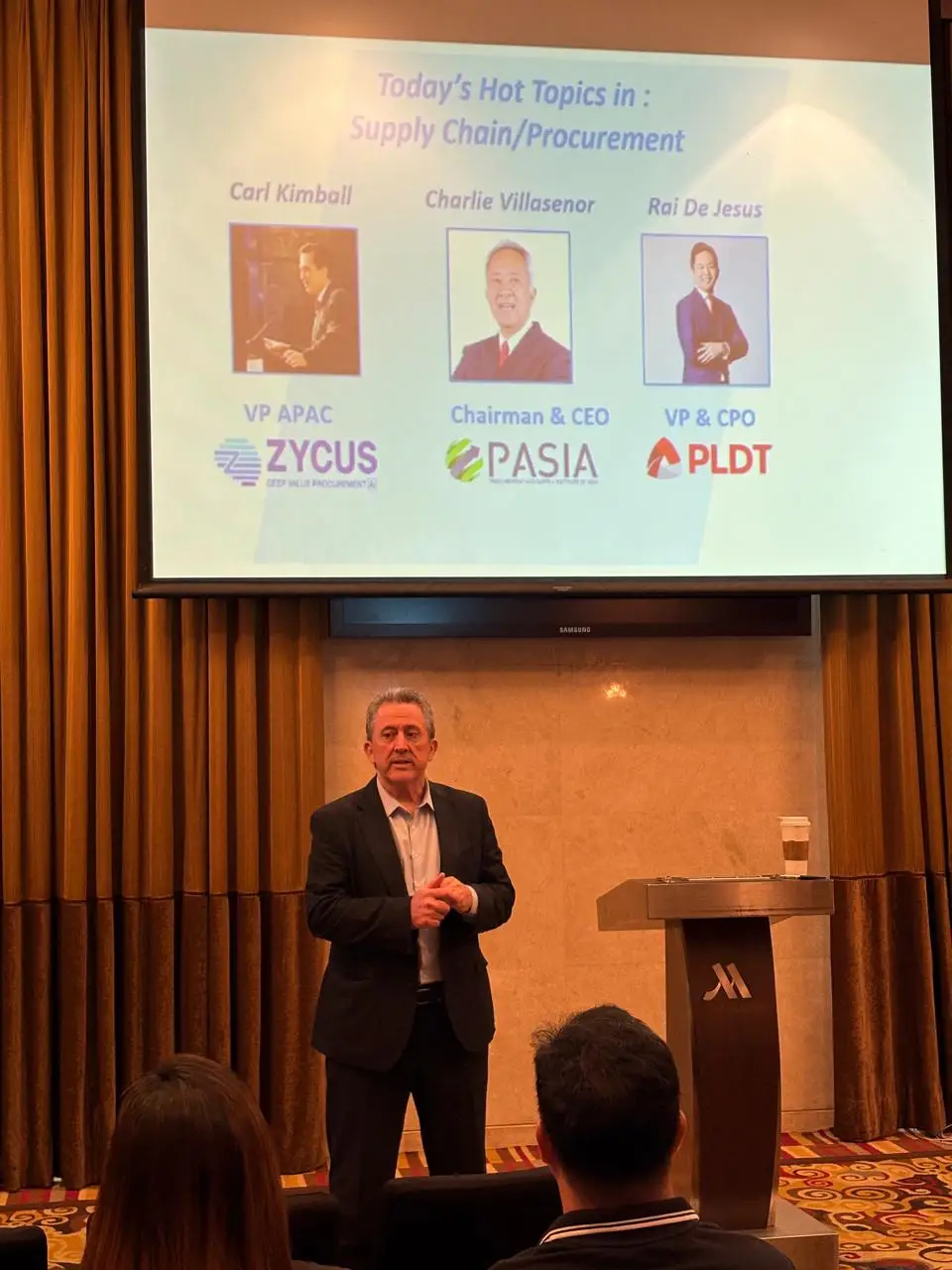
During the panel discussion I moderated with Charlie Villaseñor and Rai De Jesus:
Charlie Villaseñor’s Key Insight:
“I’ve watched Philippine procurement leaders go through cycles of technology curiosity. What I’m seeing with Agentic AI is different. It’s not just curiosity; leaders are seeing practical applications that solve real problems. The companies that move from curiosity to implementation will lead the next decade.”
Rai De Jesus on Moving Beyond Curiosity:
“Curiosity is valuable, but Philippine businesses need to move quickly from ‘what is Agentic AI?’ How do we implement it?’ The roadmap shown here provides that bridge.”
The consensus I heard: The curiosity about Agentic AI that was built over two days is justified; it IS genuinely different. And practical roadmaps exist to implement it within Philippine constraints.
Why Agentic AI Sparked This Level of Curiosity
During the breakout session I facilitated, a director articulated what drove the curiosity:
“We’ve been burned by automation, AI, and digital transformation promises. But when you explain Agentic AI, autonomous agents that adapt and learn, it sounds fundamentally different. The curiosity isn’t about hype. It’s about whether we’ve finally found technology that solves problems instead of creating new ones.”
Why Agentic AI Is Different:
- Autonomy, Not Just Automation
Previous tools waiting for commands. Agentic AI takes action toward goals. - Adaptation, Not Configuration
Previous tools require constant reprogramming. Agentic AI learns organizational patterns. - Integration, Not Replacement
Previous “solutions” required ripping out systems. Agentic AI orchestrates what you have. - Philippine-Ready Intelligence
Agentic AI adapts to BIR compliance and Filipino business culture.
ANA: Where Curiosity Met Reality
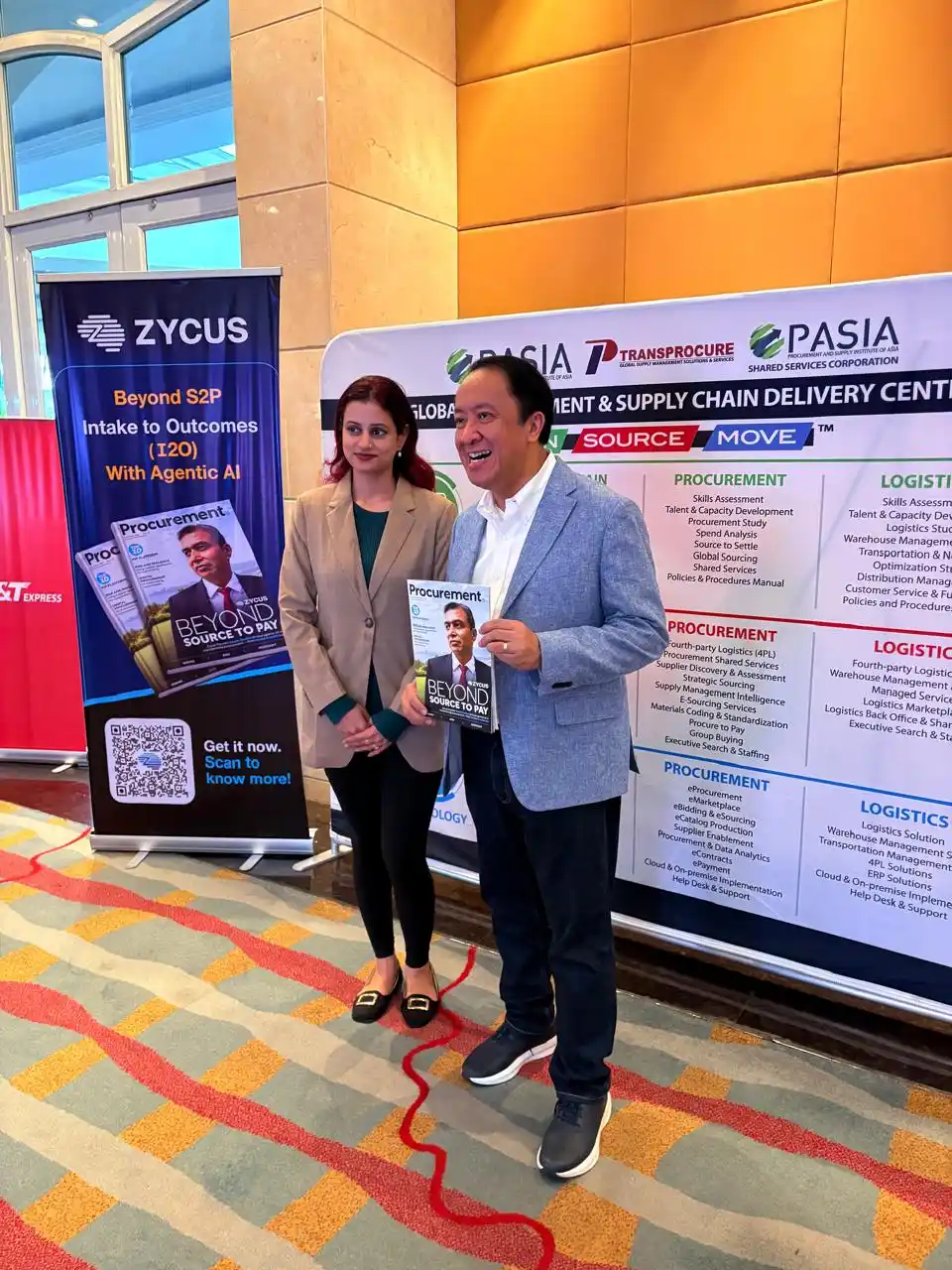
Throughout both days, I showcased Merlin AI Assistant (ANA) at our booth, where curiosity about Agentic AI became a tangible experience.
Why leaders connected:
- Immediate satisfaction: Live queries got instant answers
- Clear starting point: Works in Teams, Outlook, Viber, where users already work
- Adaptive intelligence: Real-time demonstration of handling different regional approval workflows
On Day 2, I heard: “I was just curious about Agentic AI yesterday. Today I’m convinced we need to pilot this.”
Why Philippine Procurement Can’t Afford to Wait
Based on what I heard and observed at PASIAWorld2025:
- Regional Competitors Are Beyond Intrigued
While you’re learning about Agentic AI, competitors are implementing it. - Curiosity Without Action Creates Disadvantage
Understanding Agentic AI is valuable. Implementing it is a competitive advantage. - Economic Pressure Demands Action
Recovering ₱20-40M annually isn’t nice-to-have, it’s survival. - The Roadmap Is Clear
PASIAWorld2025 satisfied curiosity and provided implementation guidance.
The Bottom Line: From ‘What If?’ to Action
Over two days, through keynotes that sparked curiosity, the intimate breakout session I organized with Carl Kimball, Charlie Villaseñor, and Rai De Jesus that satisfied it, and demonstrations that proved Agentic AI works in the Philippine market context, one journey emerged:
Philippine procurement leaders arrived exploring Agentic AI. They left with conviction and a practical roadmap.
- Phased Agentic AI approach, not “big bang” replacement
- Filipino-ready intelligence (BIR compliance, local context)
- Respects existing ₱15M investments
- Measurable ROI (40% time reclaimed, 2-5% cost savings)
The question is no longer whether Agentic AI works in the Philippines. I watched over 200 leaders see it work, live, addressing their specific constraints.
To the PASIAWorld2025 Community: Thank You
To every leader who brought curiosity about Agentic AI to the sessions I participated in, asked challenging questions, and engaged in honest dialogue, you elevated the conversation beyond technology hype to practical implementation guidance.
Related Reads:
- eBook: CPONext: 40 Procurement Leaders to Watch Out For – APAC 2nd Edition
- How Generative AI is Transforming APAC Businesses?
- From Data to Decisions: How to Leverage AI for Smarter Sourcing
- The Future of Sourcing: Autonomous Solutions for Procurement
- Beyond GenAI: The Dawn of Agentic AI
- Autonomous AI Negotiation Agents: Unlocking Millions from the Missing Middle
- Artificial Intelligence use cases- Identifying and realizing the real value
- Solution: Generative AI Platform for Source to Pay Transformation