









Insights from Horizon SEA, the Procurement AI World Tour & the Region’s Top Procurement Forums
From keynote stages to customer conversations, what we’re hearing on the ground across the region.
Every year, Ardent Partners publishes its Procurement: BIG Trends and Predictions report — and every year, procurement leaders treat it as the definitive benchmark for what’s coming next. This year’s report covers eleven major trends and fourteen predictions, and the headline is unmistakable: AI has moved from experiment to expectation, with 76% of procurement teams now using AI in some form and autonomous procurement tools predicted to hit the market by end of 2026.
Having spent the past twelve months keynoting at PASIA, ProcureCon Leaders, CPO series in the Philippines and Malaysia, PSS BK, and SEA Horizon — presenting alongside IDC, CIPS, PwC, and Microsoft, and meeting procurement leaders across Singapore, Malaysia, and Bangkok on the Procurement AI World Tour in 2025, I can tell you the Ardent report is directionally right. And as we bring the roadshow to Hong Kong, Manila, and Jakarta in 2026, I’m even more certain of this: it’s written through a Western lens. If you’re a CPO operating in Southeast Asia or India, the on-the-ground reality is more nuanced than any global report can capture.
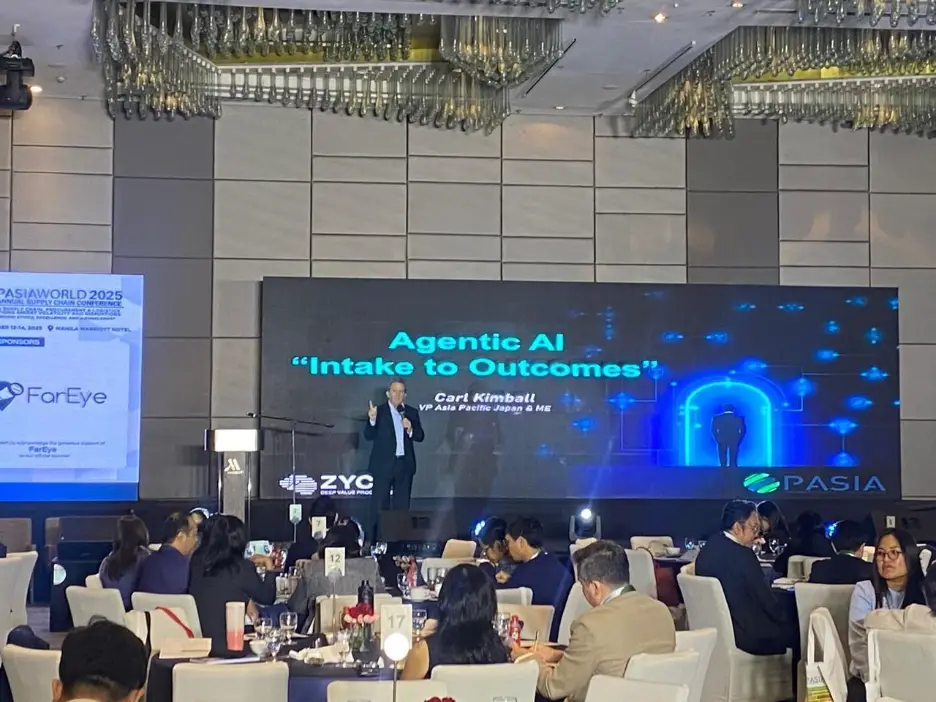
Here’s what I’ve seen, heard, and discussed — and what it actually means for our region.
Is AI Adoption in APAC Really Keeping Up?
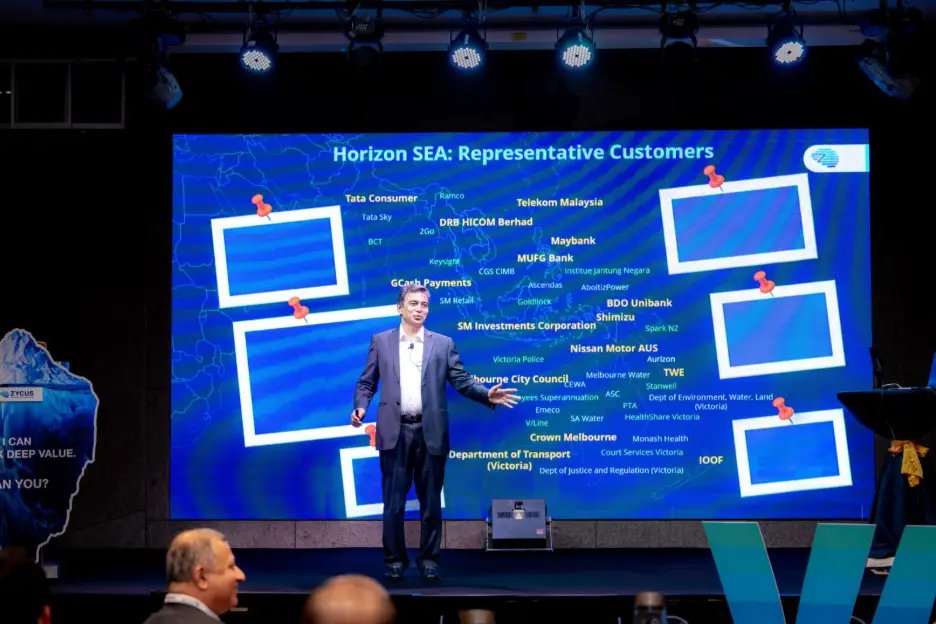
At Horizon SEA 2025, held April 23–24 at the Lexis Hibiscus resort in Port Dickson, Malaysia, the shift was undeniable. In 2024, the most common question I heard was: “What can GenAI really do for procurement?” In 2025, it had become: “How do we operationalize AI agents to unlock speed, efficiency, and compliance?”
That’s not a subtle evolution. That’s a leap.
But the picture is uneven. Procurement heads from infrastructure firms, healthcare networks, and FMCG companies across Southeast Asia and India showed real readiness — one told me candidly: “Last year, we ran a small AI pilot. This year, we’re scaling it across three business units.” Meanwhile, many mid-market organization’s are still wrestling with inconsistent spend data, fragmented supplier bases, and manual approval workflows.
The key insight: teams digitizing now can leapfrog legacy systems entirely. They don’t need to bolt AI onto decades-old architecture. They can build AI-first from the ground up — a genuine competitive advantage the Ardent report doesn’t fully capture. And the organization’s that move now won’t just catch up with their Western counterparts — they’ll set the pace.
Why is Supply Chain Reconfiguration APAC’s Biggest Challenge?
Where Ardent focuses on supply chain volatility, APAC is living through something more structural: a wholesale reconfiguration of global manufacturing and trade flows.
This was a dominant theme in our fireside chats at Horizon SEA with PASIA, CIPS, Microsoft, IBM, TCS, and Trustpair. Vietnam has emerged as a key “connector economy,” absorbing manufacturing as companies diversify away from China. India’s growth is accelerating, with value growth rising from 7.2% in 2024 to 13.7% in the first half of 2025. The Philippines and Indonesia are accelerating as key supply chain nodes, while Malaysia strengthens its position in electronics and semiconductor manufacturing.
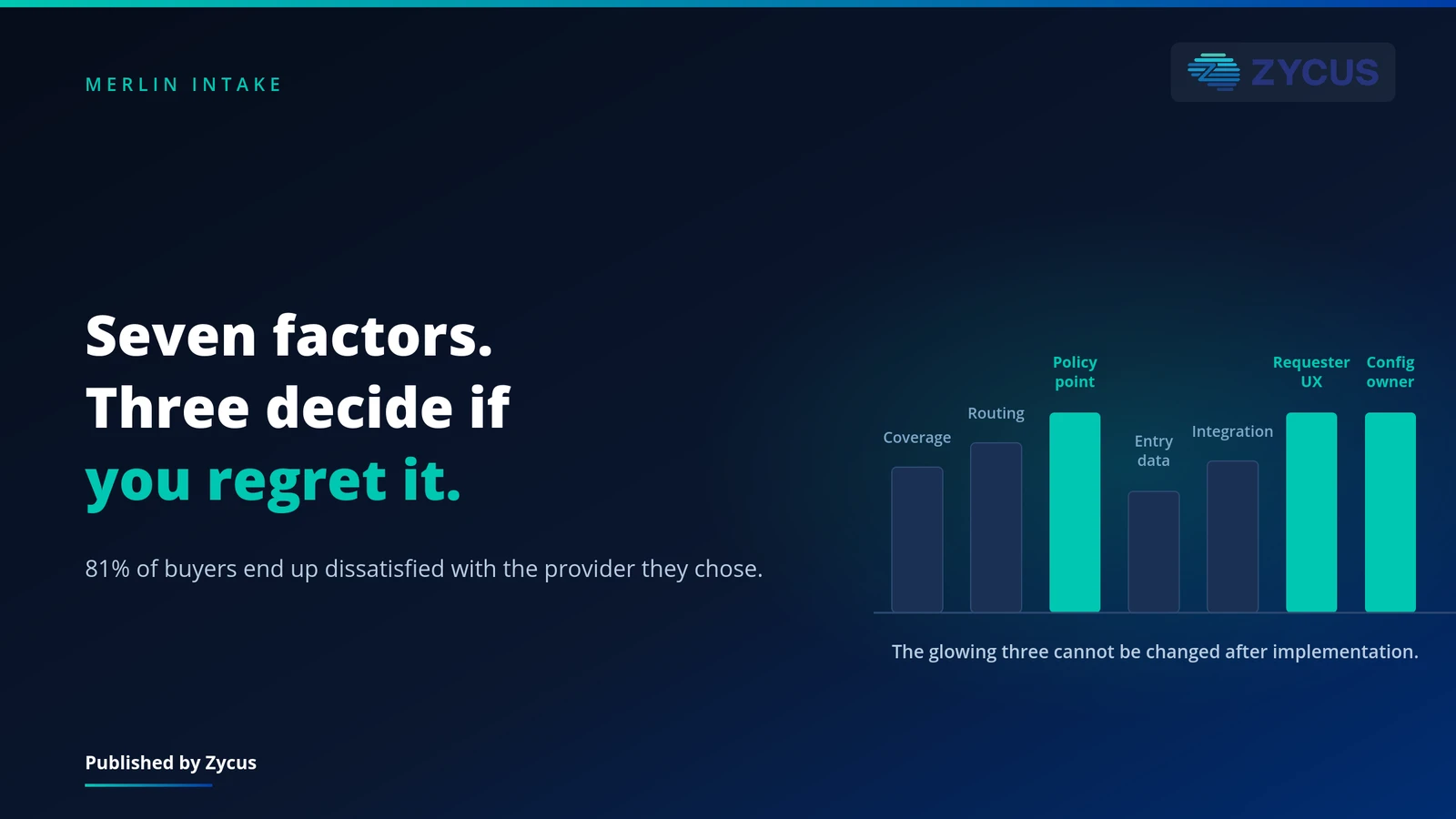
For procurement teams, real-time supplier risk monitoring, alternative sourcing strategies, and AI-powered supplier discovery aren’t theoretical here — they’re operational necessities. At Horizon SEA, IDC analyst Patrick Reymann reinforced why intake is emerging as procurement’s next value frontier: in a multi-market, multi-tier supplier environment, how you capture and route demand determines everything downstream.
Our CEO Aatish Dedhia put it directly in his keynote: “Procurement is now poised to lead enterprise transformation through intelligent orchestration and deep data integration.” That message resonated deeply with an audience navigating exactly these structural shifts in real time.
Are APAC Teams Ready for the 2026 Regulatory Wave?
This is where the Ardent report and APAC reality diverge most sharply. Ardent focuses on US-centric dynamics — ESG rollbacks, shifting political headwinds. Across Southeast Asia and India, the regulatory landscape is fragmenting across every major market simultaneously:
- Vietnam’s Digital Technology Industry Law introduces a risk-based AI governance framework
- The Philippines plans to introduce an AI regulatory framework during its ASEAN chairmanship
- Singapore continues to lead with AI Verify governance toolkits
- Indonesia, Thailand, and Malaysia are each advancing their own AI governance policies
- India’s Digital Personal Data Protection Act is reshaping how procurement platforms handle vendor data
The practical implication: an AI-powered sourcing tool deployed in Singapore may need different governance documentation than one used in Vietnam, India, or the Philippines. A sustainability lead at one of our events told me: “We’ve moved from spreadsheets to systems. Our ESG data isn’t just tracked — it’s trusted.” But others admitted they’re still figuring out what compliance even looks like when AI regulations differ by country.
Building one control framework that flexes across jurisdictions — rather than managing separate compliance programmes per country — is becoming a strategic imperative. This is exactly why platforms with built-in compliance and policy-aware decisioning matter. At Horizon SEA, we demonstrated this through live Merlin Intake Agent demos showing how policy rules adapt to regional requirements without manual reconfiguration.
How Should APAC CPOs Think About Cost Savings Differently?
Ardent correctly identifies savings as “job one” for 74% of CPOs. But in APAC, the cost equation is more complex. At Horizon SEA, PwC’s Bob Cohen discussed how currency volatility, varying inflation rates, and multi-country supply chain costs create layers of pressure that a single global savings playbook can’t address. India’s economy is growing robustly; Southeast Asia’s growth has moderated to 1.8% — these divergent trajectories demand market-specific sourcing strategies.
This is where AI-powered competitive sourcing shines. The ability to run more sourcing events per buyer per week, across multiple markets, with locally optimised parameters, is a genuine competitive differentiator. One Fortune 500 manufacturing customer implemented Zycus’ Autonomous Negotiation Agent to manage 3,000+ tail-spend negotiations across global suppliers — achieving 2% savings across categories, translating into millions of dollars. The question I kept hearing: “Can the AI agent handle our specific category complexity?” The answer is yes — Agentic AI doesn’t just automate the bid; it learns from every negotiation outcome and adapts.
What’s the Talent Gap Nobody’s Talking About?
Across Southeast Asia and India, there’s a demographic advantage: a large, young, digitally native workforce that can adopt AI tools faster than many Western counterparts. But most procurement certification programmes haven’t caught up with AI-driven transformation. The leaders who invest in upskilling now — not just on procurement fundamentals, but on how to work alongside AI agents — will build teams that outperform.
At Horizon SEA 2025, attendees completed a certified programme on “Managing Global Developments in the Era of AI in Procurement,” led by Charlie Villasenor and supported by Zycus expert Akshay Dhanda. Participants from the Philippines, Malaysia, India, and Singapore earned certificates demonstrating readiness to lead in an AI-driven landscape. It’s not just about technology — it’s about building the human capability to use it well.
Five Things We Saw That Go Beyond Ardent’s Predictions
After attending and presenting at multiple APAC events this year, here are five things I observed that go beyond — or directly challenge — Ardent’s global predictions:
- Intake is the real battleground. In APAC, the biggest pain point isn’t sourcing — it’s how procurement requests get captured, classified, and routed. IDC’s Patrick Reymann validated this as the highest-impact, fastest-ROI opportunity for the region.
- “AI FOMO” is compressing with timelines. CPOs described board pressure to demonstrate AI in procurement, compressing evaluation cycles from 12 months to 3–6 months.
- ESG is being operationalized, not retreating. Unlike the US pullback, leaders across Southeast Asia and India are building supplier diversity, ethical sourcing, and modern slavery compliance into core strategies.
- Community beats content. The “AI Agent Quest” at Horizon SEA — where attendees designed AI procurement use cases — generated more engagement than any keynote.
- Mid-markets are moving fastest. Organisations at $100M–$750M are outpacing large enterprises constrained by legacy systems and procurement by–committee.
The Bottom Line
2025–2026 is a transformational moment for procurement. But for APAC leaders, transformation isn’t just about AI adoption — it’s about navigating supply chain reconfiguration, regulatory fragmentation, uneven digital maturity, and diverse cost pressures, all at once.
The organisations that thrive will combine global best practices with deep regional execution. That means understanding the trends — but also showing up in the rooms where the future of procurement is being built.
Having been in those rooms this year — from Port Dickson to Manila to Singapore to Mumbai — I can tell you the energy is real, the challenges are specific, and the opportunities for APAC procurement teams are unlike anything I’ve seen in 25 years in this industry. We’ll see you at the next one.
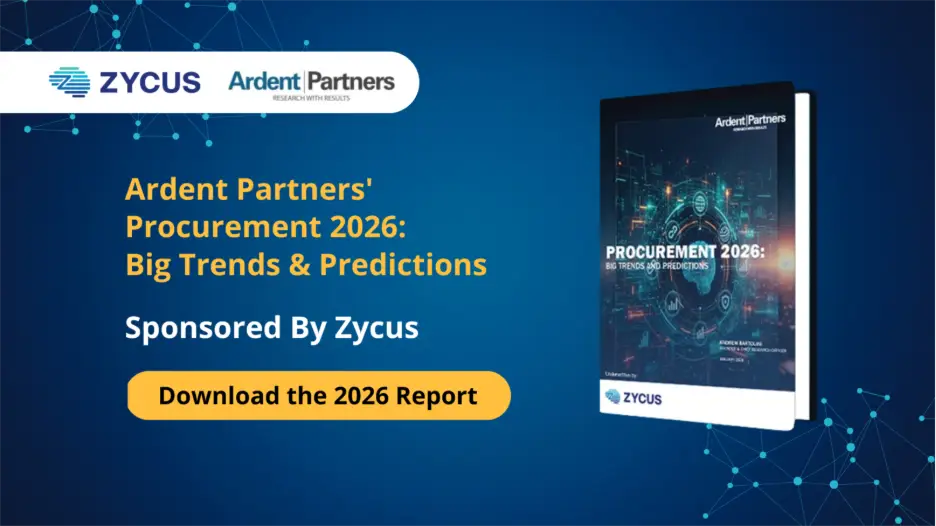
The Ardent Partners Procurement 2026: BIG Trends and Predictions report maps the full picture — 11 trends, 14 predictions, and the data behind why 76% of procurement teams are already using AI. It’s the one report every CPO is reading this year.
Related Reads:
- Success story: Asia-Pacific Leaders Drive 75% Faster Procurement and 10K+ Supplier Integrations with Zycus
- A Roadmap to Conquering Source-to-Pay Optimization Challenges in APAC
- The Agentic AI Advantage: Unlocking Deep Value in APAC’s AI-Driven Future
- Procure to Pay Analytics: How APAC Businesses Can Optimize Procurement and Payments
- CPONext: 40 Procurement Leaders to Watch Out For – APAC 2nd Edition