




You just took the CPO seat. Within 90 days, your CFO wants cost wins. Your CEO wants AI strategy. Your team wants direction. And the data you need to make decisions is scattered across seven systems that don’t talk to each other.
This is not a hypothetical scenario. It’s the documented reality of new Chief Procurement Officers in 2026, captured in a Forrester study of 261 procurement leaders commissioned by Zycus. And it’s why the first 90 days have quietly become the most consequential window in a CPO’s tenure.
Why the First 90 Days Define a CPO’s Entire Tenure
Procurement is no longer defined by transactions or cost control alone. It now sits at the intersection of enterprise strategy, digital transformation, and agentic AI. New CPOs walk into an environment of accelerated change, rising expectations, and increased risk exposure — yet most inherit functions built for a world that no longer exists.
Forrester’s research is blunt about the stakes: CPOs who navigate the first 90 days with clarity, opportunistic intent, and ambition redefine procurement’s role in the enterprise. Those who don’t spend the rest of their tenure playing catch-up.
The good news? The pattern of what works is now measurable. Below is the 30-60-90 framework that high-performing new CPOs are following — and the data that proves it.
Days 1-30: Diagnose, Listen, and Build Credibility
The first 30 days are not for setting a strategy. They are for understanding the terrain. The CPOs Forrester surveyed were emphatic: before you decide where procurement is going, you need a brutally honest picture of where it actually is.
Three actions dominate this phase:
- 59% prioritize feedback sessions with business leaders. This is not optics. It’s intelligence-gathering. Every business unit head you meet is telling you, in their own words, exactly what procurement isn’t delivering — and where the political landmines are buried.
- 53% conduct rapid diagnosis of demand and spend flows. Where is the money actually going? What’s on contract, what’s off contract, and where is value leaking? Most new CPOs discover within two weeks that their spend visibility is far worse than the dashboards suggest — the kind of gap that AI-powered spend analysis was built to close in days, not quarters.
- 50% actively set stakeholder expectations. The single biggest credibility killer in month one is letting expectations run unmanaged. Successful CPOs reset the narrative early — explicitly addressing what procurement will own, what it won’t, and on what timeline.
One CFO interviewed by Forrester captured the perception gap new CPOs typically inherit: the business saw procurement as “a rubber stamp to get a contract” with no recognized value in category strategy or commercial negotiation. If that sounds familiar, day 30 is when you decide whether to fight that perception or be defined by it.
Days 31-60: Set Strategy, Architecture, and Operating Model
Day 60 is the inflection point. By now, the listening tour has produced a clear picture, and the new CPO must convert insight into direction. Forrester’s data shows three priorities dominate:
- 63% align procurement priorities with enterprise strategy. This sounds obvious until you realize most legacy procurement KPIs (compliance rate, savings against last-paid-price) have no line of sight to enterprise outcomes like growth, resilience, or margin expansion.
- 45% assess digital and AI maturity. Not vendor demos — an honest audit of what’s actually deployed, what’s adopted, and what’s gathering dust. CPOs evaluating their AI options at this stage often start by walking the Merlin Experience Center, which lets teams test live agentic AI in a sandbox environment before committing to deployment.
- 43% evaluate talent and capability gaps. Most procurement teams can surface insights. Very few can act autonomously. Closing that gap is the central operating-model challenge of the first quarter.
This is also when AI governance gets defined. 61% of new CPOs sponsor procurement-led AI awareness and onboarding programs. 54% lead executive communications to reinforce adoption. 52% align with IT and business units on shared goals. The CPOs who skip this step end up with well-funded AI pilots that never reach scale — which is exactly why the Merlin Agentic AI Platform is built around governed, low-code orchestration rather than black-box automation.
A CFO in manufacturing put it best when interviewed: focus on the basics first, get the data right, define the process, and then let AI amplify it. The reverse order is how transformation programs die.
Days 61-90: Execute, Communicate Value, and Demonstrate Progress
Day 90 is the transition from positioning to proof. The credibility you’ve earned now needs receipts.
Forrester’s data shows that successful CPOs deliver early, measurable wins:
- 61% prioritize cost or efficiency improvements — visible, attributable, and ideally before the next board meeting. The fastest path to a measurable Q1 saving is usually tail spend, where Autonomous Negotiation Agents (ANA) routinely surface savings on previously non-negotiated, low-value, high-volume categories.
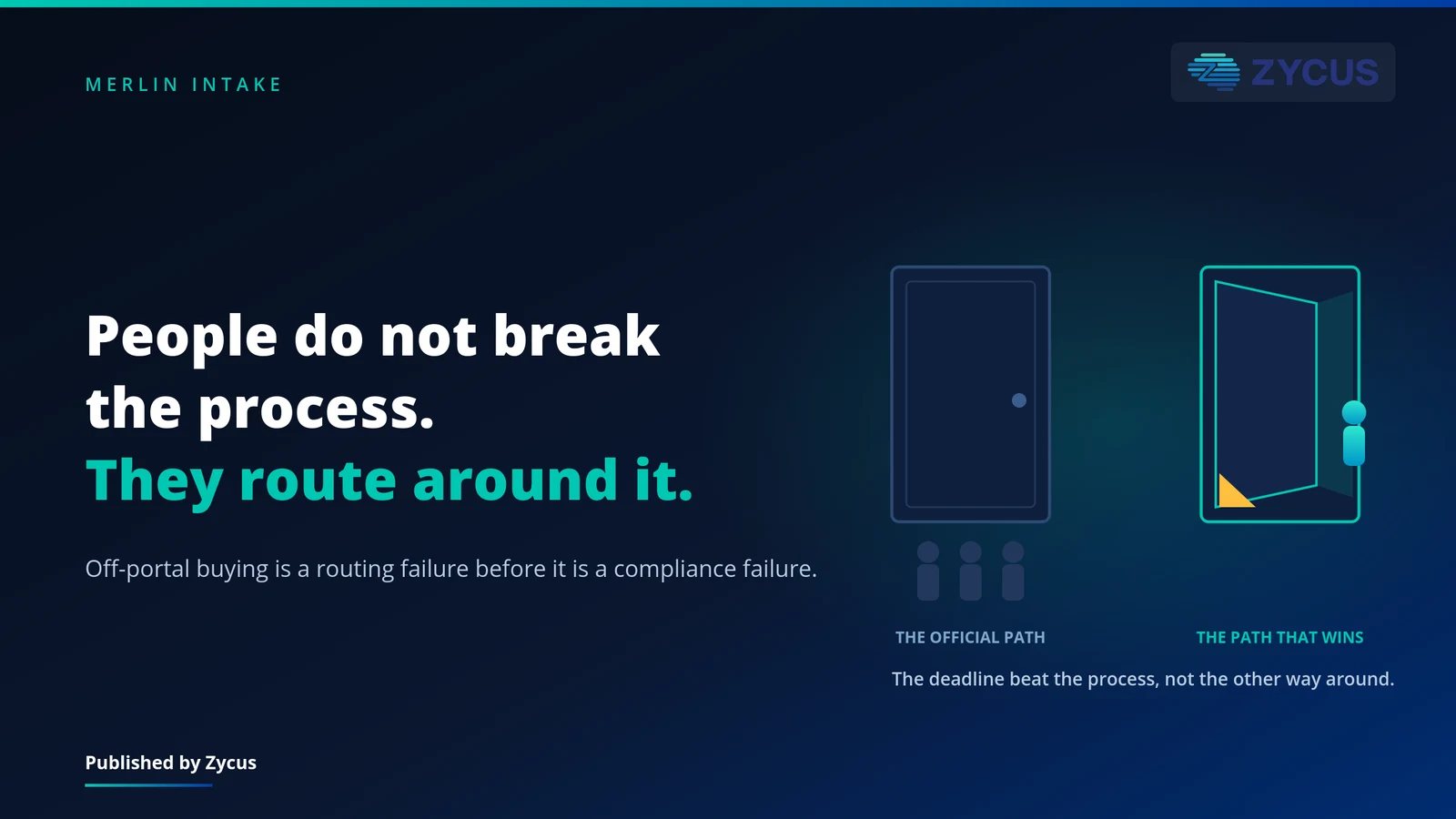
- 48% focus on stakeholder experience — reducing intake friction, cycle time, and the small frustrations that shape how procurement is perceived. This is where Merlin Intake delivers an immediate user-experience win: requesters submit needs in Microsoft Teams or Slack and Merlin handles policy, routing, and triage automatically.
- 65% prioritize AI initiatives and 53% set AI decision rights, moving beyond experimentation toward governed, repeatable workflows.
The metrics that anchor day 90 reporting are now well-established: cost savings (65%), workforce productivity (54%), cycle time reduction (53%), reduction in manual touches per request (53%), risk mitigation (52%), and supplier performance improvements (50%). Each of these is observable in real time when procurement runs on connected agentic infrastructure — the kind of conversational, always-on visibility Merlin Analytics was designed to deliver, replacing static dashboards with questions answered in plain language.
The Foundation Most New CPOs Underestimate
Here is the uncomfortable finding buried in the Forrester data: 68% of new CPOs cite fragmented or outdated technology as their top challenge. Only 37% feel confident their technology is ready to support agentic AI workflows.
This matters because every action in the 30-60-90 plan above depends on a foundation of integrated data and connected workflows. You cannot diagnose spend flows you can’t see. You cannot govern AI on data that lives in spreadsheets. You cannot scale supplier collaboration on a system designed for transaction processing.
The CPOs who succeed in their first 90 days are not the ones with the most ambitious AI roadmaps. They are the ones who treat the underlying data and platform layer as a strategic priority, not an IT problem.
Beyond 90 Days: The CPO Role Is Being Rewritten
The first 90 days is the foundation. What it sets up is a fundamental redefinition of the role itself. Forrester’s research found that over the next three to five years:
- 71% of CPOs will take accountability for driving agentic AI and digital innovation across procurement
- 69% will co-innovate with suppliers and forge strategic ecosystem partnerships
- 64% will embed sustainability and ESG into procurement strategy
- 61% will gain greater influence in enterprise-level strategic decision-making
- 61% will take a proactive role in anticipating supplier, market, and geopolitical risks
None of that is possible without nailing the first 90.
Get the Full Forrester Playbook
This article summarizes the framework. The full Forrester Opportunity Snapshot — The New CPO Reality: First 90 Days, commissioned by Zycus — contains the complete data set, day-by-day action plan, KPI benchmarks, and the executive interview quotes from CPOs and CFOs across financial services, manufacturing, transportation, and fintech.
→ Download the full Forrester study
Continue Reading
Next in this series: Why 67% of CPOs Say Procurement Is Too Slow (And How to Fix It in 2026)
FAQs
Q1: What should a new CPO do in their first 30 days?
Focus on diagnosis and credibility building. Forrester’s 2026 study found that 59% prioritize feedback sessions with business leaders, 53% conduct rapid diagnosis of demand and spend flows, and 50% set stakeholder expectations early. Setting strategy comes later — month one is for listening.
Q2: What are the top challenges new CPOs face in 2026?
Fragmented or outdated technology (68%), change resistance from teams (61%), poor data quality (58%), and disconnected digital and AI initiatives (48%). Cultural barriers and platform fragmentation are the two most common reasons transformation programs stall.
Q3: How do CPOs measure success in the first 90 days?
The most common KPIs are cost savings (65%), workforce productivity (54%), cycle time reduction (53%), reduction in manual touches per procurement request (53%), risk mitigation (52%), and supplier performance improvements (50%).
Q4: Why is the first 90 days so critical for a new CPO?
A: It is the decisive credibility window. The first 90 days determines stakeholder trust, sets the strategic mandate, and builds the political capital needed for long-term transformation. CPOs who navigate this window with clarity reposition procurement from a support function to a strategic architect of enterprise performance.
Related Reads:
- You Surely Can’t Beat These Four Traits of a Successful CPO
- The CPO’s First 90 Days in the AI Era | Forrester x Zycus
- From Cost Center to Strategic Engine: The CPO Role in 2026
- CPO Rising 2025: Navigating Global Uncertainty & Unlocking an AI- Driven Future
- The CPO’s Playbook: 5 Strategic Nuances for Proactive Procurement Excellence
- CPO Game Changer Series Volume 2: New and Improved Technology