




The narrative around agentic AI in procurement has been running ahead of the evidence. Vendors talk about autonomous procurement. Analysts talk about reinventing the function. Executives nod along — and then quietly admit they don’t know where their team actually stands.
A new Forrester study commissioned by Zycus surveyed 261 procurement leaders responsible for AI strategy in their organizations. The findings cut through the hype. Agentic AI is real, deployed, and delivering value — but the gap between deployment and scaled value is wider than most leaders realize.
Here’s what the data actually shows.
Agentic AI is Already Operational — In Specific Places
The first surprise in the data: agentic AI in procurement is no longer experimental. It’s deployed at scale in three specific high-volume workflows:
- 48% use agentic AI in spend analysis — auto-classifying transactions, enriching supplier data, and surfacing compliance risks in real time
- 39% use it in accounts payable automation — template-less invoice extraction, intent-aware email handling, and 50% lower invoice processing cost
- 38% use it in procure-to-pay (P2P) processes — from intake all the way to payment, often orchestrated through a unified agentic platform
These three use cases share a profile: high volume, structured data, repeatable exceptions, and bounded risk. This is where AI delivers the cleanest, most attributable ROI — and where the early wins are concentrated.
The pattern matters because it tells you where to start. Organizations getting value from agentic AI aren’t deploying it everywhere. They’re deploying it in the workflows where the math is clearest, then expanding from a position of credibility. The Merlin Experience Center was built precisely so CPOs and their teams can stress-test these use cases against their own data before committing.
The CPO is Now the AI Strategy Owner
One of the most decisive findings in the Forrester data is that AI strategy in procurement is no longer drifting between functions. The CPO has been handed the wheel:
- 67% of CPOs lead the AI vision and charter for procurement
- 65% own AI investment and prioritization decisions
- 64% drive collaboration with IT and business functions on prioritized AI use cases
This is a meaningful shift. Two years ago, AI in procurement was largely an IT-led conversation, with procurement as a stakeholder. Now, the CPO is expected to set the vision, allocate the investment, and govern the operating model. It’s a clear vote of confidence — and a significant new accountability for a role that historically has not been measured on technology outcomes.
The Three Agents Doing the Heavy Lifting
Within the agentic AI category, three specific agent archetypes are emerging as the workhorses of modern procurement — each addressing a different pain point in the lifecycle.
Intake Agents
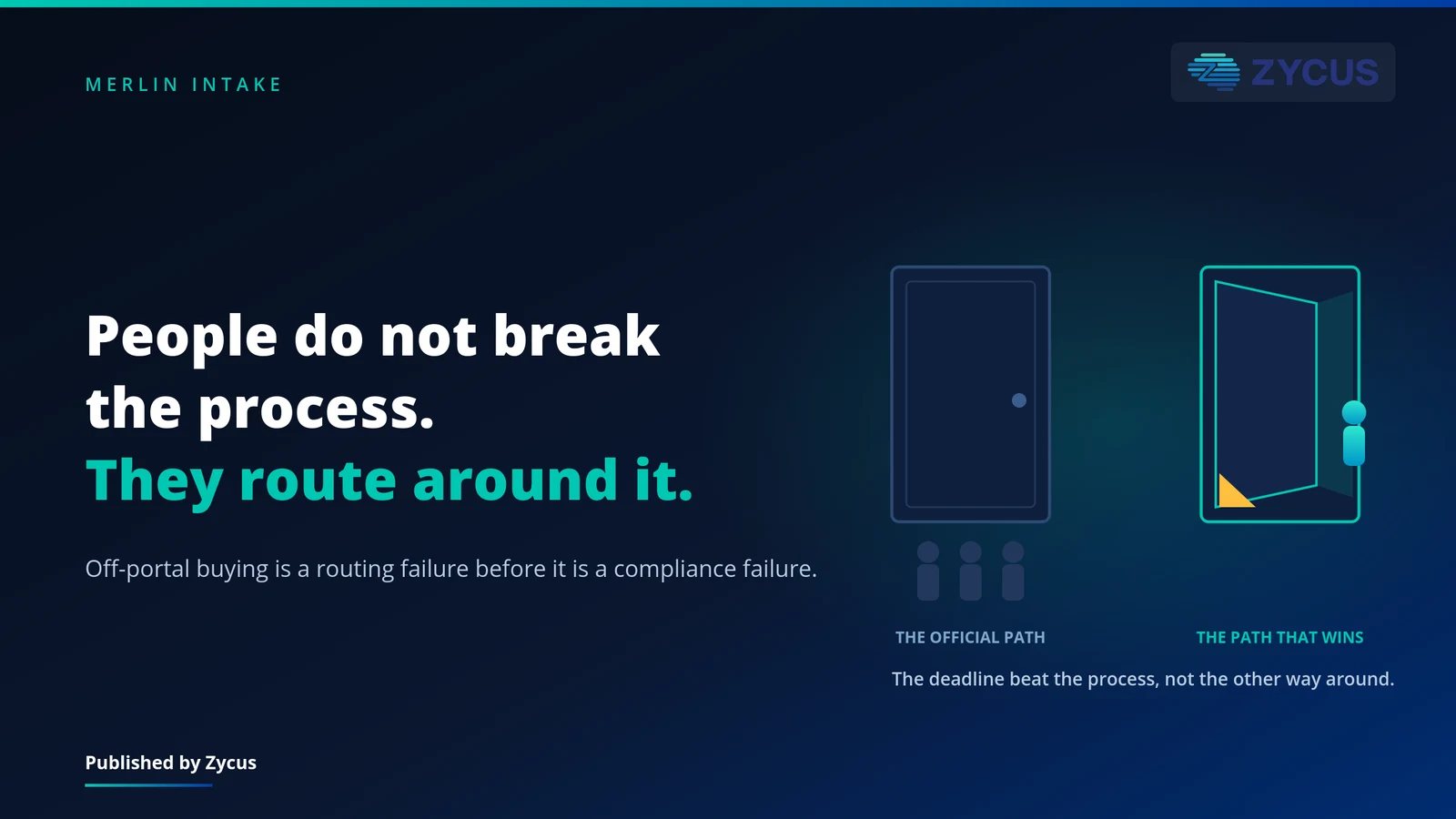
The front door of procurement has historically been its weakest link — spreadsheets, email chains, and shadow buying. Intake agents like Merlin Intake sit inside Microsoft Teams and Slack, capturing demand at the moment it occurs, enforcing policy in real time, and routing requests automatically. Spend Matters research suggests 90% of procurement software fails because of poor adoption — native intake agents solve that by working where users already work.
Negotiation Agents
Tail spend is the perennial blind spot — too small to negotiate manually, too large to ignore. Autonomous Negotiation Agents (ANA) handle low-value, high-volume purchases end-to-end, negotiating across price, payment terms, warranties, and discounts. Public deployments have reported $520M in savings on $1.2B of tail spend over five years, with 70% faster cycle times.
Analytics Agents
Static dashboards die in the inbox. Merlin Analytics replaces them with conversational intelligence — ask a question in plain language, and the agent connects spend, supplier, contract, and risk data across the S2P stack to surface answers in seconds. This is the difference between procurement reporting on the past and procurement acting in the present.
The Confidence Gap: Where Scaling Breaks Down
For all the deployment momentum, CPO confidence in scaling agentic AI is strikingly low. The Forrester data exposes two specific pressure points:
- Only 29% of CPOs feel confident in their team’s talent readiness to work with AI
- Only 40% feel confident in their ability to operationalize AI across procurement workflows
- Only 37% feel confident in their technology and platform readiness to integrate agentic workflows
Read those numbers carefully. The function is being asked to lead AI transformation while fewer than half of its leaders feel ready to actually run it. That’s not a confidence problem. That’s a structural readiness problem — and it’s the single biggest reason well-funded AI initiatives stall before reaching scale.
Cultural Resistance Is the Bigger Threat Than Technology
The conventional wisdom is that AI deployment is a technology challenge. The data says otherwise:
- 61% of new CPOs cite change resistance from teams as a top challenge
- 48% cite lack of executive buy-in
This is the inconvenient truth of agentic AI. The model works. The workflows are mappable. The vendors are credible. What stalls is the human system around the technology — procurement professionals worried about their roles, executives unconvinced of the ROI case, and cross-functional partners who want to slow-roll governance until they’re confident they understand the risks.
The CPOs who are scaling agentic AI successfully are treating this as a leadership problem, not a deployment problem. They are sponsoring AI awareness programs (61%), leading executive communications to reinforce adoption (54%), and aligning with IT and business units on shared goals (52%).
The Governance Question Most Organizations Haven’t Answered
As agentic AI moves from analytics to action — from suggesting to doing — governance becomes the central design question. Forrester’s data shows what leading CPOs are demanding from their technology partners:
- Strong data security controls — non-negotiable, especially for supplier data
- Transparent AI governance — explainability, audit trails, model behavior visibility
- Regular model updates — to avoid drift and stale logic
- Human-in-the-loop checkpoints — expected by 1 in 3 CPOs
- Configurable autonomy levels — different tasks deserve different levels of human oversight
- Seamless integration with S2P and ERP platforms — expected by 1 in 5 CPOs
The shift from “AI as feature” to “AI as governed capability” is the defining architectural decision of the next two years. Platforms designed around configurable autonomy and low-code orchestration — like the Merlin Agentic AI Platform with its 1,121 APIs and DIY agent configuration — are positioned around exactly this expectation. CPOs who treat governance as an afterthought will find their AI initiatives blocked at the audit, legal, or risk-committee gate.
What “Don’t Delegate AI” Actually Means
The most counterintuitive finding in the Forrester research is that the CPOs winning with agentic AI are the ones who refuse to fully delegate the agenda. They own the strategy. They define decision rights. They engage personally with governance. They don’t outsource the AI conversation to IT or to the vendor.
This is a meaningful change in posture. For decades, procurement leaders treated technology as something they consumed. The Forrester data suggests the most successful CPOs in 2026 are treating AI as something they govern — actively, continuously, and at the leadership level.
The Three-to-Five-Year Trajectory
Where is this headed? Forrester’s data on the next three to five years is striking:
- 71% of CPOs will take accountability for driving agentic AI and digital innovation across procurement
- 69% will co-innovate with suppliers and forge strategic ecosystem partnerships
- 61% will gain greater influence in enterprise-level strategic decision-making
- 61% will take a proactive role in anticipating supplier, market, and geopolitical risks
The CPO role is being structurally rewritten — and AI is the lever doing the rewriting. The procurement leaders who see this clearly and act on it within their first 90 days are setting up the trajectory for the rest of the decade.
Get the Full Forrester Study
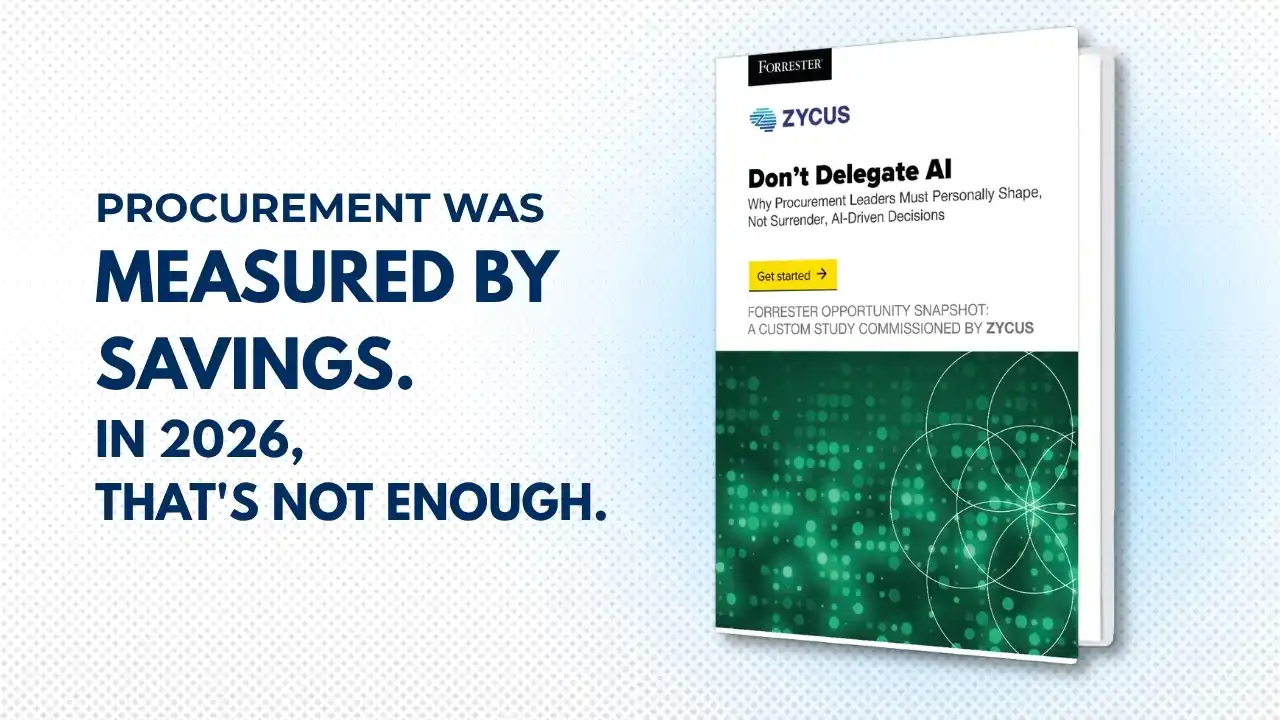
This article summarizes the AI findings. The full Forrester Opportunity Snapshot — The New CPO Reality: First 90 Days, commissioned by Zycus — contains the complete dataset, including governance benchmarks, KPI tracking, and the day-by-day plan for new CPOs leading AI transformation.
→ Download the full Forrester study
Continue Reading
Previous in this series: Why 67% of CPOs Say Procurement Is Too Slow (And How to Fix It in 2026)
Next in this series: From Cost Center to Strategic Engine: The CPO Role in 2026
FAQs
Q1: What is agentic AI in procurement?
Agentic AI in procurement refers to AI systems that autonomously execute multi-step procurement tasks — spend classification, supplier triage, invoice matching, contract review — within defined decision rights and human-in-the-loop checkpoints. It goes beyond traditional automation by reasoning, planning, and adapting to exceptions.
Q2: Where is agentic AI being used in procurement today?
The three most common deployments are spend analysis (48% of organizations), accounts payable automation (39%), and procure-to-pay processes (38%). These are high-volume, structured workflows where AI delivers the clearest, most attributable ROI.
Q3: Who owns AI strategy in procurement?
The CPO. 67% lead the procurement AI vision, 65% own AI investment decisions, and 64% drive cross-functional collaboration on AI use cases. AI strategy in procurement has shifted from an IT-led conversation to a CPO-owned mandate.
Q4: What’s stopping organizations from scaling agentic AI in procurement?
Talent readiness (only 29% of CPOs feel confident their teams are ready), operational integration (40% confident), platform readiness (37% confident), and cultural resistance (61% cite as a top barrier). Technology is rarely the bottleneck — leadership and operating-model readiness are.
Related Reads: