





For most of its history, procurement has been measured by what it saved. In 2026, that’s no longer enough — and the Chief Procurement Officer who treats cost control as the primary mandate is already behind.
A Forrester study commissioned by Zycus surveyed 261 procurement leaders and surfaced something more significant than a list of trends. The CPO role is being structurally rewritten. The functions that procurement is expected to own, the influence it’s expected to wield, and the way it’s expected to create value have all shifted at once.
This is what the data says about where the role is going — and what separates the CPOs who will lead the transition from those who will be displaced by it.
The Old Mandate is Officially Insufficient
The Forrester research found that the gap between what enterprises now expect of procurement and what most procurement functions can deliver has reached crisis levels. 67% of CPOs admit procurement falls short on speed of execution. 52% admit shortfalls in strategic alignment with corporate objectives. 51% cite the tension between cost savings and enabling business growth.
The honest reading of those numbers is this: the function was built to optimize a different game. Cost control was the scorecard for procurement when the enterprise was relatively stable, suppliers were transactional, and risk was something the CFO worried about quarterly. None of that is true anymore.
One CFO interviewed by Forrester captured the perception problem with brutal economy: the business sees procurement as “a rubber stamp to get a contract” with no recognized value in category strategy or commercial negotiation. That CFO works at a fintech firm. The same sentiment was echoed across manufacturing, transportation, and other industries surveyed.
The Five Mandates Now Defining the Modern CPO
Forrester asked CPOs which dimensions of the role would expand most over the next three to five years. The results define the new job description:
1. AI and Digital Innovation Leader (71%)
71% of CPOs will take accountability for driving agentic AI and digital innovation across procurement. This is the most fundamental shift. The CPO is no longer a consumer of enterprise technology decisions — they are an originator. The AI vision for procurement, the build-vs-buy choices, the governance model, the talent strategy: these now sit on the CPO’s desk. Platforms like the Merlin Agentic AI Platform exist precisely to give CPOs a low-code substrate for that ownership — configurable agents, transparent governance, and 1,121 APIs for cross-system orchestration.
2. Supplier Ecosystem Architect (69%)
69% will co-innovate with suppliers and forge strategic ecosystem partnerships. The transactional supplier relationship — buy low, manage tightly, switch when convenient — is being replaced by something closer to strategic alliance management. Innovation, resilience, and competitive advantage increasingly come from how well a company collaborates with its supply base, not how hard it negotiates against it. Agentic AI for category management is what makes this scalable — live demand insights, category-specific KPIs, and intelligent intake feeding directly into supplier strategy.
3. ESG and Sustainability Owner (64%)
64% will embed sustainability and ESG into procurement strategy. This isn’t reporting compliance. It’s procurement decisions — supplier selection, sourcing geography, materials choices — that materially shape the company’s ESG posture. The CPO is increasingly the executive most responsible for translating ESG ambition into operational reality.
4. Enterprise Strategic Influencer (61%)
61% will have greater influence in enterprise-level, strategic decision-making. Pricing strategy, M&A integration, geographic expansion, capacity planning — these conversations now require procurement at the table because they all depend on the supply base. The CPOs who earn this seat do so by speaking in enterprise terms, not procurement terms — and tools like Merlin Analytics, which surfaces real-time insights conversationally across spend, contracts, and risk data, are how that fluency gets built.
5. Proactive Risk Manager (61%)
61% will take a proactive role in anticipating supplier, market, and geopolitical risks. The post-pandemic, post-tariff, post-geopolitical-shock era has made supply risk an existential business risk. The CPO is now expected to see it coming, not just respond to it. Agentic AI for supply chain resilience is the operational answer — Merlin Intake flags disruptions and routes alternate sourcing requests instantly, while ANA negotiates with backup vendors in real time.
The Math is Changing the Conversation
One of the more subtle findings in the Forrester data is that the CFO conversation about procurement value is shifting. 51% of CPOs cite the challenge of balancing cost savings versus enabling business growth — a tension that exists because many procurement cost savings, like process efficiencies and off-contract spend reductions, don’t always translate cleanly into the P&L.
The CPOs who are repositioning successfully are introducing new KPIs that the CFO can actually use. Forrester’s data shows the leading metrics now include:
- Cost savings (65%)
- Workforce productivity (54%)
- Cycle time reduction (53%)
- Reduction in manual touches per procurement request (53%)
- Risk mitigation (52%)
- Supplier performance improvements (50%)
This is a more diversified scorecard than procurement has historically run on. It moves the conversation away from “savings against last-paid-price” — a metric most CFOs privately distrust — and toward enterprise outcomes the finance organization can validate.
The Talent Gap That Determines Everything
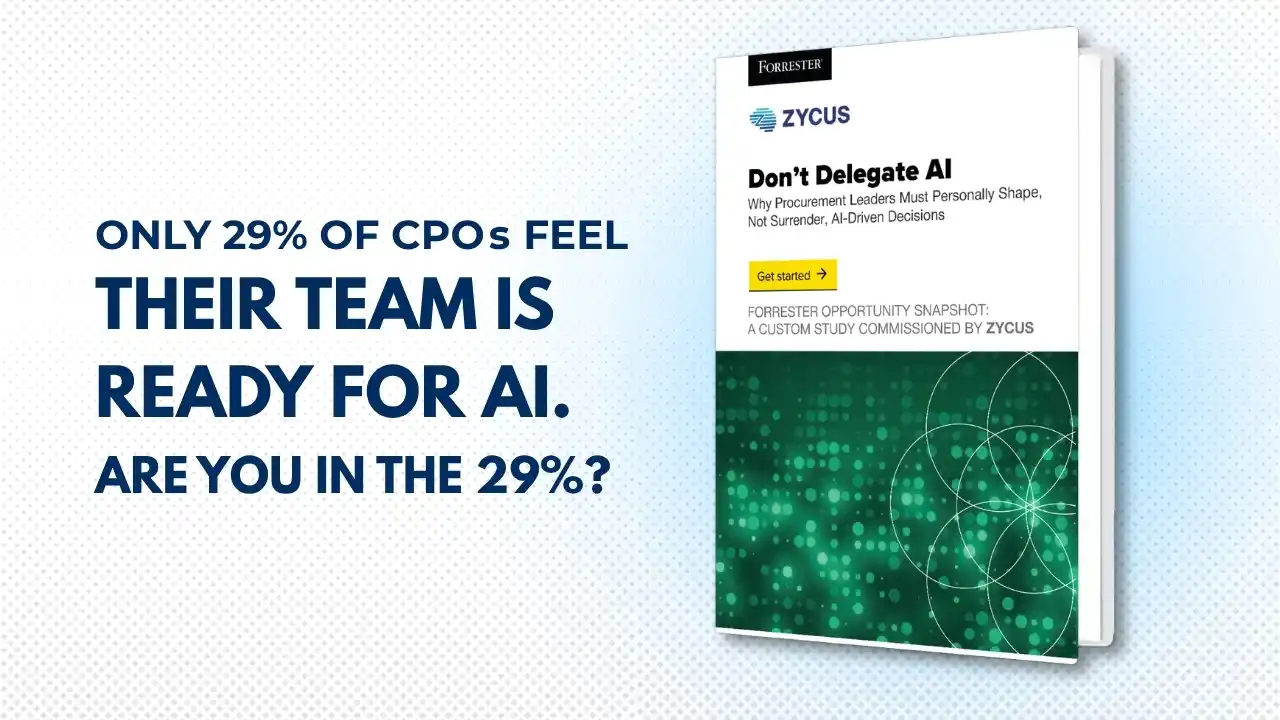
Here is the uncomfortable finding the role-evolution narrative usually skips: only 29% of CPOs feel confident in their team’s readiness to operate in the new model. Only 40% feel ready to operationalize AI across workflows. Only 37% feel platform-ready for agentic AI.
The role is expanding faster than the function is upgrading. The implication is significant. CPOs who succeed in the new mandate are not just the ones who set bold strategy. They are the ones who simultaneously rebuild the team — through hiring, reskilling, and operating-model redesign — fast enough to actually execute the strategy.
61% of CPOs are now sponsoring procurement-led AI awareness and onboarding programs for exactly this reason. 54% are leading executive communications to reinforce adoption. The teams that are scaling are doing so because the CPO is treating capability building as a personal priority, not an HR program.
The First 90 Days Sets the Trajectory
For new CPOs stepping into this expanded role, the first 90 days is the decisive credibility window. The Forrester data is unambiguous about what works:
- Days 1-30: Diagnose, listen, and build credibility. 59% prioritize feedback sessions with business leaders, 53% map demand and spend flows, 50% set stakeholder expectations.
- Days 31-60: Set strategy, architecture, and operating model. 63% align procurement priorities with enterprise strategy, 45% assess digital and AI maturity, 43% evaluate talent gaps.
- Days 61-90: Execute, communicate value, and demonstrate progress. The fastest measurable wins typically come from fixing intake with Merlin Intake, running Autonomous Negotiation Agents on a pilot tail-spend category, or extracting contract obligations at scale with Merlin for Contracts.
The pattern is clear. CPOs who sequence the first 90 days correctly — diagnosis before strategy, strategy before execution, foundation before AI — emerge with credibility intact and momentum building. Those who skip steps end up either fighting the legacy perception of procurement or losing political capital on premature initiatives.
What this Means for the Profession
The CPO role evolution isn’t a forecast. It’s already happening. The Forrester data shows that CPOs are already leading AI strategy (67%), already owning supplier ecosystem design, already being asked to anticipate geopolitical risk. The “future state” is the current state for the leaders ahead of the curve.
What it means practically is that the people who will hold CPO titles in 2030 are mostly different people than the ones who hold them today. The skill set, the operating model, and the executive presence required to run procurement as a strategic engine are meaningfully different from what was required to run it as a cost center. The transition is happening at speed.
The good news for procurement leaders is that the playbook is now mappable. The Forrester research is one of the clearest articulations of what works in the first 90 days and what scales beyond it. The opportunity is real for the CPOs who choose to lead the transition rather than be carried by it.
Get the Full Forrester Study
This article summarizes the role-evolution findings. The full Forrester Opportunity Snapshot — The New CPO Reality: First 90 Days, commissioned by Zycus — contains the complete day-by-day plan, KPI benchmarks, and executive perspectives from CPOs and CFOs across multiple industries.
→ Download the full Forrester study
Continue Reading
Previous in this series: Agentic AI in Procurement: What 261 CPOs Just Told Forrester
Next in this series: The Hidden Cost of Fragmented Procurement Tech: Why 68% of New CPOs Inherit a Mess
FAQs
Q1: What does a Chief Procurement Officer do in 2026?
A modern CPO leads enterprise spend strategy, owns AI and digital transformation, builds strategic supplier and ecosystem partnerships, manages supply chain risk, embeds ESG into procurement, and increasingly influences enterprise-level strategic decisions. The role has moved beyond cost control to strategic enablement.
Q2: How is the CPO role changing?
Forrester’s 2026 data shows that over the next 3-5 years, 71% of CPOs will drive agentic AI and digital innovation, 69% will co-innovate with suppliers, 64% will embed sustainability and ESG, 61% will gain enterprise strategic influence, and 61% will lead proactive risk management.
Q3. Why is procurement still seen as a cost center?
Legacy KPIs, fragmented technology, and outdated mandates keep procurement anchored to transactional metrics. Repositioning requires new KPIs the CFO trusts, integrated technology, and visible early wins that demonstrate strategic value beyond savings.
Q4. What skills does a modern CPO need?
Strategic business acumen, digital and AI fluency, governance capability, supplier ecosystem leadership, change management skills, and the ability to communicate in enterprise terms. Talent readiness is now a top concern — only 29% of CPOs feel their teams are ready for the new mandate.
Related Reads:
- Why 67% of CPOs Say Procurement Is Too Slow (And How to Fix It in 2026)
- The CPO’s First 90 Days in the AI Era | Forrester x Zycus
- You Surely Can’t Beat These Four Traits of a Successful CPO
- What is Autonomous Sourcing? And Why Every CPO Should Care Now
- Top 10 strategies for managing innovations in the Procure to Pay Software for CPOs