










Introduction: The UAE E-Invoicing Revolution
UAE e-invoicing becomes mandatory in 2026, transforming how businesses across the Emirates manage B2B and B2G transactions. The United Arab Emirates’ new electronic invoicing system, established under Federal Decree-Law No. 16 of 2024, requires all VAT-registered businesses to adopt the PEPPOL framework through Accredited Service Providers (ASPs).
This comprehensive guide covers everything you need to know about UAE e-invoicing requirements, including:
- Mandatory compliance dates starting July 2026
- PEPPOL 5-corner model implementation
- Penalties up to AED 5,000 monthly for non-compliance
- Step-by-step preparation strategies
- Technology solutions for seamless transition
This isn’t just another regulatory checkbox—it’s a fundamental shift in how businesses operate, ensure compliance, and interact with the Federal Tax Authority (FTA). With strict timelines starting July 2026, substantial penalties for non-compliance reaching AED 5,000 monthly, and complex technical requirements, understanding UAE e-invoicing requirements is critical for every business operating in the UAE.
For businesses operating in the UAE, the time to act is now. When Saudi Arabia implemented e-invoicing in 2021, businesses that started early achieved 98% success rates, while those who delayed faced penalties and operational disruptions.
What is UAE E-Invoicing?
UAE e-invoicing refers to the electronic creation, exchange, and storage of invoices in structured digital formats (XML/JSON using UBL or PINT standards) under the government’s new Electronic Invoicing System (EIS). Unlike traditional PDF invoices sent via email, e-invoices are machine-readable documents that can be automatically processed and reported to the Federal Tax Authority (FTA).
What Does NOT Count as E-Invoicing:
- PDF documents
- Word files
- Scanned images
- Email attachments
- Excel spreadsheets
- Screenshots
These traditional formats will no longer be valid for VAT compliance once UAE e-invoicing becomes mandatory.
Valid E-Invoice Formats:
- XML (Extensible Markup Language)
- JSON (JavaScript Object Notation)
- UBL (Universal Business Language) standard
- PINT (PEPPOL International) format
Learn more: UAE Ministry of Finance E-Invoicing Portal
UAE E-Invoicing Legal Framework 2024-2026
The UAE government established comprehensive legal foundations through multiple legislative instruments:
Federal Decree-Law No. 16 of 2024
Effective Date: November 1, 2024
Purpose: Amends UAE VAT Law for e-invoicing
Key Provisions:
- Defines “Electronic Invoicing System,” “Electronic Invoices,” and “Electronic Credit Notes”
- Recognizes e-invoices as valid for issuance and input tax recovery
- Article 55: Mandates retention of electronic invoices for VAT recovery
- Articles 65 & 70: Requires electronic issuance of tax invoices and credit notes
- Article 76: Introduces penalties for non-compliance
Research Report: Invoice Workflow Automation (IWA) Report
Federal Decree-Law No. 17 of 2024
Purpose: Amends Tax Procedures Law
Key Changes:
- Defines the e-invoicing system framework
- Grants Ministry of Finance implementation authority
- Specifies effective dates and entity requirements
Ministerial Decision No. 243 of 2025
Focus: Technical & Operational Framework
Establishes:
- Data requirements and specifications
- PEPPOL framework architecture
- Accredited Service Provider requirements
- Industry-specific exceptions (financial services, airlines)
Ministerial Decision No. 244 of 2025
Focus: Phased Implementation Timeline
Determines:
- Business categorization by revenue
- Compliance deadlines by category
- Pilot program structure
Cabinet Decision No. 106 of 2025
Released: November 24, 2025
Focus: Administrative Penalties
Penalty Structure:
- AED 5,000/month for non-implementation
- AED 100 per late invoice (max AED 5,000/month)
- AED 1,000/day for late system failure notifications
Official Source: UAE Ministry of Finance
How UAE E-Invoicing Works: The PEPPOL 5-Corner Model
The UAE adopted the internationally recognized PEPPOL (Pan-European Public Procurement Online) framework using a decentralized Continuous Transaction Control and Exchange (DCTCE) model—known as the “5-corner model.”
The 5 Corners Explained:
Corner 1: Supplier
- Enters invoice data in ERP/business software
- Sends data to appointed Accredited Service Provider
Corner 2: Supplier’s ASP
- Validates invoice against UAE e-invoicing standards
- Checks buyer details via OpenPeppol directory
- Transmits validated invoice to buyer’s ASP securely
Corner 3: Buyer’s ASP
- Receives invoice data
- Delivers to buyer’s business software
Corner 4: Buyer
- Receives populated invoice data
- Processes for payment and compliance
Corner 5: Federal Tax Authority
- Receives invoice data extract from UAE ASPs only
- Stores data for tax compliance monitoring
- Note: Not a clearance system—invoices aren’t pre-approved
Key Advantage
Speed Insight: Zycus clients report invoices reaching buyers in under 60 seconds versus 2-3 days with traditional email methods, significantly improving cash flow.
Technical Details: Understanding PEPPOL Networks
Who Must Comply with UAE E-Invoicing Requirements?
Businesses Subject to E-Invoicing
- All VAT-registered businesses issuing invoices under UAE VAT Law
- VAT groups (each member needs separate ASP connection using group TRN)
- B2B transaction businesses (regardless of VAT status if dealing with TIN holders)
- B2G transaction businesses (business-to-government)
Transactions in Scope
Domestic:
- B2B transactions using Tax Identification Number (first 10 digits of TRN)
- B2G transactions with government entities
Export:
- Overseas customer transactions
- PEPPOL-connected overseas customers can use existing addresses
- Non-PEPPOL customers: continue with email/PDF
Currently Excluded:
- B2C (business-to-consumer) transactions
- Certain financial services
- Specific airline services
- Sovereign government transactions
Implementation Timeline by Business Size
Phase 1: Large Businesses (Revenue ≥ AED 50 Million)
📅 By July 31, 2026: Appoint Accredited Service Provider
🚀 January 1, 2027: Mandatory implementation
Phase 2: Medium & Small Businesses (Revenue < AED 50 Million)
📅 By March 31, 2027: Appoint Accredited Service Provider
🚀 July 1, 2027: Mandatory implementation
Phase 3: Government Entities
📅 By March 31, 2027: Appoint Accredited Service Provider
🚀 October 1, 2027: Mandatory implementation
Pilot Program
📅 July 1, 2026: Voluntary adoption begins
👥 Selected Taxpayer Working Group tests system
Planning Window
Critical: Large businesses need 6+ months for effective compliance. Start preparations immediately if in the first wave.
Experience-Based Warning: When Saudi Arabia launched e-invoicing, businesses starting 9+ months early had 98% success rates. Those waiting until 3 months before faced system integration failures, training gaps, and 40% experienced non-compliance issues in Q1.
Accredited Service Providers (ASPs): Your Mandatory Partner
What is an ASP?
An Accredited Service Provider is a Ministry of Finance-certified technology vendor that:
- Connects businesses to UAE e-invoicing infrastructure
- Validates invoices against UAE standards
- Transmits invoices securely via PEPPOL network
- Reports to Federal Tax Authority in real-time
- Stores electronic records compliantly
Why ASPs Are Mandatory
Direct FTA connections available ONLY to ASPs—not individual businesses. While you could become an ASP yourself, it’s costly and impractical for most organizations.
ASP Key Responsibilities
- Data Mapping
- Aligns ERP data to FTA’s XML/JSON formats
- Ensures UBL or PINT standard compliance
- Validation
- Checks UAE e-invoicing schema compliance
- Verifies VAT law requirements
- Confirms PEPPOL standards
- Data Enrichment
- Adds digital signatures
- Inserts required tax details
- Includes proper identifiers
- Format Conversion
- Converts PDF/CSV/Excel to machine-readable formats
- Corrects errors pre-submission
- Secure Transmission
- Exchanges invoices via OpenPeppol network
- Ensures data integrity
- FTA Reporting
- Submits data to central platform
- Maintains audit trails
- Compliant Storage
- Stores records within UAE
- Meets retention requirements
Selecting Your ASP: Evaluation Criteria
| Criterion | What to Assess |
| Technical Capability | PEPPOL certification, UAE compliance |
| ERP Integration | SAP, Oracle, other system compatibility |
| Scalability | Transaction volume support |
| Support | Local presence, response times |
| Pricing | Total cost of ownership, hidden fees |
| Track Record | Client references, success rate |
| Security | Data protection, backup systems |
Action Timeline: Begin ASP evaluation 6 months before your mandatory date.
Penalties for Non-Compliance: Understanding the Costs
Cabinet Decision No. 106 of 2025 establishes strict penalties for mandatory entities (voluntary adopters are exempt until mandated).
Penalty Breakdown
| Violation | Penalty | Maximum |
| Non-Implementation | AED 5,000/month | No cap |
| No ASP Appointed | AED 5,000/month | No cap |
| Late Invoice | AED 100/invoice | AED 5,000/month |
| Late Credit Note | AED 100/note | AED 5,000/month |
| Late System Failure Notice | AED 1,000/day | No cap |
Real Financial Impact
Example Calculation:
Business with 500 invoices/month failing compliance:
- Non-implementation: AED 5,000
- Late invoices: AED 5,000 (max cap)
- Monthly Total: AED 10,000
- Annual Total: AED 120,000
Enforcement Approach
While penalties are legally binding, FTA may initially provide:
- Warnings and guidance
- Grace periods for technical issues
- Support for resolution
However, Do NOT rely on leniency. Prioritize timely compliance.
Your UAE E-Invoicing Preparation Action Plan
Based on 200+ successful UAE implementations, here’s your roadmap:
Step 1: Assess Your Timeline (Immediate)
Determine Classification:
- Calculate annual revenue (AED 50M threshold)
- Identify your phase (large/medium-small/government)
- Review transaction types (B2B/B2G/export)
- Check exception eligibility
Gap Analysis:
- Audit current invoicing processes
- Inventory systems and software
- Document workflows
- Map supplier/customer touchpoints
Step 2: Systems Assessment (1-2 Months)
ERP Review:
- XML/JSON output capability
- PEPPOL format support
- Upgrade/replacement needs
- ASP integration readiness
IT Infrastructure:
- Internet bandwidth adequacy
- Cybersecurity measures
- Backup/disaster recovery
- System redundancy
Data Quality:
- Master data completeness
- Cleansing requirements
- Governance processes
Step 3: Engage ASP (3-6 Months Pre-Deadline)
Selection Process:
- Review official ASP list
- Request 3-5 proposals
- Evaluate capabilities/pricing
- Check references
- Negotiate SLAs
Integration Planning:
- Define technical requirements
- Establish testing protocols
- Create implementation timeline
- Assign responsibilities
Step 4: Process Redesign (2-4 Months Pre-Deadline)
Workflow Mapping:
- New e-invoicing processes
- Updated SOPs
- Revised approval hierarchies
- Exception handling procedures
Policy Updates:
- Invoicing policies
- Credit note procedures
- System failure protocols
- Data retention policies
Step 5: Stakeholder Training (2-3 Months Pre-Go-Live)
Training by Department:
Finance Team:
- Invoice creation
- Validation procedures
- Exception handling
IT Team:
- System integration
- Troubleshooting
- Technical support
Tax/Compliance:
- Regulatory requirements
- FTA reporting
- Audit preparation
Procurement:
- Supplier onboarding
- Receiving e-invoices
- System navigation
Training Methods:
- Hands-on workshops
- Quick reference guides
- Video tutorials
- Help desk setup
Step 6: Supplier/Customer Communication (3 Months Pre-Go-Live)
Supplier Engagement: Notification emails with requirements
- ASP connection instructions
- Technical specifications
- Testing coordination
- Transition deadlines
Customer Communication: Implementation announcements
- PEPPOL address sharing
- Testing schedules
- Updated T&Cs
Step 7: Testing Phase (1-2 Months Pre-Go-Live)
Technical Testing:
- End-to-end validation
- Invoice transmission
- Exception scenarios
- FTA reporting
- Security/performance
Pilot Program:
- Select 10-20 test transactions
- Process with key partners
- Document issues
- Refine processes
- Measure success metrics
Step 8: Go-Live Support
Cutover:
- Execute transition plan
- Activate ASP connections
- Monitor real-time
- Provide immediate support
Post-Go-Live (First 90 Days):
- Daily performance monitoring
- Track compliance metrics
- Quick issue resolution
- User feedback collection
- Continuous optimization
Step 9: Ongoing Optimization
Monthly Activities:
- System health checks
- Training refreshers
- Regulatory update monitoring
- Analytics review
- Partner relationship management
Quarterly Activities:
- Process optimization
- Cost/benefit analysis
- Technology updates
- Audit preparation
Lessons from Saudi Arabia’s E-Invoicing Implementation
Saudi Arabia launched e-invoicing in December 2021, providing valuable insights:
1. Early Preparation = Success
KSA Data:
- 9+ months prep: 98% success rate
- 6 months prep: 85% success rate
- 3 months prep: 60% success rate with issues
- <3 months: 40% experienced compliance violations
UAE Takeaway: Start now, regardless of your deadline.
2. Integration Challenges Are Common
Common KSA Issues:
- Incompatible data formats
- Limited API functionality
- Insufficient PEPPOL support
- Legacy system constraints
UAE Solution: Budget for ERP upgrades/replacements early.
3. Training Drives Compliance
KSA Success Factor:
- Organizations with comprehensive training: 95% adoption success
- Limited training: 62% adoption success
- No formal training: 31% adoption success
UAE Recommendation: Invest in multi-department training programs.
4. Post-Go-Live Support Matters
KSA Findings:
- Dedicated support teams: 89% maintained consistent compliance
- Limited support: 53% experienced recurring issues
- No support: 35% faced penalty risks
UAE Strategy: Plan 90-day intensive support period post-implementation.
5. Communication Prevents Disruption
KSA Experience:
- Proactive communicators: 78% smooth transitions
- Late communicators: 42% experienced transaction disruptions
UAE Plan: Communicate with partners 3+ months before go-live.
Strategic Benefits Beyond Compliance
Operational Efficiency Gains
Processing Speed:
- 66% reduction in processing time
- Near real-time invoice delivery
- Automated routing and approvals
Error Reduction:
- 89% fewer data entry errors
- Built-in validation checks
- Standardized formats
Financial Management Improvements
Cash Flow:
- 41% faster payment cycles (client average)
- Better working capital management
- Real-time financial visibility
Cost Savings:
- 58% lower processing costs (client average)
- Eliminated printing/mailing
- Reduced manual handling
Compliance & Transparency
Audit Readiness:
- Complete transaction audit trails
- Automated VAT reporting potential
- Pre-populated return capabilities
- Real-time FTA visibility
Data-Driven Insights
Analytics:
- Real-time spend visibility
- Supplier performance tracking
- Payment pattern analysis
- Cash position forecasting
Environmental Impact
Sustainability:
- Paperless operations
- Reduced carbon footprint
- Digital record keeping
- CSR alignment
Competitive Advantage
Market Position:
- Digital maturity demonstration
- Customer preference alignment
- PEPPOL global compatibility
- Process excellence differentiation
Real ROI Data
Client Results (200+ implementations):
- 58% processing cost reduction
- 41% faster payments
- 89% fewer invoice queries
- One retail client: AED 450,000 annual savings
How Zycus Solves UAE E-Invoicing Challenges
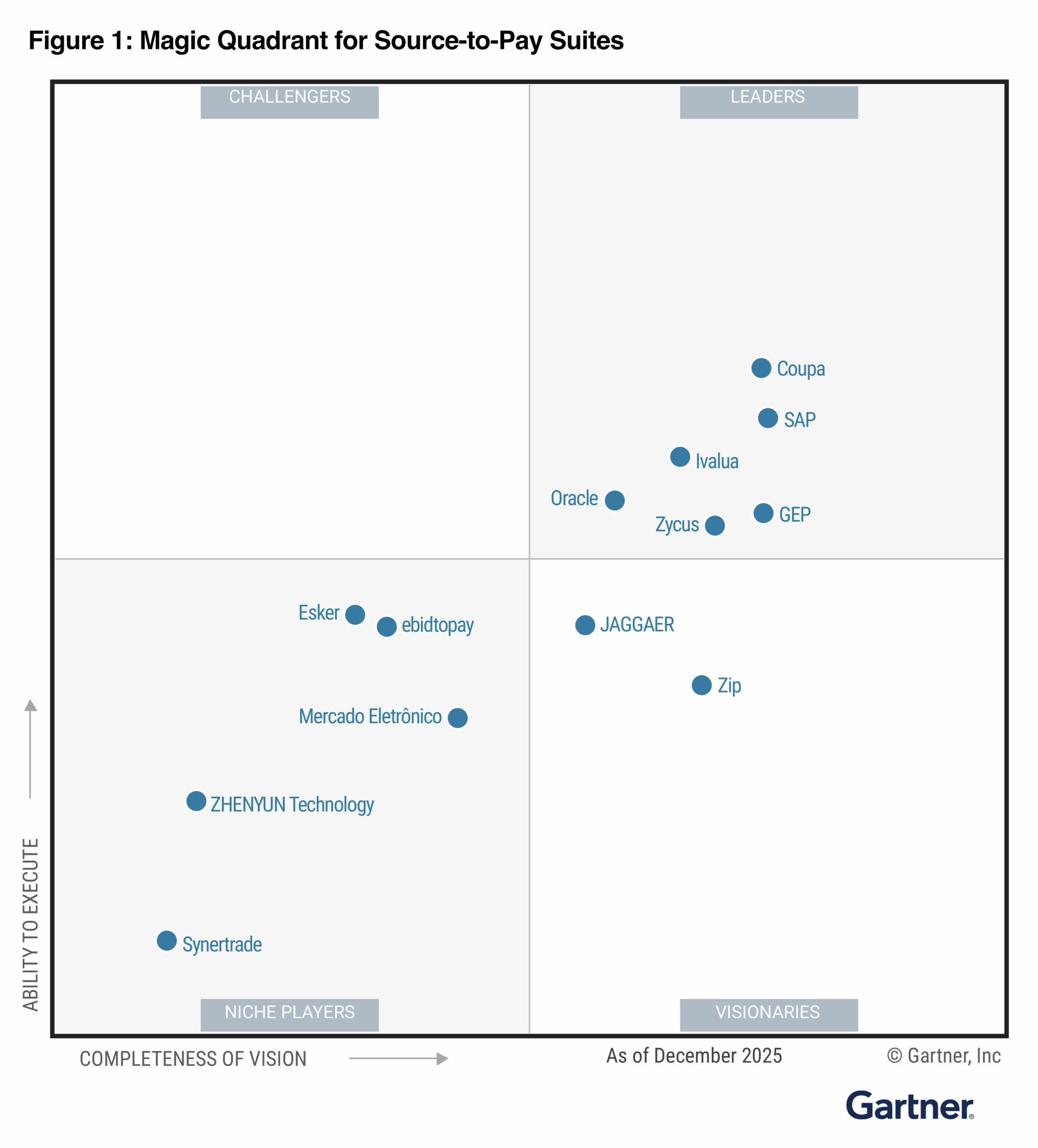
As a Gartner-recognized leader in Source-to-Pay solutions, Zycus offers comprehensive, AI-powered e-invoicing compliance for UAE businesses.
Why Zycus for UAE E-Invoicing?
- Global Compliance Expertise
- 29+ countries supported
- UAE-specific PEPPOL implementation
- Real-time FTA validation
- Automated compliance monitoring
- AI-Powered Intelligence
- Merlin GenAI for instant validation
- Real-time fraud detection
- Touchless invoice processing
- Smart optimization recommendations
- Seamless ERP Integration
- SAP S/4HANA prebuilt adapters
- Oracle Cloud integration
- Real-time data synchronization
- Rapid deployment (45-day average)
- Comprehensive Matching
- 2-way, 3-way, 4-way, N-way matching
- Automated PO/GR/invoice reconciliation
- Configurable business rules
- Exception management
- Multi-Source Invoice Capture
- EDI, cXML
- Scanned images
- Structured data formats
- Real-Time Visibility
- AI-powered dashboards
- Live invoice status tracking
- Cash position forecasting
- Custom analytics
- Supplier Collaboration (ZSN)
- Zycus Supplier Network portal
- Real-time notifications
- Simplified e-invoice generation
- Automated matching
- Flexible Payments
- P-Card/V-Card support
- Cross-border capabilities
- Third-party integration
- Dynamic discounting
Implementation Services
Assessment & Planning:
- Current state analysis
- Gap identification
- Compliance roadmap
- Change management
Configuration & Integration:
- ERP integration
- ASP connectivity
- Workflow automation
- Data mapping
Training & Support:
- Role-based training
- User documentation
- Knowledge transfer
- Best practices
Post-Implementation:
- Dedicated support
- Continuous monitoring
- Regular updates
- Compliance tracking
Industry Recognition
- Gartner Magic Quadrant Visionary – Source-to-Pay Suites 2024
- Forrester Wave Leader – Supplier Value Management Q3 2024
- IDC MarketScape Leader – Procure-to-Pay 2025
Learn more: Zycus E-Invoicing Solutions
Conclusion: Start Your E-Invoicing Journey Today
UAE e-invoicing represents more than regulatory compliance—it’s a digital transformation opportunity. With mandatory deadlines approaching (July 2026 pilot, January 2027 for large businesses), early preparation is critical.
Key Takeaways:
- Start now – Businesses starting 9+ months early achieve 98% success rates
- Choose proven partners – Technology and ASP selection is critical
- Invest in training – Comprehensive training drives 95% adoption success
- Plan for support – Dedicate resources for 90-day post-implementation period
- Communicate early – Inform partners 3+ months before go-live
Why Act Now?
Time is running out:
- Large businesses: Only 13 months until mandatory compliance (Jan 2027)
- Implementation takes 3-6 months for complex organizations
- ASP selection and integration require careful planning
- Staff training across multiple departments takes time
The cost of delay:
- Up to AED 120,000 annually in penalties
- Operational disruptions during rushed implementation
- Lost competitive advantage
- Compliance risks and audit issues
The benefits of early action:
- Avoid all penalties through timely compliance
- 58% average reduction in processing costs
- 41% faster payment cycles
- Improved cash flow and working capital
- Enhanced supplier/customer relationships
- Competitive market positioning
Your Next Steps:
- Assess your timeline – Determine which phase applies to you
- Evaluate your systems – Check ERP readiness for e-invoicing
- Research ASPs – Review the official accredited provider list
- Contact experts – Schedule consultation with Zycus team
- Develop roadmap – Create detailed implementation plan
- Secure budget – Get stakeholder buy-in and funding
- Begin preparation – Start gap analysis and planning now
Get Expert Help
Don’t navigate this complex transition alone. Schedule your free consultation with a Zycus Expert today
The deadline is approaching. The time to act is now.
Transform regulatory compliance into competitive advantage with Zycus’s AI-powered e-invoicing solution.
FAQs
Q1. When does UAE e-invoicing become mandatory?
UAE e-invoicing becomes mandatory in phases starting July 2026. Large businesses (revenue ≥ AED 50M) must comply by January 1, 2027. Medium and small businesses (revenue < AED 50M) by July 1, 2027. Government entities by October 1, 2027.
Q2.What are the penalties for non-compliance?
Penalties include AED 5,000/month for failing to implement or appoint an ASP, AED 100 per late invoice (max AED 5,000/month), AED 100 per late credit note (max AED 5,000/month), and AED 1,000/day for late system failure notifications.
Q3. Do I need to hire an Accredited Service Provider?
Yes, it’s mandatory. Direct connections to UAE e-invoicing infrastructure are only available through ASPs accredited by the Ministry of Finance.
Q4. What is the PEPPOL 5-corner model?
PEPPOL is an international framework where suppliers and buyers exchange invoices through their respective Accredited Service Providers, who validate and transmit data. The Federal Tax Authority acts as the 5th corner, receiving invoice data for compliance monitoring.
Q5. Can I still use PDF invoices?
No. PDF, Word, Excel, scanned images, and email attachments will NOT be valid for VAT compliance once e-invoicing becomes mandatory. Only machine-readable XML/JSON formats using UBL or PINT standards are accepted.
Q6. Does e-invoicing apply to B2C transactions?
Currently no. The initial mandate covers only B2B (business-to-business) and B2G (business-to-government) transactions. B2C may be added in future phases.
Q7. How long does implementation take?
Average implementation time with Zycus is 45 days. However, large organizations with complex ERP systems may require 3-6 months for full deployment, testing, and training.
Q8. What ERP systems does Zycus support?
Zycus integrates with major ERP systems including SAP S/4HANA, Oracle Cloud, Microsoft Dynamics, and others through prebuilt adapters and APIs.
Q9. Do overseas customers need UAE e-invoicing?
Overseas customers don’t need UAE ASPs unless they have VAT or Corporate Tax obligations in the UAE. If they’re already on PEPPOL in their country, their existing address can be used. Otherwise, continue with email/PDF.
Q10. What happens to VAT groups?
Each VAT group member must have a separate ASP connection while using the group’s Tax Registration Number (TRN) to ensure all transactions are captured.
Q11. Can I voluntarily adopt e-invoicing early?
Yes. Voluntary adoption begins July 1, 2026. Early adopters are exempt from penalties until their mandatory compliance date.
Q12. What data must be stored electronically?
All invoice and credit note data must be stored in machine-readable format within the UAE according to Tax Procedures Law retention requirements (typically 5 years).
Q13. How do I select the right ASP?
Evaluate ASPs based on PEPPOL certification, ERP integration capabilities, transaction volume support, local presence, pricing, track record, and security measures. Check the official Ministry of Finance ASP list.
Q14. What training do staff need?
Training should cover invoice creation, validation, exception handling, system navigation, and regulatory requirements. Different training is needed for Finance, IT, Tax, Procurement, and AR/AP teams.
Q15. How quickly will I see ROI?
Clients typically see ROI within 6-12 months through reduced processing costs (avg 58% reduction), faster payment cycles (avg 41% faster), and eliminated penalties.
Disclaimer: This blog post is for informational purposes only and should not be considered legal or professional tax advice. Businesses should consult with qualified tax professionals and legal advisors for specific guidance on UAE e-invoicing compliance. All information is current as of December 10, 2025, and subject to updates from the UAE Ministry of Finance and Federal Tax Authority.
Related Reads:
- Reduce the invoice processing time to less than 5 days with Zycus’ AP Automation Software
- Unlock the value of digital transformation by adopting e-invoicing
- Explore how E-Invoicing is changing the role of today’s Accounts Payable
- What is Invoice Approval Workflow?
- Setting Up Internal Controls in Accounts Payable Processes
- Top 7 reasons to Digitize Accounts Payable
- 5 Key Benefits of Enhancing Your Business with an e-Invoice Generation Tool