








TL;DR
- 65% of procurement leaders prefer agentic workflows over standalone point agents.
- Point agents solve single tasks; agentic workflows orchestrate end-to-end processes across S2P.
- The shift reflects a move from isolated automation to connected intelligence.
- Pre-built workflows within S2P suites are winning over custom-built agent solutions.
- Success requires choosing technology that fits your orchestration maturity, not just your automation ambitions.
Two years ago, the conversation was simple: automate or fall behind. Today, it’s more nuanced. How you automate matters as much as whether you automate.
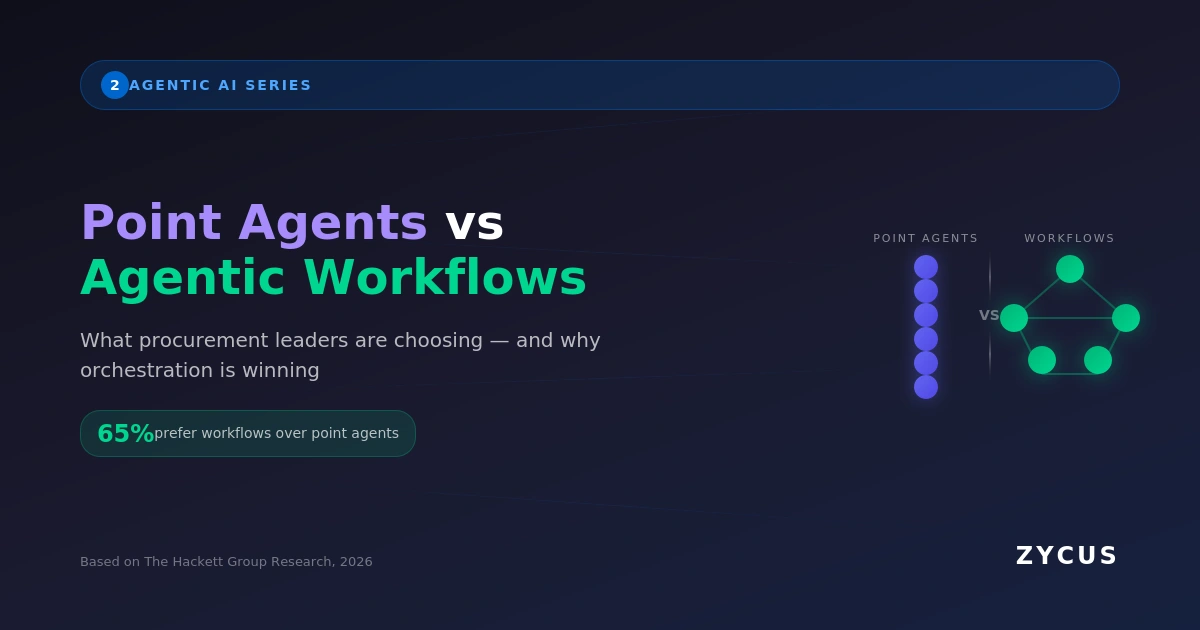
The Hackett Group’s 2026 research reveals a clear preference emerging: 65% of procurement leaders favor agentic workflows over standalone point agents. That’s not a marginal lean — it’s a decisive shift in how organizations are thinking about AI deployment.
But what’s driving this preference? And more importantly, are organizations choosing workflows because they’re genuinely better — or because point agents are harder to get right?
Point Agents vs. Agentic Workflows: The Core Difference
A point agent is a specialized AI that handles a single, well-defined task. Think of it as a highly skilled contractor: excellent at one thing, but you need to manage handoffs yourself. Examples include an agent that extracts invoice data, another that monitors supplier risk alerts, or one that drafts RFP responses.
An agentic workflow is different. It’s a coordinated system where multiple agents work together, passing context and decisions across the source-to-pay process. Instead of automating tasks in isolation, workflows automate outcomes.
The distinction matters because procurement doesn’t operate in silos. A requisition connects to a contract, which connects to a supplier, which connects to an invoice. When you deploy point agents without workflow orchestration, you’re building islands of intelligence in an ocean of manual handoffs.
Point Agents vs. Agentic Workflows: Key Differences
| Dimension | Point Agents | Agentic Workflows |
| Scope | Single task | End-to-end process |
| Context sharing | Limited | Continuous |
| Integration effort | High per agent | Built into suite |
| Maintenance | Individual updates | Unified governance |
| Best for | Quick wins | Process transformation |
Source: Zycus Analysis based on The Hackett Group Research, 2026
Why 65% Are Choosing Workflows
The preference for workflows isn’t about technology sophistication — it’s about practicality. Three factors are driving the shift:
First, integration fatigue. Organizations that deployed multiple point agents discovered a hidden cost: every agent needs connections to data sources, ERP systems, and other agents. What started as “quick automation” became an integration project.
Second, context loss. Point agents don’t naturally share what they learn. An invoice processing agent doesn’t tell the contract management agent about payment term discrepancies. Workflows maintain context across the entire process.
Third, governance complexity. Managing ten independent agents means ten separate monitoring frameworks, ten update cycles, and ten potential points of failure. Workflows consolidate governance into a single orchestration layer.
The Pre-Built vs. Build-Your-Own Decision
Within the workflow preference, another choice is emerging: should organizations use pre-built agentic workflows from their S2P vendors, or build custom orchestrations?
The Hackett research suggests most are leaning toward pre-built. The reasoning is straightforward: S2P vendors have spent years understanding procurement processes. Their workflows reflect patterns from thousands of implementations.
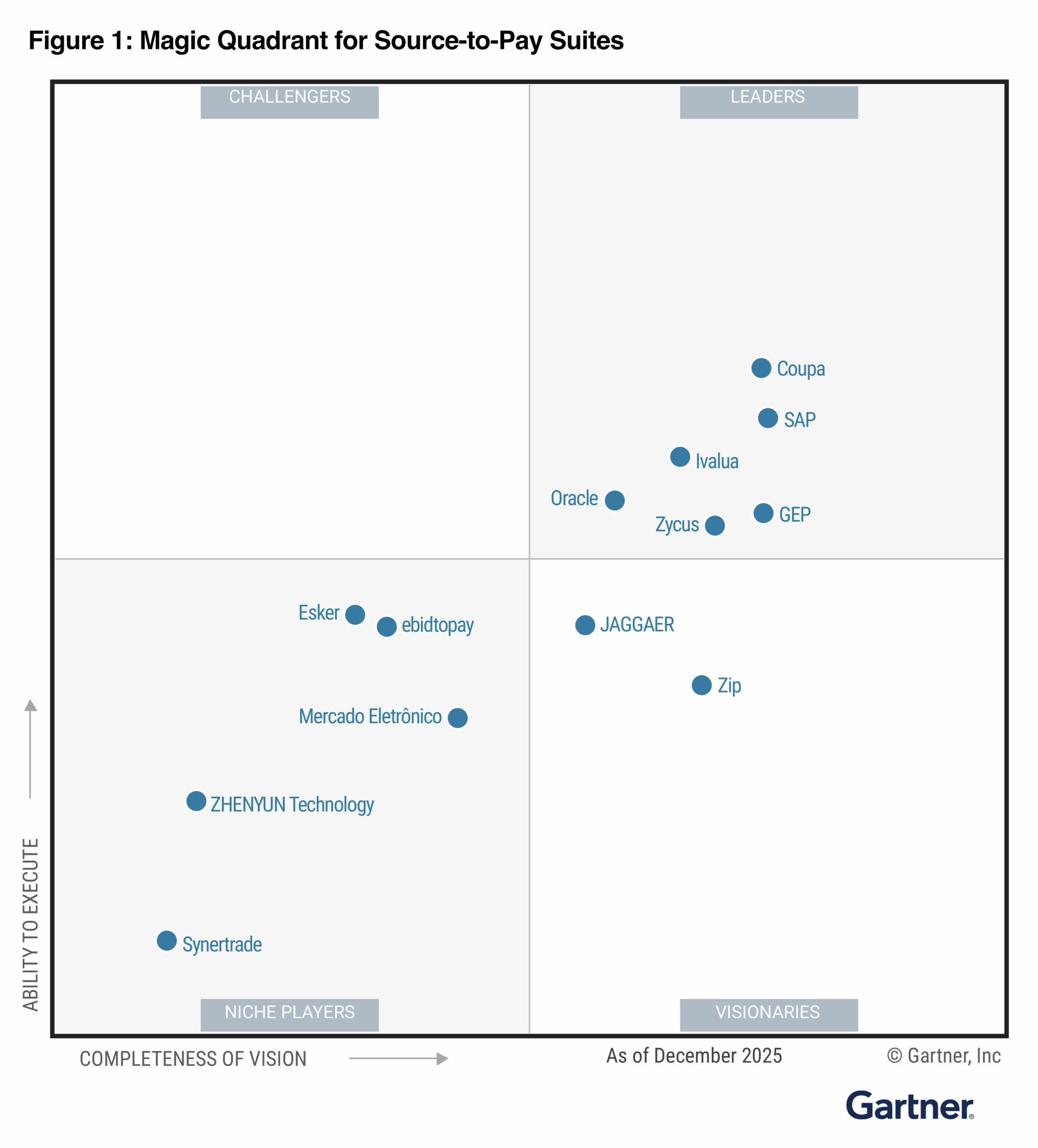
Zycus — recognized as a Leader in the 2025 IDC MarketScape for AI-Enabled Source-to-Pay — exemplifies this approach with investments in intake and orchestration that connect across the entire S2P lifecycle.
Custom builds make sense when your processes are genuinely unique. But for most organizations, differentiation comes from how you use procurement intelligence — not from reinventing workflow infrastructure.
Making the Right Choice for Your Organization
- Start with process mapping. Before choosing technology, understand where your current handoffs create delays, errors, or visibility gaps.
- Evaluate your integration maturity. If connecting systems is already a struggle, point agents will amplify that challenge. Workflows may offer a faster path.
- Consider total cost of orchestration. Point agents may seem cheaper individually, but factor in integration, maintenance, and governance costs over three years.
The 65% choosing workflows aren’t rejecting point agents entirely — they’re recognizing that orchestration matters more than individual automation. And for many, that orchestration is easier to achieve within an integrated S2P platform than through assembly.
| Next in This Series
Autonomous Tail Spend Negotiation: The 86% Opportunity Procurement Is Missing Why the biggest opportunity for agentic AI in procurement is hiding in your smallest transactions. |
FAQs
Q1. What is the difference between a point agent and an agentic workflow?
A point agent handles a single specific task autonomously, while an agentic workflow orchestrates multiple agents working together across an end-to-end process, sharing context and coordinating decisions.
Q2. Why are most procurement leaders choosing agentic workflows over point agents?
Workflows reduce integration complexity, maintain context across processes, and simplify governance. Organizations found that deploying multiple point agents created hidden costs in integration and maintenance that workflows avoid.
Q3. Should organizations build custom workflows or use pre-built solutions?
Most organizations benefit from pre-built workflows within S2P suites, which reflect best practices from thousands of implementations. Custom builds are justified only when processes are genuinely unique and differentiated.
Related Reads:
- Pioneering Procurement: Building Your First Agentic AI Use Case
- The Autonomous Advantage: How Agentic AI is Redefining Competitive Edge in Procurement
- Agentic AI in Procurement: A Comic Book Exploration
- Beyond GenAI: The Dawn of Agentic AI in Procurement
- Agentic AI in Procurement: What Hackett’s Adoption Index Reveals About Control