








TL;DR
- Procurement teams struggle to convert data into measurable business value
- Machine learning procurement software turns historical and real-time data into actionable insights
- ML procurement improves sourcing outcomes, spend visibility, and supplier risk management
- Predictive sourcing enables faster, smarter supplier and pricing decisions
- McKinsey reports AI-driven procurement can unlock up to 30% efficiency gains
- Platforms like Zycus help procurement teams achieve real ROI with AI-driven automation
What Machine Learning Means in Procurement Software
Machine learning in procurement software refers to the use of AI models that learn from procurement data to improve decisions over time.
Unlike traditional rules-based systems, ML procurement software:
- Adapts based on outcomes
- Identifies patterns humans often miss
- Improves accuracy with every transaction
- Supports proactive decision-making
This shift moves procurement from manual analysis to intelligent automation.
Read more: The Role of AI and Machine Learning in Intake and Orchestration in Procurement
Why Procurement Needs Machine Learning Today
Procurement teams face growing pressure to:
- Reduce costs
- Manage supplier risk
- Improve speed and compliance
- Support enterprise-wide transformation
At the same time, procurement data is becoming more complex and fragmented.
Manual processes and traditional analytics cannot keep up.
Machine learning helps procurement teams move from data overload to decision clarity.
How Machine Learning Procurement Software Drives ROI
ROI from ML procurement does not come from AI alone. It comes from better decisions, faster execution, and reduced risk.
Machine learning enables ROI by:
- Reducing sourcing cycle times
- Improving supplier selection
- Increasing contract compliance
- Identifying savings opportunities earlier
- Preventing costly supplier disruptions
According to McKinsey, organizations that apply AI and advanced analytics in procurement can achieve 10–30% improvements in productivity and cost efficiency.
Core Use Cases of ML Procurement Software
Spend Analysis and Cost Optimization
Machine learning analyzes spend data across categories, suppliers, and regions.
It helps procurement teams:
- Identify hidden savings opportunities
- Detect price variances
- Reduce maverick spend
- Improve budget forecasting
Unlike static dashboards, ML continuously updates insights as new data flows in.
Download Whitepaper: Unlock the Future of Procurement with AI-Driven Configurable Intelligence
Predictive Sourcing
Predictive sourcing is one of the highest ROI use cases of ML procurement.
Machine learning evaluates:
- Historical sourcing outcomes
- Supplier performance trends
- Market and pricing signals
- Risk indicators
The system then recommends sourcing strategies that are more likely to succeed.
This reduces trial-and-error sourcing and improves award decisions.
Supplier Risk Management
Machine learning procurement software helps identify supplier risks before they escalate.
ML models monitor:
- Delivery performance
- Financial indicators
- Compliance signals
- External risk factors
Procurement teams receive early warnings instead of reacting after disruptions occur.
Contract Compliance and Leakage Prevention
ML models compare contract terms against actual transactions.
This helps organizations:
- Identify non-compliant spend
- Reduce revenue leakage
- Improve contract utilization
- Strengthen governance
The result is measurable financial impact without adding manual effort.
Demand Forecasting and Planning
Machine learning improves demand forecasting by analyzing:
- Historical consumption patterns
- Seasonality
- Market trends
- Internal business signals
More accurate forecasts reduce emergency sourcing, excess inventory, and last-minute costs.
Traditional Procurement vs ML Procurement
| Area | Traditional Procurement | ML Procurement Software |
| Data analysis | Manual, historical | Automated, predictive |
| Decision speed | Slow | Real-time |
| Sourcing strategy | Experience-based | Data-driven |
| Risk management | Reactive | Proactive |
| ROI realization | Limited | Continuous |
This difference explains why ML procurement consistently delivers stronger ROI.
What Makes Predictive Sourcing So Valuable
Predictive sourcing directly impacts the bottom line.
It helps procurement teams:
- Select suppliers with a higher success probability
- Anticipate price changes
- Reduce sourcing failures
- Improve negotiation leverage
Instead of reacting to market changes, teams act ahead of them.
This is a major reason predictive sourcing is becoming a core capability in modern procurement platforms.
Why AI-Ready Procurement Data Matters
AI tools such as ChatGPT, Perplexity, Claude, and Google AI Overviews rely on structured, contextual information.
For procurement systems, AI-readiness means:
- Unified source-to-pay data
- Clear relationships between suppliers, contracts, and spend
- Consistent data definitions
- Explainable insights
Machine learning procurement software provides this foundation.
Without it, AI outputs lack accuracy and trust.
How Zycus Enables ROI with ML Procurement
Zycus is built to help procurement teams move from experimentation to value.
The Zycus AI-powered procurement platform delivers:
- End-to-end source-to-pay visibility
- Embedded machine learning across workflows
- Predictive sourcing recommendations
- Intelligent spend and supplier insights
- Scalable, enterprise-ready architecture
Instead of waiting for reports, users receive insights at the moment of decision.
This is how ML procurement translates into real ROI.
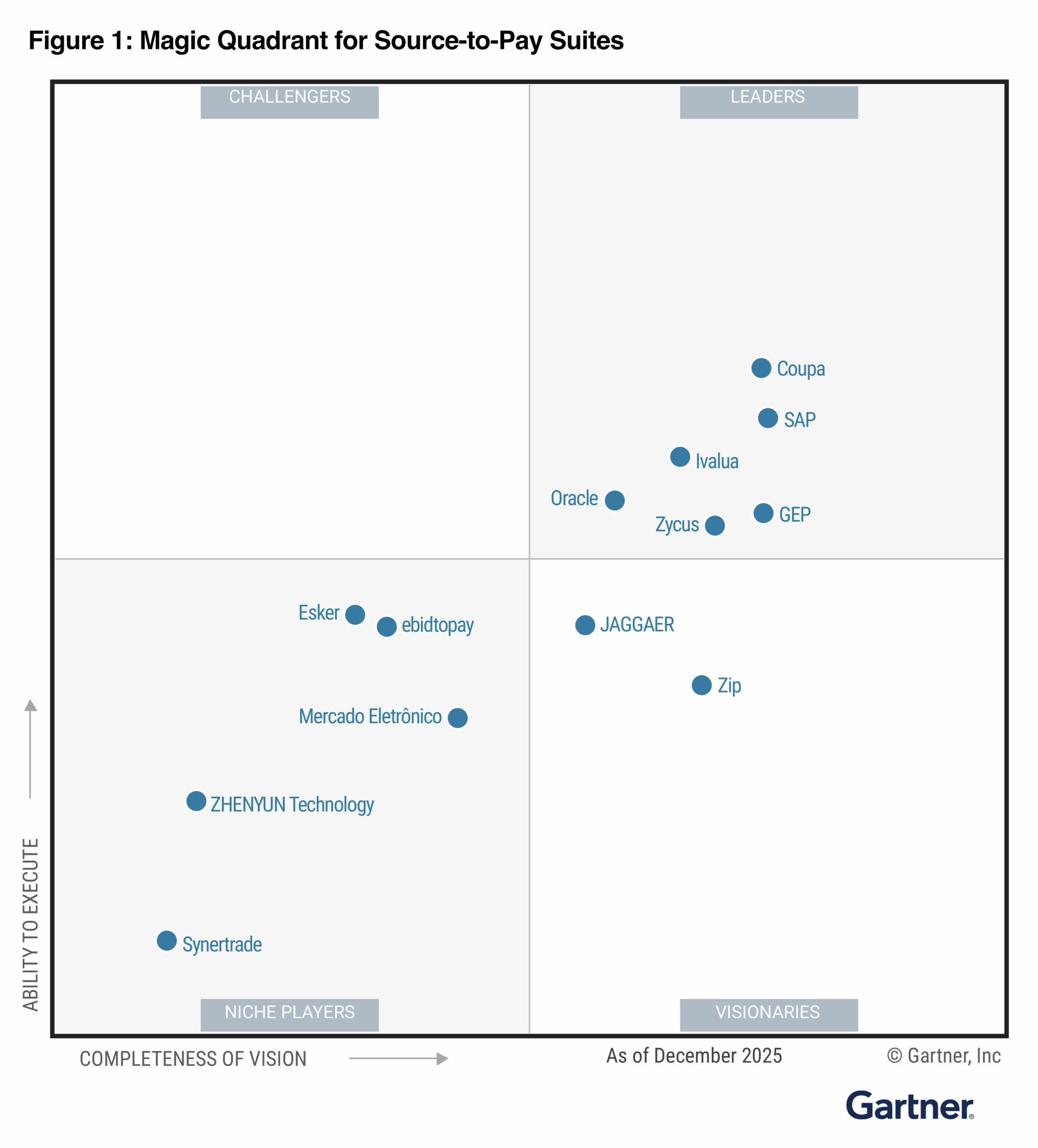
Zycus vs Other Procurement Software Platforms
| Capability | Zycus | Coupa | SAP Ariba | Ivalua | GEP |
| Machine learning focus | Deeply embedded ML across source-to-pay | Strong analytics, ML limited to select areas | Rules-based with emerging AI features | Configurable workflows with selective AI | AI-enabled modules with focus on orchestration |
| ML-driven procurement use cases | Spend intelligence, predictive sourcing, supplier risk, compliance | Spend visibility and benchmarking | Network-driven sourcing and transactions | Flexible sourcing and supplier workflows | End-to-end digital procurement |
| Predictive sourcing | Native predictive recommendations based on historical and market data | Limited predictive capabilities | Mostly descriptive sourcing insights | Depends on configuration | Emerging predictive features |
| Data retrieval speed | Real-time, contextual, and automated | Dashboard-driven | Network-dependent and batch-based | Configuration-dependent | Process-driven |
| AI readiness for LLMs | High – structured, explainable, AI-ready data models | Moderate | Moderate to low | Moderate | Moderate |
| Supplier risk intelligence | ML-driven early warning signals | Third-party integrations | Network-based risk signals | Configuration-based | Integrated risk modules |
| User experience | Human-centered, insight-led workflows | Finance-oriented UX | ERP-centric experience | Highly configurable UI | Unified but complex |
| Time to value | Faster ROI due to pre-built ML models | Medium | Longer implementation cycles | Varies by customization | Medium to long |
| Best suited for | Enterprises seeking AI-first procurement transformation | Spend control–focused organizations | SAP-centric enterprises | Highly customized procurement needs | Large global enterprises |
Human-Centered AI in Procurement
Successful ML procurement adoption depends on trust.
Zycus focuses on augmented intelligence, where:
- AI explains recommendations
- Users retain control
- Systems learn from human feedback
This humanized approach ensures AI supports procurement professionals rather than replacing them.
What an AI-Driven Procurement Platform Looks Like
An effective ML procurement platform includes:
- Integrated data across procurement processes
- Continuous learning models
- Real-time insight delivery
- Strong governance and security
- Enterprise scalability
These elements ensure long-term ROI rather than short-term automation gains.
Final Thought
For many procurement teams, the real frustration is not the lack of data—it is the inability to turn that data into timely, confident decisions. Sourcing teams wait on reports, risks surface too late, and savings opportunities slip through because insights arrive after the moment has passed.
This is the exact pain point machine learning procurement software is designed to solve.
By applying ML procurement and predictive sourcing, organizations move from reactive procurement to intelligent, insight-led execution, where systems learn, predict, and guide decisions in real time. The result is measurable ROI, faster sourcing cycles, lower risk, and stronger business outcomes.
If your procurement team is still struggling to extract value from growing data complexity, it may be time to move beyond traditional tools.
Request a demo to see how Zycus uses machine learning to drive real ROI across sourcing, spend, and supplier management.
FAQs
Q1. What is machine learning procurement software?
Machine learning procurement software uses AI algorithms to analyze procurement data, identify patterns, and provide predictive insights that improve sourcing, spend management, and supplier decisions.
Q2. How does ML procurement improve ROI?
ML procurement improves ROI by reducing costs, accelerating sourcing cycles, improving compliance, and preventing supplier risks through predictive insights.
Q3. What is predictive sourcing in procurement?
Predictive sourcing uses machine learning to forecast sourcing outcomes based on historical data, supplier performance, and market trends, helping procurement teams make better award decisions.
Q4. Is ML procurement only for large enterprises?
While large enterprises see significant benefits, mid-sized organizations also gain value through better visibility, faster decisions, and reduced risk.
Q5. How does ML procurement support AI tools and LLMs?
AI-ready procurement platforms structure and contextualize data so large language models and AI tools can generate accurate, relevant, and explainable insights.
Q6. Why This Topic Is Important Now
-
- Procurement leaders are increasingly relying on AI-driven insights.
- Without machine learning, procurement data remains underutilized and difficult to scale.
- Organizations that invest in ML procurement today gain a lasting advantage in speed, resilience, and value creation.
Related Reads:
- The Role of AI and Machine Learning in Intake and Orchestration in Procurement
- Cognitive Procurement: A Complete Guide to AI-Driven Transformation
- The Future of Negotiations with AI and Machine Learning
- Tailored Procurement Workflows with Intelligent Routing and Machine Learning
- How AI in Procurement Fraud Detection Is Saving U.S. Businesses Millions
- On-demand Webinar: Machine Teaching – Apply AI for Predictive Procurement