


I want to share something I have been watching happen in the market over the past eighteen months, because I think most procurement leaders know it is happening but have not yet decided what to think about it.
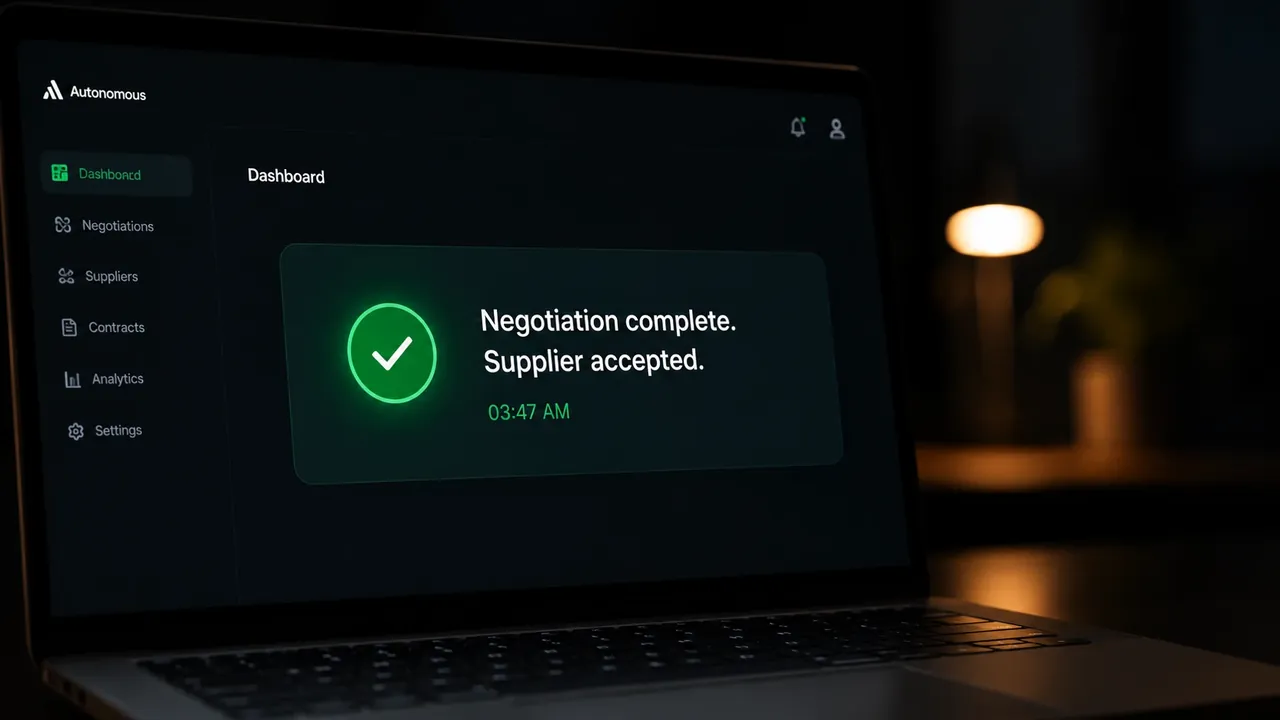
Autonomous negotiation is not a pilot programme at a handful of early-adopter organisations. It is in production, at scale, in the tail-spend categories of a growing number of large businesses. Agents are initiating supplier contact, running competitive processes, responding to counteroffers within defined parameters and closing agreements, without a buyer involved in any individual transaction.
Where it works
The categories where fully autonomous negotiation is functioning well share a few characteristics: high transaction volume, relatively standardised specifications, established supplier markets with clear pricing signals and low strategic sensitivity. Office consumables. Facility management services. Certain logistics categories. Low-complexity professional services at the margin.
In these categories, the agent is not a worse version of a buyer. In many cases it is better: faster to respond, consistent in applying the commercial brief, tireless in running competitive processes that a human buyer would run once a year if pressured. The outcomes in well-configured deployments are genuinely good.
Where it does not
The categories where autonomous negotiation fails, or fails quietly, are the ones that require contextual judgment that no current agent handles reliably. Strategic supplier relationships where the commercial terms are secondary to the relationship quality. Categories where specification ambiguity is high and the agent cannot resolve it without escalation. Negotiations where regulatory complexity or reputational risk requires human accountability at the moment of decision.
The honest assessment: the majority of an organisation’s procurement spend by value sits in categories that need human judgment. The majority by transaction volume does not. Buyers who understand that distinction will be far better placed than those who resist autonomous systems wholesale or trust them without appropriate oversight.
What this means for the buyers in your team
The job of a buyer is changing from negotiator to supervisor in the categories where agents operate. That is not a demotion. It is a different skill set. Supervising autonomous negotiation well requires understanding how to set parameters intelligently, how to audit agent behaviour for drift and error, and how to design escalation triggers that catch the situations agents cannot handle.
Most buyers have not been trained for this. Most procurement development programmes have not caught up with it. The gap between what the technology can do and what the human capability to govern it looks like is real and widening.
If you want to address that gap seriously, for yourself or for your team, the Procurement Futures Fund is one route. It co-pays 50% of any accredited Agentic AI course, up to EUR 1,000, with no obligation attached. I mention it not because I am involved commercially but because I think the problem it is trying to solve is genuine.
Autonomous negotiation is not coming. It is here. The question for every procurement leader right now is not whether to engage with it but how to govern it well.
Related Reads:
- The Power of Orchestration for Cost Efficiency and Strategic Success: A Game Changer
- Unlock Hidden Procurement Insights: Mastering Data Orchestration Before Your Competitors Do
- Navigating the Complexities of Procurement Orchestration: Tackling Tech, Process, and Stakeholder Hurdles
- Merlin Intake Resource Center
- Whitepaper: The Integration Imperative: Transforming Procurement Efficiency with Built-In Intake Management
- Streamlining Sourcing: The Power of Autonomous Negotiation
- What We Would Fund if Budget Were No Constraint: The Procurement Leader’s Ideal AI Curriculum
- AI Upskilling for Procurement Leaders: Why Co-Fund?
- How We Picked the Panel, and Why Most of Them Do Not Work for Zycus