

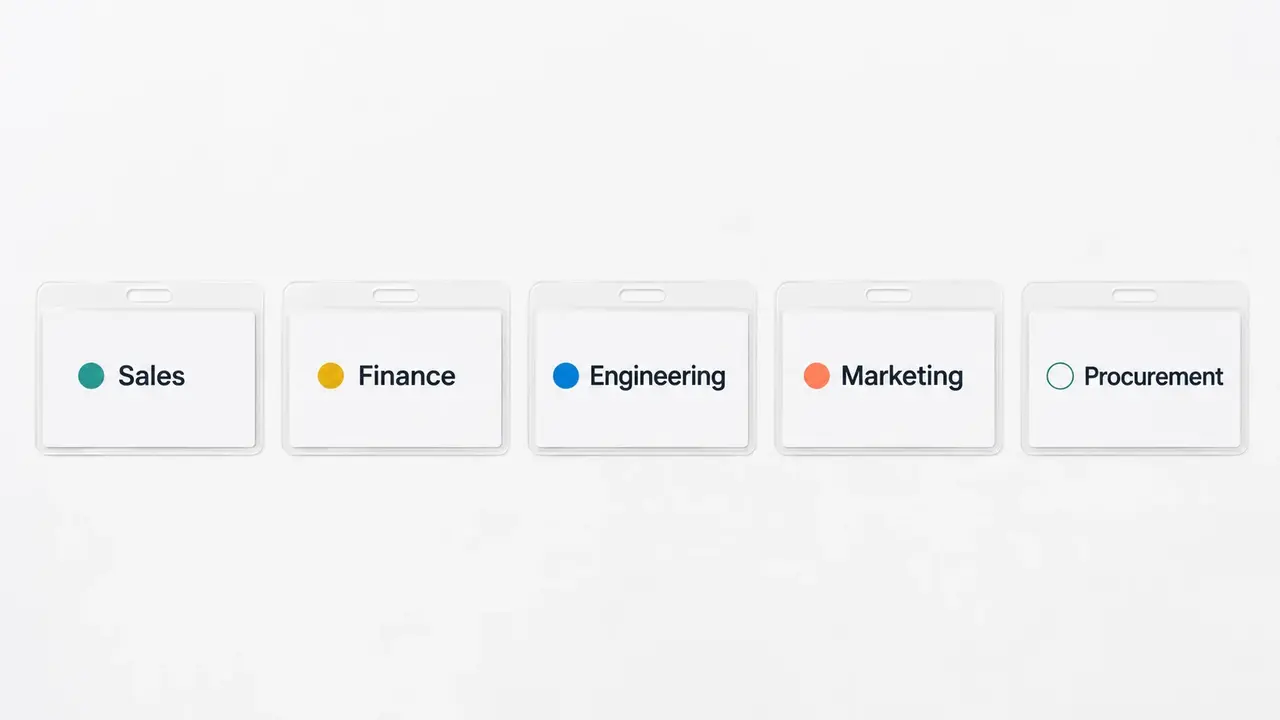

Ask someone in sales what their AI stack looks like and they will talk for twenty minutes. Clay for prospecting. Apollo for data enrichment. Gong for call intelligence. Their CRM has a copilot. Their enablement platform has AI coaching. The function has been rebuilt around tools that reduce the administrative burden and amplify human judgment.
Ask the same question of a senior procurement leader and the conversation is different. The tools are evolving, e-sourcing platforms are acquiring AI features, contract management systems are adding language model capabilities, spend analytics is getting smarter. But the equivalent moment of enablement that sales, marketing, finance and engineering have each experienced? Procurement is still waiting for it.
The function versus the leaders
There is an important distinction to make here. Procurement as a function is receiving technology investment, platforms are being upgraded, pilots are being run, agentic workflows are being deployed in specific categories. The function is moving.
Procurement leaders, the senior professionals who need to govern, direct and develop those systems, are in a different position. The function is changing under them, and the professional development infrastructure to support that transition is largely absent. There is no procurement equivalent of the sales enablement team. There is no standard agentic AI certification pathway that procurement bodies have yet widely adopted. There is no funded programme that exists specifically to help the most senior and experienced people in the function build the skills the next decade will require.
What the gap actually costs
The cost of this gap is not theoretical. Organisations are buying agentic procurement technology and discovering that their teams are not equipped to govern it well. Autonomous sourcing agents make decisions within parameters that someone has to set intelligently. Agentic negotiation systems require oversight from professionals who understand both the commercial context and the AI behaviour. When that oversight is thin, the results are inconsistent and the technology fails to deliver on its promise.
The bottleneck is not the technology. It is the human capability to direct it.
The Procurement Futures Fund as a structural response
The fund does not solve the entire problem. It is not a systemic overhaul of procurement professional development. What it is: a direct, funded pathway for one hundred senior procurement professionals to build the specific skills the next decade will require, at a course and provider of their own choosing.
It is also a signal. That someone noticed the gap. That someone thought it was worth doing something about. And that the investment in procurement capability can come from somewhere other than the L&D budget line that keeps getting cut.
Every function has its thing. This is procurement’s, one fund, one hundred professionals, one genuinely different conversation about what the function deserves.
Related Reads:
- Real-Time Budget Visibility: Tools and Techniques for Emerging Enterprises
- From Chaos to Control: Fixing Vendor Master Data and Rogue Spend with AI
- The Adoption Deficit: Solving the Procurement Change Challenge in Emerging Enterprises
- What We Would Fund if Budget Were No Constraint: The Procurement Leader’s Ideal AI Curriculum
- AI Upskilling for Procurement Leaders: Why Co-Fund?
- The 2030 Procurement Leader: What They Will Need to Know