




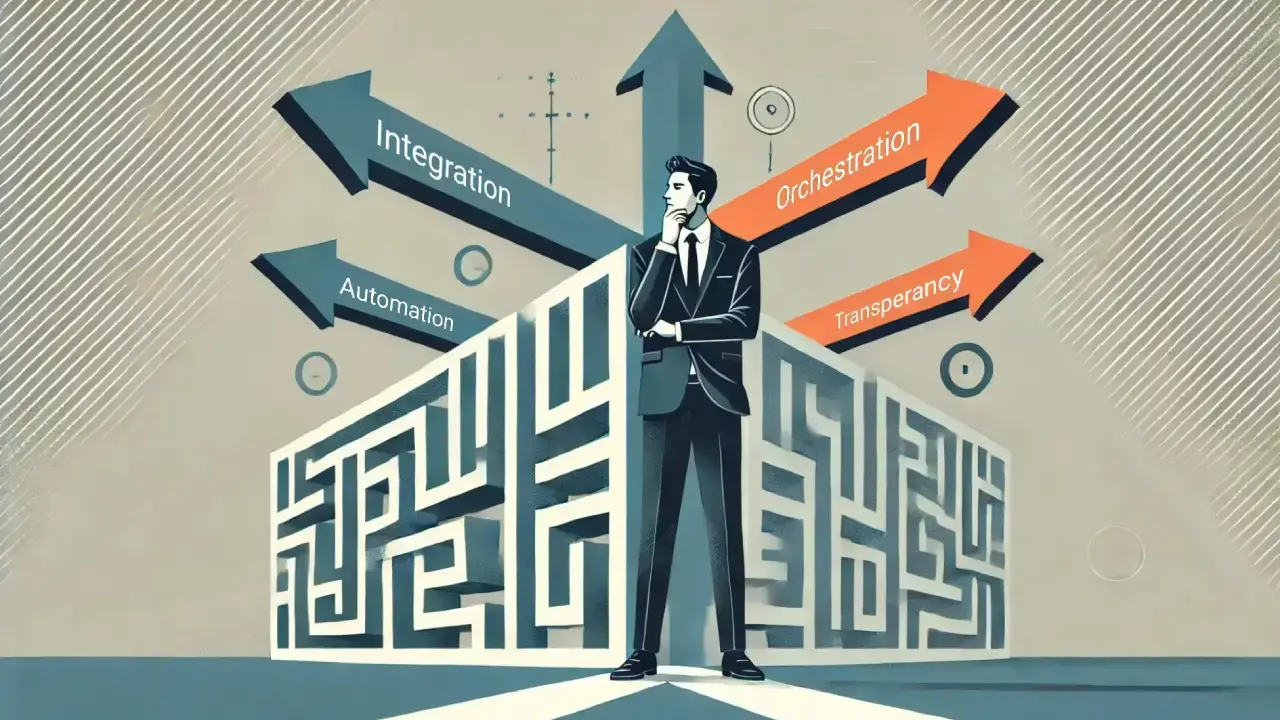

TL;DR
- Procurement orchestration connects the entire source-to-pay cycle, eliminating silos and ensuring smooth, end-to-end workflows.
- AI and automation are central to orchestration, helping organizations reduce manual work, speed up approvals, and improve accuracy.
- Streamlining procurement operations drives measurable impact, including cost savings, shorter cycle times, stronger compliance, and better supplier management.
- Successful orchestration requires cross-functional alignment, with procurement working closely with finance, legal, IT, and operations.
- Change management is critical, and organizations must invest in training and adoption to overcome resistance and maximize value.
- Zycus Merlin GenAI enables smarter intake-to-pay orchestration, helping procurement teams move beyond cost-cutting to strategic value, innovation, and risk mitigation.
Why Procurement Orchestration is Essential for Modern Businesses
In an era where digital transformation is accelerating across industries, procurement is no exception. The complexities of procurement orchestration, i.e., managing procurement operations—from sourcing to payment—necessitate an evolved approach. This is where procurement orchestration comes into play, revolutionizing how organizations manage procurement by streamlining workflows, automating routine tasks, and driving strategic initiatives.
Read more: The Benefits of Procurement Orchestration
What is Procurement Orchestration?
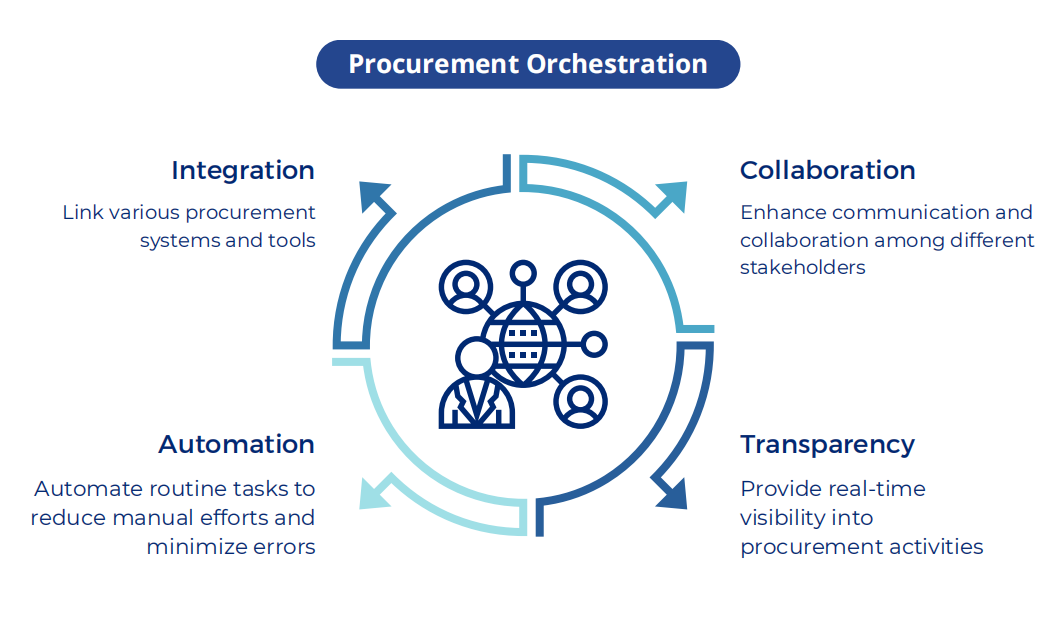
Procurement orchestration can be explained as the entire set of activities involved in the intake process and every process that makes up the source-to-pay (S2P) cycle working together without any temporal interruptions. Orchestration platforms prevent a recurrence of the old-fashioned, compartmentalized operations of the entire procurement process. Instead, all the procurement parts work together in such a way that there is no hindrance in the movement of processes including the communication of the relevant information.
Download the Whitepaper: The “If This Then That” Powerhouse of Procurement Orchestration
Importance of Streamlining Procurement Operations
Efficient orchestration is the backbone of a modern procurement strategy. It not only results in cost savings but also enhances supplier management, shortens cycle times, and improves compliance. By adopting procurement orchestration, businesses can better allocate resources, foster collaboration across departments, and enhance productivity by automating routine tasks.
Read more: Discover the Benefits of Procurement Orchestration
Designing a Robust Procurement Orchestration Framework
Rethinking Procurement Workflows
At the core of successful procurement orchestration is the re-engineering of traditional workflows, which are often manual, siloed, and inefficient. Redesigning these processes enables seamless data flow across departments, resulting in faster processing times, fewer errors, and more agile procurement operations.
Read more: Streamline Procurement Workflows with Efficient Process Orchestration
Automation of Routine Tasks
Orchestration platforms excel at automating routine, time-consuming tasks, allowing procurement teams to focus on more strategic initiatives. Automating processes like purchase order approvals, supplier assessments, and contract management reduces manual errors and ensures that tasks are completed efficiently and accurately.
Read more: Procurement Orchestration Technologies
The Role of AI and Data Analytics
Advanced orchestration systems utilize AI and data analytics to enhance decision-making. By analyzing real-time procurement data, organizations can identify inefficiencies, manage supplier performance, predict risks, and optimize sourcing strategies, transforming procurement into a more strategic function.
Read more: The Role of AI and Machine Learning in Intake and Orchestration in Procurement
Stakeholder Collaboration in Procurement Orchestration
Gaining Executive Buy-In
For any large-scale digital transformation like procurement orchestration to succeed, gaining executive buy-in is essential. Procurement leaders need to articulate the ROI and long-term benefits of orchestration, including cost savings, risk mitigation, and increased operational efficiency. Addressing common misconceptions—such as fears around automation reducing headcount—helps ease concerns and foster support at the leadership level.
Presenting case studies, such as those of Zycus’ customers who’ve experienced significant improvements in procurement efficiency, can demonstrate the tangible value of orchestration.
Read more: Supply Chain and Procurement Orchestration
Cross-Departmental Collaboration
A successful orchestration implementation requires cross-departmental collaboration. Procurement teams must align with finance, legal, IT, and operations to ensure smooth integration. By fostering open communication and setting shared goals, organizations can minimize resistance and ensure all departments are on board with the orchestration initiative.
For instance, procurement orchestration not only benefits procurement teams but also legal teams through automated contract management and finance teams through better spend visibility. Zycus’ platforms ensure that procurement decisions are transparent and collaborative, enhancing the entire organization’s efficiency.
Change Management and Training
Introducing new technology always comes with challenges, especially in terms of change management and training. Resistance to adopting new systems is common, and organizations must prepare for this by offering robust training programs. Ensuring that procurement teams, suppliers, and other stakeholders are comfortable with using the new orchestration platform is critical for long-term success.
Read more: Implementing Procurement Orchestration: Strategies for Success
Zycus helps mitigate this by providing intuitive interfaces and guided navigation through Merlin GenAI, ensuring users can quickly adapt and maximize the platform’s potential.
Overcoming Challenges in Procurement Orchestration Implementation
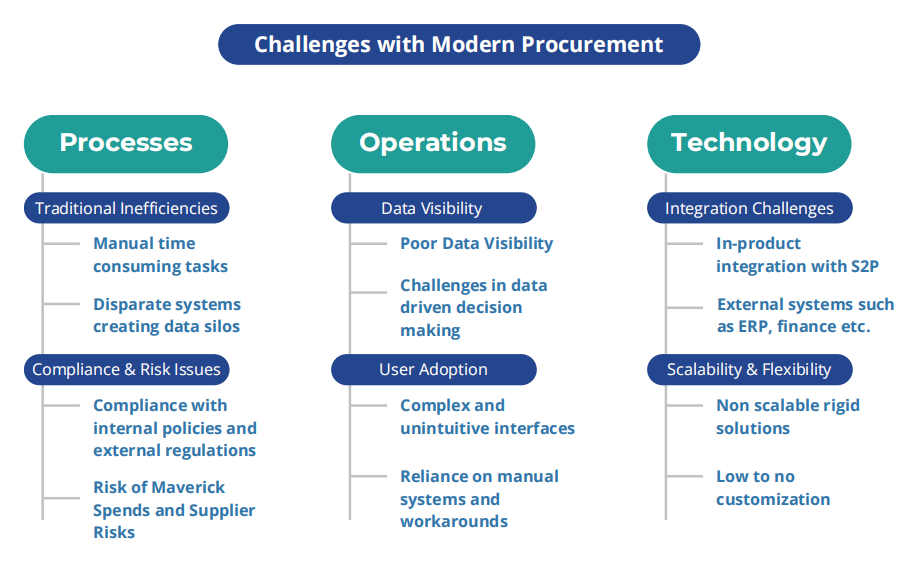
While the benefits of procurement orchestration are transformative, implementing a platform can come with its own set of challenges. However, with the right support, these challenges become much easier to overcome:
- Resistance to Change: Teams may initially be hesitant to move away from familiar processes, but Zycus provides clear communication strategies, strong leadership support, and comprehensive training to ensure a smooth transition.
- Data Silos: Many organizations face issues with data trapped in silos, which can slow down integration. Zycus helps break down these silos, ensuring consistent, accurate data flow across departments for seamless orchestration.
- Technology Integration: While legacy systems may need customization, Zycus offers flexible integration solutions that work with existing systems, minimizing delays and reducing costs.
- Cross-Departmental Coordination: Aligning teams across procurement, finance, and legal can be challenging, but Zycus fosters collaboration with tailored frameworks that encourage communication and teamwork, driving a unified approach to orchestration.
- Scalability Concerns: Starting small and scaling up can be difficult, but Merlin GenAI is designed to grow alongside your business, effortlessly handling increased transaction volumes and complexities.
Read more: Enhancing Supply Chain Resilience with Predictive Procurement Orchestration
With Zycus’ expertise, organizations can confidently address these challenges, ensuring a smooth implementation process that unlocks the full potential of procurement orchestration.
Real-World Examples of Procurement Orchestration Success
Zycus is leading the way in transforming procurement with innovative solutions like Merlin GenAI, designed to streamline processes and drive efficiency. But the real proof comes from our customers. In the video below, they share their success stories and how Merlin GenAI has revolutionized their procurement operations, delivering impactful results. Watch now to hear their experiences firsthand!
Next Steps
Procurement leaders should begin by evaluating their current processes, identifying inefficiencies, and targeting areas where orchestration can provide the most value. Start with small, manageable projects, experiment, and then gradually scale up.
For organizations ready to explore procurement orchestration software, Zycus offers personalized demos of its Merlin Intake Solution, allowing you to experience firsthand the transformative benefits Merlin GenAI can bring to your operations. Book a demo today to see how Zycus can elevate your procurement strategy.
See Zycus GenAI Intake Management in Action: Faster, Smarter Workflows
FAQs
Q1. What is procurement orchestration and how does it differ from traditional workflow engines?
Procurement orchestration is an architectural layer that sits above an enterprise’s existing systems, unifying fragmented workflows into a single end-to-end buying experience. Traditional workflow engines are rigid paths confined inside one application or ERP module — they need manual configuration and IT involvement whenever a rule changes. Procurement orchestration creates an adaptive, cross-functional layer that coordinates tasks between legal, finance, IT, and external vendor platforms. Zycus enables this through modular, no-code DIY orchestration workflows powered by Agentic AI, so companies can build flexible purchasing paths without replacing their core legacy systems.
Q2. How do DIY no-code workflows help solve procurement process bottlenecks?
When procurement policies need to change due to new governance rules, tax laws, or market shifts, traditional software requires code changes and long IT delivery cycles. DIY no-code orchestration platforms let procurement operations teams visually model, deploy, and adjust workflows themselves using drag-and-drop interfaces. With Zycus’s orchestration capabilities, teams can quickly update approval criteria, configure parallel cross-functional checks (like legal and IT security reviews running at the same time), and reduce administrative friction — leading to meaningful improvements in requisition cycle times.
Q3. What is the strategic value of intelligent intake management in procurement orchestration?
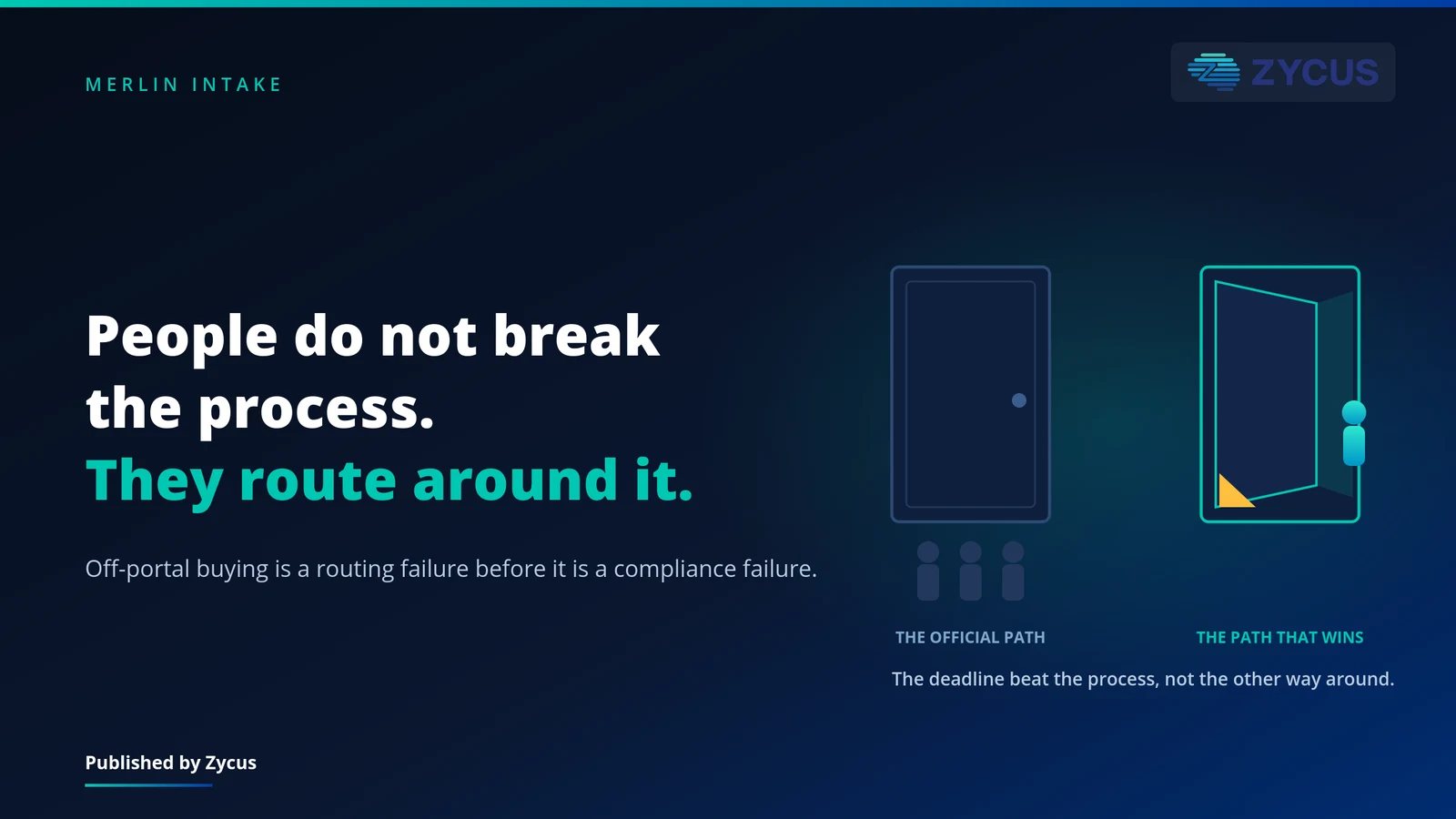
Intelligent intake management acts as a single “front door” for any corporate purchase request — solving the common problem of employees not knowing which form or application to use. Instead of forcing users to navigate complex software fields, an intelligent intake layer accepts plain-language input and unstructured data. Zycus’s Merlin Intake Agent captures these requests at the point of origin, evaluates them against internal compliance rules, checks budget availability, assigns the right fulfillment path, and helps prevent data errors and maverick spend.
Q4. How does an orchestration layer bridge the gap between finance, legal, and procurement silos?
Different functions naturally focus on different priorities: finance tracks budget, legal reviews contractual risk, IT checks software architecture, and procurement manages supplier performance. Without an orchestration layer, documentation moves manually between these systems, causing delays. An orchestration layer connects these functions and lets evaluations run in parallel instead of one after another. Zycus unifies these workstreams so information flows between ERPs, CLMs, and risk tools while keeping stakeholders aligned in real time.
Q5. How does dynamic risk routing protect enterprises during the intake phase?
Dynamic risk routing automatically adjusts a request’s verification path based on factors like spend category, contract value, supplier geography, and data privacy impact. Instead of applying the same multi-layered approvals to every purchase, the orchestration layer applies the right level of governance for each case. Low-risk, pre-catalogued purchases are auto-approved, while high-value or complex service agreements trigger full legal and compliance review. Zycus uses its embedded AI engine to detect anomalies, check third-party databases, and surface compliance risks before purchase commitments are made.
Q6. In what ways does procurement orchestration improve data quality across downstream systems?
Poor data quality at intake leads to misclassified spend analytics, inaccurate forecasting, and invoice matching failures later in the cycle. Procurement orchestration solves this by validating and cleaning information during the intake phase. As a user describes their requirement, classification engines map the data to standardized taxonomies (such as UNSPSC codes) and populate GL strings automatically. Zycus keeps data clean from the start, so downstream purchase orders and AP modules run with reliable information — reducing the exception cleanup work that drags AP teams down.
Q7. Can procurement orchestration work effectively alongside existing legacy procurement systems?
Yes — a defining principle of procurement orchestration is that it does not require a “rip-and-replace” of your existing software. Orchestration works as a non-disruptive, modular layer that integrates with your current ERPs, point solutions, and databases. It coordinates user experiences across these systems, pulling data from legacy applications and feeding it back. Zycus’s unified framework connects with older enterprise applications, letting companies unlock modern agentic workflows and better user interfaces while protecting their historical software investments.
Q8. How does orchestration prevent value leakage between contract signing and invoice payment?
Value leakage happens when the pricing discounts, rebates, and service levels negotiated during sourcing are not enforced during everyday transactions. Procurement orchestration closes this gap by checking every incoming request against the central contract registry. If a user requests a service covered by an active agreement, Zycus automatically applies the negotiated rates and terms. This active compliance management helps reduce price creep and improves how much of the negotiated savings actually reach the bottom line.
Q9. What role do multi-agent AI systems play in a mature orchestrated procurement pipeline?
In a mature procurement orchestration pipeline, multi-agent AI systems handle distinct stages of a complex workflow. Instead of relying on a single large language model, multiple dedicated agents work together: an intake agent captures and qualifies the request, a classification agent cleans the data, a risk agent verifies supplier compliance, and a contract agent reviews contract clauses. Zycus orchestrates these specialized agents through its Merlin platform, letting them pass data, re-evaluate plans, and escalate edge cases — moving the workflow closer to autonomous execution.
Q10. How does procurement orchestration measure operational performance and workflow efficiency?
Procurement orchestration gives real-time visibility into process metrics — cycle times, approval bottlenecks, compliance tracking, and user satisfaction. By pulling data across all connected platforms, the orchestration layer surfaces operational insights you would otherwise miss. The Zycus platform includes dashboards that show exactly where requests are stalling, whether in legal reviews or management sign-offs. This transparency lets leadership continuously optimize workflows, refine routing logic, and improve efficiency across the enterprise.
Q11. How is procurement orchestration different from a traditional Source-to-Pay (S2P) platform?
Traditional Source-to-Pay (S2P) platforms are end-to-end suites that own each step of the procurement process — from sourcing through payment — within their own modules. Procurement orchestration is a layer that sits above multiple systems, coordinating workflows across them rather than owning each step itself. The key difference: S2P is a “do everything yourself” platform, while orchestration is a “coordinate everything you already have” platform. Many enterprises now use both — an S2P suite for transactional execution, plus an orchestration layer to unify intake, route requests intelligently, and bridge gaps between specialized tools. Zycus offers both: a full S2P suite and a separate orchestration layer that works with Zycus modules or with third-party systems.
Related Reads:
- The Power of Orchestration for Cost Efficiency and Strategic Success: A Game Changer
- Strategies for Success: Procurement Orchestration Technologies
- Implementing Procurement Orchestration: Strategies for Success
- Improving Supply Chain Visibility with Procurement Orchestration
- Building a Sustainable Supply Chain: The Role of Procurement Orchestration
- The Role of AI and Machine Learning in Intake and Orchestration in Procurement
- eBook: 10X Source to Pay with GenAI
- Whitepaper: The CPO’s Guide to Mastering Generative AI in Procurement
- eBook: 10X Source to Pay with GenAI
- On-Demand Webinar: Procurement Orchestration with GenAI-Powered Intake Management
- Merlin Intake Resource Hub
- On-Demand Webinar: Transform Intake Management with Zycus Merlin GenAI
- On-Demand Webinar: Procurement Orchestration with GenAI-Powered Intake Management
- On-Demand Webinar: Transforming Procurement: GenAI Intake Management Demo
- Whitepaper: Deep Value in Intake Management with Merlin
- Whitepaper: Transforming Procurement: Built-In Intake Management