


When healthcare RFPs stall for months, teams often assume it is due to interpersonal friction or endless debate, but the root cause is usually unsequenced reviews where IT, clinical, and finance ask competing questions simultaneously. Asking these functions to evaluate options in parallel forces each department to guess the others’ answers and build heavy hedges into their feedback, resulting in constant rework. Achieving true healthcare RFP alignment is not about forcing artificial agreement; it is about carefully sequencing the evaluation so each stakeholder is consulted precisely when their input can actually change the outcome.
Read on to learn how to structure your review sequence, prevent cross-functional misalignment, and feed clean decisions to your value analysis committee.
TL;DR
- Alignment is not agreement. It is sequencing the questions so each function is asked its own at the point the answer still changes something.
- Clinical asks whether it works, IT whether it is safe and supportable, finance whether it is affordable and when.
- Evaluate in sequence and approve in parallel. Parallel evaluation forces each function to hedge against the others.
- The value analysis committee sits after the three functions, not among them. It needs all three answers to decide.
Alignment is not agreement. It is sequencing the questions so that each function is asked its own question at the point where the answer still changes something.
IT, clinical, and finance are not obstructing each other when a healthcare RFP stalls. They are asking three different questions, in an order nobody set, about a decision that has usually already been partly made. The fix is not more meetings. It is deciding which question gets answered first and what each answer unlocks.
This is written for sourcing leads in health systems who have watched an evaluation lose a month to a disagreement nobody could name.
What question is each function actually asking?
Three questions, and they are not variations of one another. Each is owned by someone accountable for a different outcome, as Figure 1 sets out.
Clinical asks whether it works. Not whether it is compliant or affordable, but whether it performs acceptably in the setting where it will be used and whether staff will adopt it. A clinical no is not negotiable through commercial terms, and treating it as though it were is how evaluations acquire a second month.
IT asks whether it is safe and supportable. Whether it meets security and privacy obligations, whether it integrates with the systems already running, and whether supporting it is realistic with the team that exists. The last is rarely written into an RFP and frequently decides the outcome.
Finance asks whether it is affordable and when. Not only total cost but which budget it lands in, which planning cycle it belongs to, and what it displaces. Displacement produces late objections, because nobody asks until the number is real.
Most misalignment is one function answering another function’s question. A clinical objection expressed as a cost concern, or an IT objection expressed as a timing concern, is the most common form and the hardest to resolve, because the stated objection is not the real one. Naming which function owns which question makes these objections legible.
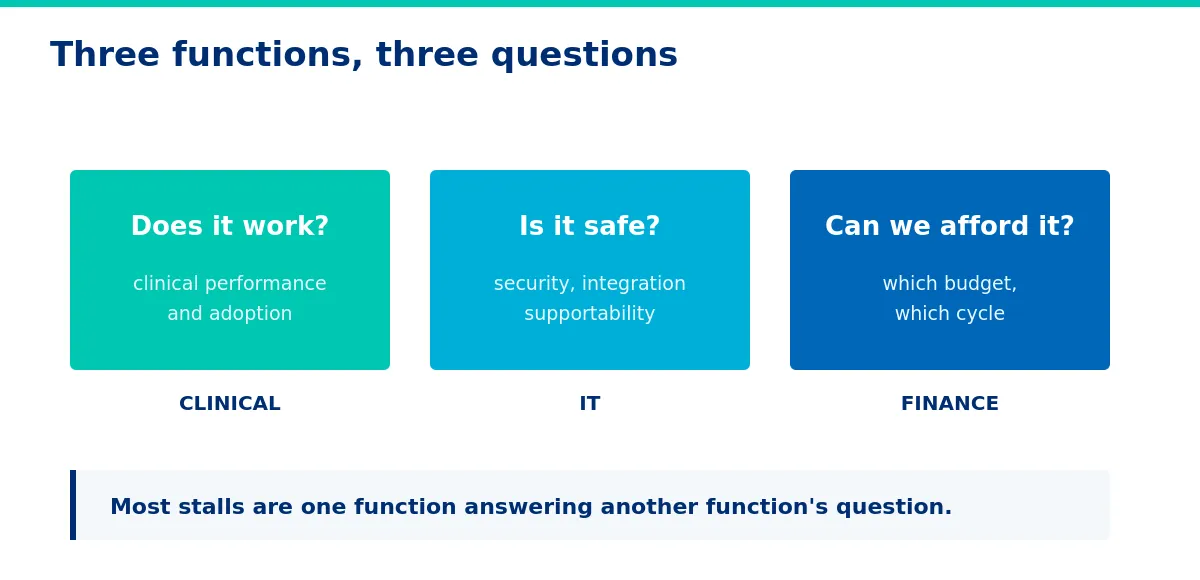
Figure 1: Three functions, three questions, none interchangeable.
That analysis examined value analysis as a governance mechanism rather than the sequencing of stakeholder questions. What it establishes for this piece is that cross-functional coordination is treated in the literature as a distinct governance function requiring deliberate design, not as something that emerges from having the right people in a room.
Why does asking them simultaneously fail?
Because the answers are conditional on each other, and asking in parallel forces each function to guess the others’ answers. A guess recorded as a position is harder to move than a question left open.
Finance cannot price an option clinical has not validated. IT cannot scope integration work before the shortlist exists. Ask all three at once and each produces a provisional answer hedged against assumptions about the others, which then has to be revisited when the assumptions resolve.
Revisiting is what consumes the calendar. Figure 2 shows both. A single well-sequenced pass costs less elapsed time than three parallel passes that each need redoing, and it costs less goodwill, because nobody is asked to reverse a position they stated publicly.
This is the opposite of how approval routing should work, and the distinction matters. Approvals of a settled decision should run in parallel. Evaluation of an unsettled one should not. Applying one rule to both produces slow evaluations and slow approvals at once.
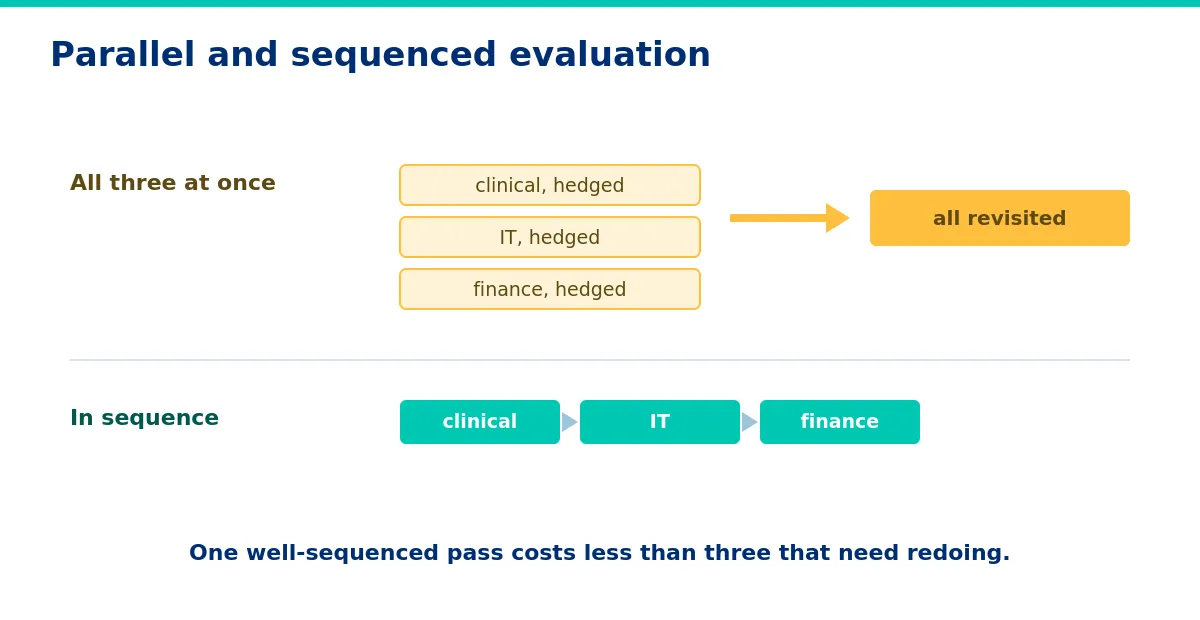
Figure 2: One sequenced pass against three that need redoing.
What is the right order?
Clinical, then IT, then finance, with one deliberate exception. The order follows from which answer can end the evaluation and which stage takes longest, not from organizational seniority.
Clinical first, because a clinical no ends the evaluation and every hour spent on security review or business case before that point is at risk. Clinical evaluation is also the longest stage, so starting it first shortens the whole.
IT second, on the clinical shortlist only. Assessing every candidate is the most common source of wasted security review capacity in health systems, and security review capacity is the scarcest reviewing resource most of them have. Shortlisting first is not a shortcut. It is what makes the assessment affordable.
Finance third, once scope and integration effort are known well enough to price. Asked earlier, finance produces a range wide enough to be useless and narrow enough to be quoted back.
The exception is the budget gate. Finance should confirm at the outset that funding exists in principle and in which cycle, because discovering at the end that a purchase belongs to next year’s capital plan wastes the entire evaluation. That is a different question from pricing an option, and conflating the two is why finance often gets involved at the wrong point twice.
That research studied how value analysis committees review products, not how upstream functions should be sequenced. Its bearing here is on who initiates: where submissions arrive through an individual service line head rather than a defined process, the sequence preceding the committee is set case by case, which is the condition this piece argues against.
Where does the value analysis committee sit?
After the three functions, not among them. That is a structural point, and getting it wrong is expensive.
The committee is a decision body rather than an evaluating one. It weighs clinical benefit against financial impact and standardization, which means it needs all three answers present to do its work. A submission arriving with any of them missing is not an incomplete form. It is a decision the committee cannot make.
This is the practical link between alignment and cycle time. The five gates that make healthcare sourcing slow are the symptom. Misaligned sequencing upstream is what fills them with incomplete submissions. Fixing the gates without fixing the sequence produces faster handling of the same defective inputs.
How do you make the sequence stick?
Write down what each function owns and what triggers its involvement.
One page is enough. For each function: the question it answers, the input it needs before it can start, the output it produces, and the point in the process where it is asked. Circulate it before the next evaluation. Written mid-evaluation it reads as an argument about the case in front of everyone.
Then name a single owner for the sequence itself. Every function in a healthcare evaluation owns its own answer and nobody owns the order of the questions, which is precisely why the order drifts. Procurement is the natural owner, being the only participant with visibility across all three. Ownership means deciding when each question is asked, not deciding the answers.
Merlin Autonomous Sourcing assembles requirements, supplier options, and evaluation criteria in one governed flow, which means the material each function needs is gathered once and carried forward rather than requested separately at each stage. The sequencing judgment stays with procurement. What changes is how much rebuilding happens between the stages.
Achieving lasting healthcare RFP alignment does not require endless meetings or forced consensus across disparate hospital departments. By evaluating clinical viability, IT supportability, and financial affordability in a disciplined sequence rather than all at once, you eliminate redundant rework and clear the path for your value analysis committee.
Ready to streamline cross-functional evaluations and build a governed, RFP-ready strategy?
Request a demo to transform healthcare procurement workflows and our expert will connect.
Frequently asked questions
1. Who should be involved in a healthcare RFP evaluation?
Clinical leadership and the practicing clinicians who will use the product, IT and information security, finance, and procurement, with legal engaged on contract terms and the value analysis committee as the decision body. The participants are rarely disputed. The order in which they are asked usually is, and that is where evaluations lose time.
2. Should clinical, IT, and finance review in parallel or in sequence?
In sequence during evaluation, because their answers depend on each other and parallel review forces each to hedge against assumptions that later resolve. Once the decision is settled and the request moves to approval, parallel routing is correct. Evaluation and approval are different activities and the same rule does not serve both.
3. Why do healthcare RFP evaluations stall?
Most often because one function raises an objection framed in another function’s terms, so the real concern is never addressed directly. A clinical reservation expressed as a cost issue cannot be resolved by renegotiating price. Naming which function owns which question makes these objections legible.
4. When should finance get involved in a healthcare RFP?
Twice, for two different purposes. At the outset to confirm funding exists in principle and in which planning cycle, and again after scope and integration effort are known well enough to price an option properly. Treating these as one engagement is why finance is often consulted at the wrong moment.
5. Who owns the RFP process in a health system?
Procurement usually owns the process mechanics, but the more consequential ownership question is who owns the sequence of stakeholder questions. That is frequently unowned, which is why the order drifts between evaluations. Procurement is the natural owner because it is the only participant with visibility across all functions.
6. How does the value analysis committee fit into stakeholder alignment?
The committee sits after the three functions rather than among them. It is a decision body that needs clinical, IT, and financial answers already present in order to weigh them. A submission missing any of the three is not an incomplete form but a decision the committee is unable to make.
7. How do you document a stakeholder alignment process?
One page, listing for each function the question it answers, the input it needs before starting, the output it produces, and where it sits in the sequence. Longer documents are not read. Circulating it before an evaluation rather than during one is what determines whether it changes anything.
8. Does technology solve stakeholder misalignment?
No. Misalignment is a sequencing and ownership problem, and a platform cannot decide who is asked what and when. What technology can remove is the rebuilding of the same information at each stage, which is the cost misalignment imposes rather than its cause.