


When evaluating automation and generative tools for clinical procurement, health system leaders face two fundamental questions: what happens to the data the system sees, and how does it handle errors? Relying on vague vendor assurances is never enough when sourcing decisions involve commercially sensitive intelligence and strict compliance boundaries. Successfully deploying AI in healthcare sourcing requires rigorous testing around data privacy, commercial confidentiality, and error detection—particularly distinguishing between easily caught document mistakes and dangerous filters of omission. In this guide, we break down how to evaluate privacy risks, verify model accuracy against your own historical data, and establish graduated oversight for clinical procurement.
TL;DR
- Two questions decide it: what happens to the data the system sees, and what happens when it is wrong.
- Sourcing data is commercially sensitive rather than clinically sensitive. PHI usually enters through supporting material, not requirements.
- Errors of omission matter most. A supplier wrongly excluded is never reviewed.
- Verify accuracy against a completed sourcing event of your own, not a published benchmark.
Two questions decide whether AI belongs in a healthcare sourcing process: what happens to the data it sees, and what happens when it is wrong.
Both have concrete answers that a buyer can test. Neither is settled by a vendor stating that the platform is secure and accurate, because those words describe an intention rather than a design.
This is written for health system procurement and IT leaders evaluating AI capability in a sourcing platform, where the answers will be examined by someone other than the person who bought it.
Both questions are answerable in a demo rather than in a policy document, which is the useful thing about them. Ask to see what the system does rather than reading what it claims.
A vendor unwilling to demonstrate either has answered the question.
What data does AI sourcing actually see?
Requirements, supplier responses, evaluation criteria, and the commercial terms under negotiation. In most healthcare sourcing that is commercially sensitive and not clinically sensitive.
Protected health information rarely enters a sourcing process directly. Where it does, it arrives in supporting material: sample data supplied for integration testing, incident histories attached to a supplier evaluation, or specifications containing real identifiers.
The practical consequence is that the privacy question for AI sourcing is mostly a commercial confidentiality question, and it should be asked in those terms. Where PHI genuinely enters, treat it as a separate and narrower conversation rather than letting it govern the whole evaluation.
Gartner was assessing agent governance across enterprises rather than healthcare sourcing. The relevance is that gaps found only after an incident are the ones these questions exist to surface beforehand, and asking them costs nothing.
There is a second asymmetry worth holding. Errors in a document are recoverable at any point before award. Errors in a filter are recoverable only if someone thinks to look, and nobody looks at a shortlist for what is absent from it.
Asking a vendor to demonstrate what happens to a borderline response is more informative than any accuracy figure, because it shows whether uncertainty is surfaced or silently resolved.
Where does accuracy actually matter?
At the points where an error changes a decision rather than a document.
A summarization error in a comparative table is caught in review. A misclassified requirement that routes a supplier out of a shortlist is not, because nobody reviews what was excluded. That asymmetry, shown in Figure 1, is the useful lens: errors of omission are considerably more dangerous than errors of commission in sourcing, and much harder to detect.
The design question follows directly. Ask what the system does with a supplier response it cannot classify, and whether exclusions are visible and reviewable. A system that surfaces its uncertain cases is safer than one with a marginally better accuracy rate that resolves uncertainty silently.
Vendors will offer accuracy figures and those figures are usually honest about the thing they measured. The gap is that the thing they measured is rarely the task you care about. Classification accuracy on a public dataset says little about requirement matching on your category structure.
Ask what the figure was measured on and whether the same test can be run against your material. A vendor confident in the capability will agree readily.
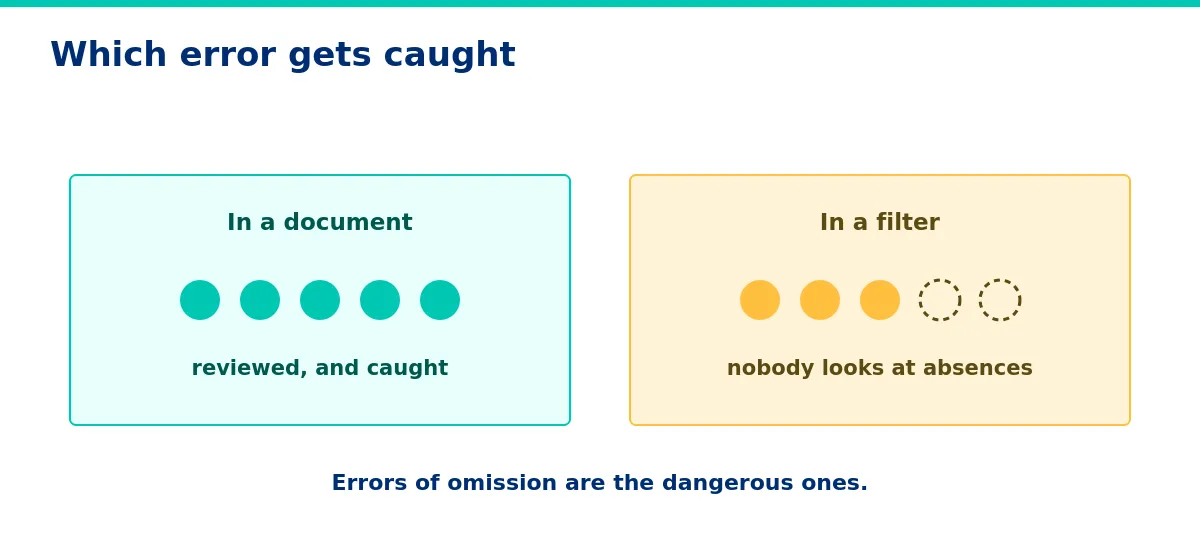
Figure 1: A document error is reviewed. A filter error is not.
How should accuracy be verified?
Against your own material, not against a published benchmark.
Take a completed sourcing event where you know the outcome, run it through the platform, and compare. This is the single most informative test available and it takes an afternoon. Benchmarks describe performance on someone else’s data with someone else’s requirement conventions.
The AMA measured physician sentiment on clinical AI rather than sourcing accuracy. It is included because the appetite it describes is for graduated involvement, which maps onto the verification question: clinicians reviewing AI output on clinical requirements is both what they want and the most reliable accuracy check available for that portion of the work.
McKinsey was measuring adoption rather than accuracy or privacy design. The relevance is that deployment at that level means governance questions are being applied to work already running, so a policy written as though adoption is still a future decision describes an organization that no longer exists.
What should a health system require contractually?
Four things, and they are unremarkable once stated.
That request and response content is not used to train models outside your instance, with the ability to confirm it. That data residency can be constrained where obligations apply. That vendor access to your content is logged rather than merely restricted. And that an exit returns your data in a usable form with defined deletion afterward.
Where protected health information is genuinely in scope, a business associate agreement applies and the conversation becomes narrower and better defined. Most sourcing tooling does not reach that threshold, and treating everything as though it does obscures the cases that genuinely do.
The contractual points above are unremarkable in the sense that a serious vendor will already have answers, which is exactly why asking is worthwhile. The informative signal is not the answer itself but whether it arrives immediately or requires escalation.
Keep the answers with the contract rather than in the evaluation folder, since these are the questions that matter in an audit and nobody can locate them two years later.
What does good governance look like in practice?
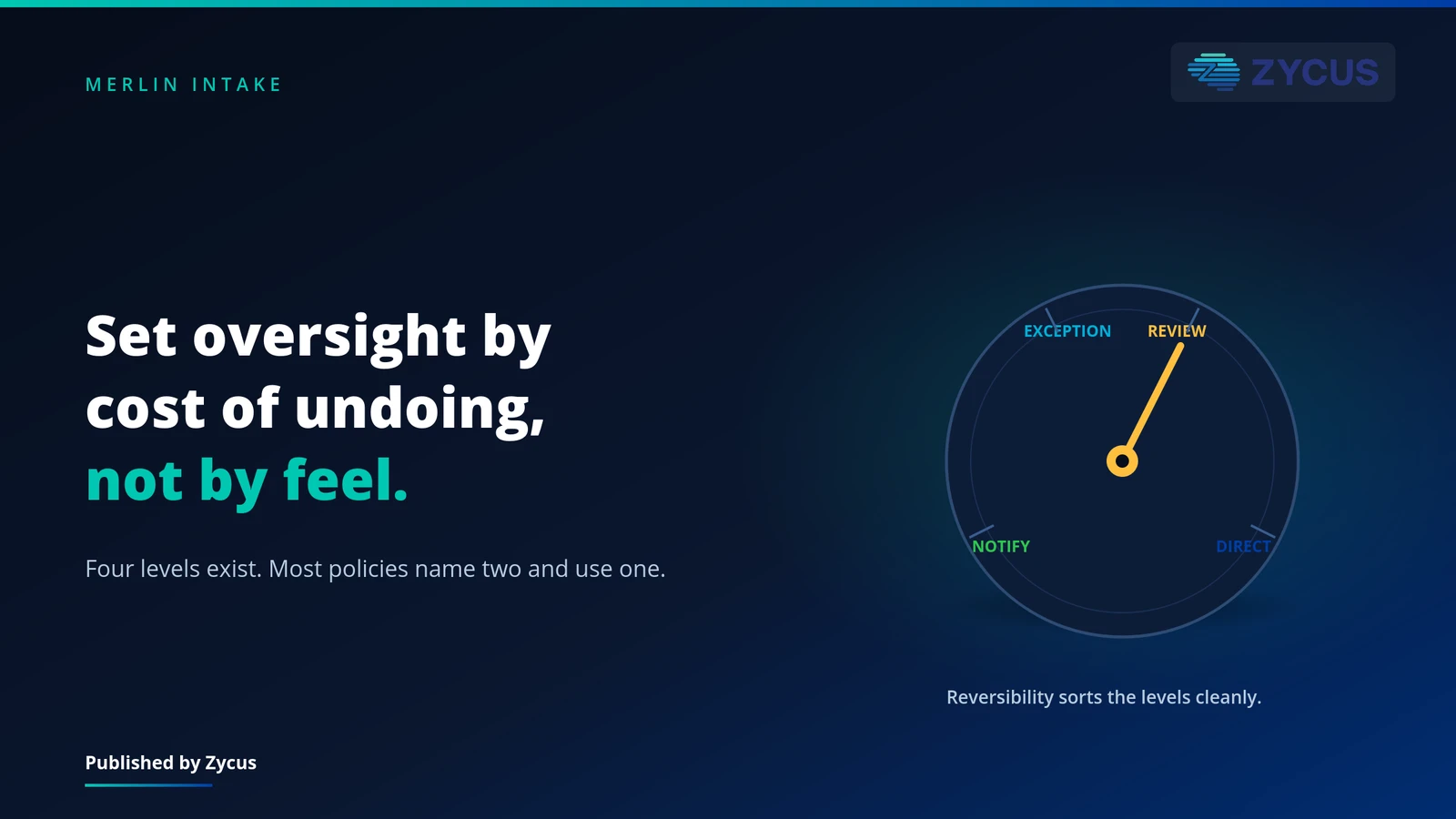
Graduated rather than uniform, as Figure 2 sets out, which is where most implementations go wrong.
Actions that are cheap to reverse need light oversight. Actions creating external commitments need a gate. Applying the same level everywhere means either blocking routine work or under-reviewing consequential work, and usually both.
None of this requires taking a position on whether AI belongs in sourcing. It requires establishing what a specific system does with your data and what it does when uncertain, both of which are testable before purchase and difficult to change afterward.
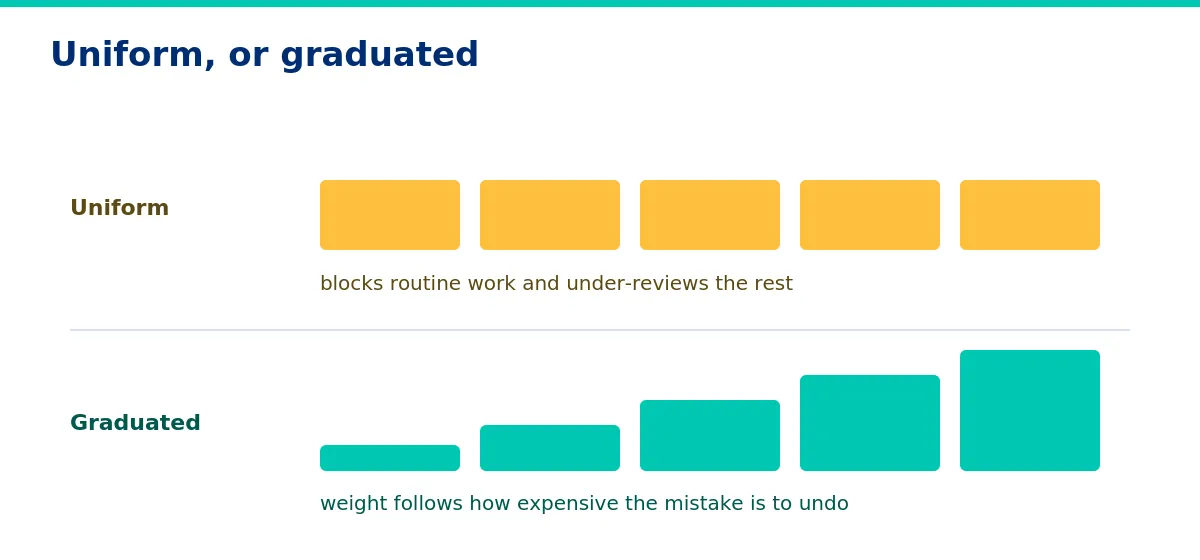
Figure 2: Oversight weighted by how expensive the mistake is to undo.
Implementing AI in healthcare sourcing safely does not mean avoiding automation; it means demanding concrete, testable answers regarding data confidentiality, error handling, and graduated human oversight. By verifying platform accuracy against your own completed sourcing events and securing contractual guarantees around model training and data residency, your health system can protect sensitive commercial intelligence while accelerating workflows.
Ready to introduce autonomous sourcing within a secure, governed framework? Request a demo today to see how Zycus Merlin Autonomous Sourcing balances full transparency with robust human control.
Frequently asked questions
1. Is AI sourcing safe for protected health information?
Protected health information rarely enters a sourcing process directly, since requirements and commercial terms are not clinical data. Where it does arrive, usually through sample data sets or integration specifications with real identifiers, standard HIPAA obligations apply and a business associate agreement may be required for the tooling itself.
2. What data does an AI sourcing platform actually process?
Requirements, supplier responses, evaluation criteria, and commercial terms under negotiation. This is commercially sensitive information describing what your organization is considering and from whom, before any of it is committed, which makes confidentiality rather than clinical privacy the primary concern.
3. How accurate is AI in sourcing evaluations?
Accuracy varies by task and published benchmarks describe performance on other organizations’ data. The informative test is running a completed sourcing event where you know the outcome and comparing. What matters more than the headline rate is whether uncertain cases are surfaced or resolved silently.
4. What is the most dangerous kind of AI error in sourcing?
Errors of omission. A supplier wrongly excluded from a shortlist is not reviewed, because nobody examines what was filtered out. A summarization error in a comparative table gets caught. Ask specifically what happens to responses the system cannot classify confidently.
5. What should be in a contract with an AI sourcing vendor?
That content is not used to train models outside your instance and that this can be confirmed, that data residency can be constrained where obligations apply, that vendor access is logged rather than merely restricted, and that exit returns your data in usable form with defined deletion afterward.
6. Do you need a business associate agreement for sourcing software?
Only where protected health information is genuinely in scope, which is less common in sourcing than in clinical systems. Establishing whether your tooling ingests PHI at all is the first step, since treating everything as though it does obscures the cases that actually require the agreement.
7. How much human oversight should AI sourcing have?
Graduated by how expensive an action is to reverse, not applied uniformly. Cheap-to-reverse actions need light oversight. Actions creating external commitments need a gate before execution. Uniform oversight either blocks routine work or under-reviews consequential work, and commonly does both.
8. Who should evaluate AI accuracy in healthcare sourcing?
Clinicians for clinical requirements, IT for integration and security requirements, and procurement for commercial scoring. Clinical review is both the most reliable accuracy check for that portion of the work and what clinicians themselves consistently ask for when surveyed.