






TL;DR
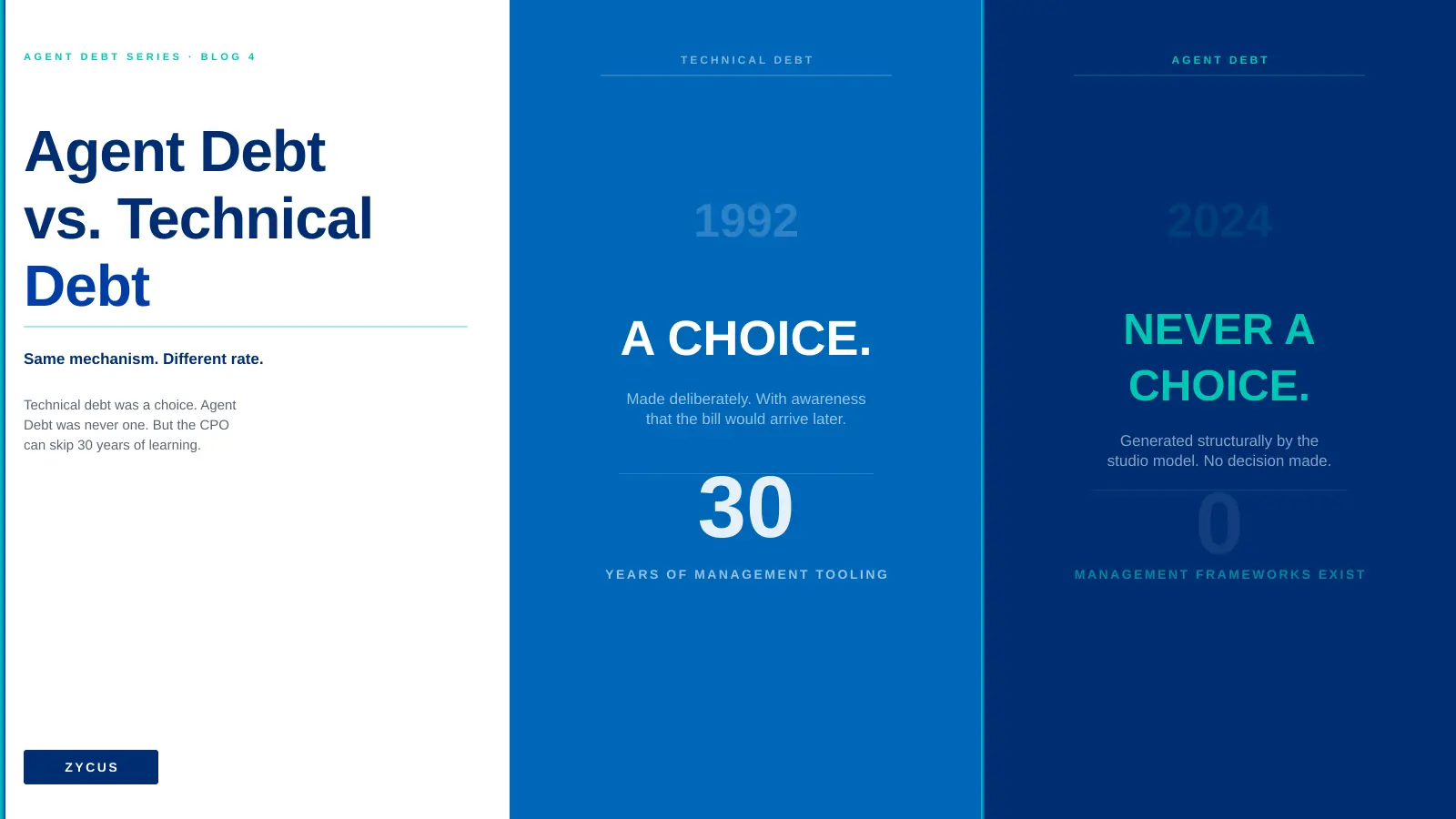
- Technical debt was Ward Cunningham’s deliberate shortcut, made in 1992 with awareness that the bill would arrive later. Agent Debt was never a choice: the studio model generates all four types by design.
- The compound interest mechanism is identical. But Agent Debt accumulates across four dimensions simultaneously, while technical debt compounds in a single codebase.
- Agent Debt also lacks the tooling that slows technical debt: no code review, no static analysis, no sprint-based accounting, no architectural audit standard.
- The CTO built four frameworks over 30 years. All four translate directly to Agent Debt, and the CPO can apply them now without repeating the learning curve.
- The visibility gap is the key structural difference: technical debt surfaces in build metrics; Agent Debt surfaces in the business, not in monitoring dashboards.
- Explore how the Merlin Agentic AI Platform gives procurement the visibility the CTO spent three decades building, by design.
Technical debt was Ward Cunningham’s deliberate shortcut. Agent Debt is not a shortcut: it is what the studio model generates by design. The mechanism is identical. The rate is worse. And the CPO has one advantage the CTO never had: 30 years of someone else’s lessons already paid for.
The foundational Agent Debt piece established the concept. The CPO self-assessment provided the diagnostic framework. The studio teardown identified where Governance and Orchestration Debt originate. The four debt types mapped the full landscape. This blog addresses the comparison practitioners ask most: how is Agent Debt different from the technical debt the enterprise already knows, and why is it harder to manage?
Agent Debt is the compounding operational liability an enterprise takes on when it deploys task-doing AI agents faster than it can govern, orchestrate, and tie them to business outcomes. The two distinctions below explain why that definition matters more than the technical debt analogy suggests.
What did Ward Cunningham actually mean when he coined technical debt in 1992?
Ward Cunningham introduced the technical debt metaphor in a 1992 report to the ACM. A team building software quickly could take a deliberate shortcut: ship now, refactor later. The interest on that debt was the additional work required when the shortcut eventually had to be revisited.
Two features defined the original concept. The debt was chosen: someone made a conscious decision to prioritize speed over quality. The interest was predictable: the team could estimate the future cost and schedule the remediation. The debt was visible because a person chose it. Cunningham was describing a management problem with a known owner, a known cause, and a calculable paydown schedule.
Where does Agent Debt break from Cunningham’s original definition?
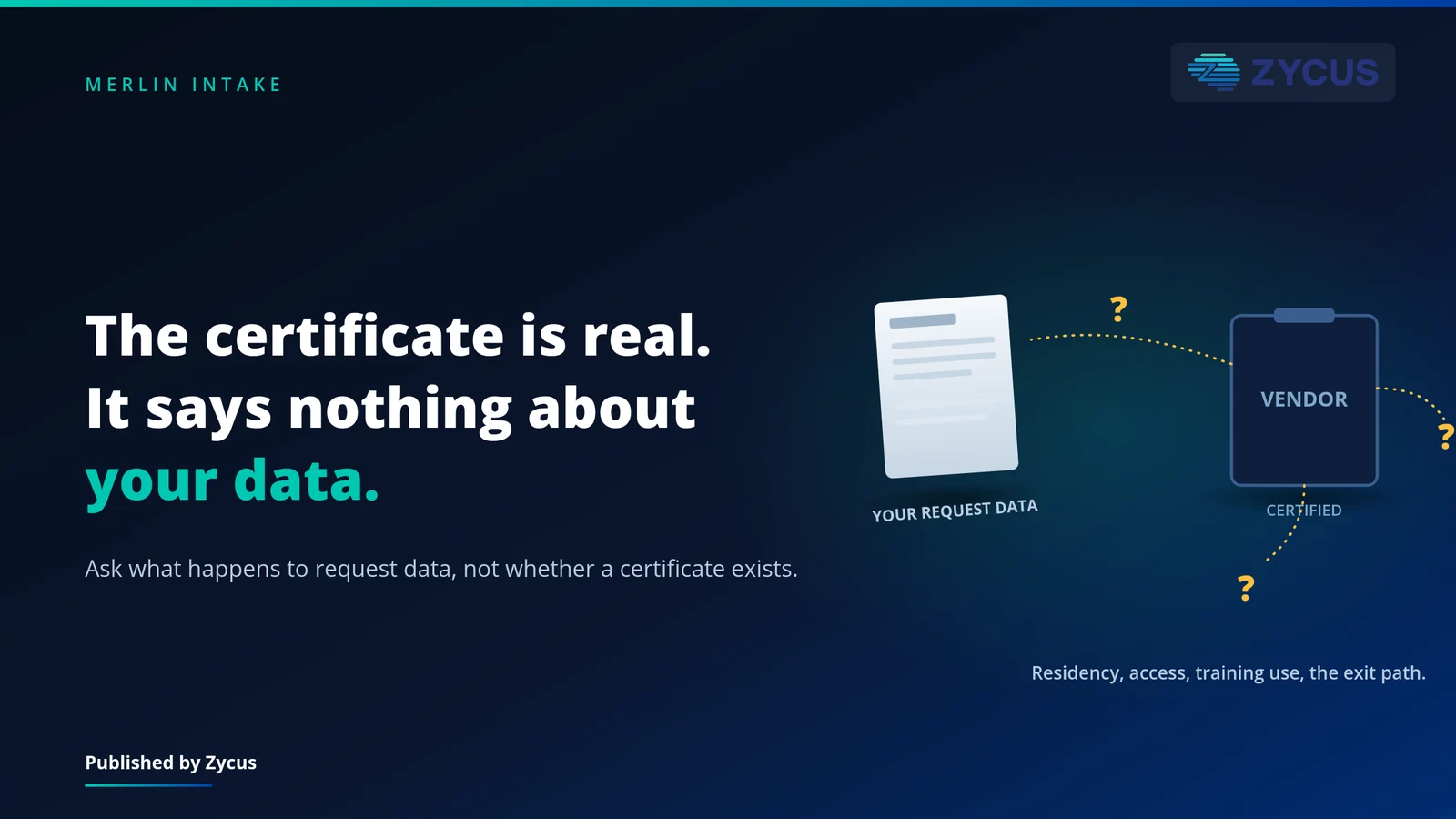
Agent Debt has the same compound interest structure, but it breaks the original definition at the most important point: choice. No CPO decided to accumulate Governance Debt. No enterprise architect chose Orchestration Debt. No procurement team elected to carry Maintenance Debt into the next quarter.
The studio model generates all four types of Agent Debt structurally, as a consequence of its architecture. This distinction matters for management. Cunningham’s frameworks assume intentionality: someone knew the debt was being taken on. The four Agent Debt types require a different starting point: diagnosing what was never decided, and building governance for choices that were never made.
If the mechanism is the same, why does Agent Debt compound faster?
Technical debt compounds at the pace of code change, a rate organizations can observe and partly control. Agent Debt compounds at a rate driven by three forces the enterprise does not control.
First, probabilistic behavior: agents degrade gradually and without warning, unlike code that fails at a deterministic point and produces a reproducible error. An agent under performance drift produces subtly different outputs across thousands of decisions before the deviation becomes visible in business outcomes.
Second, multi-dimensional accumulation: all four types compound simultaneously rather than in a single codebase. Governance Debt in one agent creates audit exposure across every agent the organization deploys.
Third, the absence of 30 years of management infrastructure. Technical debt has code review, static analysis, sprint-based debt accounting, and architectural debt audits. Agent Debt has none of these. The rate is higher partly because there is nothing established to slow it.
“75% of technology decision-makers will see their technical debt rise to a moderate or high level of severity by 2026.” (Forrester Technology and Security Predictions 2025)
Technical debt has 30 years of management infrastructure. Agent Debt is compounding without any.
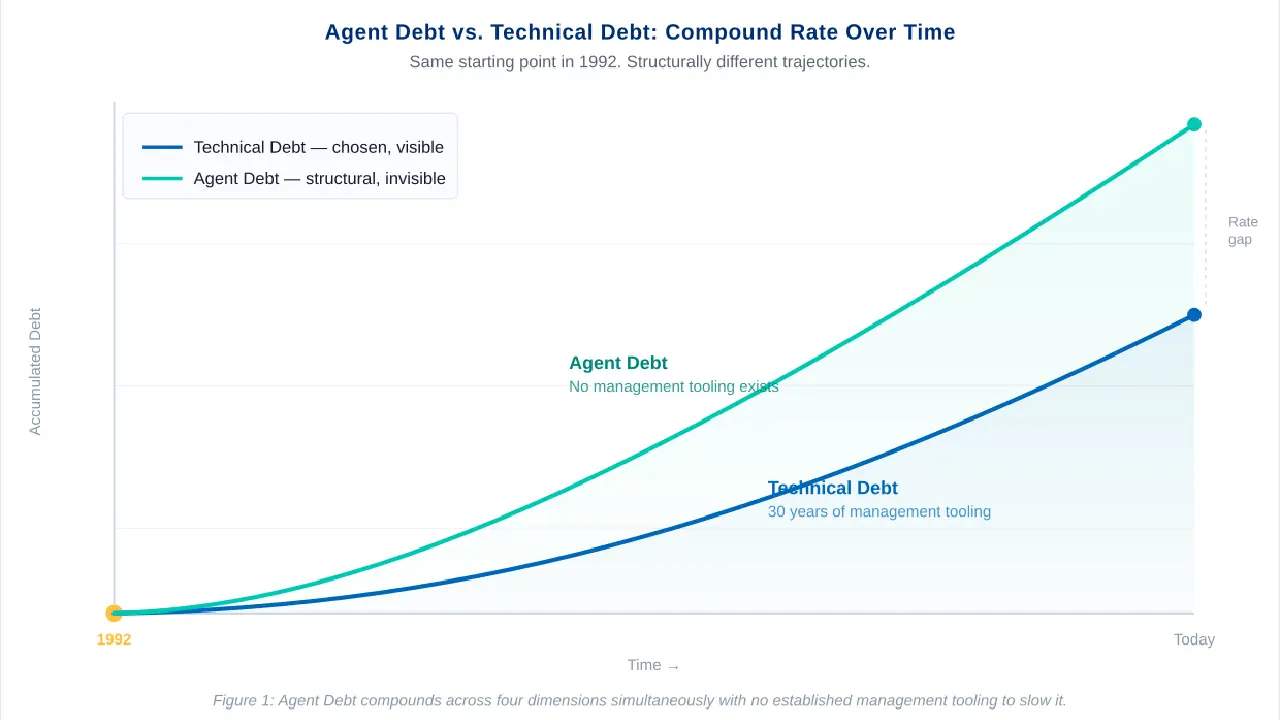
Figure 1: Agent Debt and Technical Debt share the same compound interest structure from a common 1992 origin — but Agent Debt lacks 30 years of management tooling to slow it.
What did 30 years of technical debt teach the CTO?
Four frameworks emerged from three decades of technical debt management, none of which existed in 1992. Code review culture: peer review before code ships, catching debt before it accumulates. Static analysis tooling: automated systems that identify debt candidates before they reach production. Sprint-based debt accounting: treating the technical debt backlog as a first-class item alongside feature work, so remediation is scheduled rather than deferred. Architectural debt audits: periodic reviews of the entire system to surface accumulating debt before a single component creates a cascading failure.
“By 2030, 50% of AI agent deployment failures will be due to insufficient AI governance platform runtime enforcement for capabilities and multisystem interoperability.” (Gartner Data and Analytics Predictions 2026)
Governance gaps are the failure mode technical debt drove in software for 30 years. They are now arriving in a new domain.
Which of those lessons apply directly to Agent Debt right now?
All four frameworks translate without modification in principle, requiring only translation into the procurement context.
Code review culture becomes agent decision review before production: before any agent touches a live procurement system, its decision logic is documented and reviewed. Static analysis becomes pre-deployment governance gates: a checklist of conditions that must be met before an agent is permitted to interact with live supplier data. Sprint-based debt accounting becomes four-dimension tracking: the four Agent Debt types become standing agenda items in every procurement AI governance meeting, not topics that surface only when a trigger event forces the conversation. Architectural debt audits become the CPO self-assessment: a diagnostic run on a defined cadence, before an audit request makes it urgent.
The CPO does not need to derive these from first principles: they exist, proven by three decades.
What is the one thing the CTO had that the CPO currently does not?
Visibility. Technical debt shows up in systems that engineering teams monitor daily: build times slow, defect rates rise, sprint velocity drops. These signals are imperfect, but they are signals. The debt accumulates in a place that is instrumented.
Agent Debt shows up in the business: a category manager raises an issue, an auditor asks a question with no documented answer, a senior analyst leaves and operating knowledge leaves with them. None of these events surfaces in a dashboard. The debt is invisible until a trigger event makes it undeniable.
“Technical debt accounts for about 40% of IT balance sheets. Companies typically do not discover the true scale until it begins materially slowing new development.” (McKinsey “Breaking Technical Debt’s Vicious Cycle”)
The CPO is in the early version of that situation today: accumulating a liability that is not measured, not monitored, and not visible until it becomes a crisis. The CTO spent 30 years building the monitoring infrastructure that made technical debt visible. The CPO does not need to repeat that process.
How does the Merlin Agentic AI Platform give the CPO the visibility the CTO never had?
The CTO’s 30-year learning curve is already documented. The failure modes are known. The visibility gap can be closed by design. The Merlin Agentic AI Platform is built on this starting point: audit-ready decision records for every agent action, centralized orchestration monitoring, proactive maintenance alerting, and platform-embedded operating knowledge.
The CPO does not need 30 years. The Intake-to-Outcomes architecture gives procurement the visibility the CTO spent three decades building.
Published by Zycus
No AI agent at Zycus operates in isolation. Explore how the Merlin Agentic AI Platform connects procurement’s agents through governed, auditable Intake-to-Outcomes workflows, giving every CPO the visibility the enterprise needs before the debt compounds.
Read the series: What is Agent Debt? · The CPO Self-Assessment · What 50+ Agents Actually Means · The Four Types of Agent Debt · Beyond the Hype (Whitepaper)
FAQs
Q1. What is the difference between technical debt and Agent Debt?
Technical debt is the accumulated cost of deliberate shortcuts taken in software development, written quickly at the expense of quality with the plan to refactor later. Agent Debt is not the result of any deliberate choice. It accumulates when an enterprise deploys task-doing AI agents faster than it can govern, orchestrate, and tie them to business outcomes, regardless of whether any shortcut was taken. The compound interest mechanism is identical. The origin and the visibility are not.
Q2. Who coined the term ‘technical debt,’ and when?
Ward Cunningham introduced the technical debt metaphor in a 1992 report to the ACM. He used it to describe a deliberate shortcut: ship now, refactor later, and pay the interest in the form of additional future work. Cunningham’s original concept emphasized intentionality. The debt was chosen and the interest was predictable. This is the key feature Agent Debt does not share.
Q3. Why does Agent Debt compound faster than technical debt?
Three structural differences drive the higher rate. First, agent behavior is probabilistic: agents degrade gradually and without warning, unlike code that fails at a deterministic point. Second, Agent Debt accumulates across four dimensions simultaneously (Governance, Orchestration, Maintenance, and Talent), while technical debt typically accumulates in a single codebase. Third, technical debt has 30 years of management tooling; Agent Debt has none. The rate is higher partly because there is no infrastructure to slow it.
Q4. What is the ‘visibility gap’ and why does it matter for procurement AI?
The visibility gap is the structural difference between how technical debt and Agent Debt reveal themselves. Technical debt appears in systems that engineering teams monitor daily: build times slow, defect rates rise, sprint velocity drops. Agent Debt appears in the business: a category manager raises an issue, an auditor asks a question without a documented answer, someone leaves and takes operating knowledge with them. Procurement functions lack the monitoring infrastructure that makes technical debt visible, which means Agent Debt accumulates without early warning signals.
Q5. Can the CTO’s technical debt frameworks be applied directly to Agent Debt?
Yes, with translation. Code review culture becomes agent decision review before production. Static analysis becomes pre-deployment governance gates. Sprint-based debt accounting becomes four-dimension debt tracking across the Agent Debt types. Architectural debt audits become the structured estate self-assessment that surfaces debt before a trigger event makes it undeniable. The frameworks do not require modification in principle. They require translation into the procurement context, where the unit of analysis is an agent action rather than a line of code.
Q6. What is a sprint-based approach to managing Agent Debt?
A sprint-based approach treats Agent Debt remediation as a standing work item rather than a topic that surfaces only when something goes wrong. In practice, this means allocating a fixed percentage of procurement AI team capacity each sprint to reviewing governance gaps, updating monitoring thresholds, verifying agent decision logs, and addressing talent knowledge concentration. The key insight from 30 years of technical debt management is that debt addressed on a scheduled cadence costs significantly less than debt addressed under crisis conditions.
Q7. Is Agent Debt a software engineering problem or a procurement problem?
Agent Debt has technical roots but its consequences are procurement problems. The four types manifest as procurement failures: decisions that cannot be explained, workflows that cannot scale, performance that degrades without warning, and institutional knowledge that exits with personnel. The CPO owns the consequences even if engineering owns the architecture. This is why procurement leadership needs to be involved in agentic AI governance decisions from day one rather than inheriting the outcomes after the architecture is set.
Q8. How do you know if your organization is accumulating Agent Debt right now?
The CPO self-assessment in the first blog in this series provides a structured diagnostic across all four debt dimensions. At a high level, the warning signals are: agent decisions that cannot be traced without engineering involvement, integration work that grows with each additional agent, performance monitoring that relies on manual checks, and operating knowledge that lives in individuals rather than the platform. Any one of these signals warrants attention. All four together indicate a compounding estate.
Related Reads:
- Agent Debt: The Tech Debt of the Agentic Era
- Do You Have Agent Debt? A CPO’s Self-Assessment
- What Does “50+ Agents Out of the Box” Actually Mean for Procurement AI?
- What Are the Four Types of Agent Debt, and When Does Each One Surface?
- Whitepaper: Beyond the Hype: Agent Studio vs. Enterprise Agentic AI
- From Co-Pilots to Commanders: How Agentic AI is Redefining Procurement Transformation
- AI Agents in Procurement: A Comprehensive Guide