


When healthcare sourcing teams rely on massive, multi-hundred-question surveys, they often drive down response quality and alienate specialized clinical suppliers who triage their limited time. A bloated questionnaire is usually a substitute for knowing what genuinely disqualifies a vendor before investing heavy evaluation effort. To successfully pre-qualify vendors without creating unnecessary administrative friction or shrinking your supplier pool, procurement leaders must separate binary threshold requirements from detailed comparative criteria. In this guide, we break down why onboarding questionnaires grow uncontrollably, the true hidden costs of survey length, and actionable ways to streamline vendor vetting.
TL;DR
- Pre-qualification removes suppliers who fail a threshold. Questions without a disqualifying answer belong at evaluation.
- Questionnaires grow because every addition is reasonable and nobody owns removal.
- Length costs answer quality first, then supplier pool, which matters most for specialized clinical suppliers.
- Reuse assessments already held, split threshold from evaluation, accept certifications, and tier by risk.
A long questionnaire is a substitute for knowing what would disqualify a vendor. Establish that first, and most of the questions stop earning their place.
Pre-qualification exists to remove suppliers who cannot meet a threshold, not to gather information about suppliers who can. Those are different purposes and questionnaires that serve the second while claiming the first are how a 300-question survey happens.
This is written for health system sourcing teams whose supplier questionnaires have grown and whose response rates have not.
The confusion is understandable, since both purposes involve asking suppliers questions and both produce useful information. The difference is what happens to the answer: one removes a supplier, the other informs a comparison, and only the first belongs at this stage.
Sorting an existing questionnaire on that basis is a single afternoon of work.
What is pre-qualification actually for?
Removing suppliers who fail a threshold, cheaply, before anyone invests evaluation effort.
That framing produces a short list of questions, because a threshold question has a binary answer and a defined consequence. Does the supplier hold the required certification. Can they meet the data residency obligation. Do they serve your geography. Each has a yes or no and a clear action attached.
Questions without a disqualifying answer are not pre-qualification questions. They are evaluation questions arriving early, and they should move to the stage where the answer will actually be used.
Applying that test typically removes more than half of a mature questionnaire, and the removal is defensible because you can state what each surviving question decides.
The test is deliberately narrow. Not whether a question is useful, since almost all of them are useful in some sense, but whether a failing answer has ever removed a supplier. Usefulness is what makes questionnaires grow. Disqualifying power is what justifies a question at this stage.
Questions that fail the test are rarely worthless. They are usually evaluation questions that migrated forward, and moving them back means only shortlisted suppliers answer them, which reduces total supplier effort substantially without losing any information you actually use.
Why do questionnaires grow?
Because every addition is individually reasonable and nobody owns removal, which Figure 1 shows over time.
A question is added after an incident, another after an audit finding, another because a stakeholder wanted visibility. Each is justified at the time. None is revisited, and there is no forcing function that ever asks whether a question has disqualified anyone.
The World Commerce and Contracting benchmark research found negotiation named among the top responsibilities of contracting functions by 83% of respondents, ahead of drafting at 78% and post-award management at 72%.
WorldCC measured how contracting functions allocate responsibility rather than questionnaire design. The bearing here is that where negotiation dominates contracting capacity, pre-qualification is competing for attention with the stage that actually creates value, which is why questionnaires accumulate rather than being maintained.
The practical fix is an annual review with one question per question: how many suppliers has this disqualified. Anything at zero over a meaningful period is either a threshold nobody fails or an evaluation question in the wrong place.
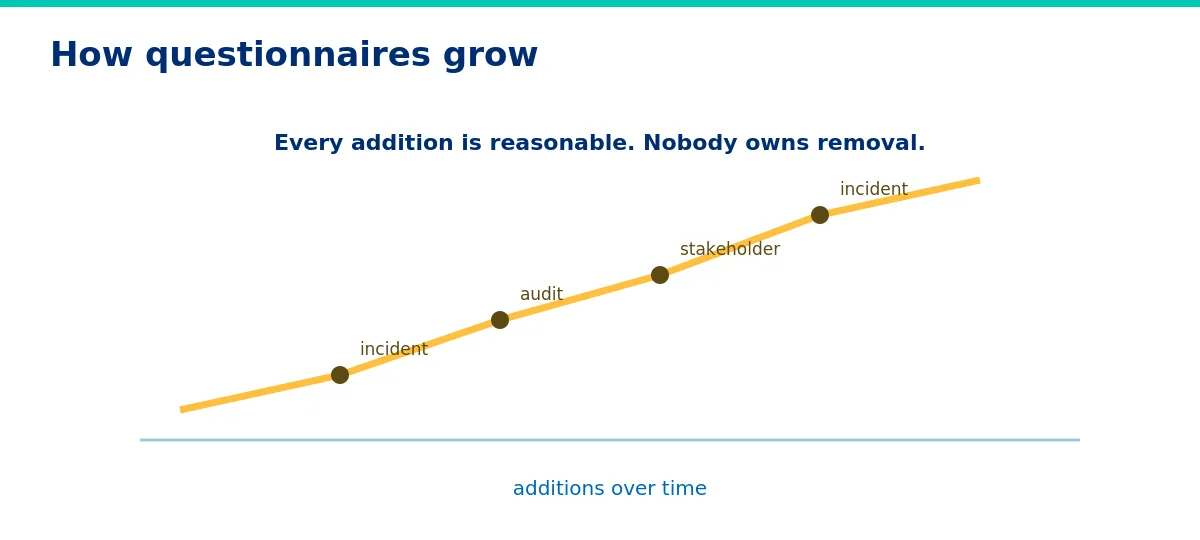
Figure 1: Every addition is reasonable. Nobody owns removal.
What does a long questionnaire cost you?
Response quality, supplier pool, and your own reading time, in that order.
Suppliers triage. A questionnaire that takes days to complete gets a proportionate effort, which means considered answers on the first section and boilerplate after that. The information you receive degrades as the questionnaire lengthens, which is the opposite of the intended effect.
Smaller and specialized suppliers decline entirely. In healthcare this matters more than in most categories, because specialized clinical suppliers are frequently small and are exactly the ones a long-tail category needs.
Research published in the Journal of Public Economics and summarized by the University of Alberta School of Business found that switching from a GPO in the bottom quartile of market share to one in the top quartile produced a 4.8 percent reduction in supply expenses per patient discharge, worth over $1.2 million annually for an average hospital.
That research measured the effect of purchasing scale on supply expenses rather than questionnaire design. It is relevant here because aggregated purchasing already handles the long tail of standardized categories, which means the categories a health system sources directly are disproportionately the specialized ones where supplier pool matters most.
There is a supplier-relations dimension worth naming. A supplier who completes a long questionnaire and hears nothing has spent real effort for no outcome, and they remember. In specialized clinical categories where the supplier pool is small, that memory affects who responds next time.
Acknowledging outcomes to unsuccessful pre-qualification respondents costs almost nothing and is unusual enough to be noticed.
How do you reduce the load without losing control?
Four moves, in order of return.
- Reuse what you already hold. A supplier assessed within a defined period should not be reassessed for a new project unless something changed. This is the largest single reduction available and it requires a register rather than a policy.
- Split threshold from evaluation. Ask disqualifying questions at pre-qualification and everything else at evaluation, where only shortlisted suppliers answer.
- Accept existing evidence. Where a supplier holds a recognized certification covering a question, accept it rather than asking them to describe the same controls in your format.
- Tier by risk. A supplier handling protected health information warrants more than one supplying consumables. A single questionnaire serving both is calibrated for neither.
Research from the Weill Cornell study of supply chain intermediaries notes that over 95% of US hospitals use pooling alliances to purchase medications, devices, and supplies.
That study examined whether purchasing intermediaries steer product choice rather than questionnaire design. It matters here because near-universal use of pooling alliances means the suppliers a health system qualifies directly are the exceptions to that channel, and exceptions are disproportionately specialized and small.
Tiering is the move that meets the most internal resistance, because a single questionnaire feels safer to whoever owns compliance. The counter is that a questionnaire calibrated for the strictest case is not applied rigorously to it, since reviewers reading the same document for every supplier stop reading closely.
What should stay long?
Security and privacy assessment for suppliers touching regulated data, and nothing else, as Figure 2 sets out.
That is a genuine exception rather than a caveat. Where a supplier will handle protected health information or connect to clinical systems, depth is proportionate and the questions have real disqualifying power. The error is applying that depth to a supplier delivering office furniture because the questionnaire is one document.
Merlin Autonomous Sourcing assembles requirements, supplier options, and evaluation criteria in one governed flow, which makes reuse of prior assessment evidence a property of the record rather than an administrative effort. The tiering judgment stays with procurement. What changes is whether last quarter’s assessment can be found.
Then review annually with the disqualification count in hand. A questionnaire reviewed only when something goes wrong will only ever grow, because incidents produce additions and nothing produces removals.
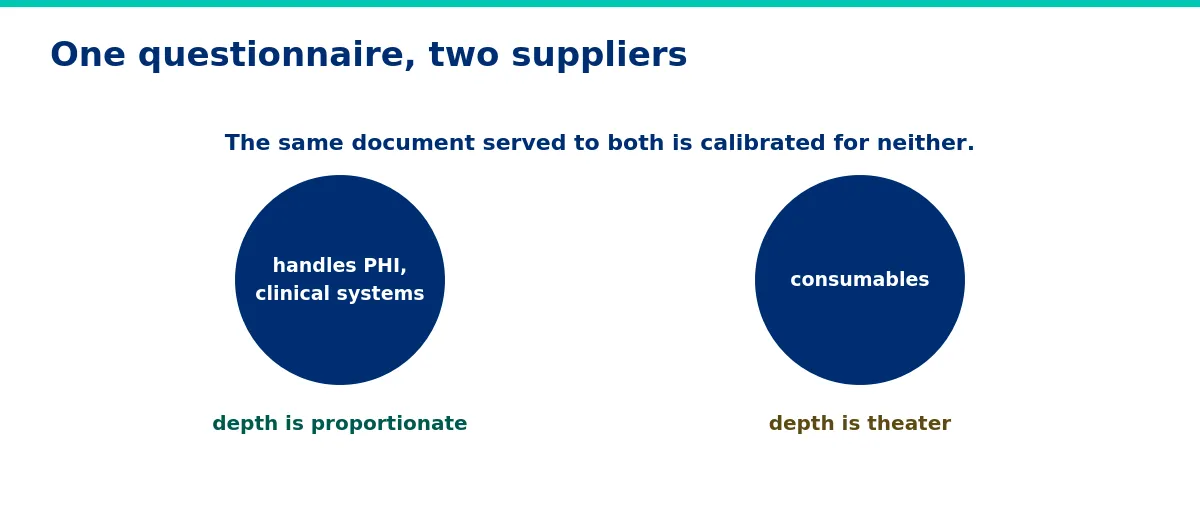
Figure 2: One document served to both is calibrated for neither.
Learning how to effectively pre-qualify vendors is not about compromising compliance or reducing risk visibility, it is about calibrating your vetting process to focus exclusively on true disqualifying thresholds. By reusing prior assessment records, accepting recognized certifications, and tiering survey depth by actual data risk, your health system can protect response quality and preserve vital specialized supplier pools.
Ready to streamline supplier onboarding and automate your pre-qualification workflows? Request a demo to see how Zycus transforms healthcare procurement from intake to execution.
Frequently asked questions
1. What is supplier pre-qualification?
Pre-qualification is the stage that removes suppliers unable to meet a defined threshold before evaluation effort is invested. Every question should have a disqualifying answer and a defined consequence. Questions gathering information about suppliers who pass are evaluation questions arriving early.
2. How long should a supplier questionnaire be?
Short enough that every question can be justified by naming what a failing answer disqualifies. In practice this is far shorter than most mature questionnaires, since applying the test typically removes more than half. Length correlates with declining answer quality rather than better information.
3. Why do supplier questionnaires keep growing?
Because each addition is individually reasonable, usually following an incident or audit finding, and nobody owns removal. There is no routine forcing function asking whether a question has ever disqualified a supplier, so questions accumulate indefinitely.
4. What does a long questionnaire cost?
Answer quality first, since suppliers triage effort across sections. Supplier pool second, since smaller and specialized suppliers decline entirely. Your own reading time third. In healthcare the supplier pool cost matters most, because specialized clinical suppliers are frequently small.
5. How do you reduce questionnaire load safely?
Reuse assessments already held within a defined validity period, separate threshold questions from evaluation questions, accept recognized certifications instead of asking suppliers to restate controls in your format, and tier depth by the risk the supplier actually presents.
6. Should all suppliers answer the same security questions?
No. A supplier handling protected health information or connecting to clinical systems warrants substantially more depth than one supplying consumables. A single questionnaire serving both is calibrated for neither and imposes the cost of the strictest case on every supplier.
7. How often should supplier assessments be repeated?
When something material changes or when a defined validity period lapses, rather than when a new project starts. Reassessing an unchanged supplier because a different department is buying is identical work performed twice and is the largest avoidable load in most health systems.
8. Can certifications replace questionnaire sections?
Where a recognized certification covers the ground a section asks about, yes, and asking for the scope statement is more informative than the section would have been. Certification confirms controls existed against a defined scope, which is exactly what the questions were attempting to establish.