







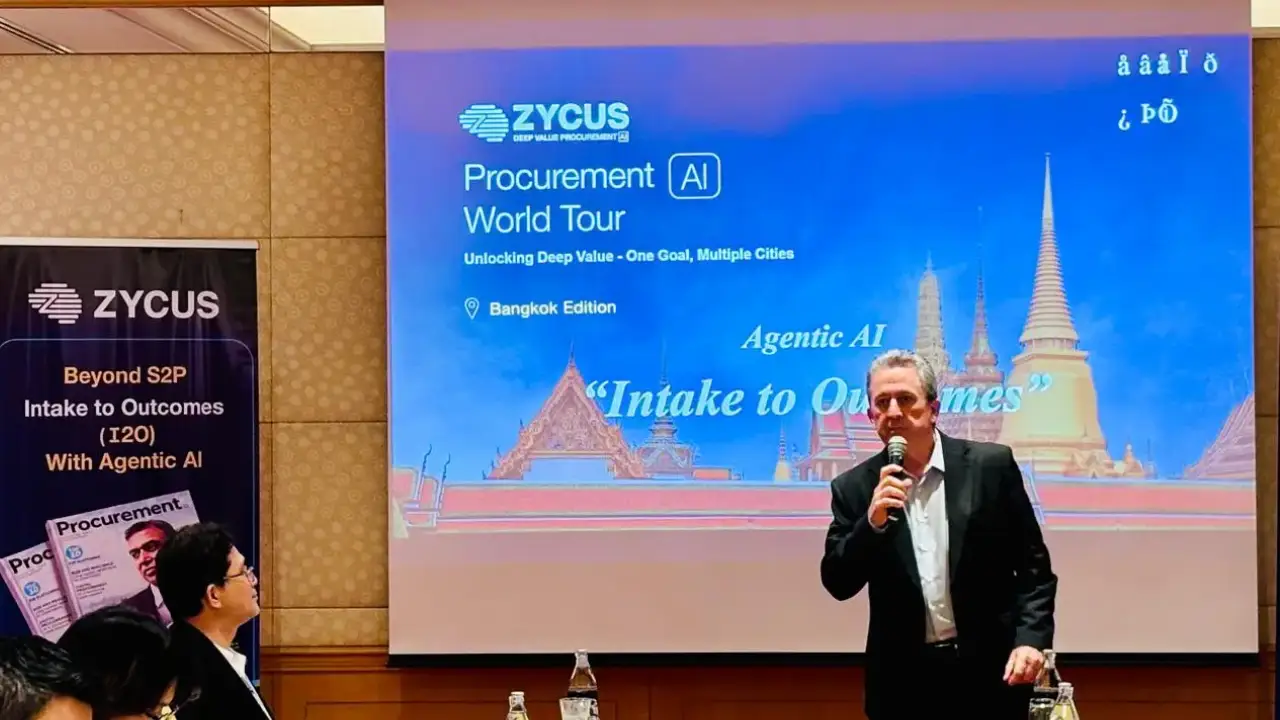

A procurement director from one of Thailand’s largest multinational corporations leaned forward and said: “We’ve invested millions in ERP systems and procurement platforms. But we’re still spending 40% of our time chasing approvals, fixing maverick spend, and manually routing requests. Where’s the AI that actually solves that?”
That moment captured the central challenge facing procurement leaders across Southeast Asia: the gap between AI hype and AI execution.
Understanding the Shift: From Automation to Agentic AI
Before diving into solutions, let’s clarify the critical distinction that shaped every conversation at our Bangkok roundtable:
Traditional Automation follows pre-programmed rules: “If this happens, do that.” It’s rigid, brittle, and breaks when scenarios change.
Agentic AI takes autonomous action toward goals: “Achieve this outcome and determine the best path to get there.” It adapts, learns, and improves over time.
For procurement—with its complexity, constant exceptions, and endless variability—that distinction is transformative.
The 40% Problem: Time Wasted, Value Lost
We opened the Bangkok roundtable with a sobering statistic that resonated immediately:
40% of procurement hours are spent on low-value, manual tasks, intake management, approval routing, data entry, chasing maverick spend, and answering the same questions repeatedly.
For Thai procurement teams navigating complex global supply chains, multi-currency operations, and regional compliance requirements, this isn’t just inefficiency. It’s a competitive disadvantage.
The room wasn’t there for theory. They came with hard, practical questions:
- “Can AI understand Thai language queries in real time?”
- “How do we benchmark AI performance across different markets?”
- “Does this actually personalize to our business’s procurement patterns?”
- “How do we integrate AI across global operations without breaking existing systems?”
These weren’t hypothetical concerns. There were barriers standing between intention and implementation.
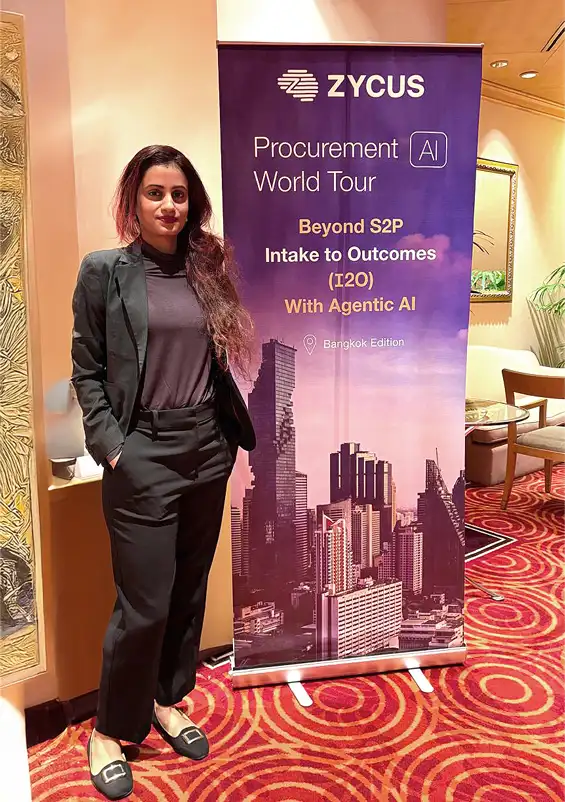
The Demo That Changed the Conversation: Intake to Outcomes
The centerpiece of the Bangkok roundtable was the “Intake to Outcomes” live demonstration, a full-cycle walkthrough of how Agentic AI transforms procurement from request to value delivery.
What the Room Saw:
1. Intelligent Intake Management
A business user submits a procurement request via Slack in conversational language—no forms, no procurement jargon, just: “I need 50 laptops for the new Bangkok office by next month.”
ANA captures the intent, asks clarifying questions (“Do you have a preferred brand or budget?”), and routes the request automatically based on:
- Category (IT hardware)
- Value threshold (triggers appropriate approval workflow)
- Regional requirements (Thai VAT compliance, preferred local suppliers)
The reaction: “Wait, it understood the request without a form?”
Yes. And it gets better.
2. Autonomous Decision-Making
Agentic AI evaluates the request against:
- Existing contracts: Do we have a pre-negotiated laptop supplier agreement?
- Budget availability: Is there an approved budget for this cost center?
- Does this require additional approval for IT asset management?
It doesn’t just flag issues; it recommends solutions and auto-populates requisitions with pre-approved options.
“Here are three suppliers under contract with stock availability in Bangkok. Supplier A offers a 15% volume discount if ordered this week.”
3. Proactive Risk Monitoring
Mid-cycle, the AI detects a supplier financial risk flag based on real-time credit data feeds.
It alerts the procurement team, suggests alternative suppliers from the pre-qualified list, and triggers contingency workflows, all before human intervention.
One attendee interrupted: “That supplier risk alert just saved us from a disaster we wouldn’t have seen coming.”
4. Real-Time Analytics and Outcomes
At the end, stakeholders see:
- Cycle time reduced by 45%(from request to PO issuance)
- 100% policy compliance(zero maverick spend)
- Spend visibility across categories in a live dashboard
- Contract utilization rates showing which agreements are underused
The reaction? Silence. Then rapid-fire questions about implementation timelines.
ANA: The Breakout Star of Bangkok
If there was a single feature that captured attention, it was Merlin AI Assistant (ANA) Zycus’ conversational AI interface.
Why ANA Resonated:
1. It Speaks Your Language (Literally)
ANA handles both understanding context and delivering procurement-specific answers, not generic chatbot responses.
“Can I order marketing materials without going through the full RFP process?”
ANA: “Yes, if the value is under 500,000 THB and you use one of our three pre-approved printing vendors. Would you like me to show you, their catalogs?
2. It’s Embedded in Workflow
ANA isn’t a separate tool you have to log into. It lives inside Slack, Microsoft Teams, email, and procurement portals. Users don’t change behavior, they just get smarter answers where they already work.
3. It Learns Your Business
One attendee asked: “What if our approval matrix is unique? We have different thresholds for different subsidiaries.”
The answer: ANA ingests your policies, learns your exceptions, and adapts. It doesn’t force you into a vendor’s best practice; it teaches you.
4. It Guides, Not Just Responds
ANA doesn’t wait for questions. It proactively nudges users:
- “This request is missing the cost center. Would you like me to suggest one based on similar past requests?
- “Your preferred supplier for this category has a lead time issue. Here are two alternatives with better availability.”
By the end of the demo, the question shifted from “Can we use this?” to “How fast can we pilot this?”
The Four Pillars: What Bangkok Taught Us About AI Adoption
The roundtable discussions crystallized around four non-negotiables for successful AI integration in procurement:
1. Localization Matters
One lesson I’ve learned working across Southeast Asia: global solutions must adapt to local languages, regulations, and business practices. Thai procurement teams need AI that understands local nuances, navigates local tax codes (VAT, withholding tax), works with regional supplier ecosystems, and respects other cultural nuances in negotiation. That’s why we’ve built our dedicated Thai website, designed for local business context, not adapted from Western templates.
2. Personalization Is the Baseline
Generic AI is noisy. Procurement AI must learn organizational behavior, category nuances, approval of workflows specific to each company, and historical patterns.
3. Integration Over Disruption
No one wants to rip out their ERP. Successful AI layers on top of existing systems, integrates via APIs, enhances SAP/Oracle/Ariba without requiring migration, and proves value in 90 days, not 2 years.
4. Proof, Not Promises
Benchmarking frameworks, pilot KPIs, and measurable outcomes matter more than vendor case studies. Bangkok’s leaders wanted to see their data, their workflows, their ROI models, not generic “up to 40% savings” marketing claims.
Why Traditional Systems Fail Modern Procurement
A pattern emerged: organizations had plenty of systems; they just didn’t work together.
One procurement director described managing five separate platforms simultaneously: sourcing, contracts, purchase orders, invoicing, and supplier management.
Each worked reasonably well in isolation. But integration points were where value disappeared: data entered manually across systems, insights trapped in silos; suppliers asked for the same information repeatedly, approvals duplicated, and reporting requiring manual consolidation.
One attendee called it “death by a thousand integrations.”
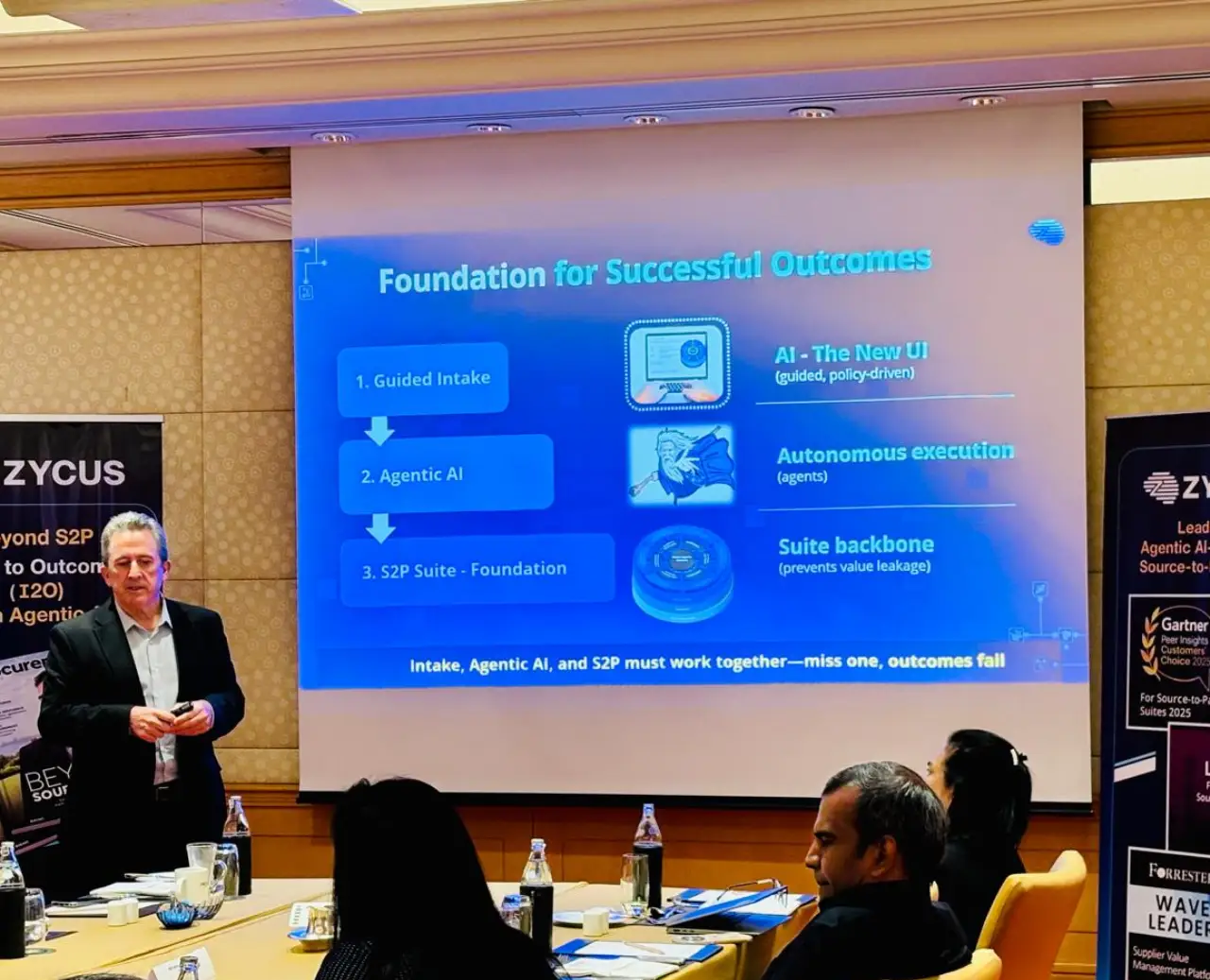
What Made Zycus’ Unified S2P Platform Compelling
It wasn’t featuring breadth; it was intelligence continuity.
When AI-powered Intake Management captures a procurement request, intelligence flows seamlessly to sourcing, contract management, supplier management, autonomous negotiation, and AP automation.
Merlin AI sits across all modules, learning patterns, predicting needs, and connecting dots that separate systems can’t see.
A regional CPO summed it up: “We don’t need another point of solution. We need a brain that connects what we already have.”
The Shift: From “If” to “How Fast”
Perhaps the most telling moment came during Q&A when an attendee said:
“We’re not debating whether to adopt AI anymore. We’re debating whether we can afford to wait six months while our competitors don’t.”
That’s the inflection point. Procurement AI has moved from experimental to essential.
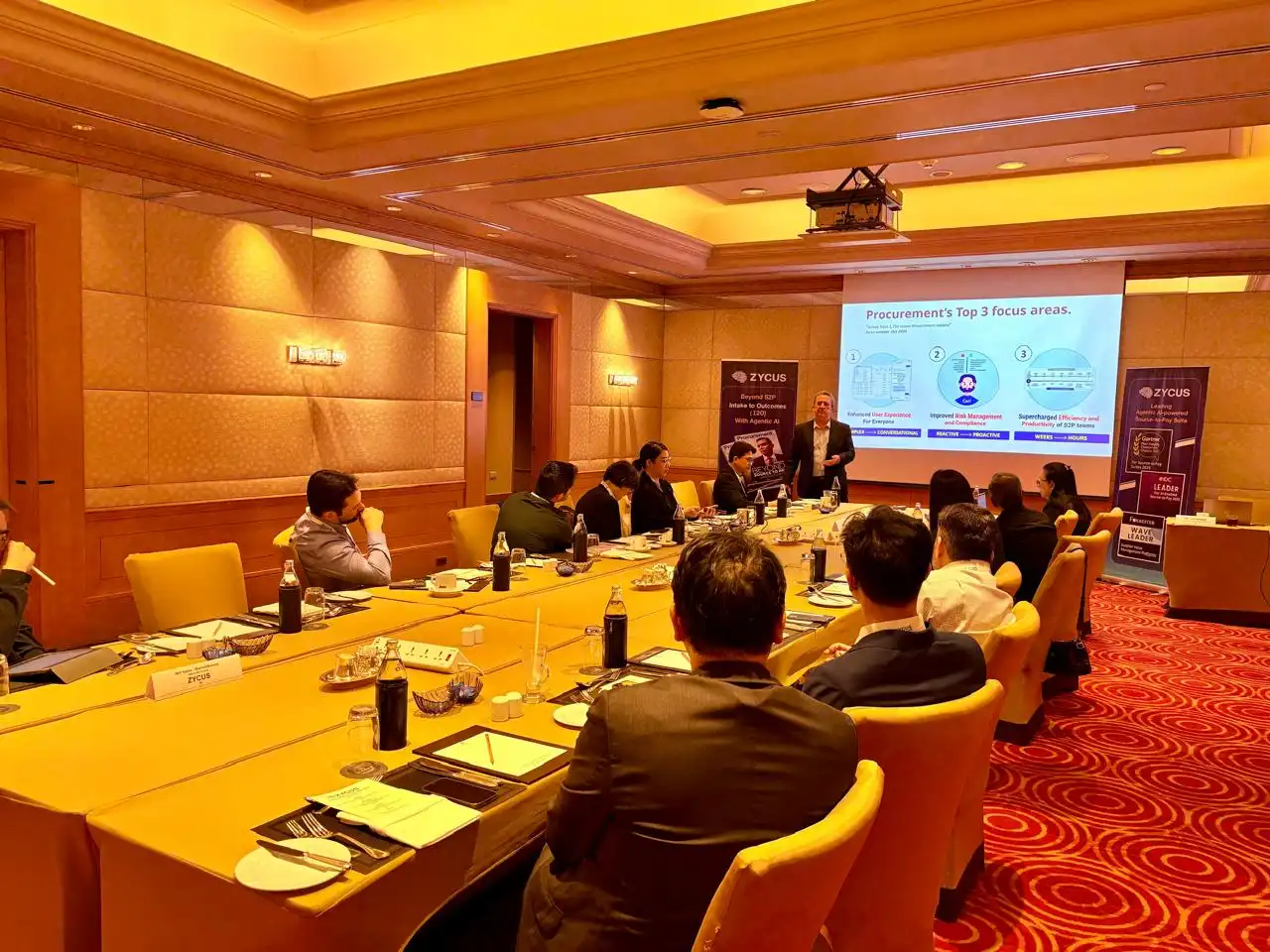
Quantifying the ROI: What Bangkok Leaders Calculated
By the end of the roundtable, the business case was undeniable:
- Maverick Spend Elimination:15-25% savings by bringing 20-30% of spend under management
- Tail Spend Optimization:2-5% immediate savings through autonomous negotiation
- Process Efficiency:70% faster processing, reclaiming 1,200+ hours annually
- Contract Leakage Recovery: Millions recovered through proactive obligation monitoring
The Bottom Line: Procurement AI Is Here
The Zycus World AI Procurement Tour in Bangkok proved that unified AI-powered procurement isn’t coming to Southeast Asia; it’s already here.
Leaders left with specific solutions for maverick spending, tail spend optimization, contract intelligence gaps, system fragmentation, and process friction.
The risk isn’t whether unified AI-powered platforms will work. The risk is whether competitors will move faster.
The question isn’t whether AI will transform procurement in Thailand and Southeast Asia, the transformation is already accelerating.
The question is whether your organization will lead it or spend the next three years watching competitors capture the value you left on the table.
To the Bangkok Procurement Community: Thank You
To every leader who showed up with tough questions and engaged deeply, you elevated the conversation. This is how transformation happens: not through vendor pitches, but through honest dialogue between practitioners solving real problems.
The era of reactive procurement is ending. The era of AI-powered, proactive, strategic procurement is here.
Related Reads:
- Understanding Blockchain in Procurement and Its Impact
- Procurement Excellence and Awards India 2025: Unlocking ₹10-50 Crores in Indirect Spend
- Procurement vs Purchasing: Understanding the Difference
- Procurement in Value Chain for Business Advantage
- White Paper – Unraveling Cognitive Procurement: Unlocking Efficiency With AI
- White Paper – The 11 Most Important KPIs to Unlock Sustained Procurement Performance in 2025