Zycus PLAN · Global Virtual Event · 3 Procurement World Premieres · November 18, 2026 Register Now

How to Set a Procurement Intake SLA

How to Set a Procurement Intake SLA: A Realistic Target Framework

Promising a single turnaround time for every request is the fastest way to break your procurement intake SLA, it will inevitably be breached on complex purchases and wasted on routine renewals. To build a framework that actually works, procurement leaders must divide their intake SLA into two distinct commitments: response time and fulfillment time. While […]

How to Set a Procurement Intake SLA: A Realistic Target Framework Read More »
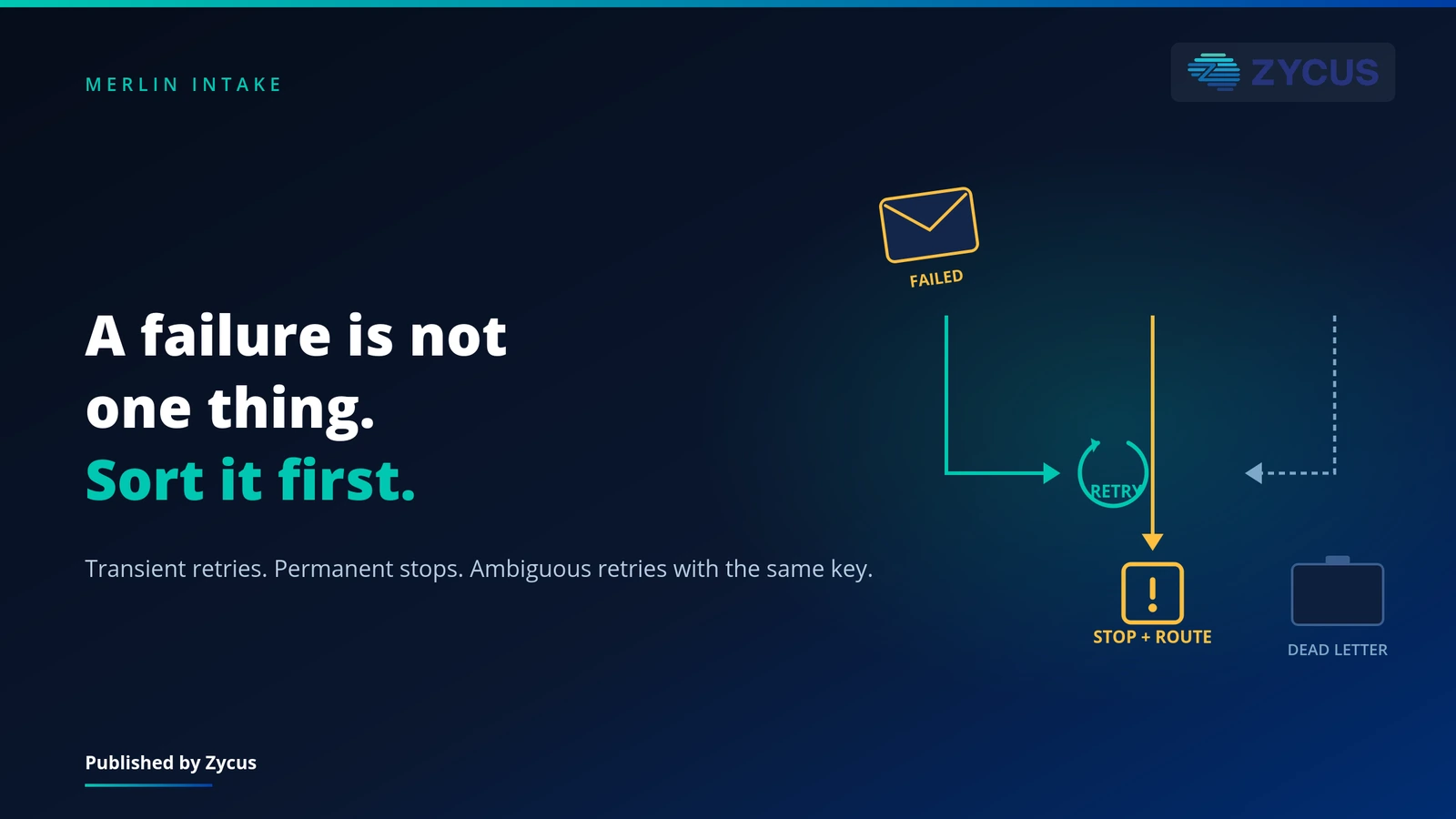
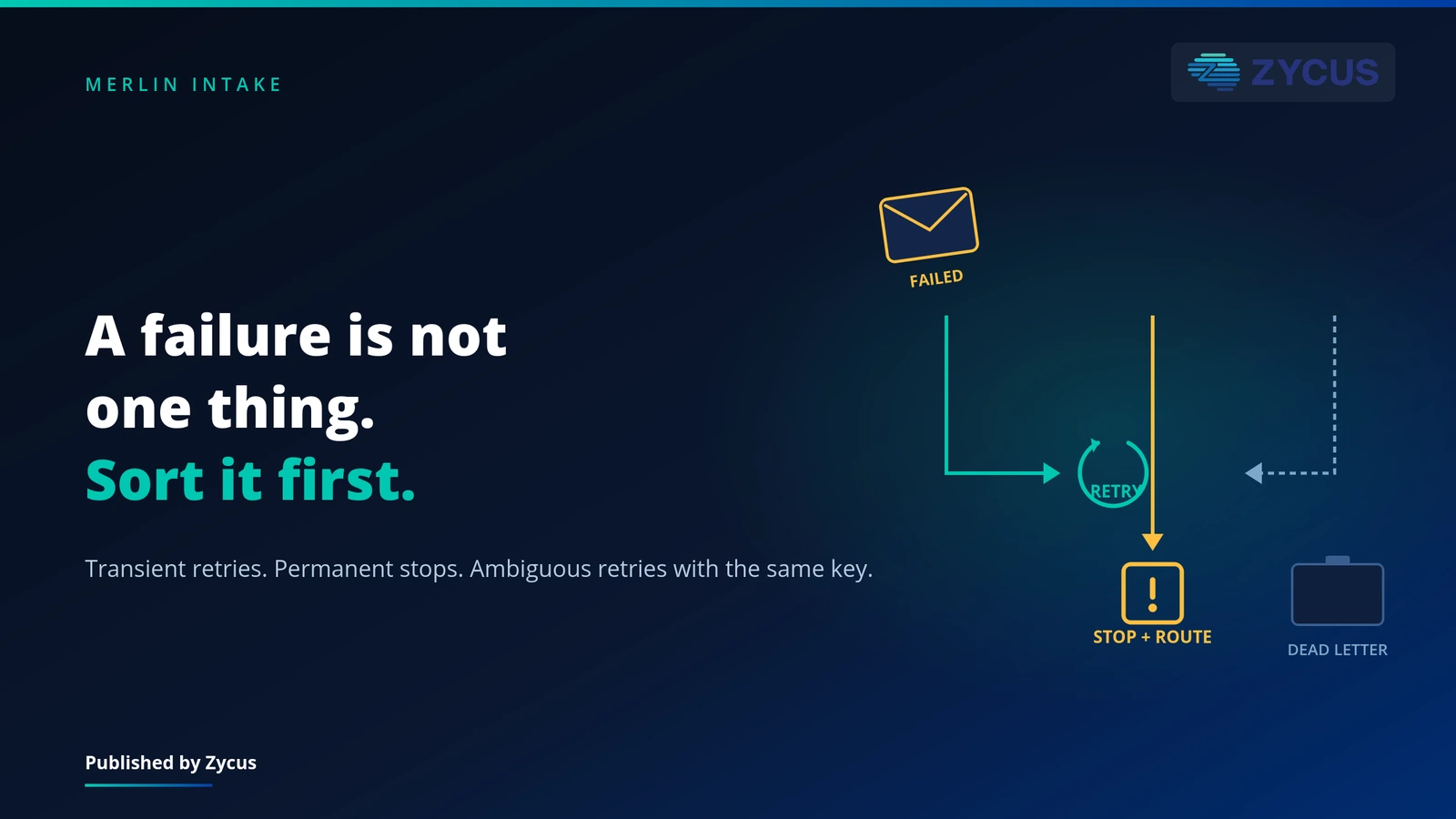
What should happen when an intake-to-ERP request fails?

What should happen when an intake-to-ERP request fails?

TL;DR  Sort failures by whether retrying could ever work. Everything else in the design follows from that classification.  Transient failures retry with backoff and a ceiling. Permanent failures stop immediately and route to a person.  Ambiguous failures retry with the same idempotency key, which is what makes the retry safe.  A dead letter queue needs

What should happen when an intake-to-ERP request fails? Read More »

Orchestration or choreography: which pattern does intake-to-ERP need?

Orchestration or choreography: which pattern does intake-to-ERP need?

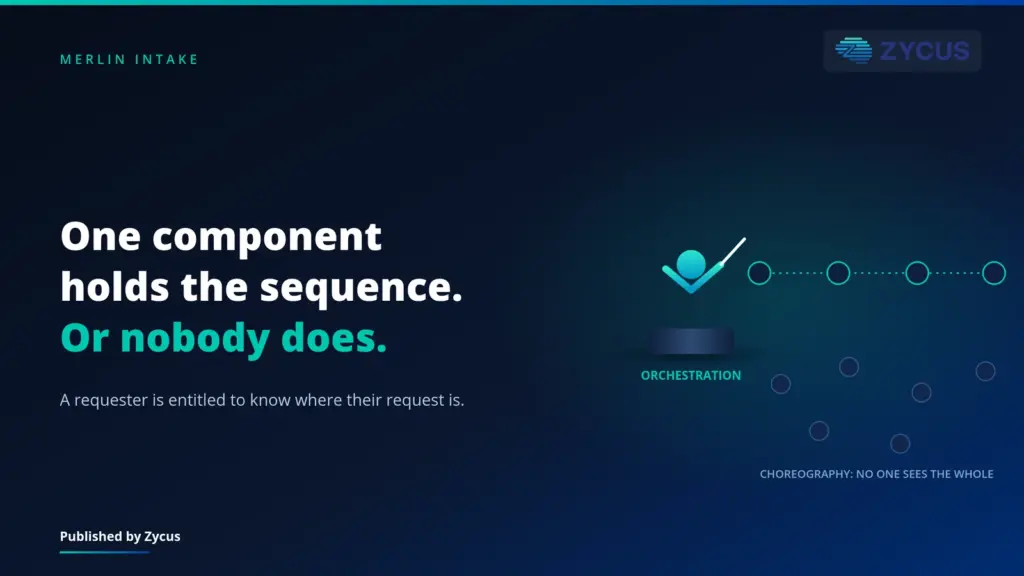
TL;DR  Orchestration puts one component in charge of the sequence. Choreography lets each react to events and gives none the whole picture. Orchestration fails at the coordinator, which is a visible bottleneck. Choreography fails at visibility, and a request nobody can locate is worse. Intake-to-ERP is a sequence and favors orchestration, because a requester is

Orchestration or choreography: which pattern does intake-to-ERP need? Read More »

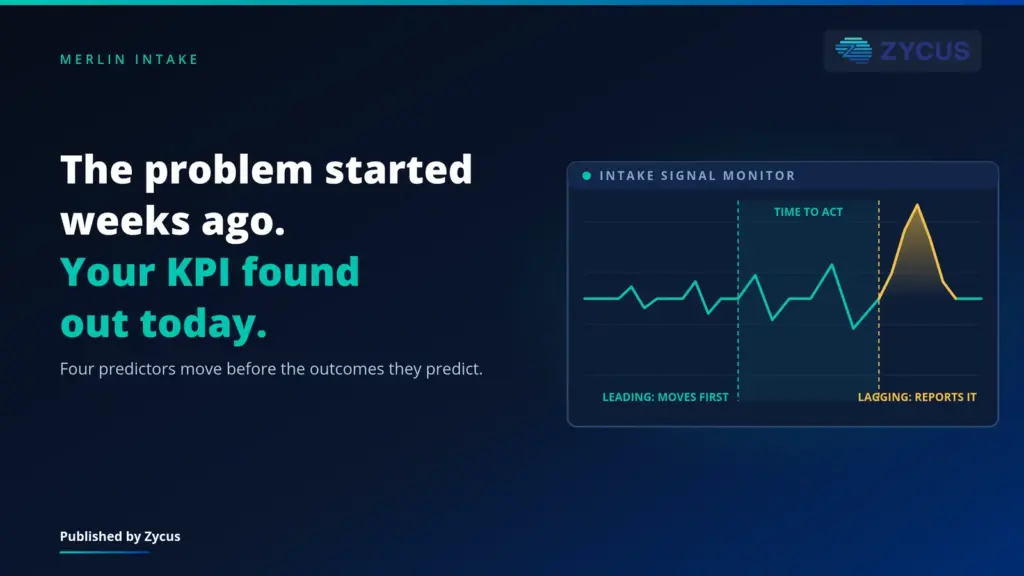
A slide with a line chart where a leading signal moves first and a lagging spike reports it, under a weeks ago headline

Which intake KPIs tell you something before it is too late?

TL;DR  A lagging intake KPIs and metric reports on a closed period. A leading one gives you time to act.  Four outcomes matter: cycle time, spend under management, exception rate, and requester satisfaction.  Four predictors move first: first-pass completeness, off-channel request volume, category match rate, and time to first response.  Pair each outcome with its

Which intake KPIs tell you something before it is too late? Read More »

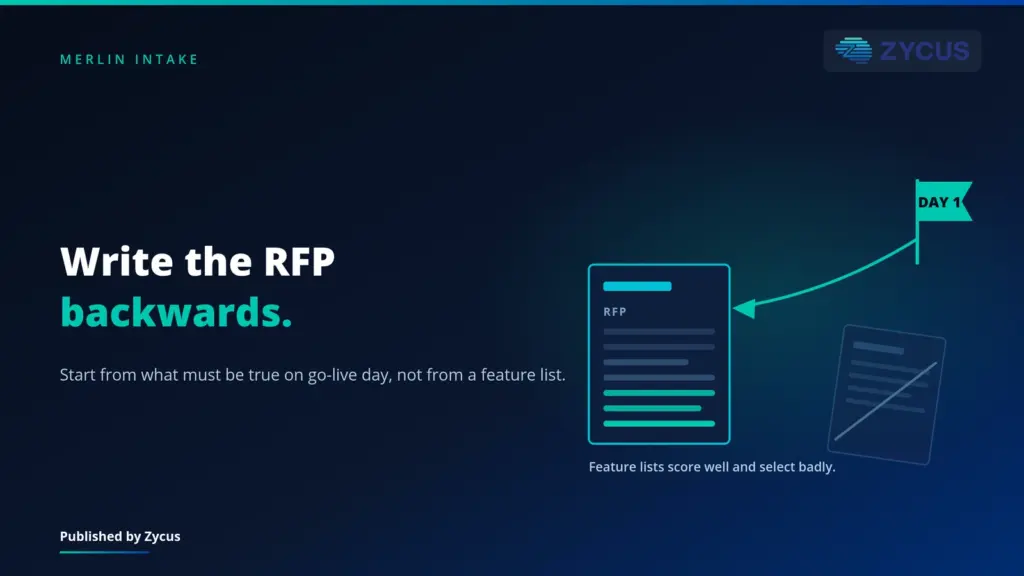
A slide urging readers to write the RFP backwards, with an arrow from a day 1 flag pointing to a document

What Should a Procurement Intake RFP Ask For?

TL;DR  Write the procurement intake RFP backwards from six conditions that must be true on day one, not forwards from a vendor feature list.  Turn each day-one condition into a procurement software requirement and a demonstration you would accept as proof.  Treat requester access, pre-commitment policy enforcement, and configuration ownership as architecture-level decisions rather than

What Should a Procurement Intake RFP Ask For? Read More »

What must be true about your master data before intake goes live?

What must be true about your master data before intake goes live?

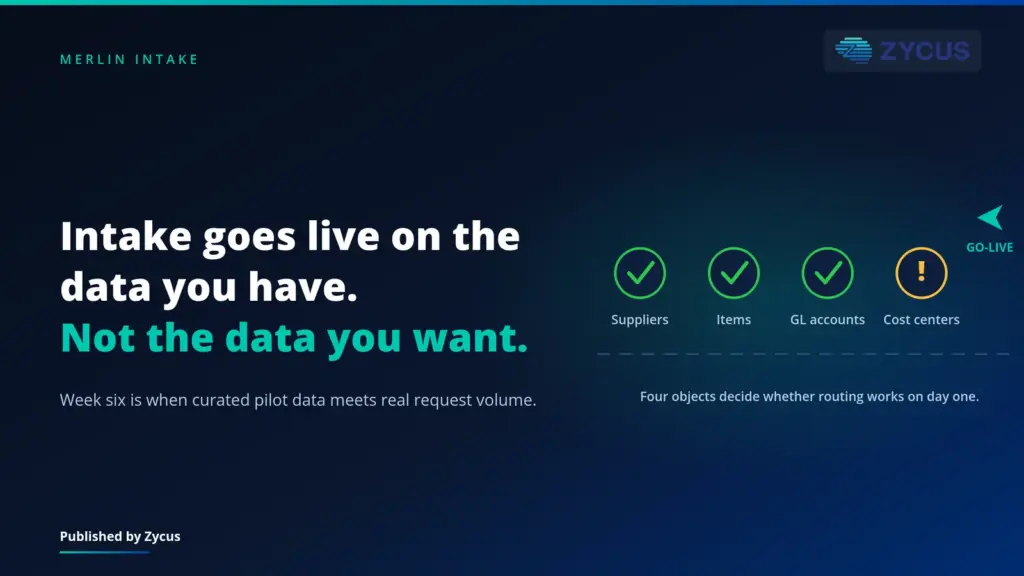
TL;DR  Four objects decide whether an intake rollout works: suppliers, items, general ledger accounts, and cost centers.  Supplier duplicates, conflicting category taxonomies, and retired cost centers block go-live. Specification detail and catalog breadth can be improved after launch.  Intake rollouts stall at week six because that is when curated pilot data gives way to real

What must be true about your master data before intake goes live? Read More »

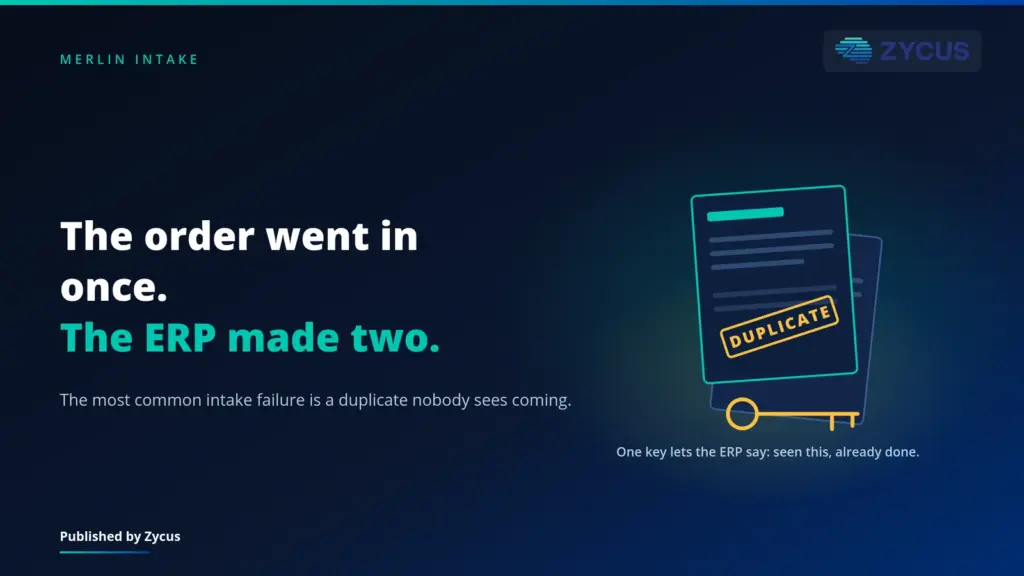
What Is an Idempotency Key, and Why Does Your Intake-to-ERP Integration Need One?

What Is an Idempotency Key, and Why Does Your Intake-to-ERP Integration Need One?

TL;DR  An idempotency key is a durable identifier for one write operation. Reuse the same key on every retry so the receiver can recognize the original business intent.  In an intake-to-ERP integration, a lost acknowledgment can otherwise turn a correct retry into a duplicate purchase order.  Production-ready idempotency also requires clear rules for scope, payload

What Is an Idempotency Key, and Why Does Your Intake-to-ERP Integration Need One? Read More »

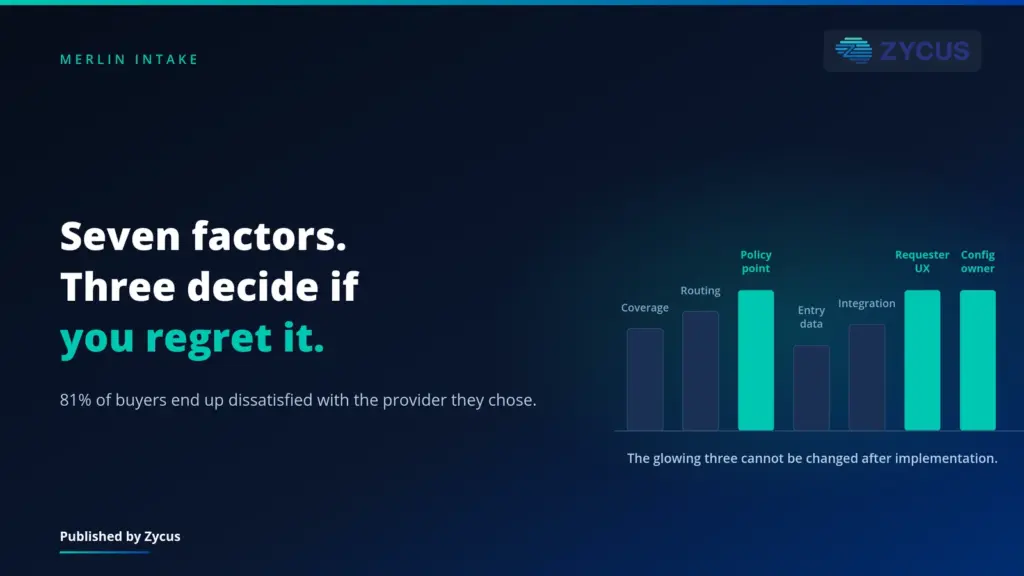
How to Evaluate Procurement Intake Software: 7 Criteria That Matter - Zycus

How to Evaluate Procurement Intake Software: 7 Criteria That Matter

As organizations struggle with fragmented purchasing workflows, choosing the right procurement intake software has become a critical priority for modern finance and operations teams. Knowing how to evaluate procurement intake software effectively can mean the difference between seamless adoption and employee frustration. Before making a commitment, establishing clear procurement intake software evaluation criteria ensures you

How to Evaluate Procurement Intake Software: 7 Criteria That Matter Read More »