
Zycus Horizon US Edition 2026 · September 21-23, 2026 Register Now

September 19, 2026

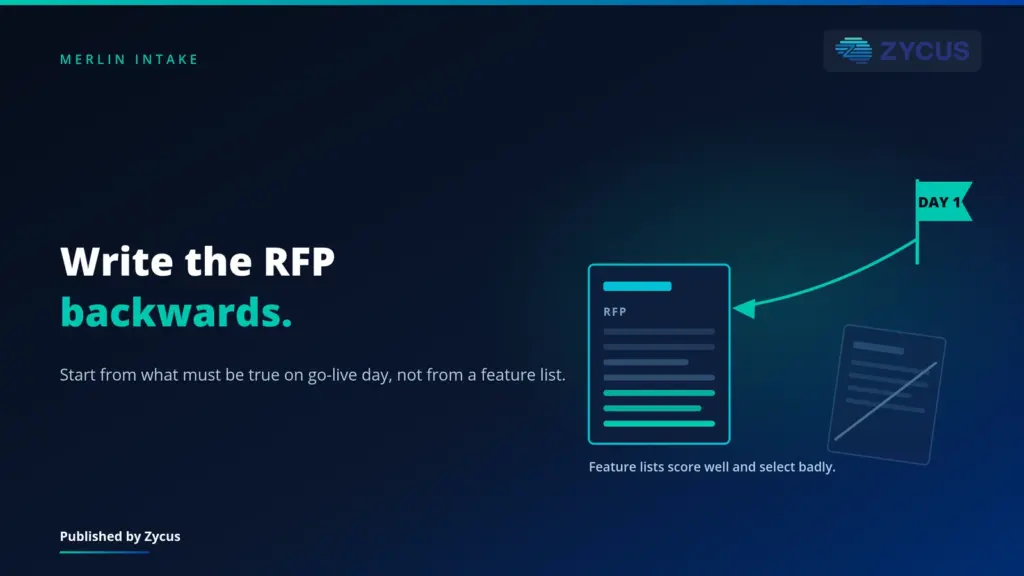
What Should a Procurement Intake RFP Ask For?

TL;DR  Write the procurement intake RFP backwards from six conditions that must be true on day one, not forwards from a vendor feature list.  Turn each day-one condition into a procurement software requirement and a demonstration you would accept as proof.  Treat requester access, pre-commitment policy enforcement, and configuration ownership as architecture-level decisions rather than […]

What Should a Procurement Intake RFP Ask For? Read More »
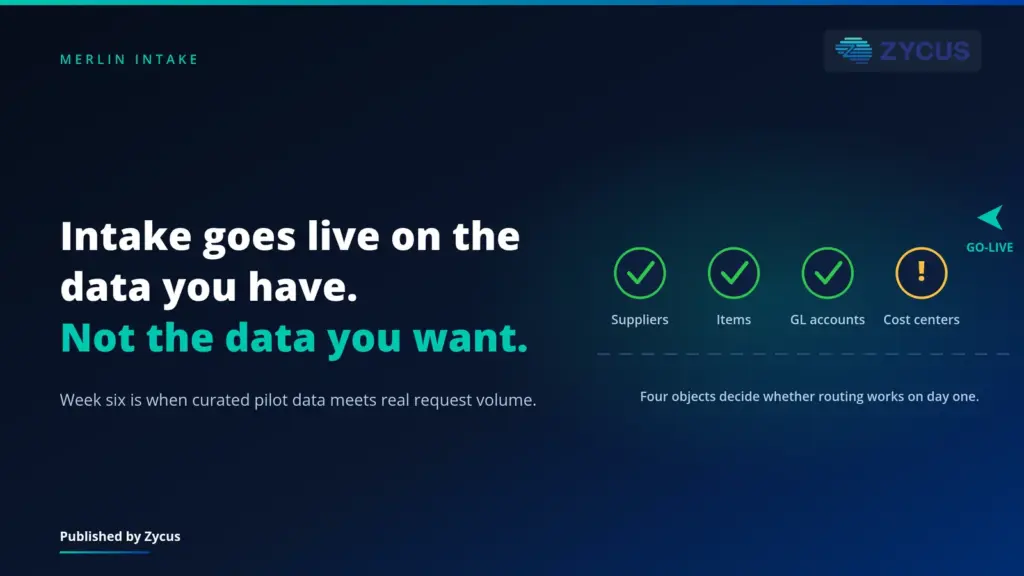
What must be true about your master data before intake goes live?

What must be true about your master data before intake goes live?

TL;DR  Four objects decide whether an intake rollout works: suppliers, items, general ledger accounts, and cost centers.  Supplier duplicates, conflicting category taxonomies, and retired cost centers block go-live. Specification detail and catalog breadth can be improved after launch.  Intake rollouts stall at week six because that is when curated pilot data gives way to real

What must be true about your master data before intake goes live? Read More »

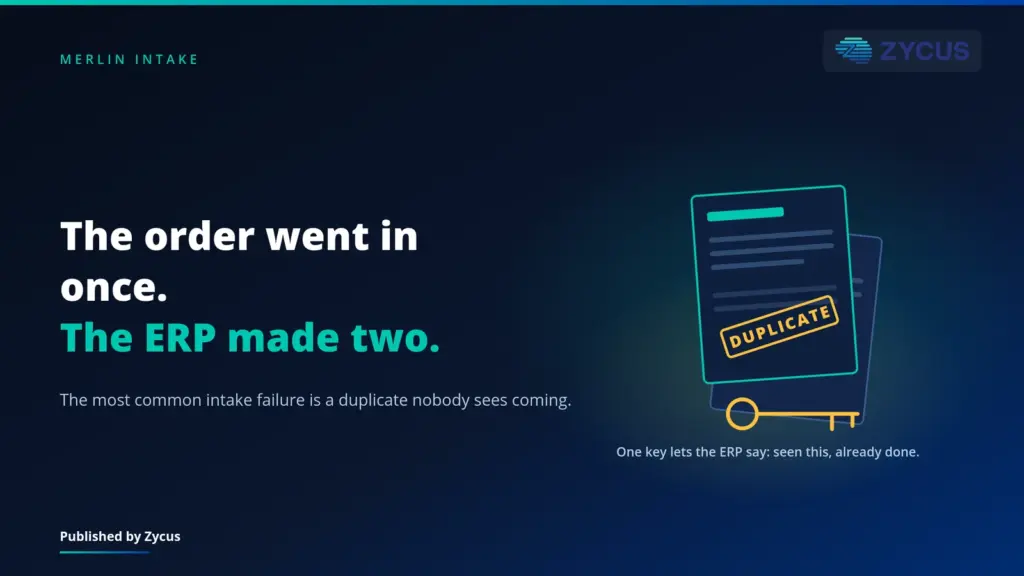
What Is an Idempotency Key, and Why Does Your Intake-to-ERP Integration Need One?

What Is an Idempotency Key, and Why Does Your Intake-to-ERP Integration Need One?

TL;DR  An idempotency key is a durable identifier for one write operation. Reuse the same key on every retry so the receiver can recognize the original business intent.  In an intake-to-ERP integration, a lost acknowledgment can otherwise turn a correct retry into a duplicate purchase order.  Production-ready idempotency also requires clear rules for scope, payload

What Is an Idempotency Key, and Why Does Your Intake-to-ERP Integration Need One? Read More »