



A Cost-Plus Pricing Model is a pricing approach where the supplier sets the final price by taking the actual cost of delivering a product or service and adding a pre-agreed markup (profit margin).
In procurement, cost-plus pricing is commonly used when the work scope is uncertain, market pricing is volatile, or the supplier must recover variable costs, such as in engineering services, maintenance contracts, custom manufacturing, and long-term service delivery.
Instead of negotiating a fixed unit price upfront, procurement negotiates the rules of cost recovery and the profit percentage, so pricing stays transparent and defensible.
Why Cost-Plus Pricing Matters in Procurement
Cost-plus contracts are often chosen when procurement needs to prioritize continuity, flexibility, and execution reliability over rigid pricing.
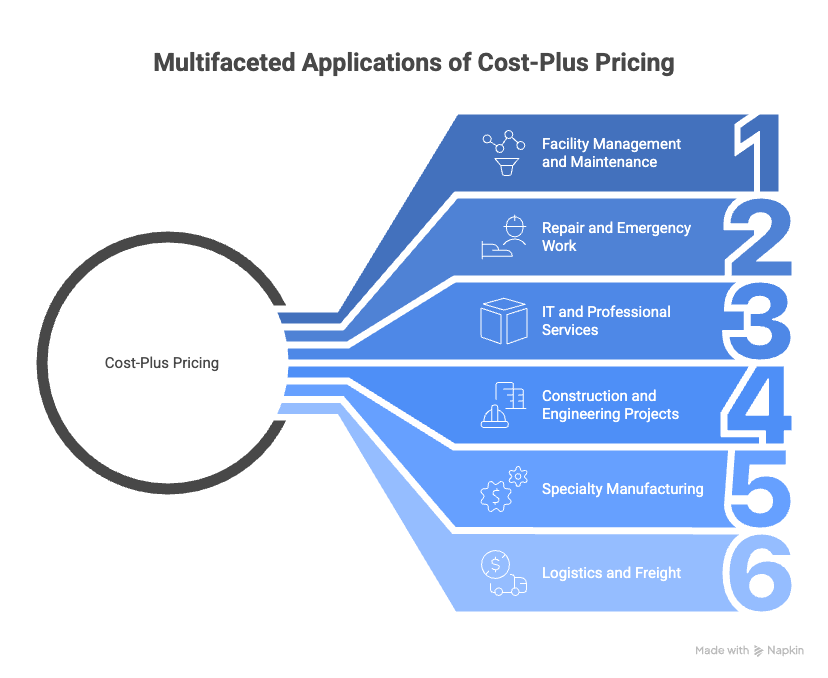
This model is particularly valuable when:
- The work cannot be accurately priced upfront
- Input costs (labor, materials, freight) change frequently
- Suppliers must ramp capacity or respond to unknown demand
- The organization needs faster contracting with fewer pricing disputes
However, because suppliers get paid based on their costs, cost-plus models require stronger controls to prevent overspend and inefficiency.
How Cost-Plus Pricing Works
At its core, the supplier’s price is built in two parts:
Final Price = Allowable Costs + Markup
Allowable costs are defined in the contract and can include labor, materials, tooling, freight, or subcontractor expenses—depending on the category.
The markup is the profit component, usually expressed as:
- a fixed percentage (example: cost + 12%)
- a fixed fee (example: $50,000 fixed management fee)
- a blended structure (fixed + variable)
This structure creates transparency, but procurement must clearly define which costs are eligible and how they will be validated.
Core Components of a Cost-Plus Pricing Model
1. Cost Definition (What’s Included vs Excluded)
The first step is agreeing on what counts as a “cost.”
If cost definitions are vague, cost-plus contracts become expensive quickly.
A well-structured model clearly separates:
- Direct costs (labor hours, raw materials, parts)
- Indirect costs (admin, supervision, tools)
- Non-allowable costs (rework due to supplier error, penalties, avoidable waste)
This prevents open-ended invoicing and builds control into the pricing structure.
2. Markup or Fee Structure (Profit Logic)
The markup defines supplier profit and directly impacts the buyer’s final spend.
Procurement typically negotiates markups based on:
- service complexity and risk
- market benchmarking
- supplier uniqueness or capacity constraints
- expected efficiency and volume stability
The goal is to ensure the supplier stays motivated, without rewarding inefficiency.
3. Cost Evidence and Auditability
Cost-plus pricing depends on proof.
Suppliers are expected to provide documentation such as:
- time sheets or labor logs
- invoices for materials and subcontractors
- freight bills
- rate cards and cost breakdowns
- supporting receipts tied to the job/work order
This creates a clean audit trail and reduces invoice disputes.
4. Governance Controls (Preventing Cost Inflation)
The biggest risk in cost-plus pricing is supplier cost creep.
Procurement manages this through controls such as:
- capped markups for certain cost categories
- approval thresholds for high-cost activities
- rate ceilings on labor
- limits on overtime billing
- clear rules for rework and scrap responsibility
These controls ensure cost-plus stays flexible without turning uncontrolled.
5. Performance Metrics and SLA Alignment
Cost-plus contracts should still be tied to output.
That’s why mature procurement organizations link cost-plus pricing to:
- SLAs (response times, uptime, resolution cycles)
- quality targets (defect reduction, first-time fix rate)
- delivery performance (on-time completion)
- escalation SLAs for issue handling
This ensures suppliers focus on outcomes, not just billable activity.
6. Change Orders and Scope Management
Cost-plus contracts often exist because scope changes are expected.
To avoid confusion, procurement defines:
- what qualifies as a change request
- who approves changes
- how incremental cost is calculated
- timelines for confirmation and billing
This keeps change management structured and prevents surprise spend.
Cost-Plus vs Fixed Price (Quick Comparison)
| Factor | Cost-Plus Pricing | Fixed Price |
| Best for | Uncertain scope / volatile costs | Stable scope / predictable delivery |
| Buyer risk | Higher cost risk | Higher performance risk |
| Supplier risk | Lower | Higher |
| Transparency | High (if validated) | Medium |
| Governance required | High | Medium |
Key Terms
- Allowable Costs – Costs that the contract permits the supplier to charge
- Markup – The profit percentage added to allowable costs
- Fixed Fee – A defined profit amount instead of % markup
- Cost Validation – Verification of supplier cost claims using evidence
- Audit Rights – Contract terms allowing buyer to review cost records
- Change Order – A formal process to approve scope/cost changes
KPIs & Metrics
| KPI Area | KPI | What it Shows |
| Cost Control | Cost variance vs budget | Whether costs are staying within plan |
| Transparency | % invoices with complete evidence | Quality of supplier documentation |
| Compliance | Non-allowable cost rejection rate | Billing discipline and controls strength |
| Efficiency | Cost per unit / job / deliverable | Productivity improvement over time |
| Performance | SLA compliance rate | Output quality despite flexible pricing |
| Governance | Avg approval cycle time | Control speed vs operational delays |
FAQs
Q1. What is a cost-plus pricing model in procurement?
Cost-plus pricing is when a supplier charges actual allowable costs plus an agreed markup or fee, commonly used for variable-scope services and projects.
Q2. When should procurement use cost-plus pricing?
Cost-plus is ideal when scope is uncertain, input costs fluctuate, or service delivery needs flexibility without frequent renegotiation.
Q3. What is the biggest risk of cost-plus contracts?
The main risk is uncontrolled cost growth if cost definitions, approvals, and audit controls are not clearly enforced.
Q4. How do you control cost-plus spend effectively?
By defining allowable costs, capping rates, enforcing documentation, aligning SLAs, and using approvals and audit rights for high-cost activities.
Q5. Cost-plus vs time and materials—are they the same?
They’re similar, but not always identical. Time & materials is often a form of cost-plus where labor hours and material costs are billed with agreed rates, sometimes with additional markup rules.
References
For further insights into these processes, explore Zycus’ dedicated resources related to the Cost-Plus Pricing Model:
- 2025: The Year Procurement Transforms Forever with Agentic AI
- Global Trade Realignment: Strategic Imperatives for Non-US CPOs in 2025
- Put Incremental Improvements on Hold and Achieve Your Accounts Payable Process Improvements in 2024 and Beyond
- IT HARDWARE & EQUIPMENT Tariff Impact Analysis for Procurement Leaders
- AI in Procurement Innovation: Transforming the Industry










