




A strategic supplier is a vendor that provides goods or services critical to an organization’s core operations, competitive advantage, or long-term business objectives. Unlike transactional suppliers, strategic suppliers are selected based on their ability to deliver value beyond price — including innovation, reliability, risk mitigation, and alignment with the organization’s goals. The strategic supplier definition centers on mutual dependency and long-term partnership rather than short-term cost optimization.
Read more: Supplier Management–Benefits, Process, & Best Practices
Why Strategic Supplier Matters in Procurement
Not all suppliers are equal. Treating every vendor the same wastes resources and misses opportunities. Strategic suppliers account for a significant share of spend, supply hard-to-replace materials or services, or directly impact product quality and customer experience. Identifying and managing these relationships differently allows procurement to focus investment where it matters most — building partnerships that drive innovation, ensure supply continuity, and create competitive differentiation. Failing to recognize strategic suppliers leads to underinvestment in critical relationships and overexposure to supply risk.
Download Whitepaper: Supplier Risk And Performance Management: Best Practices For KPI Creation
The Core Process of Strategic Supplier
The process begins with supplier segmentation. Procurement analyzes the supply base using criteria such as spend volume, criticality of supply, substitutability, and strategic importance to the business. Suppliers that score high on both business impact and supply risk are candidates for strategic classification.
Once identified, strategic suppliers are evaluated more deeply. This includes assessing financial stability, operational capabilities, innovation potential, sustainability practices, and cultural alignment. The goal is to confirm that the supplier can support a long-term, value-driven relationship.
After classification, procurement develops a tailored relationship management plan. This typically involves joint business reviews, collaborative improvement initiatives, shared performance metrics, and executive sponsorship. Communication frequency and governance structures are more intensive than for transactional suppliers.
Ongoing management focuses on value creation, not just cost control. Procurement monitors performance, tracks innovation contributions, manages risks proactively, and periodically reassesses whether the supplier still merits strategic status as business needs evolve.
Core Components of Strategic Supplier
Supplier Segmentation: A framework for categorizing suppliers based on spend, risk, and strategic importance — distinguishing strategic suppliers from tactical and transactional vendors.
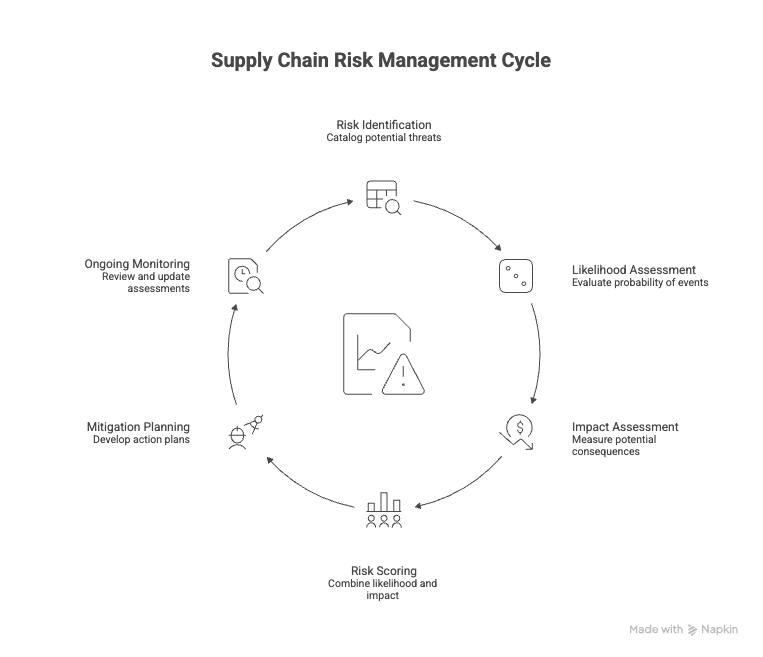
Relationship Governance: Defined escalation paths, executive sponsors, and structured touchpoints such as quarterly business reviews to maintain alignment and accountability.
Performance Management: KPIs and scorecards tailored to strategic priorities — covering not just delivery and quality but also innovation, responsiveness, and risk mitigation.
Joint Value Creation: Collaborative initiatives such as co-development projects, process improvement programs, or demand planning integration that benefit both parties.
Risk Monitoring: Ongoing surveillance of financial health, operational stability, geopolitical exposure, and compliance status to anticipate and mitigate supply disruptions.
Download eBook: A 7 Step Guide to Strategic Sourcing
Common Pitfalls of Strategic Supplier
Classifying too many suppliers as strategic: When every supplier is “strategic,” none receives the attention the label implies. Be selective.
Focusing only on spend: High spend does not automatically mean strategic. A low-spend supplier of a critical component may be more strategic than a high-spend commodity vendor.
Neglecting the relationship after classification: Strategic status requires ongoing investment. Without active management, relationships erode into transactional patterns.
Ignoring cultural and strategic fit: A supplier may have strong capabilities but poor alignment with your organization’s values or direction — limiting partnership potential.
Signs a Supplier Should Be Elevated to Strategic Status
Supply criticality: They provide materials or services that would be difficult or time-consuming to source elsewhere if disrupted.
Innovation contribution: They bring new ideas, technologies, or process improvements that enhance your competitive position.
Deep integration: Their operations are tightly linked to yours — shared systems, co-located teams, or joint planning processes.
Executive relationships: Senior leaders on both sides are engaged and invested in the partnership’s success.
Long-term alignment: Their growth trajectory, values, and strategic priorities align with where your organization is heading.
KPIs of Strategic Supplier
| Dimension | Sample KPIs |
| Performance | On-time delivery rate, quality defect rate, service level achievement |
| Value Creation | Cost savings delivered, innovation contributions, process improvements implemented |
| Relationship Health | Executive engagement frequency, issue resolution time, contract renewal rate |
| Risk | Financial stability score, compliance audit results, supply disruption incidents |
Key Terms in Strategic Supplier
- Supplier Segmentation: The practice of categorizing suppliers into tiers based on strategic importance, spend, and risk to prioritize management efforts.
- Quarterly Business Review (QBR): A structured meeting between buyer and supplier to review performance, address issues, and align on future priorities.
- Total Value of Ownership: A comprehensive view of supplier value that includes cost, quality, service, risk, and innovation — not just purchase price.
- Preferred Supplier: A supplier designated for priority use based on negotiated terms, but not necessarily at the strategic partnership level.
- Supplier Development: Initiatives to improve a supplier’s capabilities, processes, or performance to better meet the buyer’s needs.
- Executive Sponsorship: Senior leadership involvement in a supplier relationship to signal commitment and enable escalation when needed.
FAQs
Q1. What is a strategic supplier?
A supplier that provides critical goods or services, contributes to competitive advantage, and warrants a long-term, partnership-based relationship beyond transactional purchasing.
Q2. How is a strategic supplier different from a preferred supplier?
A preferred supplier is prioritized for purchasing based on negotiated terms. A strategic supplier goes further — involving deeper collaboration, joint planning, and mutual investment in the relationship.
Q3. How many strategic suppliers should an organization have?
There is no fixed number. Most organizations limit strategic classification to 5–15% of suppliers to ensure each receives meaningful attention and investment.
Q4. What criteria define a strategic supplier?
High spend, supply criticality, limited substitutability, innovation potential, and alignment with long-term business objectives are common criteria.
Q5. How often should strategic supplier relationships be reviewed?
Formal reviews should occur quarterly, with ongoing performance monitoring. Strategic status itself should be reassessed annually as business needs evolve.
Q6. Can a supplier lose strategic status?
Yes. If a supplier’s performance declines, strategic relevance diminishes, or better alternatives emerge, reclassification to a lower tier may be appropriate.
References
For further insights into these processes, explore Zycus’ dedicated resources related to Strategic Supplier:
- Deciphering Strategic Supplier Management
- How Supplier Performance Management can Align Global Supply Base
- 30-Day Guide to Implementing a Cost-Saving Indirect Procurement Strategy
- The Procure to Pay playbook – Planning for eProcurement Success
- Getting a Hold of Big Data: A Comprehensive Big Data Analytics Guide by Zycus










