Supplier Collaboration is the systematic, relationship-driven approach to working with suppliers to improve performance, strengthen operational continuity, drive innovation, and manage shared risks.
Rather than limiting supplier interactions to transactions, Supplier Collaboration builds mutual visibility, trust, and co-ownership across activities such as forecasting, quality improvement, compliance, and innovation.
Read more: Supplier Collaboration Networks: A Roadmap to Unlocking Synergy in Procurement
Modern procurement teams embed collaboration throughout the S2P lifecycle, supported by digital workspaces, shared data, and structured engagement models that enable suppliers to operate as strategic partners.
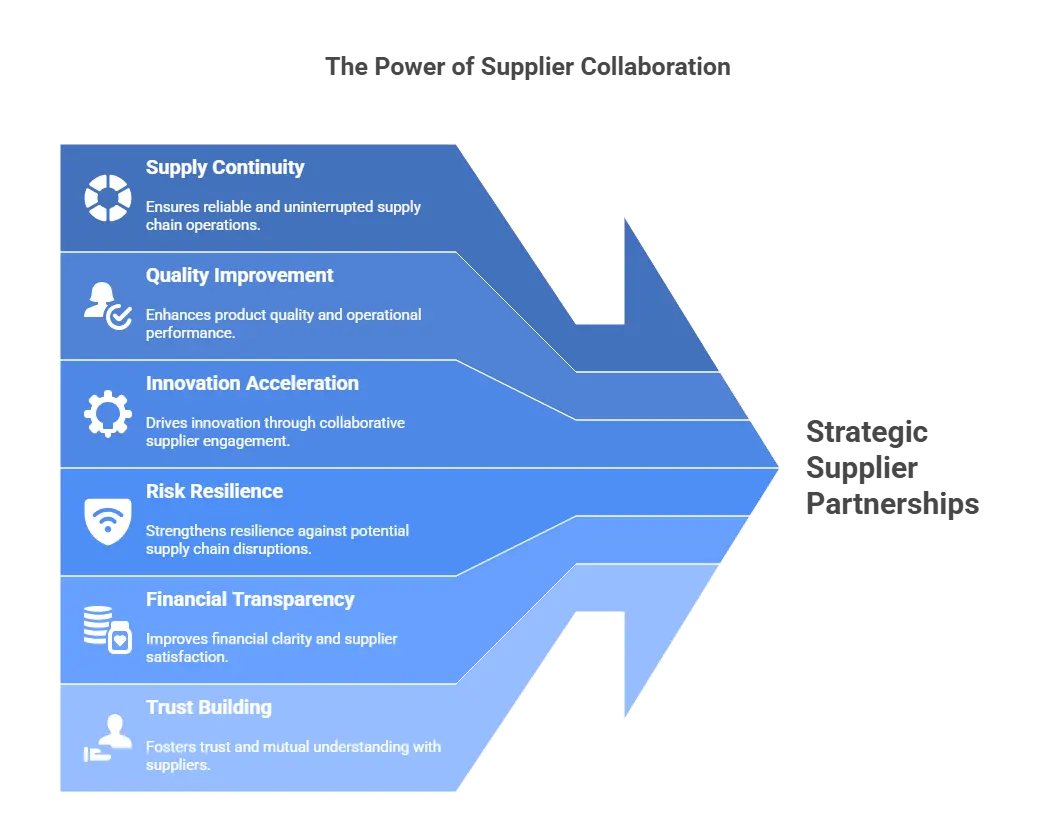
Core Components of Supplier Collaboration
1. Shared Communication & Information Exchange
Collaboration begins with unified, real-time communication. Suppliers need visibility into purchase orders, forecasts, invoices, and payment status, while buyers rely on timely updates on capacity, lead times, documentation, and compliance.
A shared supplier workspace or portal becomes the collaboration hub — reducing email traffic, eliminating miscommunication, and ensuring both sides operate using the same information.
2. Joint Performance Monitoring & Continuous Improvement
Suppliers and buyers jointly track performance metrics such as delivery accuracy, defect rates, service responsiveness, and SLA adherence. Instead of policing suppliers, this becomes a two-way improvement cycle powered by scorecards, QBRs (Quarterly Business Reviews), and structured CAPA (Corrective & Preventive Action) plans.
Open visibility into expectations and performance creates predictable, measurable improvement.
3. Forecasting, Planning & Capacity Alignment
One of the strongest collaboration levers is shared forecasting. Buyers provide visibility into expected demand, while suppliers share their production capacities, constraints, and inventory plans.
This synchronization reduces stockouts, minimizes last-minute firefighting, and stabilizes the flow of goods and services.
4. Risk & Compliance Collaboration
Supply chains face constant disruption — financial, operational, ESG, cybersecurity, or regulatory. Collaboration extends into real-time risk monitoring: suppliers share changes or incidents early, while buyers share alerts, compliance expectations, and mitigation plans.
Joint visibility ensures disruptions are addressed before they become critical.
5. Contract, SLA & Issue Resolution Alignment
Suppliers collaborate to meet contractual and SLA obligations. Shared dashboards help both parties track service levels, delivery accuracy, warranty commitments, and performance thresholds.
When issues arise, structured escalation paths and communication workflows help resolve them quickly and transparently.
6. Financial Collaboration & Payment Transparency
Collaboration includes predictable financial flows — clear invoice status, early-payment programs, dispute-resolution channels, and pricing validation tied to contracts.
This strengthens trust, eliminates uncertainty, and improves supplier cash flow consistency.
7. Supplier Development & Capability Building
Advanced collaboration programs invest in supplier growth — providing training, best-practice sharing, and improvement roadmaps.
These initiatives raise supplier maturity and performance, reducing long-term risk and improving the competitiveness of the entire supply base.
The Supplier Collaboration Lifecycle
Supplier Collaboration is most effective when integrated across the full supplier journey, with both parties actively contributing to shared outcomes.
1. Supplier Onboarding & Information Alignment
Collaboration begins by giving suppliers a clear, structured way to submit data, certifications, contacts, and compliance documents.
A centralized supplier workspace ensures both sides have a consistent view of profiles, policies, and expectations — reducing rework and communication gaps.
Read more: Revolutionizing Supplier Onboarding with Generative AI: Efficiency, Accuracy, and Beyond
2. Performance Visibility & Continuous Improvement
Once active, suppliers gain access to performance dashboards showing delivery timelines, quality metrics, issue-resolution cycles, and SLA compliance.
Buyers and suppliers jointly review performance through regular QBRs, root-cause analysis sessions, and CAPA follow-ups.
This creates a transparent, data-driven improvement loop.
3. Forecasting, Capacity, and Planning Collaboration
Collaboration extends into operational planning, where suppliers participate in:
- Forecast exchange
- Capacity planning
- Inventory alignment
- Demand fluctuation management
Shared visibility stabilizes production schedules and prevents supply shocks — especially in volatile or long-lead-time categories.
4. Risk & Compliance Collaboration
Buyers and suppliers jointly monitor risks across:
- Financial viability
- Safety and quality
- ESG compliance
- Cybersecurity
- Regulatory exposure
- Operational constraints
Real-time alerts, document sharing, and compliance workflows ensure both parties stay aligned and audit-ready.
5. Contract, SLA & Issue Resolution Collaboration
Suppliers collaborate to meet contractual terms, service levels, and quality thresholds.
Shared SLA dashboards and structured escalation paths help resolve issues early.
This prevents service degradation and improves accountability on both sides.
6. Financial Collaboration & Payment Transparency
Suppliers gain visibility into invoice validation, payment timelines, disputed amounts, and credit-note workflows.
Early-payment programs offer them faster liquidity.
This financial transparency reduces disputes and strengthens trust.
7. Supplier Development & Capability Growth
High-potential suppliers benefit from capability-building programs such as:
- Quality and compliance training
- Process improvement coaching
- Digital maturity upgrades
- Innovation workshops
These programs help suppliers improve performance, resilience, and competitiveness over time.
KPIs & Metrics
| Category | Key Performance Indicators |
| Performance | OTIF %, defect rate, SLA adherence, quality score |
| Collaboration Quality | QBR participation, responsiveness index, issue-resolution cycle time |
| Innovation | Number of co-innovation projects, value of ideas implemented |
| Risk & Compliance | Audit results, CAPA closure time, ESG compliance rate |
| Financial & Experience | Dispute resolution time, portal adoption %, supplier satisfaction |
Key Terms in Supplier Collaboration
| Term | Meaning |
| Supplier Collaboration | Ongoing partnership between buyer and supplier to improve value, quality, and reliability |
| QBR | Quarterly Business Review to evaluate performance and improvement actions |
| CAPA | Corrective and Preventive Action framework for resolving recurring issues |
| ESI | Early Supplier Involvement in forecasting, design, or development processes |
| Supplier Development | Programs designed to improve supplier capabilities, maturity, and readiness |
| Supplier Portal | Centralized digital workspace for communication and performance visibility |
FAQs
Q1. What is supplier collaboration?
Supplier collaboration is the structured partnership between buyers and suppliers to jointly improve performance, reduce risk, and create value through shared information, co-planning, and continuous improvement.
Q2. How does supplier collaboration improve performance?
By giving suppliers real-time visibility into KPIs and issues, enabling structured reviews, and providing clear expectations around quality, delivery, and compliance.
Q3. What tools support supplier collaboration?
Supplier portals, shared dashboards, QBR tools, forecasting modules, and automated CAPA workflows make collaboration structured and scalable.
Q4. Is supplier collaboration only for strategic suppliers?
While strategic suppliers receive deeper engagement, all suppliers benefit from structured communication, performance visibility, and clear expectations.
References
For further insights into these processes, explore Zycus’ dedicated resources related to the Supplier Collaboration:
- Supplier Collaboration Networks: A Roadmap to Unlocking Synergy in Procurement
- Why Multi-Tier Supplier Collaboration is Vital to Building Supply Chain Agility and Efficiency
- GenAI Agents for Supplier Collaboration – The Future of Supplier Relationships
- Supplier Collaboration Hubs for Mid-Market: Redefining Vendor Partnerships
- Taking a 360° Approach to Supplier Management
- Enhancing Brand Reputation Through Supplier Management and Supply Chain Management Solutions
- Is Collaborative Sourcing the Next Supply chain accelerator?