



Supplier vetting is the process of evaluating potential suppliers before entering into a commercial relationship to confirm they meet defined standards for financial stability, operational capability, compliance, ethics, and risk. It is a structured due diligence exercise that protects the organization from engaging with suppliers who could introduce financial, legal, reputational, or operational exposure. Vetting occurs before onboarding and is distinct from ongoing supplier performance management.
Read more: Supplier Vetting 101: Best Practices for Identifying Top Performers
Why Supplier Vetting Matters in Procurement
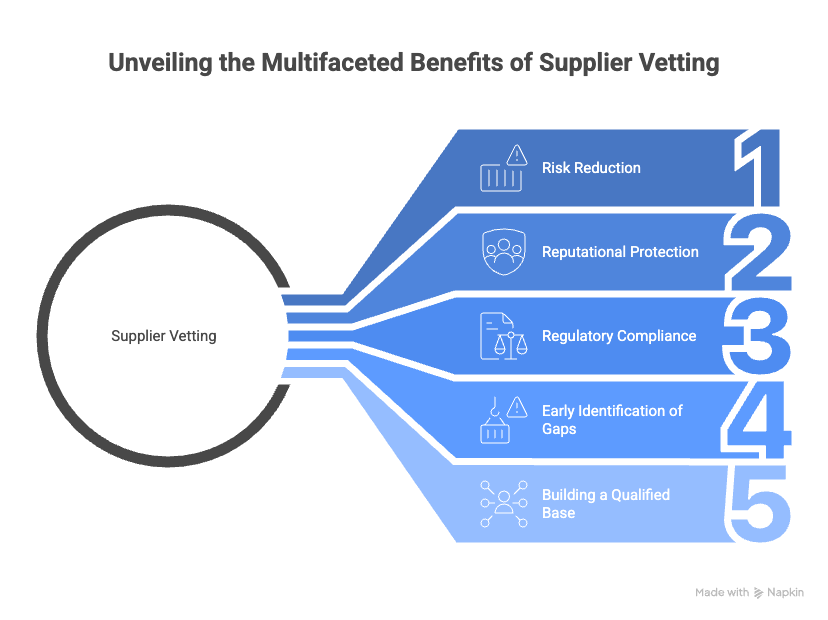
Every supplier relationship carries inherent risk. A financially unstable supplier may fail to deliver. One with poor compliance practices may expose the organization to regulatory penalties or reputational damage. Vetting filters these risks before they enter the supply base. Procurement teams that invest in rigorous vetting reduce downstream incidents and build a foundation of trusted, qualified suppliers. As supply chains extend globally and regulatory scrutiny intensifies, vetting has become a non-negotiable component of responsible procurement.
The Core Process of Supplier Vetting
The process begins when a new supplier is identified as a candidate through a sourcing event, unsolicited outreach, or internal referral. Procurement initiates the vetting workflow by requesting standard documentation: registration documents, financial statements, quality certifications, compliance declarations, and references.
The received documentation is reviewed against predefined criteria. Financial assessments examine credit ratings and trading history. Compliance checks verify certifications and regulatory standing. Ethics screens include sanctions list checks, anti-bribery declarations, and environmental or labor practice reviews.
For higher-value or higher-risk categories, vetting extends to on-site assessments or third-party audits. Results are reviewed against the organization’s risk threshold. Suppliers meeting all criteria are approved; those with minor gaps receive conditional approval with remediation requirements; those failing critical criteria are rejected or escalated. All outcomes are documented for audit purposes.
Core Components of Supplier Vetting
Financial due diligence confirms the supplier has the stability to fulfill obligations, reviewing credit ratings, payment history, and any insolvency proceedings. Compliance and regulatory verification confirm all applicable legal requirements are met. Ethics and integrity screening identifies connections to sanctioned entities or involvement in corrupt practices. Operational capability assessment validates that the supplier has the infrastructure, capacity, and quality systems to meet requirements.
Common Pitfalls of Supplier Vetting
- Applying the same vetting depth to all suppliers: Low-risk suppliers do not warrant the same scrutiny as strategic partners. A tiered framework improves efficiency without compromising protection.
- Treating vetting as a one-time exercise: Supplier risk profiles change. Financial conditions deteriorate, ownership structures shift, and compliance lapses occur. Periodic re-vetting is essential.
- Relying solely on self-reported information: Supplier-provided documentation must be validated through independent sources or third-party audits for high-risk categories.
- Creating bottlenecks that delay sourcing timelines: Overly manual processes slow onboarding and create friction. Structured workflows with defined turnaround standards prevent delays.
Red Flags That Should Halt or Escalate Vetting
- Sanctions list match: Any connection to sanctioned individuals or entities requires immediate legal escalation before proceeding.
- Refusal to provide standard documentation: Reluctance to share financial statements or compliance declarations is a significant indicator of risk.
- Adverse media findings: Recent coverage involving fraud, labor violations, or regulatory action warrants deeper investigation before approval.
- Inconsistencies between stated and verified capability: Discrepancies between capability claims and what audits confirm require additional scrutiny.
- Opaque ownership structure: Complex ownership arrangements in jurisdictions with weak oversight increase compliance and corruption risk.
KPIs of Supplier Vetting
| Dimension | Sample KPIs |
| Process Efficiency | Average vetting cycle time, % completed within target timeframe |
| Approval Outcomes | % approved, % conditionally approved, % rejected |
| Risk Coverage | % of new suppliers vetted before first purchase order |
| Risk Detection | # of red flags identified and escalated during vetting |
Key Terms in Supplier Vetting
- Supplier Onboarding: The process of registering, validating, and activating a new supplier in the organization’s systems.
- Due Diligence: Structured investigation of a supplier’s financial, operational, legal, and ethical standing before engagement.
- Sanctions Screening: A check against government and international lists of restricted individuals, entities, and countries.
- Supplier Risk Rating: A score or classification reflecting the overall risk level a supplier presents based on vetting data.
- Third-Party Audit: An independent assessment of a supplier’s facilities or management systems by an external party.
- Supplier Master: The central record of all approved, active suppliers within an organization’s procurement system.
- Conditional Approval: An onboarding status granted to a supplier that meets most criteria but must resolve identified gaps within a defined timeframe.
Technology Enablement
Modern Source-to-Pay platforms include supplier onboarding portals that automate information collection, sanctions screening integrations, and risk scoring engines. These tools reduce manual effort in vetting workflows, improve data consistency, and create the audit trails required by compliance and legal teams.
FAQs
Q1. What is supplier vetting?
The structured evaluation of a potential supplier’s financial, operational, compliance, and ethical standing before engagement.
Q2. How is vetting different from supplier performance management?
Vetting occurs before onboarding; performance management tracks suppliers already active in the supply base.
Q3. What information is typically requested during vetting?
Financial statements, trade references, quality certifications, compliance declarations, and ownership information.
Q4. How long does supplier vetting take?
Standard suppliers typically take one to two weeks; high-risk suppliers may require four to six weeks, particularly if site visits are included.
Q5. Should all suppliers go through the same vetting process?
No. A tiered approach applies deeper scrutiny to higher-value or higher-risk suppliers and lighter processes for low-risk categories.
Q6. How often should approved suppliers be re-vetted?
Strategic and high-risk suppliers are typically re-vetted annually, with ad-hoc reviews triggered by significant changes.
Q7. What happens if a supplier fails vetting?
Failed suppliers are rejected, given the opportunity to remediate specific gaps, or escalated for a risk acceptance decision.
References
For further insights into these processes, explore Zycus’ dedicated resources related to Supplier Vetting:
- Supplier Vetting 101: Best Practices for Identifying Top Performers
- The Modern Procurement Operating Model: Structure for Success in 2025
- Supplier Automation Made Easy
- From Paper Trails to Digital Highways: Building an Extensible S2P Suite
- The Power of Partnering: Driving Source-to-Pay Partnership Success with Zycus










