



eProcurement is the electronic implementation of traditional procurement processes, using internet-based applications and platforms to streamline the purchasing of goods and services, manage supplier relationships, and enhance visibility across procurement activities within an organization.
Read more: Your Guide to eProcurement
Why Teams Adopt eProcurement
Email threads and spreadsheets crack under volume. A single front door, guided purchase requisition forms, and digital catalogs mean fewer errors, fewer side deals, and spend you can actually see.
How eProcurement Works
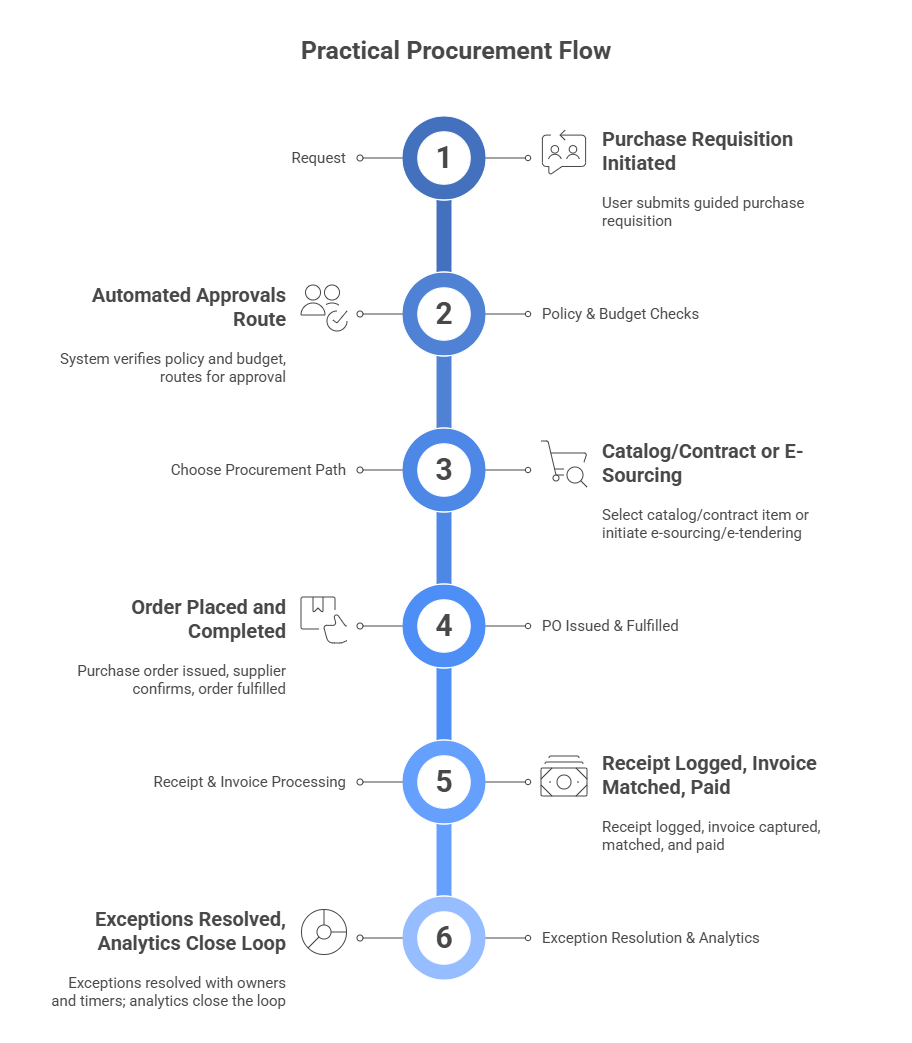
A requester opens a guided form. The system knows the policy and budget, suggests the best route, and nudges them to a digital catalog when the item already exists at a contract price. If it’s not a catalog buy—or competition is required—the request pivots upstream to e-sourcing or e-tendering for quotes. Approvals are automatic and defensible. An approved requisition becomes a PO, suppliers confirm and ship, goods are receipted, and the invoice is matched (2/3/4-way) before payment. Every step is logged; reporting doesn’t require a side project.
Example of eProcurement in Action
Field teams were buying the same safety gloves from six suppliers at four prices. After switching to eProcurement, the catalog carried a single, tested product with regional alternates. Requisitions took minutes, price variance disappeared, and invoice exceptions fell by half.
Key Facts About eProcurement
- Also called: electronic procurement, e-purchasing
- Users: requesters, buyers, approvers, AP, suppliers
- North star: fast, compliant buying with a clear audit trail
- Common metrics: PR-to-PO time, touchless rate, maverick spend %, first-pass match, on-contract %
What Good eProcurement Looks Like
A procurement platform becomes the habit: people start every buy there, not in inboxes. Digital catalogs stay tidy and priced to contracts. Approvals and budgets sit in the flow, not in side emails. Routine requests are nearly touchless; complex needs step into e-sourcing or e-tendering and return as contracts and catalog items. Finance gets clean coding and fewer exceptions; suppliers get clear POs and status without chasing.
Benefits of eProcurement
- Cycle times shrink because routing is automatic and data is structured.
- Off-contract buys drop—approved choices appear first.
- Matching works; AP stops firefighting.
- Prices at checkout reflect contracts thanks to digital catalogs.
- Spend visibility improves by category, supplier, and cost center.
- Requesters and suppliers both see status without asking.
Key Terms in eProcurement
- Electronic procurement (eProcurement): the digitized request-to-pay journey.
- Procurement platform: the cloud system running requests, approvals, POs, receipts, invoices, and reporting.
- Digital catalogs: searchable, contract-priced items maintained by buyers/suppliers.
- Purchase requisition: the request that kicks off the workflow.
- e-Sourcing / e-tendering: competitive events (RFP/RFQ) used when quotes and structured evaluation are needed.
How AI Enhances eProcurement
AI can suggest the right buying channel, normalize item descriptions, auto-code lines, flag price/quantity outliers, and draft exception notes. Humans keep policy intent, supplier choice for higher-risk buys, and final approvals.
FAQs
Q1. What is eProcurement software?
A cloud procurement platform that standardizes requesting, approving, purchasing, receiving, and invoicing—backed by policy controls, digital catalogs, and analytics.
Explore Zycus’ eProcurement Software
Q2. What’s the difference between eProcurement and eSourcing?
eProcurement handles everyday buying and payables. e-sourcing / e-tendering runs competitive events (RFP/RFQ) to select suppliers and terms; awarded items then flow into eProcurement as contracts and catalog entries.
Q3. What are the benefits of digital catalogs?
Faster ordering and fewer errors because items are standardized and contract-priced; side-by-side comparisons are easy, and approvals focus on the exceptions.
Q4. Are cloud-based procurement platforms secure?
Modern platforms provide SSO, role-based access, detailed audit logs, and encryption in transit/at rest. Final posture depends on your configuration and data policies.
Q5. Where does eProcurement improve compliance most?
Policy-aware routing, budget checks, approved catalogs, and PO-receipt-invoice matching reduce maverick spend and payment errors while preserving a clean audit trail.
Q6. When should a request go to sourcing instead of a catalog?
Push the request to e-sourcing / e-tendering when specs aren’t fixed, multiple suppliers can compete, or the value is high enough to warrant market bids and negotiated terms.
References
For further insights into these processes, explore Zycus’ dedicated resources related to eProcurement:










