eSourcing is the digital management of sourcing events — including supplier discovery, RFIs/RFQs/RFPs, evaluations, negotiations, and final award decisions — conducted through an online platform.
It replaces fragmented email-based sourcing with a governed, traceable, and data-driven workflow that enhances competition and ensures that every sourcing decision is compliant, auditable, and strategically aligned.
Read more: Comprehensive Guide to eSourcing
In the S2P ecosystem, eSourcing acts as the strategic front-end of procurement: it helps organizations evaluate suppliers objectively, secure better commercial terms, accelerate time-to-award, and build a more resilient supply base.
Why eSourcing Matters
Modern procurement demands speed, transparency, and defensible decision-making. eSourcing delivers this by:
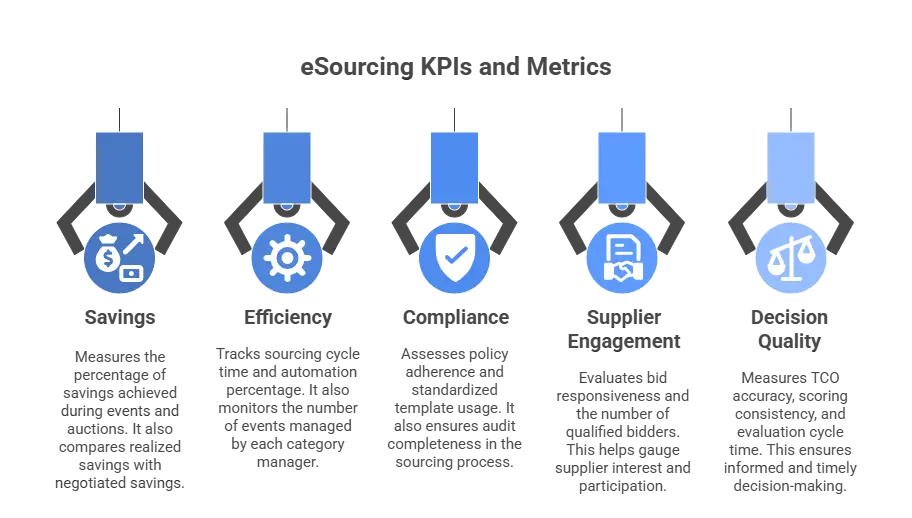
- Driving Savings through structured competition, optimized bidding, and eAuctions
- Enhancing Compliance with standardized templates, approval flows, and audit trails
- Improving Efficiency by removing repetitive email coordination and manual scoring
- Ensuring Fairness via transparent and equitable supplier evaluations
- Strengthening Decision Quality with TCO analysis, weighted scoring, and data-backed award logic
Ultimately, eSourcing transforms sourcing from operational coordination into strategic value creation.
Read more: The Stages of e Sourcing strategy: A Comprehensive Guide
The Complete eSourcing Lifecycle
eSourcing follows a continuous lifecycle — not a one-off process. Each stage builds intelligence and governance that strengthens future sourcing events.
1. Demand Identification & Event Intake
The lifecycle begins with a business need: materials, services, equipment, or indirect categories.
Digital intake forms capture requirements, validate policy triggers, and recommend the appropriate sourcing method (RFQ, RFP, eAuction).
AI-enabled intake engines — such as Merlin Intake — help classify demand, ensure completeness, and enforce approval rules before a sourcing event is launched.
2. Supplier Discovery & Pre-Qualification
Procurement identifies and validates potential suppliers using:
- Category intelligence
- Supplier performance history
- Financial and operational risk checks
- Diversity/ESG criteria
- Compliance and certification verification
Pre-qualification ensures only credible, capable suppliers enter the event, reducing downstream risk.
3. RFx Creation & Distribution
The sourcing team builds a structured RFx (RFI/RFQ/RFP) using standardized templates and questionnaires.
This stage enables:
- Consistent, policy-aligned event structures
- Automated supplier invitations
- Secure bid submission channels
- Cross-functional collaboration during drafting
Platforms aligned to Zycus provide configurable workflows that ensure standardization and full auditability.
4. Bid Collection, Evaluation & Scoring
Suppliers submit proposals digitally with complete security and transparency.
Evaluation typically combines:
- Price analysis
- Technical compliance
- Delivery capability
- Risk indicators
- ESG and quality metrics
- Historical performance
Weighted scoring models ensure decisions are objective and defensible.
AI insights can flag anomalies, highlight outliers, or recommend negotiation ranges.
5. eAuctions & Negotiation
When appropriate, competitive bidding is accelerated using eAuctions.
Common formats include:
- Reverse Auctions for price-driven categories
- Rank-based Auctions to promote competition without exposing sensitive bid data
- Multi-attribute Auctions for cost + non-cost variables
Advanced systems simulate auction outcomes, recommend strategies, and monitor real-time adherence to rules — improving savings while maintaining fairness.
6. Award Recommendation & Finalization
Procurement reviews the combined commercial and technical scores, validates policy compliance, and finalizes the award.
This stage includes:
- TCO evaluation
- Award justification documentation
- Approval routing
- Supplier communication
Audit trails ensure decisions are transparent and compliant.
7. Contracting & Transition to Execution
Awarded suppliers transition into contracting, where negotiated terms form the basis of contract creation.
Subtle Zycus alignment: In integrated ecosystems, sourcing results flow directly into contract authoring, ensuring that rates, SLAs, and obligations reflect the final negotiated position.
8. Performance, Savings & Compliance Tracking
After the award, sourcing outcomes are monitored for:
- Realized vs. projected savings
- Supplier delivery and quality
- Contractual adherence
- Compliance with negotiated pricing
Insights feed into future category strategies, improving sourcing maturity over time.
Core Components of eSourcing
A modern eSourcing platform typically includes:
RFx Management
Templates, questionnaires, automated distribution, and scoring frameworks for structured sourcing events.
Supplier Discovery & Pre-Qualification
Integrated supplier databases, risk insights, certification checks, and historical performance data.
Evaluation & Decision Support
Weighted scoring, side-by-side comparisons, TCO modeling, and multi-stakeholder evaluations.
eAuction Engine
Multiple auction types, real-time bidding dashboards, and automated auction rules.
Collaboration Tools
Comment threads, clarifications, messaging, and internal/external communication logs.
Integration with Contracting, P2P & SRM
Ensures seamless handoff from sourcing to contract creation, supplier onboarding, and purchase execution.
(Soft Zycus relevance: unified S2C/S2P architectures enable this flow.)
Key Terms in eSourcing
| Term | Meaning |
| RFx | Digital Request for Information, Proposal or Quotation |
| Reverse Auction | Competitive bidding where suppliers lower prices in real time |
| Total Cost of Ownership (TCO) | Full lifecycle cost evaluation, beyond price |
| Weighted Scorecard | Scoring model balancing price and qualitative factors |
| Award Justification | Documented rationale behind supplier selection |
Examples of eSourcing Solutions
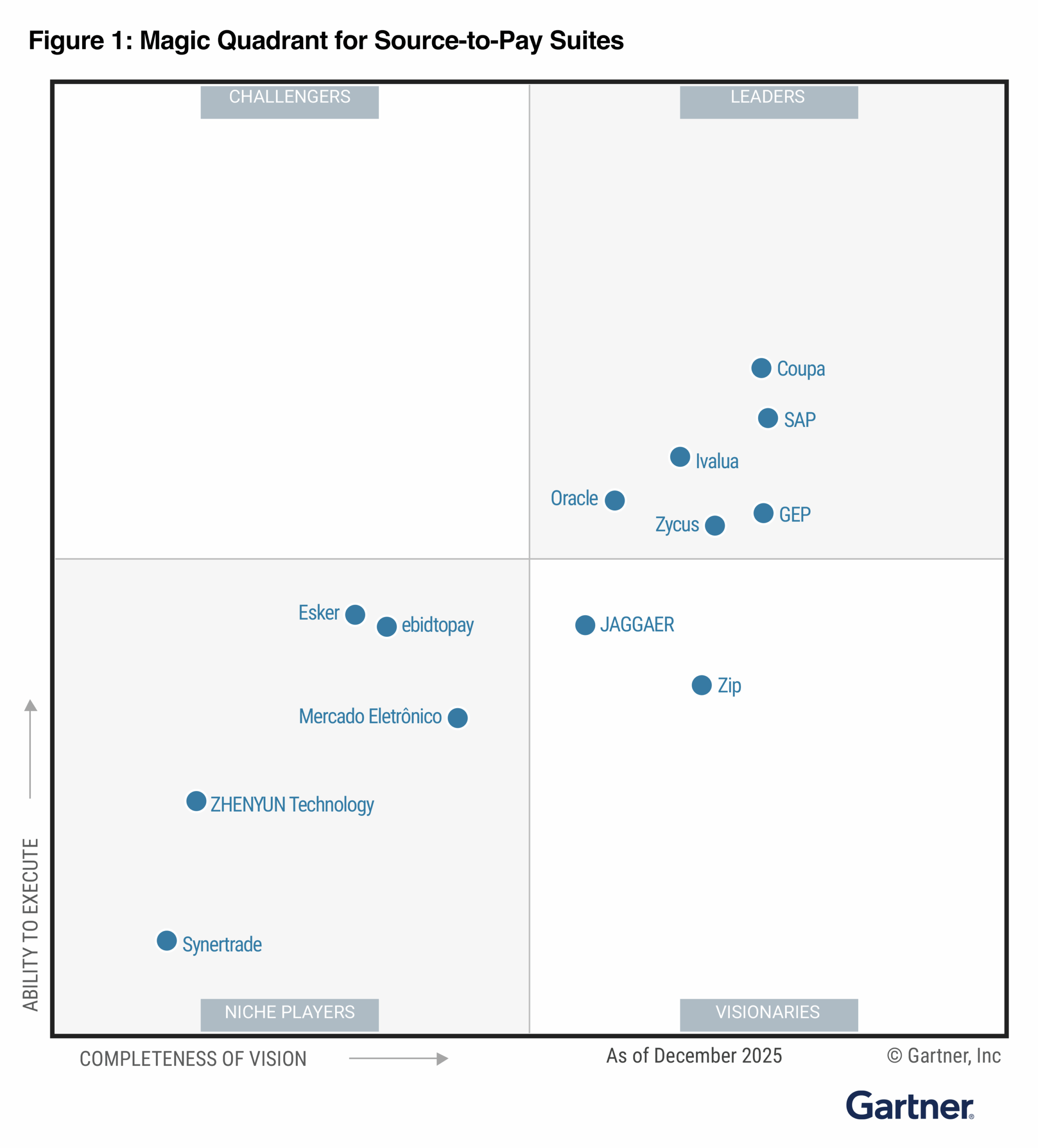
- Zycus eSourcing — Integrated RFx, eAuctions, scoring models, and AI insights that enhance competitive bidding and accelerate award decisions.
- SAP Ariba Sourcing — Global enterprise sourcing suite with strong supplier network connectivity.
- Coupa Sourcing Optimization — Known for complex bid optimization and multi-attribute cost modeling.
- GEP SMART Sourcing — Unified sourcing environment with planning and analytics.
- Jaggaer One Sourcing — Strong in higher education and manufacturing sourcing.
- Ivalua Sourcing — Highly configurable and suitable for complex enterprise environments.
FAQs
Q1. What is eSourcing in procurement?
eSourcing is the use of digital platforms to manage sourcing events — from RFx creation to bid evaluation and supplier award — in a structured, transparent, and data-driven way.
Q2. What is the difference between sourcing and eSourcing?
Traditional sourcing is manual and email-based; eSourcing is automated, governed, and auditable.
Q3. What tools are included in an eSourcing platform?
RFx modules, eAuctions, scoring engines, supplier discovery, analytics, and workflow automation.
Q4. What are the key benefits of eSourcing?
Higher savings, faster cycles, better compliance, improved competition, and more consistent decision-making.
Q5. When should you use an eAuction?
Whenever specifications are clear, multiple suppliers are available, and price competition can deliver value.
Q6. How does AI improve eSourcing?
By predicting supplier performance, identifying risky bids, optimizing auction strategies, and automating scoring.
Q7. Is eSourcing suitable for indirect categories?
Yes — it improves competition, enforces policy, and reduces tail-spend leakage across indirect spend categories.
References
For further insights into these processes, explore Zycus’ dedicated resources related to eSourcing:
- Jason Busch on history of eSourcing (a short video)
- Zycus Webinar: Advanced eSourcing –; Rising to the next level in sourcing automation
- 4 Key Procurement Objectives for 2014: Part 4 –; Benefits of eSourcing
- [SIG Webinar] Unleashing the Power of eSourcing
- Working towards TCO in a BoM structure – Part I: Common eSourcing limitations