



Amortization is an accounting method that spreads the cost of an intangible asset or a loan repayment over its useful life or repayment period, rather than recognising the full cost in a single period. In procurement, amortization most commonly applies to multi-year software licences, capitalised contract costs, and supplier financing arrangements where the commercial commitment extends beyond the period in which it was contracted. Understanding how a purchase will be amortised — and over what period — directly affects how procurement decisions appear in the P&L and on the balance sheet.
Why Amortization Matters in Procurement
Most procurement professionals are not accountants, but the procurement decisions they make drive how spend lands in the financial statements. A three-year SaaS contract paid annually looks different from a perpetual licence with annual maintenance — even if cash outflow is similar — because amortization treatment differs. A multi-year supplier prepayment may be amortised as a prepaid asset rather than expensed immediately. For category managers negotiating long-term agreements, understanding amortization is the bridge between commercial structure and financial impact — the difference between a deal finance supports and one that creates accounting headaches.
The Core Process of Amortization
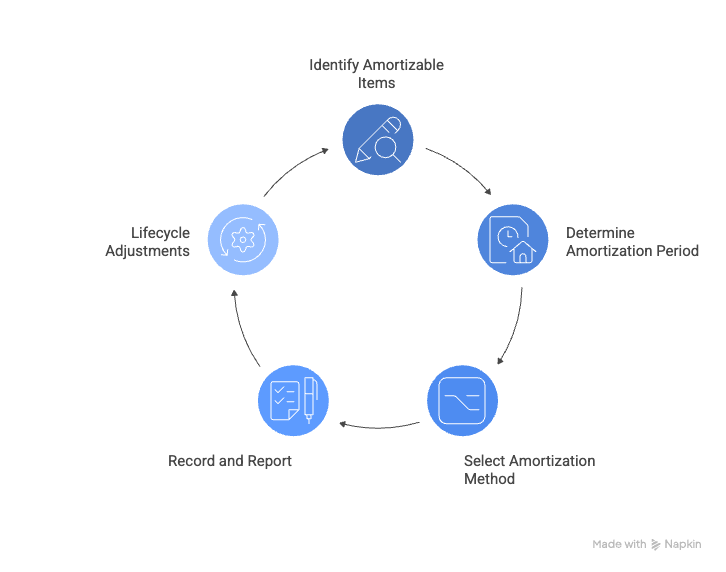
- Identifying What Gets Amortised. Not every procurement spend is amortised. The process begins by identifying which items qualify: capitalised software, multi-year prepayments, supplier financing arrangements, and certain capitalised implementation costs. Items that do not meet capitalisation criteria are expensed immediately.
- Determining the Amortization Period. The useful life or contractual term determines the period. A three-year software subscription is amortised over 36 months; a capitalised implementation cost over its expected benefit period. Setting the correct period requires alignment between procurement, IT, and finance — particularly for software where useful life and contract term can differ.
- Selecting the Amortization Method. Straight-line — equal expense each period — is the default for most software and contract costs. Accelerated methods may apply where value declines faster early in life. Method affects period-by-period expense recognition, not the total.
- Recording and Reporting. Each period, amortization expense is recorded against the asset balance, reducing carrying value on the balance sheet and recognising expense on the income statement. Procurement may not perform the journal entry but should understand its effect when reviewing total cost of ownership.
- Lifecycle Adjustments. Contract changes — early termination, scope expansion, renewal at different terms — can trigger amortization adjustments. Procurement involvement is critical so finance can update schedules rather than discovering changes at period close.
Core Components of Amortization
- Capitalisation criteria define which procurement spends qualify for amortization rather than immediate expensing — typically based on useful life thresholds, materiality, and the nature of the underlying right or benefit.
- Amortization schedule is the period-by-period record of how a capitalised cost will be expensed — the foundation document for finance and the reference point when procurement reviews total cost.
- Asset register integration connects procurement records to the financial asset register, ensuring that what was contracted aligns with what is being amortised — preventing the mismatches that surface at audit.
- Contract term and useful life alignment ensures that amortization periods reflect the commercial reality of the agreement — including renewal options, early termination provisions, and the period over which the organization will actually receive value.
Key Benefits of Amortization
- Aligns expense recognition with the period in which the organization receives value from the purchase, supporting accurate period-over-period financial comparison.
- Smooths the P&L impact of large procurement commitments, avoiding the expense spikes that would otherwise distort budget performance.
- Creates a structured view of long-term procurement commitments on the balance sheet, supporting capital planning and audit readiness.
- Enables more accurate total cost of ownership analysis by surfacing the full multi-year cost profile of a procurement decision.
Common Pitfalls of Amortization
- Confusing amortization with depreciation. Both spread cost over time, but depreciation applies to tangible assets (equipment, vehicles) while amortization applies to intangibles (software, contracts) and loans. The distinction matters for how items are categorised and reported.
- Setting the amortization period incorrectly. Using the contract term when useful life is shorter, or vice versa, distorts period-over-period expense. Procurement should flag the underlying useful life to finance, who sets the policy.
- Treating amortised costs as non-cash and ignoring them. Amortization is non-cash in the period it is recorded, but the cash was paid at acquisition. Treating it as free reverses the entire purpose of cost allocation.
- Failing to update amortization when contracts change. Early termination, scope changes, or significant renewals affect amortization schedules. Procurement must notify finance of material contract changes so the asset register stays accurate.
When Procurement Decisions Trigger Amortization Considerations
- Multi-year software contracts. SaaS and on-premise software with terms beyond one year typically involve amortization decisions — particularly around capitalised implementation costs and prepaid subscription fees.
- Capitalised contract costs. Significant costs incurred to obtain or fulfil a contract — commissions, set-up costs — may be capitalised and amortised over the contract term under modern revenue and cost recognition standards.
- Supplier prepayments and financing. Prepayments for future goods or services, or supplier financing with deferred payment terms, may be treated as amortisable assets or liabilities depending on structure.
- Equipment with bundled services. Deals bundling equipment (depreciable) with multi-year services or licences (amortisable) require careful structuring to ensure correct accounting treatment of each component.
- Acquired intangibles. Customer lists, patents, trademarks, and other intangibles acquired through procurement-led transactions are amortised over their useful lives.
KPIs of Amortization
| Dimension | Sample KPIs |
| Accuracy | % of capitalised procurement spend with correct amortization treatment, audit adjustments related to procurement contracts |
| Process Discipline | % of material contract changes notified to finance within SLA, time to update amortization schedule after contract event |
| Visibility | % of long-term contracts with documented total cost including amortization impact |
| Compliance | Audit findings on procurement-driven amortization items |
Key Terms in Amortization
- Capitalisation: Recording a cost as an asset on the balance sheet rather than expensing it immediately — the prerequisite for amortization.
- Useful Life: The period over which an asset or capitalised cost is expected to provide benefit — used to determine the amortization period.
- Straight-Line Amortization: A method that spreads cost evenly across the amortization period — the default for software and contract-related costs.
- Depreciation: The equivalent of amortization, applied to tangible assets such as equipment or property rather than intangibles or loans.
- Carrying Value: The remaining balance of an amortised asset on the balance sheet after amortization to date has been recognised.
- Prepaid Expense: A payment made in advance for goods or services to be received in future periods — expensed over the period of benefit.
Technology Enablement
Modern Source-to-Pay platforms integrate with finance systems to ensure procurement contracts with amortization implications — multi-year software, capitalised costs, prepayments — flow into the asset register with the right metadata. Contract lifecycle management modules track renewal dates, scope changes, and termination events that trigger amortization adjustments, keeping procurement actions visible to finance in time to maintain accurate reporting.
FAQs
Q1. What is amortization in procurement context?
The spreading of a procurement-related cost — typically software, multi-year contract costs, or supplier prepayments — over the period during which the organization receives benefit, rather than expensing it all upfront.
Q2. What is the difference between amortization and depreciation?
Amortization applies to intangible assets and loans; depreciation applies to tangible assets such as equipment and property. The mechanics are similar; the categorisation differs.
Q3. Does every multi-year procurement contract get amortised?
No. Whether a cost is amortised depends on accounting policy and the nature of the right or benefit acquired. Operating expenses tied to ongoing service consumption may be expensed as incurred.
Q4. Why should procurement understand amortization?
Because procurement decisions determine how spend lands in the financial statements. Understanding amortization helps procurement structure deals that align with finance’s reporting and total cost of ownership view.
Q5. What happens to amortization when a contract is terminated early?
The remaining carrying value may need to be expensed immediately, or the schedule adjusted, depending on circumstances. Early termination is a finance event procurement must trigger.
References
For further insights into these processes, explore Zycus’ dedicated resources related to Amortization:
- Why Automated 3 Way Matching in Accounts Payable is the Key to Success?
- Transforming Procurement: The Power of AI-Powered Supplier Management Solutions
- ‘Change’ just a word or a constant?
- Manufacturing Supply Chains in the COVID era: What to do now & next?
- Mastering Spend Analysis with Zycus’ Spend Visualization Tool
- What is OEM Procurement?










