


Source to Pay (S2P) software is an integrated technology platform that automates and connects the end-to-end procurement process from supplier sourcing and contract management through to purchasing and invoice payment. It brings together capabilities that were historically managed in separate systems — sourcing, supplier management, contract management, procurement, and accounts payable — into a unified environment with shared data, consistent workflows, and end-to-end spend visibility. S2P software is the primary technology investment through which procurement functions digitize and scale their operations.
Why Source To Pay (S2P) Software Matters in Procurement
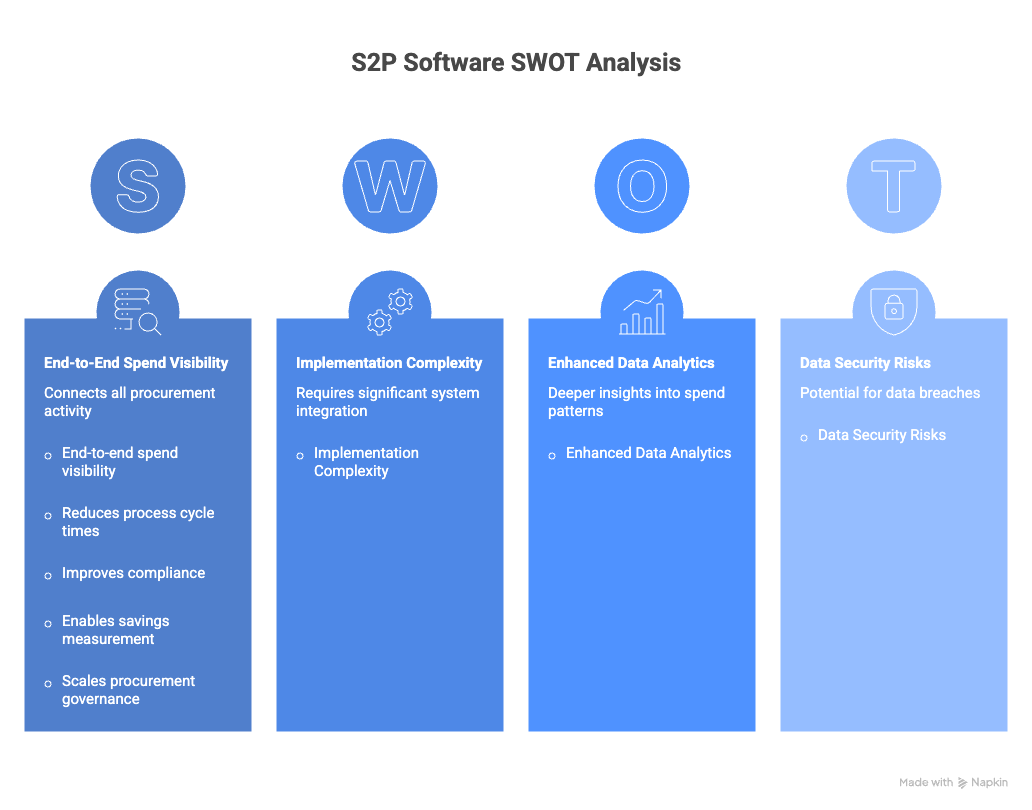
Procurement functions operating across disconnected tools — separate e-sourcing, contract, ERP, and AP systems — face data fragmentation, process inefficiency, and limited visibility that constrain their ability to manage spend strategically. S2P software solves this by creating a single, integrated environment for all procurement activity. Category managers gain end-to-end process control; finance gains real-time spend visibility; compliance teams gain documented audit trails; and leadership gains the reporting needed to measure procurement’s contribution to organizational performance.
Read more: Source to Pay (S2P): A Complete End-to-End Procurement Guide
The Core Process of Source To Pay (S2P) Software
- Sourcing and Supplier Selection: S2P platforms manage competitive sourcing events — RFI, RFP, RFQ, and e-auctions — within the same environment as supplier qualification and onboarding. Supplier responses are evaluated against configurable criteria, and award decisions are documented with a complete audit trail.
- Contract Management: Awarded contracts are created, stored, and managed within the platform. Key dates, obligations, and performance metrics are tracked. Alert workflows notify stakeholders of upcoming renewals, expiry dates, and compliance requirements.
- Procurement and Order Management: Approved suppliers and contracted pricing are surfaced to buyers through catalogues and guided buying interfaces. Purchase requisitions are raised, routed through configurable approval chains, and converted to purchase orders within the platform.
- Invoice Processing and Payment: Supplier invoices are received, matched against purchase orders and goods receipts, and processed through approval workflows before payment. Exceptions are flagged and resolved within the system. Payment data flows to ERP or financial systems.
Core Components of Source To Pay (S2P) Software
- e-Sourcing module manages competitive sourcing events, supplier bid collection, evaluation scoring, and award decisions in a structured, auditable environment.
- Supplier management module handles supplier onboarding, qualification, risk monitoring, performance tracking, and relationship management across the active supply base.
- Contract management module stores executed contracts, tracks key dates and obligations, manages amendments, and alerts stakeholders to renewal and compliance events.
- Procure-to-pay module covers purchase requisitions, order management, goods receipt, invoice processing, and payment — the transactional backbone of day-to-day procurement.
Common Pitfalls of Source To Pay (S2P) Software
- Selecting a platform without assessing integration requirements: S2P software must integrate with ERP, financial systems, and supplier data sources. Platforms that cannot connect to the organization’s existing technology landscape create new silos rather than resolving them.
- Underestimating change management requirements: Technology deployment is typically the simpler part of S2P implementation. Driving user adoption, process redesign, and supplier onboarding to the new platform requires sustained change management investment.
- Deploying the full platform scope simultaneously: Organizations that attempt to go live with all S2P modules at once frequently experience delays and adoption failures. A phased implementation starting with the highest-value modules reduces risk.
- Treating implementation as a one-time project: S2P platforms require ongoing configuration, user training, and capability development as the organization’s needs evolve. Treating go-live as completion rather than as the beginning of a continuous improvement program limits long-term value realization.
Example Source To Pay (S2P) Software
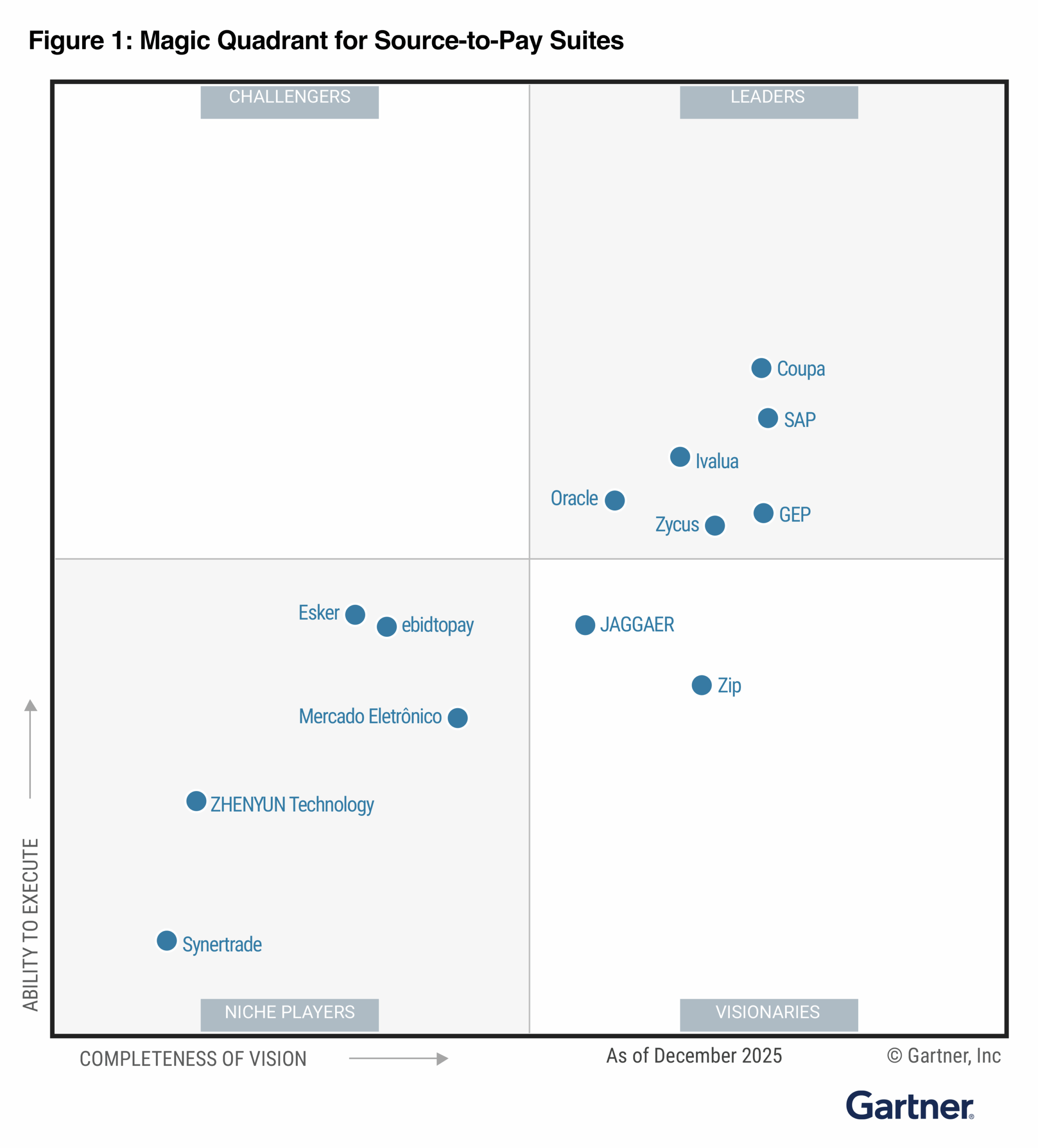
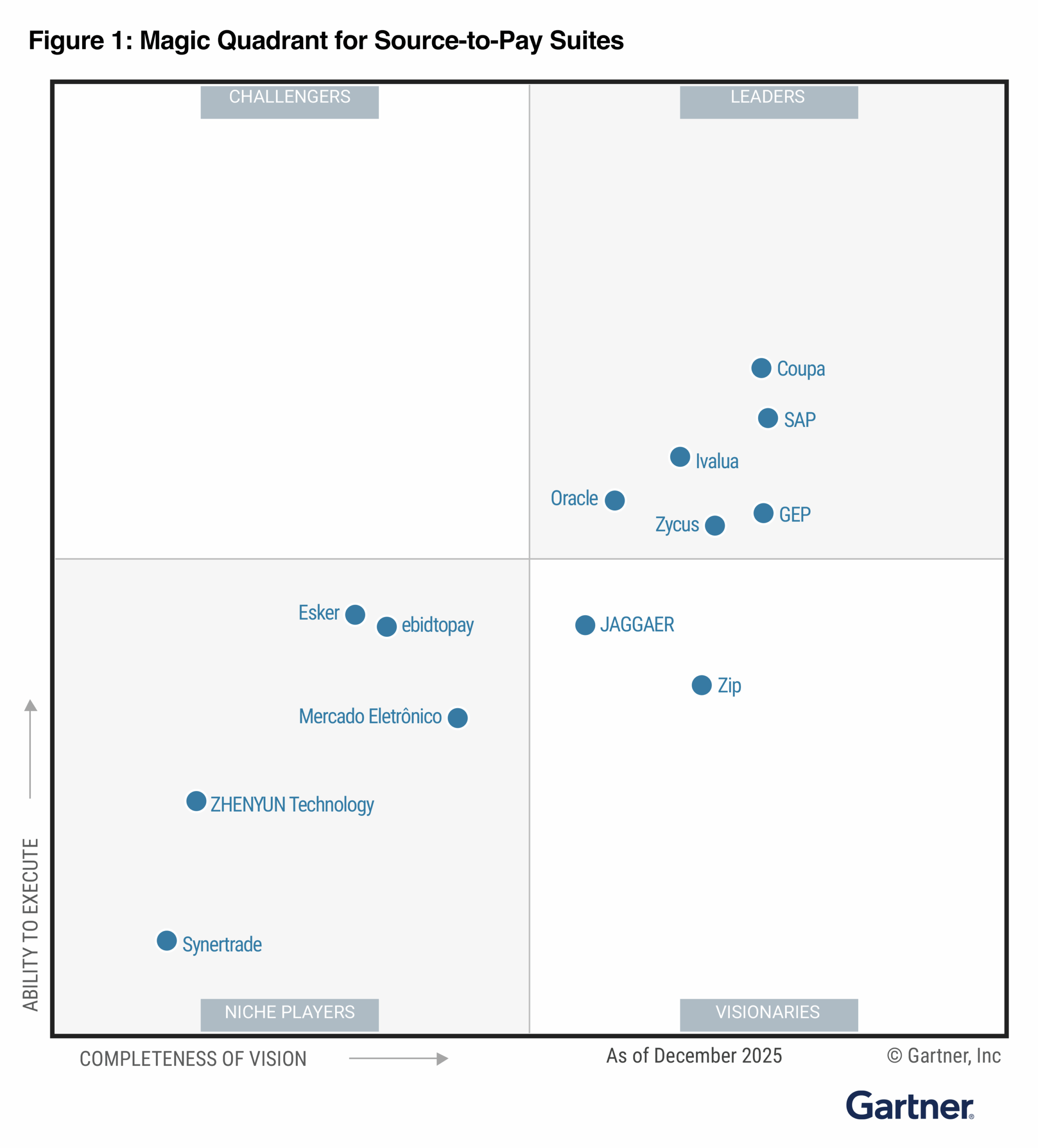
- Zycus. AI-powered S2P suite with integrated agentic AI capabilities across sourcing, contracts, supplier management, and procure-to-pay, with strong intake-to-outcomes coverage.
- SAP Ariba: Enterprise-grade S2P platform with deep ERP integration and broad global adoption, strongest in large, complex organizations with SAP financial systems.
- Coupa: Cloud-native S2P suite with strong user experience design, high adoption rates, and broad coverage across sourcing, contracts, purchasing, and AP.
- Jaggaer. Comprehensive S2P platform with deep category management and supplier collaboration capability, particularly strong in manufacturing and research-intensive industries.
- Ivalua. Highly configurable S2P platform known for its flexible data model, strong supplier management capability, and ability to handle complex procurement requirements.
KPIs of Source To Pay (S2P) Software
| Dimension | Sample KPIs |
| Platform Adoption | % of procurement spend processed through S2P, user adoption rate by module |
| Process Efficiency | Sourcing cycle time, PO-to-invoice cycle time, touchless invoice rate |
| Compliance | % of spend through approved channels, contract coverage rate |
| Value Delivery | Savings captured through platform, ROI on S2P investment |
Key Terms in Source To Pay (S2P) Software
- Source-to-Pay (S2P): The end-to-end procurement process from supplier sourcing through contract management, purchasing, and invoice payment.
- Procure-to-Pay (P2P): The operational subset of S2P covering purchase requisition through invoice payment — the transactional buying cycle.
- e-Sourcing: Technology-supported competitive sourcing events including RFx processes and electronic auctions.
- Touchless Invoice: An invoice processed entirely through automated matching and approval without manual intervention.
- Spend Under Management (SUM): The proportion of total organizational spend actively governed through S2P platform processes and controls.
- Guided Buying: A platform feature that directs users toward approved suppliers and contracted items at the point of purchase, supporting compliance without requiring manual enforcement.
Technology Enablement
Modern S2P platforms are evolving beyond process automation toward AI-powered intelligence — embedding spend classification, contract analysis, supplier risk monitoring, and demand prediction within the procurement workflow. Organizations that treat S2P as an active capability investment, continuously expanding adoption and leveraging new platform capabilities, consistently outperform those that treat implementation as a one-time project.
FAQs
Q1. What is Source-to-Pay software?
An integrated platform that connects and automates the end-to-end procurement process from sourcing and supplier management through purchasing and invoice payment.
Q2. What is the difference between S2P and P2P software?
S2P covers the full procurement cycle including strategic sourcing, contracts, and supplier management. P2P covers the operational subset from purchase requisition through payment.
Q3. Does S2P software replace ERP?
No. S2P platforms complement ERP systems by providing procurement-specific capabilities and user interfaces, with financial records maintained in ERP.
Q4. What should organizations prioritize when selecting S2P software?
Functional coverage of priority process areas, integration capability with existing systems, user experience, configurability, vendor stability, and total cost of ownership.
Q5. How long does S2P implementation typically take?
Six to eighteen months for a phased implementation, depending on organizational complexity, module scope, integration requirements, and change management maturity.
Q5. How is S2P adoption measured?
Primarily through spend under management — the proportion of total procurement spend processed through the platform — and user adoption rates by module.
Q6. What is guided buying and why does it matter?
Guided buying directs users to approved suppliers and contracted items at the point of purchase, improving compliance without relying on policy enforcement alone.
References
For further insights into these processes, explore Zycus’ dedicated resources related to Source To Pay (S2P) Software:
- Automate Your Supplier Management Processes for Better Financial Performance
- Navigating Efficiency with Tail Spend Management Solutions
- 6 Common Mistakes You Shouldn’st Make In Your Spend Management Strategy
- Moving Procurement to the cloud for resilient and efficient operations
- In Talks with Zycus: CB&I Supply Chain Transformation Journey