Negotiation styles refer to the characteristic approaches individuals and organizations use when conducting commercial discussions with suppliers, contractors, and other business partners. In procurement, understanding negotiation styles helps buyers adapt their tactics to different supplier relationships, contract types, and business objectives. The most effective procurement professionals recognize their natural tendencies and deliberately adjust their approach based on what each negotiation situation requires to achieve optimal outcomes.
Read more: A Quarter Century of Procurement Negotiation Strategies: A Retrospective
Why Negotiation Styles Matter in Procurement
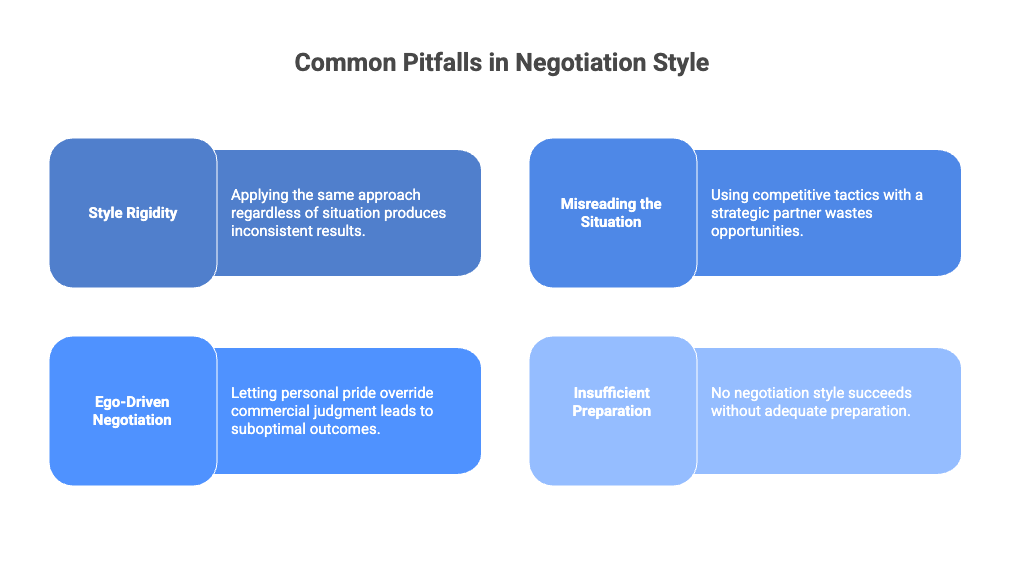
Negotiation outcomes directly impact procurement’s contribution to organizational value. The wrong style applied to a given situation can damage supplier relationships, leave money on the table, or create contracts that fail to protect organizational interests adequately. A competitive approach with a strategic supplier may undermine long-term collaboration potential, while an overly accommodating stance with a commodity vendor may result in unfavorable pricing and terms. Procurement teams that develop style awareness and adaptability consistently achieve better commercial outcomes while maintaining the productive supplier partnerships essential for supply chain success.
The Core Process of Negotiation Styles
Effective style application begins with situation assessment. Before entering any negotiation, procurement professionals analyze the relationship context, power dynamics, strategic importance, and desired outcomes to determine which approach will be most effective for the specific circumstances.
Preparation follows, where negotiators develop their strategy, identify key issues, establish targets and limits, and anticipate supplier positions and likely responses. Style selection influences how arguments are framed, what tactics will be employed, and how concessions will be managed.
During the negotiation itself, skilled practitioners monitor the dynamic and adjust their approach as needed. A supplier’s unexpected flexibility might warrant shifting from competitive to collaborative, while resistance on critical terms may require more assertive positioning to protect organizational interests.
Read more: 10 Key Elements of a High-Performing Direct Procurement Strategy
Post-negotiation review examines what worked and what did not in the approach taken. This reflection builds style awareness and improves future negotiations by identifying patterns in how different approaches produced different results across various situations.
Core Components of Negotiation Styles
Competitive negotiation focuses on maximizing value for the buyer, often through assertive positioning, leverage application, and firm stances on key terms. This approach works well for transactional purchases where relationship continuity is less important than immediate cost outcomes.
Collaborative negotiation seeks mutually beneficial outcomes through open information sharing, joint problem-solving, and creative deal structuring. This style suits strategic relationships where long-term value creation matters more than extracting short-term gains from individual transactions.
Accommodating approaches prioritize relationship preservation over immediate commercial outcomes. While risky if overused, accommodation can be appropriate when maintaining supplier goodwill is more valuable than winning specific concessions on minor issues.
Avoiding behavior postpones or deflects negotiation, which may be tactical when timing is unfavorable or counterproductive when it prevents necessary commercial discussions from occurring at appropriate times.
Compromising seeks middle-ground solutions through mutual concessions. This efficient approach works when time pressure exists, and both parties have reasonable positions worth preserving rather than forcing win-lose outcomes.
Key Benefits of Negotiation Styles
- Improved commercial outcomes. Style-appropriate negotiation extracts more value while protecting critical organizational interests effectively.
- Relationship preservation. Matching approach to relationship importance prevents unnecessary damage to valuable strategic partnerships.
- Faster resolution. Recognizing when to compete versus collaborate reduces unproductive posturing and accelerates agreement.
- Team effectiveness. Style awareness enables better negotiator selection and role assignment for complex multi-party deals.
- Risk mitigation. Understanding supplier negotiation styles helps anticipate their tactics and prepare appropriate counter-responses.
Matching Style to Situation
- Competitive situations. One-time purchases, commoditized categories, strong buyer leverage, or when protecting non-negotiable requirements from compromise.
- Collaborative situations. Strategic supplier relationships, complex requirements, innovation partnerships, or when both parties have significant value to exchange.
- Compromising situations. Time-pressured negotiations, roughly equal power positions, or when both parties have valid positions worth preserving in the final agreement.
- Accommodating situations. Minor issues not worth relationship strain, goodwill building before major negotiations, or when supplier expertise significantly exceeds buyer knowledge.
- Avoiding situations. Premature negotiations before requirements are clear, or when better timing, information, or alternatives will emerge soon.
KPIs of Negotiation Styles
| Dimension | Sample KPIs |
| Outcome Quality | Savings achieved, terms improved, value captured versus targets |
| Relationship Health | Post-negotiation supplier satisfaction, ongoing collaboration quality |
| Efficiency | Time to agreement, number of negotiation rounds required |
| Sustainability | Contract compliance rates, renegotiation frequency, dispute occurrence |
Technology Enablement
Modern procurement platforms support negotiation effectiveness through spend analytics that inform leverage positions, historical deal data for benchmarking outcomes, and collaboration tools that coordinate team strategies. Advanced tools provide negotiation playbooks and systematic outcome tracking to build organizational capability over time.
Key Terms in Negotiation Styles
- BATNA: Best Alternative to Negotiated Agreement—the fallback option available if negotiation fails.
- ZOPA: Zone of Possible Agreement—the range where both parties’ acceptable terms overlap.
- Distributive Negotiation: Win-lose bargaining over fixed resources, characteristic of competitive styles.
- Integrative Negotiation: Win-win problem-solving that expands total value, characteristic of collaborative styles.
- Anchoring: The tactic of establishing an initial position that influences the subsequent negotiation range.
- Concession Pattern: The sequence, timing, and size of compromises made during negotiation discussions.
FAQs
Q1. What negotiation style is best for procurement?
No single style is universally best—effective negotiators adapt their approach based on relationship importance, leverage, and specific objectives.
Q2. Can negotiation styles be learned?
Yes. While people have natural tendencies, training, practice, and deliberate feedback develop range and situational adaptability.
Q3. How do I identify a supplier’s style?
Observe their preparation depth, information sharing willingness, response to pressure, and how they handle concessions throughout discussions.
Q4. Should teams use consistent styles?
Teams should align on overall strategy, though individual members may play different roles within a coordinated approach.
Q5. When is competitive negotiation appropriate?
Use competitive approaches for commodities, transactional purchases, or when relationship continuity is not strategically important.
Q6. How do cultural factors affect styles?
Negotiation norms vary significantly across cultures. International deals require understanding and adapting to these differences.
References
For further insights into these processes, explore Zycus’ dedicated resources related to Negotiation Styles:
- Advanced Features of Generative AI in Procurement: Boost Efficiency and Reduce Costs
- Automating Supplier Compliance Checks with AI-Powered Intake Systems
- Why Conversational AI Tools Will Make You Rethink Your Procurement Strategies
- Is Collaborative Sourcing the Next Supply Chain Accelerator?
- Mastering Spend Analysis with Zycus Spend Visualization Tool