



WHAT IS EVALUATED RECEIPT SETTLEMENT (ERS) / SELF-BILLING?
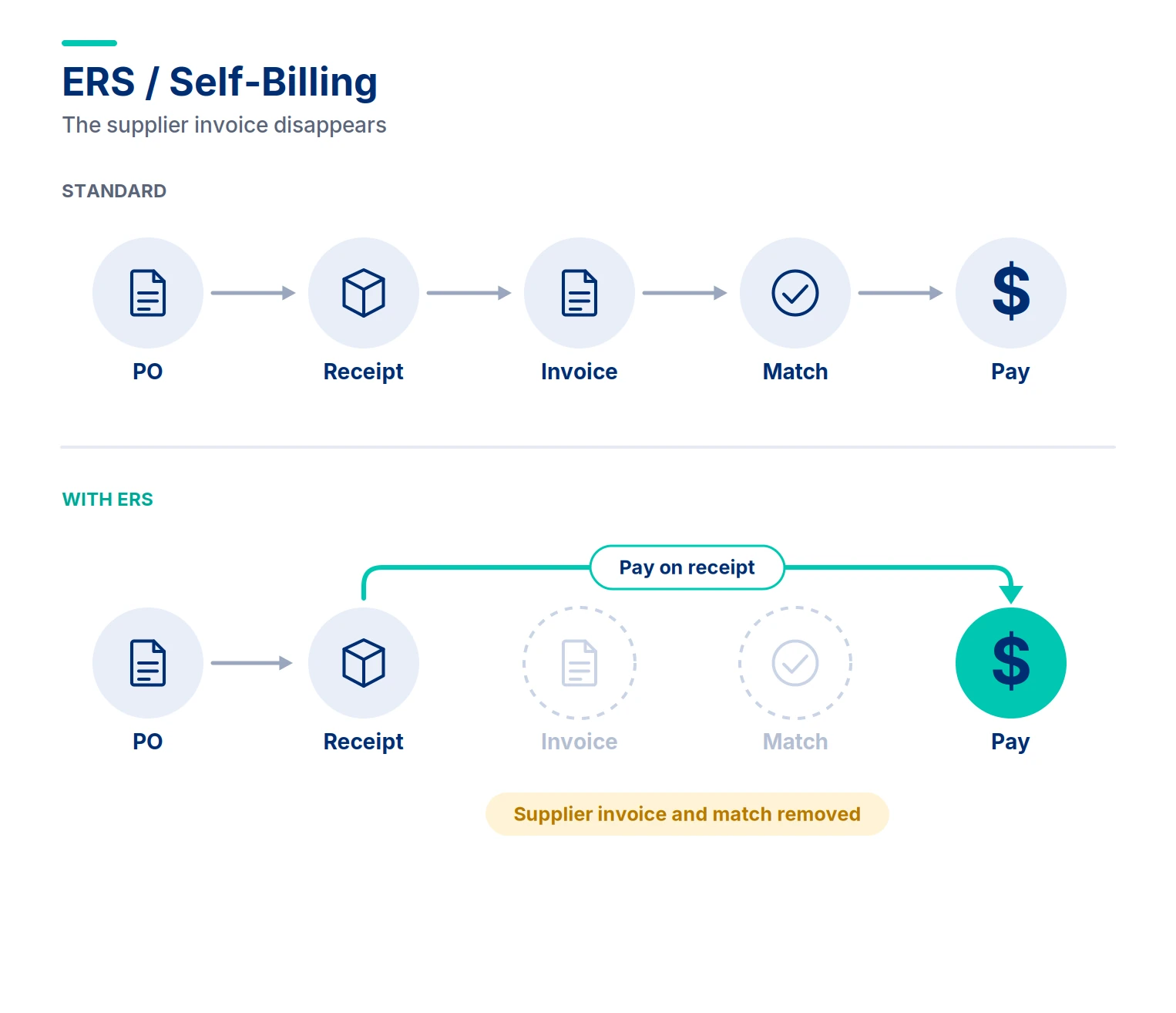
Evaluated Receipt Settlement (ERS) is a payment method where the buyer pays a supplier from the purchase order price and the confirmed goods receipt, with no supplier invoice. It is closely related to self-billing, where the buyer prepares the invoice for the supplier, and the two terms are often used together.
WHY IT MATTERS IN PROCUREMENT
Invoices are a major source of cost and delay in accounts payable. Each one has to be received, keyed, matched and corrected when it is wrong. ERS removes that step for suppliers where price and quantity are already settled, so payment follows delivery.
It works because the facts an invoice would restate already exist in the buyer’s system. The PO sets the price and the receipt sets the quantity. The saving is real, but only where those two records are accurate and trusted by both sides.
THE CORE PROCESS / LIFECYCLE
- Supplier Agreement. Buyer and supplier agree in writing to settle by ERS, including pricing, payment terms and how errors are handled. Tax rules in many countries require a prior agreement before self-billing is allowed.
- Purchase Order Issue. The buyer issues a PO carrying the agreed unit price, quantity and terms. This is the price record that will drive payment.
- Delivery and Receipt. The supplier delivers and the buyer records a goods receipt or service confirmation. The receipt becomes the quantity record.
- Automatic Settlement. The system multiplies receipt quantity by PO price and creates the payment document, usually with an invoice document issued on the supplier’s behalf. No supplier invoice is keyed or matched.
- Supplier Notification. The supplier receives the settlement details, often through a portal or EDI, and can query any difference.
- Exception Handling. Receipts that look wrong, such as quantities above the PO or missing receipts, are held for review and resolved before payment is released. Returned goods generate a credit memo in the next settlement run.
CORE COMPONENTS
The supplier agreement gives the legal and commercial basis for self-billing. PO pricing supplies the price used for payment, and the goods receipt supplies the quantity. Settlement logic multiplies the two and applies tax and payment terms. Exception rules hold anything that does not fit, and supplier visibility lets suppliers see and challenge what will be paid.
KEY BENEFITS
ERS removes invoice handling for the suppliers it covers, so there is no keying, matching or chasing of missing invoices. Payment follows receipt quickly, which suppliers value. Price and quantity disputes fall because the PO and receipt are the only records in play. Supplier invoice errors are removed, so accuracy depends on receipts and PO prices. And accounts payable staff spend their time on exceptions, not routine documents.
COMMON PITFALLS
- Using ERS without reliable receipts. If goods receipts are late or wrong, the buyer pays the wrong amount automatically.
- Skipping the written agreement. Self-billing without agreed terms can breach tax rules and invite supplier disputes.
- Applying it to every supplier. Suppliers with variable pricing, freight or changing terms do not fit.
- Not telling suppliers what was paid. Without settlement details, suppliers cannot spot mistakes or reconcile.
CONDITIONS TO MEET BEFORE SWITCHING TO ERS
- Stable prices. The PO or contract price must be agreed and fixed, with no regular adjustments at invoice time.
- Reliable receipts. Goods receipts need to be recorded promptly and accurately by the people who see the delivery.
- Clean master data. Supplier tax and bank details and units of measure must be correct, because nothing is rechecked on an invoice.
- A signed agreement. Both parties accept ERS terms in writing, including tax treatment and dispute handling.
- An exception path. A clear route for supplier queries and corrections exists before the first automatic payment.
KPIs
| Dimension | Sample KPIs |
| Coverage | Spend settled by ERS; suppliers on ERS |
| Accuracy | Settlement error rate; supplier queries per 100 settlements |
| Speed | Receipt to payment time; invoice handling time saved |
| Control | Receipts held for exception; exceptions resolved on time |
KEY TERMS
- Self-Billing. An arrangement where the buyer prepares the invoice on the supplier’s behalf.
- Goods Receipt. A record of what was actually delivered, used as the quantity for payment.
- Three-Way Match. A check of the PO, receipt and invoice before payment, which ERS replaces for covered suppliers.
- Settlement Document. The buyer-generated record of what is being paid and why.
- Self-Billing Agreement. The written agreement that lets the buyer issue invoices for the supplier.
- Unit of Measure. The unit used for quantity and price, such as each or kilogram.
- Pay on Receipt. A payment trigger that releases payment once delivery is confirmed.
FAQs
1. What is Evaluated Receipt Settlement (ERS) in procurement?
Evaluated Receipt Settlement (ERS) is an automated payment process where buyers pay suppliers based on agreed purchase order prices and confirmed goods receipts without requiring supplier-issued invoices. Also called pay-on-receipt, ERS eliminates routine invoice submission and matching activities. It helps procurement and accounts payable teams reduce manual processing, improve payment accuracy, and accelerate supplier settlements when pricing and delivery records are reliable.
2. How does the Evaluated Receipt Settlement (ERS) process work?
The ERS process begins with a supplier agreement and an approved purchase order containing agreed prices and payment terms. When goods are delivered, the buyer records the received quantity. The system automatically calculates the settlement amount using the purchase order price and confirmed receipt, then generates the necessary payment documentation. Suppliers receive settlement details for reconciliation, while discrepancies are handled through an exception management process.
3. What is the difference between ERS and self-billing?
Evaluated Receipt Settlement (ERS) and self-billing are closely related but serve different purposes. ERS automatically calculates supplier payments using purchase order prices and confirmed goods receipts, eliminating the need for supplier-issued invoices. Self-billing is an arrangement where the buyer generates an invoice on the supplier’s behalf. Many procurement systems combine both approaches to automate settlement while meeting applicable invoicing and tax requirements.
4. How is ERS different from traditional three-way invoice matching?
Traditional three-way matching compares a purchase order, goods receipt, and supplier invoice before approving payment. Evaluated Receipt Settlement removes the supplier invoice from this process and calculates payment directly from the purchase order and confirmed receipt. This eliminates routine invoice matching and reduces administrative workload. However, ERS requires accurate purchase order pricing, reliable receipt records, and effective exception controls to prevent incorrect payments.
5. Which suppliers are best suited for Evaluated Receipt Settlement?
ERS is best suited for suppliers with stable pricing, frequent deliveries, predictable purchasing arrangements, and reliable goods receipt processes. Common use cases include recurring purchases of standardized materials or products with agreed unit prices. Suppliers with variable pricing, complex freight charges, or frequent contract changes may be less suitable. Procurement teams should evaluate pricing consistency, transaction volumes, receipt accuracy, and supplier readiness before implementing ERS.
6. What are the key requirements for implementing ERS and self-billing?
Implementing ERS requires accurate purchase order pricing, reliable goods receipts, clean supplier master data, and an agreed settlement process. Buyers and suppliers should establish written agreements covering payment terms, tax treatment, and dispute resolution. Self-billing arrangements must also comply with applicable country-specific tax regulations. Organizations should configure automated settlement rules, validate supplier information, and establish exception handling procedures before processing payments.
7. What are the main risks of ERS, and how can businesses prevent payment errors?
The main ERS risks include incorrect goods receipts, outdated purchase order prices, inaccurate supplier information, and missing self-billing agreements. Because settlements occur automatically, inaccurate records can trigger incorrect payments. Businesses can reduce these risks through receipt validation, purchase order controls, supplier master data reviews, and automated exception handling. Providing suppliers with settlement statements and clear dispute procedures also helps identify discrepancies and resolve payment errors.