



What is a notice of award?
A notice of award is a formal written notification from a buyer to the successful bidder that it has been selected to win a contract, usually subject to final terms. It marks the end of evaluation and the start of contracting. In public procurement, it often triggers a standstill or challenge period.
Why it matters in procurement?
The notice of award is the point where a sourcing decision becomes official. It gives the winner confidence to prepare resources, tells the market the outcome, and starts the clock on the steps that follow, such as negotiation of final terms, onboarding and, where rules require, a waiting period for challenges.
A badly worded notice causes real problems. If it reads as a binding contract, a buyer may be held to terms it has not finalized. If it is vague or late, bidders chase for updates and trust falls. A clear notice protects both sides and keeps the award defensible under audit or challenge.
The core process / lifecycle
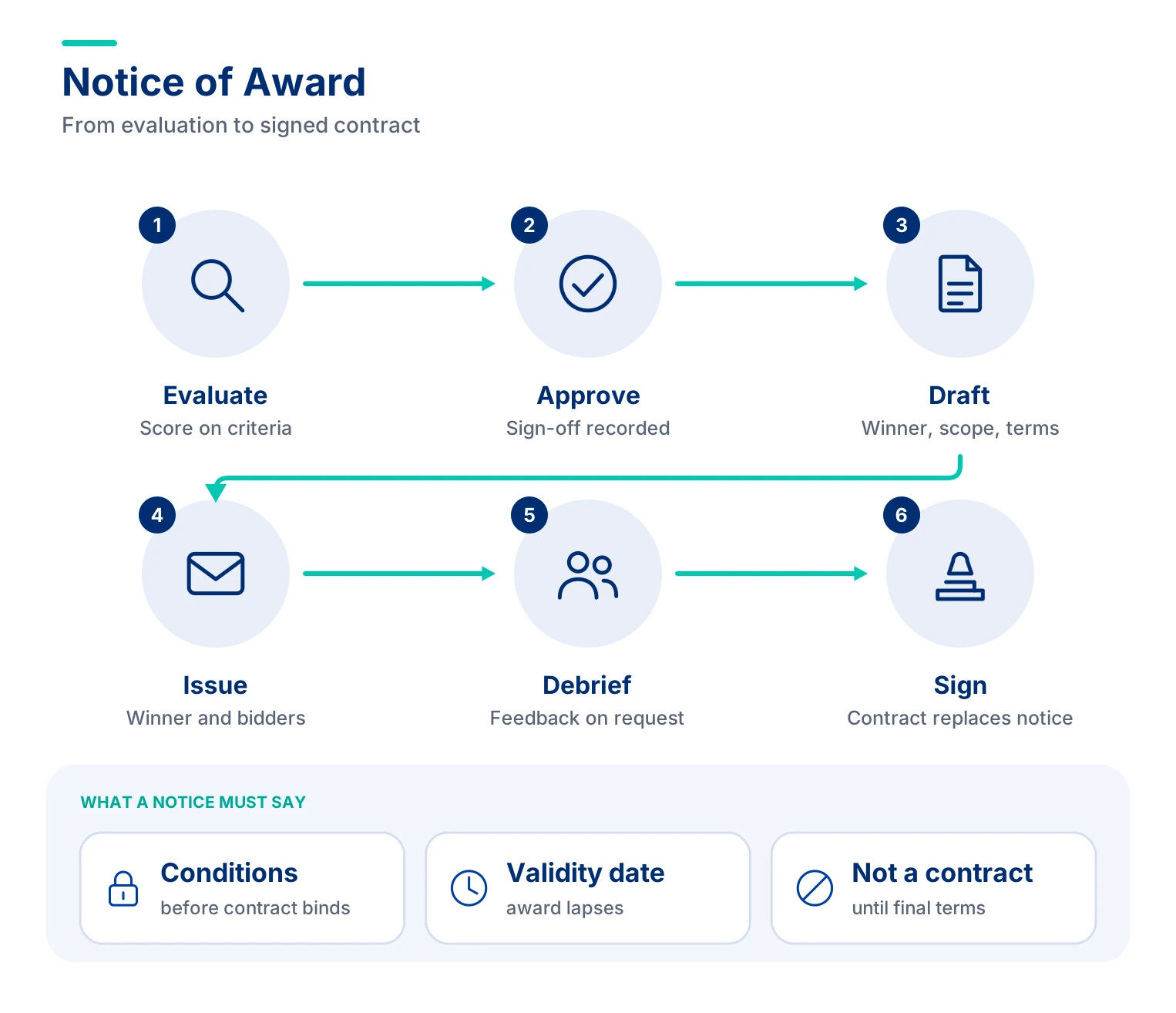
- Complete Evaluation. The evaluation team finishes scoring against the published criteria and records the reasons for its recommendation.
- Approve the Award. The decision is approved under the delegation of authority, with any required legal, finance or board sign-off recorded.
- Draft the Notice. Procurement prepares the notice, stating the winner, scope, conditions and next steps, and reviews it with legal.
- Issue to Bidders. The winner receives the notice. Unsuccessful bidders are told the outcome, and in public procurement any required standstill period starts.
- Debrief Unsuccessful Bidders. Bidders who ask receive feedback on their bid, which reduces disputes and improves future bids.
- Finalize and Sign. After any standstill, the parties agree final terms and sign the contract, which replaces the notice.
Core components
- Award details name the winning supplier, the scope and the price or price basis.
- Conditions state what must happen before the contract is binding, such as agreement of terms, insurance, due diligence or approvals.
- Validity period sets how long the award stands.
- Next steps give dates, contacts and required documents.
- Unsuccessful bidder notices explain the outcome and how to request feedback, and where rules require, set out challenge rights.
Read More About Supplier and Market Intelligence Key drivers in Procurement Strategy
Key benefits
A clear notice shortens the gap between decision and contract by telling the winner exactly what remains to be done. It gives suppliers certainty to plan capacity and to commit to mobilization.
It creates an audit record of when the decision was made and on what basis, which supports fairness and compliance. Consistent notices also improve bidder experience, so suppliers keep responding to future tenders. In regulated procurement, issuing the notice correctly protects the buyer from avoidable challenge.
Common pitfalls
- Making the notice sound like a contract. Without conditions, the supplier may argue a binding agreement exists on the buyer’s draft terms.
- Issuing it before final approval. A notice that is later withdrawn damages trust and can create claims for wasted costs.
- Skipping unsuccessful bidder notices. Silence leads to chasing and complaints, and in public procurement it can breach rules.
- Leaving out an expiry date. Open-ended offers leave the buyer unable to move to the next bidder if the winner stalls.
What a notice of award should contain?
Most notices use the same fields. Legal should review the wording for each buyer and jurisdiction.
| Field | What to include |
| Reference and date | Tender reference, notice date and the name of the buying organization |
| Winning supplier | Legal name and address of the selected supplier |
| Scope and value | Summary of goods or services and the price or pricing basis |
| Conditions | Items to complete before contract, such as terms, insurance and approvals |
| Validity | Date until which the award stands if conditions are not met |
| Next steps | Contacts, timeline and documents the supplier must provide |
| Status statement | Wording that the notice is not itself a binding contract |
KPIs
| Dimension | Sample KPIs |
| Speed | Days from evaluation close to notice; days from notice to signed contract |
| Quality | Notices reviewed by legal before issue; notices with conditions and expiry |
| Communication | Unsuccessful bidders notified within target; debriefs completed |
| Risk | Awards challenged; awards withdrawn after notice |
Key terms
- Letter of Intent. A letter stating the buyer’s intention to contract, often used to allow work to start before signing.
- Standstill Period. A pause between award notification and signing that lets unsuccessful bidders challenge.
- Conditional Award. An award that depends on conditions being met before the contract binds.
- Debrief. Feedback given to a bidder on how its bid scored.
- Award Criteria. The published factors used to choose the winner.
- Unsuccessful Bidder Notice. The notice telling a bidder it was not selected.
- Contract Award. The decision to select a supplier, before the contract is signed.
- Delegation of Authority. The rules that set who can approve an award at each value.
FAQs
Q1. What is a notice of award?
It is a written notice that a bidder has been selected to win a contract, usually subject to final terms.
Q2. Is a notice of award a contract?
Usually not. It should say so and list the conditions that must be met before a contract is binding. In some public regimes and construction forms, accepting a bid can itself create a contract, so wording matters.
Q3. How is it different from a purchase order?
A notice of award announces the selection. A purchase order is the order that commits spend, usually after the contract is in place.
Q4. How is it different from a letter of intent?
A notice of award announces the winner. A letter of intent states an intention to contract and may allow limited early work.
Q5. What is a standstill period?
A fixed pause after award notice in some public procurement regimes, so unsuccessful bidders can challenge before signing.
Q6. What should happen if the winner cannot meet the conditions?
The buyer can let the notice expire and, if the rules and bid validity allow, move to the next ranked bidder.