Cold chain refers to the temperature-controlled supply chain required to maintain product integrity for goods that must remain within specific temperature ranges from production through final delivery to end users. In procurement, cold chain considerations affect supplier selection, logistics contracting, packaging requirements, and total cost calculations for temperature-sensitive categories, including pharmaceuticals, food products, biologics, vaccines, and certain chemicals requiring controlled environments.
Why Cold Chain Matters in Procurement
Cold chain failures result in product loss, regulatory violations, and potential safety incidents that far exceed the cost of proper temperature management. Procurement teams sourcing temperature-sensitive products must evaluate supplier cold chain capabilities, specify appropriate logistics requirements, and build temperature monitoring into receiving processes. The total cost of cold chain procurement extends well beyond unit prices to include specialized packaging, expedited shipping, temperature-controlled storage equipment, and compliance documentation. Organizations that treat cold chain as an afterthought face significant spoilage losses, regulatory penalties, and supply continuity risks that impact operations.
The Core Process of Cold Chain
Cold chain management begins with requirements definition, where procurement specifies temperature ranges, acceptable excursion limits, and monitoring requirements based on product characteristics and applicable regulatory standards.
Supplier qualification assesses vendors’ cold chain capabilities including production environment controls, packaging methods, shipping carrier partnerships, and temperature documentation practices throughout their operations.
Logistics execution maintains temperature integrity through appropriate carrier selection, route planning, packaging configuration, and real-time monitoring throughout transit. Each handoff point presents a potential break in the cold chain requiring careful management and accountability.
Receipt and storage verification confirms products arrived within specification and transfers them to appropriate temperature-controlled environments promptly. Temperature records become part of lot documentation for traceability and regulatory compliance purposes.
Core Components of Cold Chain
Temperature specifications define the acceptable range and duration limits for each product category. Some materials require frozen storage while others need only refrigeration. Specifications must address both optimal conditions and maximum allowable excursion parameters.
Packaging systems maintain temperature during transit using insulated containers, refrigerants, phase-change materials, or active cooling units. Packaging selection depends on anticipated transit duration, ambient conditions, and product sensitivity.
Monitoring technology tracks temperature throughout the supply chain using data loggers, wireless sensors, or connected IoT devices. Monitoring enables excursion detection and provides documentation for quality assurance and regulatory purposes.
Qualified logistics providers offer temperature-controlled transportation and storage with demonstrated capabilities, appropriate equipment, and trained personnel. Carrier qualification is essential for maintaining cold chain integrity consistently.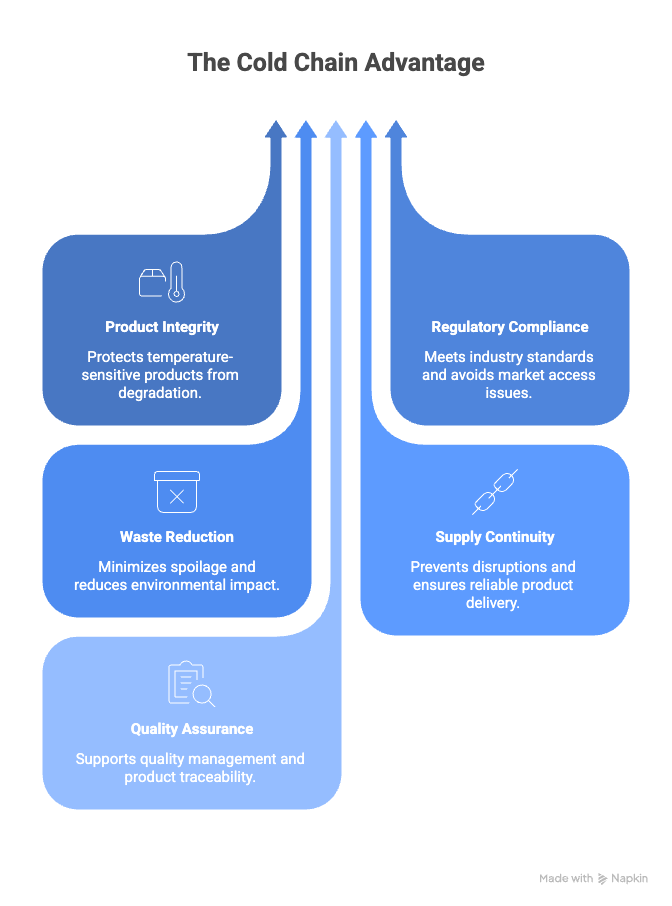
Common Pitfalls of Cold Chain
- Underestimating handoff risks: Temperature excursions often occur during transfers between transport modes or at receiving docks. Each transition requires explicit attention.
- Inadequate packaging validation: Packaging that works in controlled testing may fail under actual shipping conditions. Real-world validation under various conditions is essential.
- Ignoring seasonal variation: Packaging and routing adequate for moderate seasons may fail during summer heat waves or extreme winter cold periods.
- Insufficient carrier vetting: Not all carriers claiming cold chain capability actually deliver reliable temperature control. Thorough qualification matters.
Key Questions for Cold Chain Procurement
What temperature range is required?
Understand exact specifications, including both target storage conditions and acceptable excursion limits and duration.
How long will the product be in transit?
Transit duration determines packaging requirements, refrigerant quantities, and monitoring intervals.
What documentation is required?
Regulatory and quality requirements dictate what temperature records must accompany shipments for compliance.
Who handles each transition point?
Map every handoff and ensure temperature responsibility is clearly assigned at each stage.
What happens when excursions occur?
Define acceptance criteria, quarantine procedures, and escalation processes before they are needed.
How will we verify receipt condition?
Establish receiving procedures that confirm temperature integrity and document arrival status.
KPIs of Cold Chain
| Dimension | Sample KPIs |
| Temperature Compliance | Shipments within specification, excursion frequency and severity |
| Product Loss | Spoilage rate, units rejected due to temperature issues |
| Documentation | Complete temperature records per shipment, audit findings |
| Supplier Performance | Carrier temperature compliance, packaging failure rates |
Key Terms in Cold Chain
- Temperature Excursion: A deviation from specified temperature range during storage or transit outside acceptable limits.
- Data Logger: A device that records temperature readings at set intervals throughout the supply chain journey.
- Qualified Packaging: Packaging validated to maintain required temperatures for specified duration and environmental conditions.
- Last Mile: The final delivery segment, often the most challenging portion for temperature control maintenance.
- Ambient Shipping: Transportation without active temperature control, suitable only for products stable at room temperature.
- Mean Kinetic Temperature: A calculated temperature representing cumulative thermal exposure effects over time.
Technology Enablement
Modern supply chain platforms integrate temperature monitoring data, provide visibility into cold chain logistics status, and automate excursion alerts for rapid response. IoT sensors enable real-time tracking while analytics identify patterns that inform packaging and routing decisions for temperature-sensitive procurement categories.
FAQs
Q1. What is a cold chain in procurement?
Cold chain refers to the temperature-controlled supply chain for products requiring specific temperature ranges throughout sourcing, storage, and delivery.
Q2. What products require cold chain?
Pharmaceuticals, vaccines, biologics, fresh food, certain chemicals, and other temperature-sensitive materials require cold chain management.
Q3. How do I evaluate supplier cold chain capability?
Assess their facilities, packaging methods, carrier relationships, monitoring practices, and historical temperature performance data.
Q4. What adds to cold chain costs?
Specialized packaging, expedited shipping, temperature monitoring equipment, qualified storage, and compliance documentation all increase costs.
Q5. Can we use standard carriers?
Only if they have verified cold chain capabilities. Standard shipping services typically cannot guarantee adequate temperature control.
Q6. What regulations apply?
FDA, EU GMP, and WHO guidelines address cold chain requirements for pharmaceuticals. Food products face separate regulatory frameworks.
References
For further insights into these processes, explore Zycus’ dedicated pages and case studies related to Cold Chain:
- Transforming logistics and transportation procurement advanced digital solutions
- Procurement vs. Supply Chain: Key Differences and How They Work Together
- Optimizing Supplier Operations With Strategic Supply Chain Management and Supplier Collaboration
- How prepared are you to combat your supply chain risks?
- Supplier Risk Management Framework: A Comprehensive Approach to Mitigating Supplier Risks