



A master vendor list is a centralized, authoritative record of all suppliers approved to do business with an organization. Also known as an approved supplier list, it contains verified supplier information including company details, contact data, compliance status, banking information, and category assignments. The master vendor list serves as the single source of truth for supplier data across procurement, accounts payable, and sourcing functions.
Read more: From Chaos to Control: Fixing Vendor Master Data and Rogue Spend with AI
Why the Master Vendor List Matters in Procurement
Without a controlled master vendor list, organizations face duplicate supplier records, payments to unapproved vendors, compliance gaps, and data quality issues that ripple across procurement and finance. A well-maintained approved supplier list ensures that only vetted suppliers receive orders and payments, supports spend visibility by consolidating fragmented vendor data, and reduces the risk of fraud or unauthorized purchasing. For procurement leaders, the master vendor list is foundational infrastructure — the starting point for supplier management, sourcing, and spend analysis.
The Core Process of the Master Vendor List
The process begins with supplier onboarding. When a new supplier is identified, they submit required information — legal entity details, tax identification, banking data, certifications, and insurance documentation. This information is validated before the supplier is added to the master vendor list.
Once validated, the supplier record is created with standardized data fields and category assignments. The supplier is flagged as approved for purchasing, and the record is linked to relevant contracts, compliance documents, and performance data.
Ongoing maintenance ensures data accuracy over time. Suppliers are required to update their information periodically, and procurement validates changes before they take effect. Duplicate detection routines identify and merge redundant records. Inactive suppliers are flagged or archived based on defined criteria.
The master vendor list integrates with procurement and AP systems. Purchase orders can only be issued to approved suppliers, and invoice payments are validated against the list to prevent unauthorized disbursements.
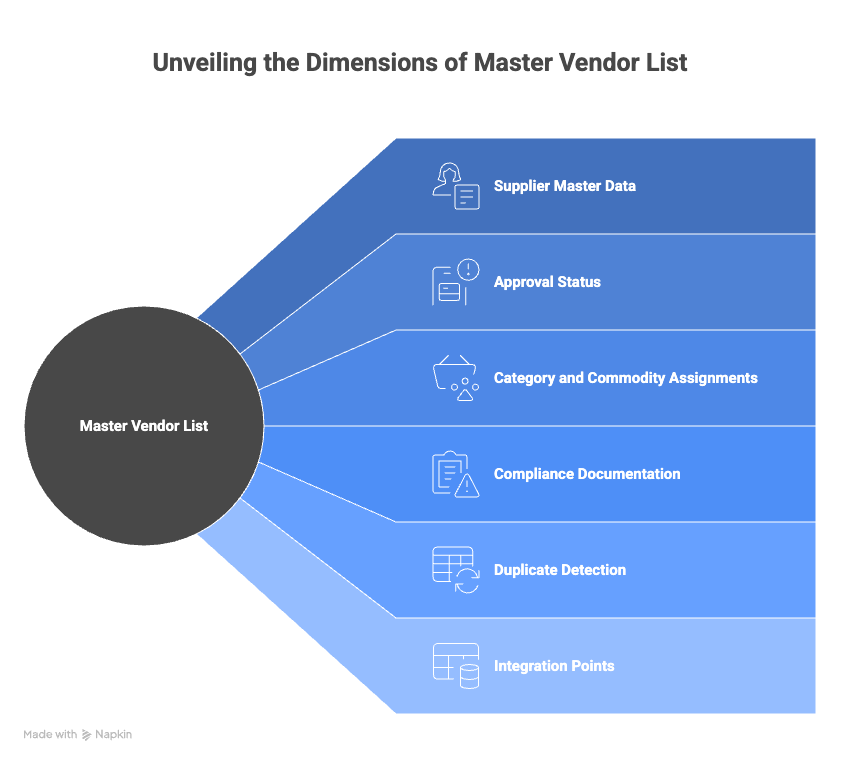
Key Benefits of the Master Vendor List
- Ensures only approved, vetted suppliers receive purchase orders and payments.
- Improves spend visibility by consolidating fragmented vendor data into a single source of truth.
- Reduces fraud risk by validating supplier banking information and approval status before disbursement.
- Supports compliance by linking supplier records to required certifications and documentation.
- Enables accurate spend analysis and supplier segmentation through consistent categorization.
Common Pitfalls of the Master Vendor List
Allowing uncontrolled supplier creation: If anyone can add suppliers without validation, the list becomes polluted with duplicates, incomplete records, and unapproved vendors.
Neglecting ongoing data maintenance: Supplier information changes. Without periodic reviews, records become stale and unreliable.
Failing to enforce the list: A master vendor list is only valuable if systems prevent transactions with non-approved suppliers. Enforcement gaps undermine the entire process.
Ignoring duplicate records: Duplicates fragment spend, distort supplier performance data, and create payment errors. Active deduplication is essential.
Essential Data Fields for Your Master Vendor List
- Legal entity name and DBA. The official registered name and any trade names used by the supplier.
- Tax identification number. Required for tax reporting and compliance verification.
- Remittance address and banking details. Where payments should be sent — validated to prevent fraud.
- Primary contact information. Key contacts for procurement, accounts receivable, and escalations.
- Category and commodity codes. Standardized classification for spend analysis and sourcing alignment.
- Approval status and date. Current status and when the supplier was last approved or reviewed.
KPIs of Master Vendor List
| Dimension | Sample KPIs |
| Data Quality | Duplicate rate, record completeness percentage, data accuracy score |
| Compliance | Percentage of suppliers with valid certifications, onboarding completion rate |
| Efficiency | Average supplier onboarding time, time to update records |
| Coverage | Percentage of spend with approved suppliers, maverick spend rate |
Key Terms in Master Vendor List
- Approved Supplier List: Another term for master vendor list — the authoritative record of suppliers cleared to do business with the organization.
- Supplier Onboarding: The process of collecting, validating, and loading new supplier information into the master vendor list.
- Duplicate Supplier: Multiple records representing the same supplier, often created through inconsistent data entry or decentralized processes.
- Supplier Master Data: The core data elements that define a supplier record — name, tax ID, addresses, contacts, and banking information.
- Data Stewardship: The practice of assigning ownership for maintaining data quality and accuracy in the master vendor list.
- Vendor Validation: The process of verifying supplier-provided information before granting approved status.
FAQs
Q1. What is a master vendor list?
A centralized record of all suppliers approved to do business with an organization, serving as the single source of truth for supplier data.
Q2. What is the difference between a master vendor list and an approved supplier list?
They are the same thing. Both terms refer to the authoritative list of vetted suppliers eligible for orders and payments.
Q3. Who is responsible for maintaining the master vendor list?
Typically, procurement, supplier management, or a dedicated master data management team — often with shared responsibility across procurement and AP.
Q4. How do duplicates get into the master vendor list?
Decentralized supplier creation, inconsistent naming conventions, and lack of validation controls allow the same supplier to be entered multiple times.
Q5. How often should supplier records be reviewed?
At minimum annually, with more frequent reviews for high-spend or high-risk suppliers. Banking information should be validated before any changes take effect.
Q6. Can a supplier be removed from the master vendor list?
Yes. Suppliers may be deactivated due to non-compliance, poor performance, inactivity, or termination of the business relationship.
References
For further insights into these processes, explore Zycus’ dedicated resources related to Master Vendor List (MVL):










