Cost breakdown analysis is a systematic examination of the individual cost components that comprise a supplier’s total price for a product or service. In procurement, this analysis deconstructs pricing into elements such as raw materials, labor, overhead, logistics, and profit margin to understand what drives supplier costs and where negotiation opportunities exist. This transparency enables procurement professionals to move beyond simple price comparisons toward value-based discussions with suppliers.
Read more: Cost Avoidance vs. Cost Savings: What’s the Major Difference?
Why Cost Breakdown Analysis Matters in Procurement
Without understanding cost structures, procurement teams negotiate blindly, accepting or rejecting prices without knowing whether they reflect fair value. Cost breakdown analysis reveals whether a supplier’s pricing is reasonable relative to underlying cost drivers and market conditions. This knowledge shifts negotiation dynamics by enabling fact-based discussions about specific cost elements rather than arbitrary demands for percentage reductions. Organizations that master cost breakdown analysis consistently achieve better pricing outcomes while building more transparent and sustainable supplier relationships based on mutual understanding of economics.
The Core Process of Cost Breakdown Analysis
Cost breakdown analysis begins with data collection, where procurement gathers supplier-provided cost information or develops estimates using industry benchmarks, should-cost models, and market intelligence. The completeness and accuracy of this data determines analysis quality.
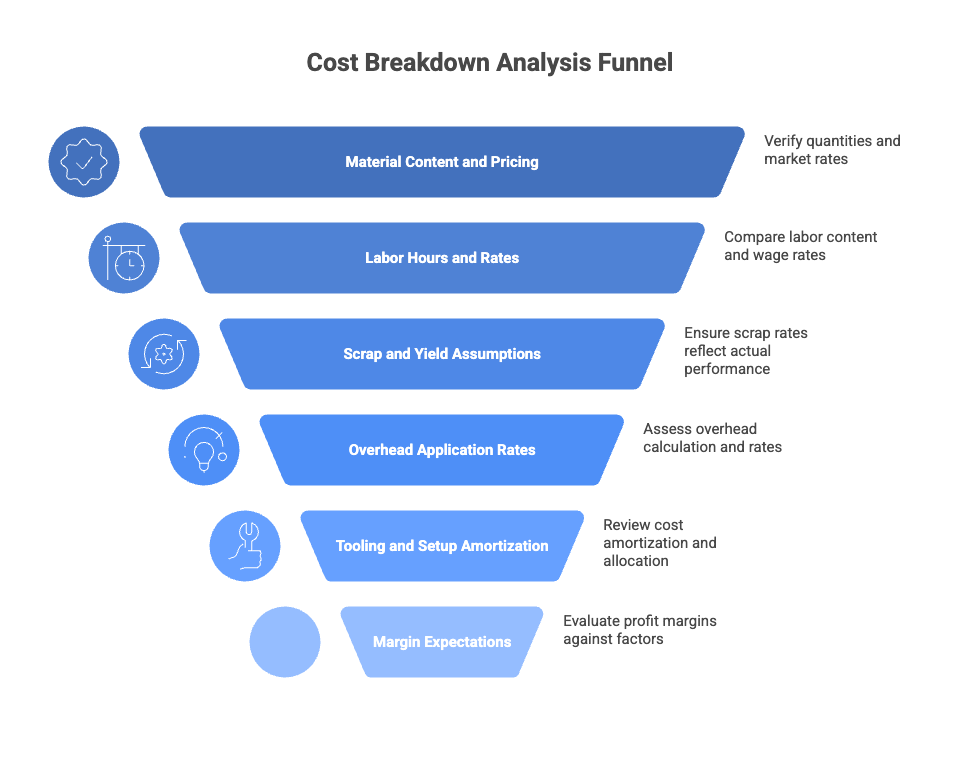
The analysis phase categorizes costs into direct materials, direct labor, manufacturing overhead, selling and administrative expenses, logistics, and profit. Each component is evaluated against benchmarks to identify outliers or areas warranting further investigation.
Validation compares the breakdown against market data, historical pricing, and alternative supplier quotes. Significant variances trigger deeper examination to determine whether differences reflect supplier inefficiency, unique value-adds, or simple overpricing.
Negotiation planning uses analysis findings to develop targeted strategies. Rather than requesting blanket discounts, procurement can address specific cost elements where analysis suggests improvement opportunities, such as material substitution or logistics optimization.
Core Components of Cost Breakdown Analysis
Direct material costs include all raw materials and purchased components that become part of the finished product. Analysis examines material specifications, quantities, commodity pricing, and potential substitution opportunities.
Labor costs encompass direct manufacturing labor and may include setup, inspection, and packaging activities. Analysis considers wage rates, productivity assumptions, and labor content relative to similar products or processes.
Overhead allocation covers manufacturing facility costs, equipment depreciation, utilities, and indirect labor. Understanding how suppliers allocate overhead helps identify whether rates are reasonable and applied consistently.
Profit and margin analysis examines the supplier’s expected return on the business. While suppliers deserve fair margins, analysis helps ensure markups are appropriate for the risk and complexity involved.
Logistics and distribution costs include packaging, transportation, warehousing, and delivery. These elements often present optimization opportunities through route changes, packaging redesign, or shipment consolidation.
Key Benefits of Cost Breakdown Analysis
- Negotiation leverage. Detailed cost knowledge enables procurement to challenge specific elements rather than negotiate price in isolation.
- Fair pricing validation. Analysis confirms whether supplier pricing is reasonable relative to actual cost drivers and market conditions.
- Improvement identification. Breaking down costs reveals optimization opportunities in materials, processes, or logistics that benefit both parties.
- Supplier relationship building. Transparent cost discussions foster collaborative relationships focused on joint value creation.
- Budget accuracy. Understanding cost structures improves forecasting for commodity fluctuations and other cost driver changes.
Common Pitfalls of Cost Breakdown Analysis
- Accepting supplier data uncritically. Suppliers may provide incomplete or inflated cost information. Validation against independent sources is essential.
- Ignoring overhead complexity. Overhead allocation methods vary widely. Accepting rates without understanding methodology can mask inefficiencies.
- Focusing only on price reduction. Cost breakdown should identify improvement opportunities, not just justify demands for lower prices.
- Neglecting the total cost perspective. Individual cost elements must be evaluated in context. Reducing one cost may increase others or impact quality.
KPIs of Cost Breakdown Analysis
| Dimension | Sample KPIs |
| Cost Visibility | Percentage of spend with detailed cost breakdowns, categories analyzed |
| Negotiation Outcomes | Savings achieved through cost-based negotiations versus market-based |
| Analysis Quality | Variance between estimated and actual costs, breakdown accuracy |
| Supplier Engagement | Suppliers providing cost transparency, joint improvement initiatives |
Key Term in Cost Breakdown Analysis
- Should-Cost Model: An independent estimate of what a product should cost based on engineering analysis and market data.
- Bill of Materials (BOM): The structured list of components and materials used to manufacture a product.
- Overhead Rate: The percentage or amount added to direct costs to cover indirect manufacturing expenses.
- Contribution Margin: Revenue minus variable costs, indicating how much each unit contributes to covering fixed costs.
- Total Cost of Ownership: The comprehensive cost including purchase price plus all costs incurred throughout the product lifecycle.
- Value Engineering: Systematic analysis to improve value by optimizing the relationship between function and cost.
Technology Enablement
Modern procurement platforms support cost breakdown analysis through should-cost modeling tools, commodity price tracking, and integration with market intelligence services. These capabilities enable procurement teams to develop independent cost estimates and validate supplier pricing systematically across the portfolio.
FAQs
Q1. What is cost breakdown analysis?
A systematic examination of the individual components that comprise a supplier’s total price to understand cost drivers and negotiation opportunities.
Q2. When should procurement request cost breakdowns?
For significant purchases, strategic categories, custom products, and any situation where price validation or negotiation leverage is needed.
Q3. What if suppliers refuse to provide breakdowns?
Develop independent should-cost estimates using engineering analysis, market data, and competitive intelligence.
Q4. How detailed should analysis be?
Detail should match purchase significance. Strategic categories warrant deeper analysis than transactional purchases.
Q5. Can cost breakdown damage supplier relationships?
When approached collaboratively as joint improvement, cost transparency typically strengthens relationships.
Q6. How do I validate supplier-provided data?
Cross-reference against commodity indices, labor market data, industry benchmarks, and competitive quotes.
References
For further insights into these processes, explore Zycus’ dedicated resources related to Cost Breakdown Analysis: