


Supply management is the strategic oversight of an organization’s external resources — including the identification, acquisition, and management of goods and services needed to operate and compete. It encompasses procurement, sourcing, supplier relationship management, and aspects of supply chain coordination. Supply management goes beyond transactional purchasing to include strategic planning, risk mitigation, and value creation across the entire supply base.
Read more: Supplier Management–Benefits, Process, & Best Practices
Why Supply Management Matters in Procurement
Supply management elevates procurement from a cost center to a strategic function. While purchasing focuses on transactions, supply management addresses the broader questions: Which suppliers should we partner with? How do we balance cost, risk, and innovation? How does our supply base support business objectives? Organizations with mature supply management capabilities achieve better total value, more resilient supply chains, and stronger competitive positioning. For procurement leaders, adopting a supply management mindset means thinking beyond the next purchase order to the long-term health and performance of the supply network.
Read more: A 5-Step Process to Effective Supplier Management
The Core Process of Supply Management
Supply management begins with strategic planning. Procurement analyzes spend, assesses market conditions, evaluates supply risks, and develops category strategies aligned to business objectives. This planning informs where to focus resources and what outcomes to prioritize.
Sourcing execution translates strategy into action. This includes supplier identification, qualification, RFx processes, negotiations, and contracting. The goal is to secure supply arrangements that deliver the targeted value, quality, and risk profile.
Supplier management ensures ongoing performance and relationship health. This involves monitoring KPIs, conducting business reviews, managing issues, and developing key suppliers to improve capabilities over time.
Continuous improvement closes the loop. Supply management functions assess what worked, identify opportunities to improve processes or supplier performance, and feed insights back into the next planning cycle. The discipline evolves as markets, technologies, and business needs change.
Read more: 8 Stages of Supplier Lifecycle Management Every Business Should Know
Core Components of Supply Management
- Category Management: Strategic oversight of spend categories, including market analysis, sourcing strategies, and supplier portfolio decisions.
- Strategic Sourcing: Structured processes to identify, evaluate, select, and contract with suppliers based on total value, not just price.
- Supplier Relationship Management: Ongoing governance, performance management, and development of key supplier partnerships.
- Risk Management: Identification, assessment, and mitigation of supply risks — financial, operational, geopolitical, and compliance-related.
- Contract Management: Lifecycle oversight of supplier agreements, from negotiation through execution, compliance, and renewal.
- Performance Measurement: KPIs and scorecards that track supply management outcomes across cost, quality, delivery, risk, and innovation.
Common Pitfalls of Supply Management
Confusing supply management with purchasing: Transactional buying is a subset, not a substitute. Strategic oversight requires different skills, tools, and focus.
Neglecting supplier relationships: Over-focusing on sourcing events while ignoring ongoing relationship management leaves value on the table.
Underinvesting in data and analytics: Supply management decisions require visibility into spend, supplier performance, and market conditions. Poor data undermines strategy.
Treating all categories the same: Different categories require different strategies. A one-size-fits-all approach misses opportunities for tailored value creation.
How Supply Management Differs from Purchasing
Strategic vs. transactional focus: Purchasing executes orders. Supply management shapes supplier portfolios and long-term sourcing strategies.
Total value vs. unit price: Purchasing often focuses on price per transaction. Supply management considers total cost, risk, quality, and innovation.
Reactive vs. proactive: Purchasing responds to requisitions. Supply management anticipates needs and market shifts.
Supplier transactions vs. supplier relationships: Purchasing interacts transactionally. Supply management builds partnerships that drive mutual value.
Cost center vs. value driver: Purchasing is seen as overhead. Supply management contributes to competitive advantage and business outcomes.
KPIs of Supply Management
| Dimension | Sample KPIs |
| Cost | Negotiated savings, cost avoidance, total cost of ownership reduction |
| Risk | Supply disruptions, supplier financial risk score, single-source exposure |
| Performance | Supplier scorecard ratings, contract compliance, innovation contributions |
| Efficiency | Sourcing cycle time, contract coverage, spend under management |
Key Terms in Supply Management
- Supply Chain Management: The broader discipline covering the flow of goods from raw materials to end customers, including logistics, operations, and demand planning.
- Category Management: Strategic management of a group of related spend categories to optimize value and supplier performance.
- Strategic Sourcing: A systematic approach to supplier selection that considers total value, not just price.
- Supplier Relationship Management (SRM): Structured processes for managing interactions and performance with key suppliers.
- Total Cost of Ownership (TCO): The full cost of acquiring and using a product or service, beyond purchase price.
- Spend Under Management: The percentage of organizational spend actively managed through strategic supply management processes.
Technology Enablement
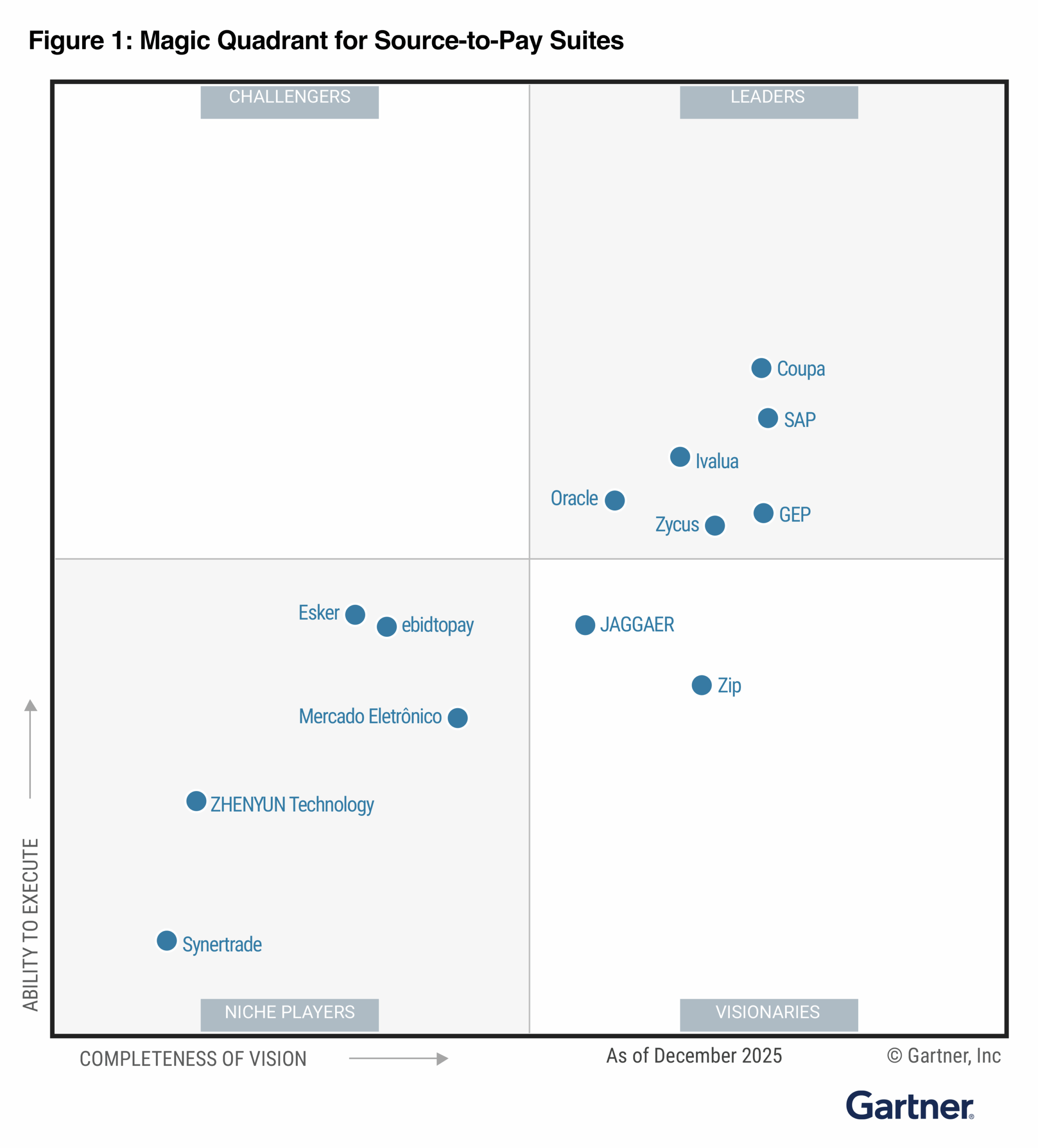
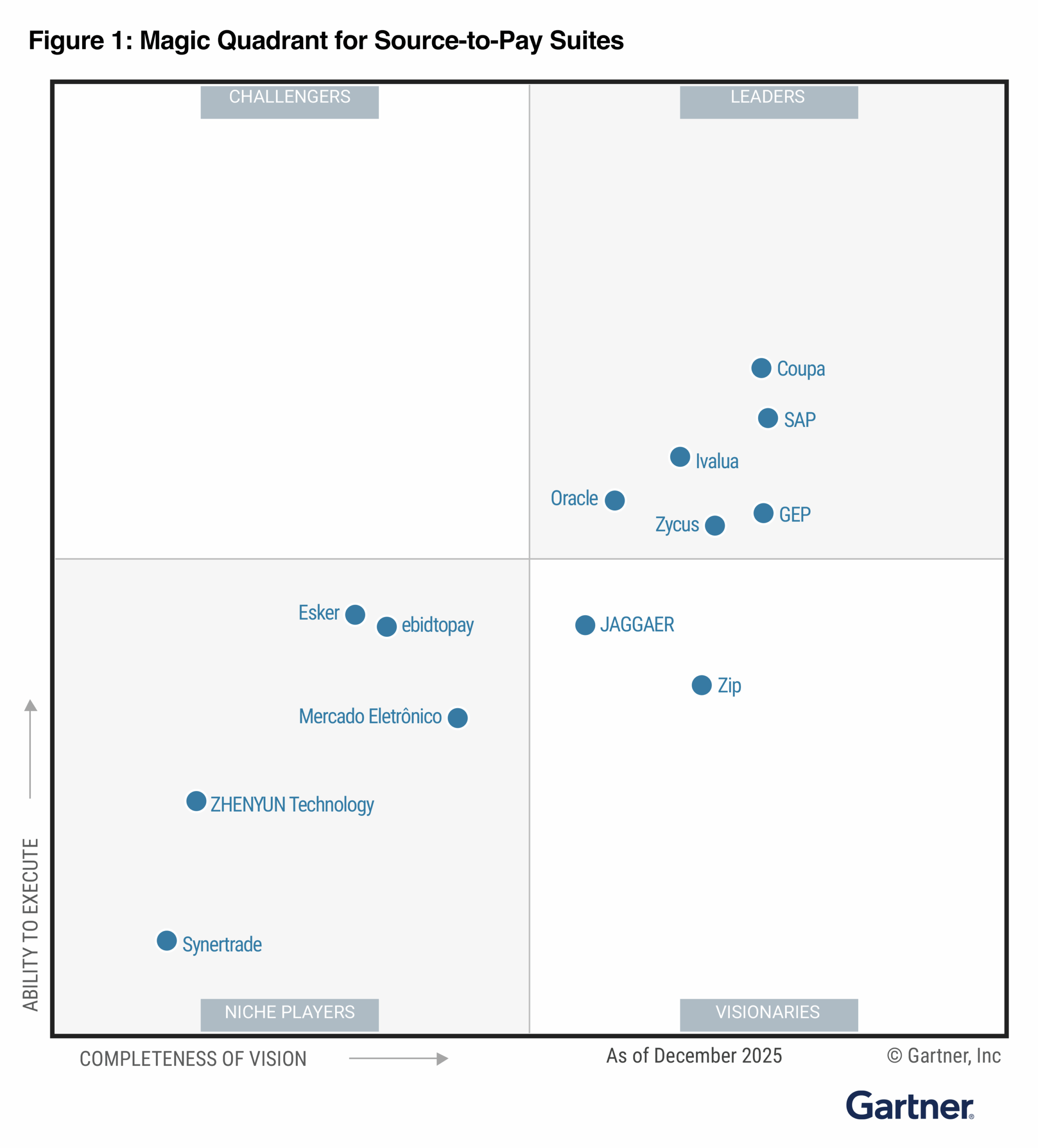
Modern Source-to-Pay platforms provide the foundation for supply management — integrating spend analytics, sourcing, contract management, supplier performance, and risk monitoring into a unified system that supports strategic decision-making across the supply base.
FAQs
Q1. What is supply management?
The strategic oversight of external resources, encompassing procurement, sourcing, supplier management, and supply risk mitigation.
Q2. How is supply management different from supply chain management?
Supply management focuses on the upstream supply base — sourcing and suppliers. Supply chain management covers the full flow from suppliers through production to customers.
Q3. What skills are needed for supply management?
Strategic thinking, market analysis, negotiation, relationship management, data analytics, and cross-functional collaboration.
Q4. What is spend under management?
The percentage of total organizational spend that is actively managed through strategic sourcing and supply management processes.
Q5. How does supply management create value?
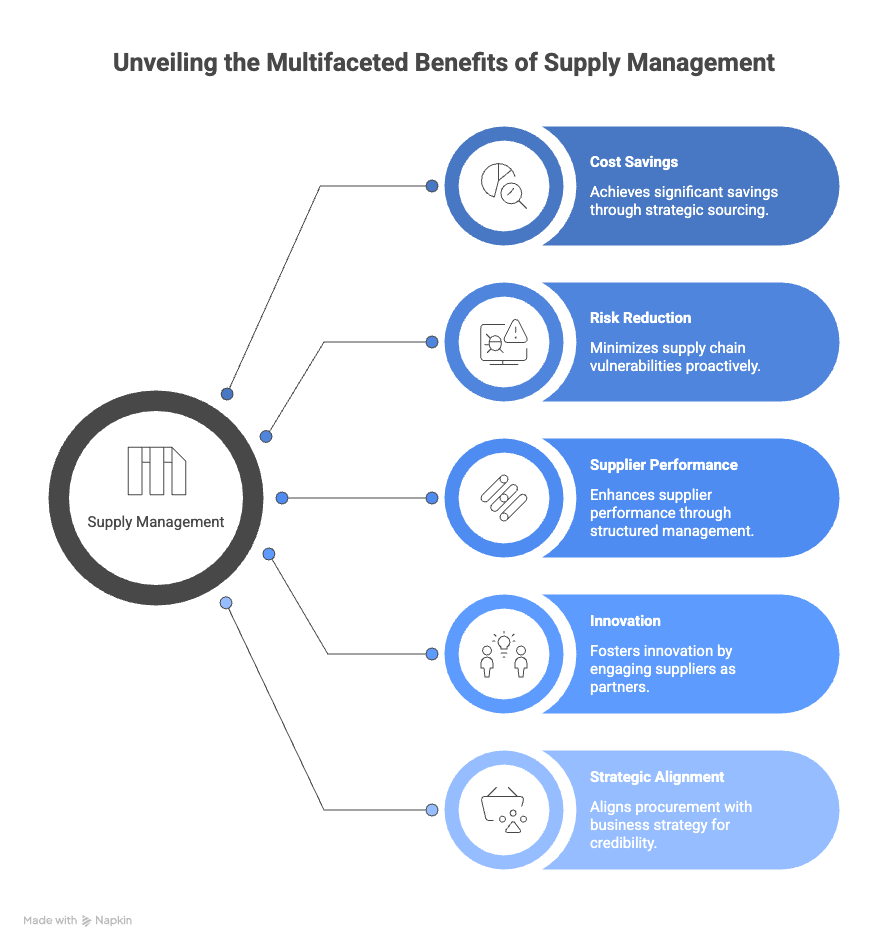
Through cost savings, risk reduction, supplier-driven innovation, improved quality, and alignment of supply with business strategy.
Q6. Is supply management only for large companies?
No. Organizations of any size benefit from strategic approaches to managing their supply base, though the formality and resources may vary.
References
For further insights into these processes, explore Zycus’ dedicated resources related to Supply Management:
- The Procurement Value Proposition: The Rise of Supply Management
- Women In Procurement
- Catalog Buying in B2B Procurement: Building Stronger Supplier Relationships
- Accelerating Supplier Enabled Innovation – Harnessing the True Power of Supplier Relationship Management(SRM)
- Procurement Insights: Best Practices from BME Symposium